
Your cart is currently empty!
Fake Journals Are Stealing Professors’ Names for AI-Generated Studies
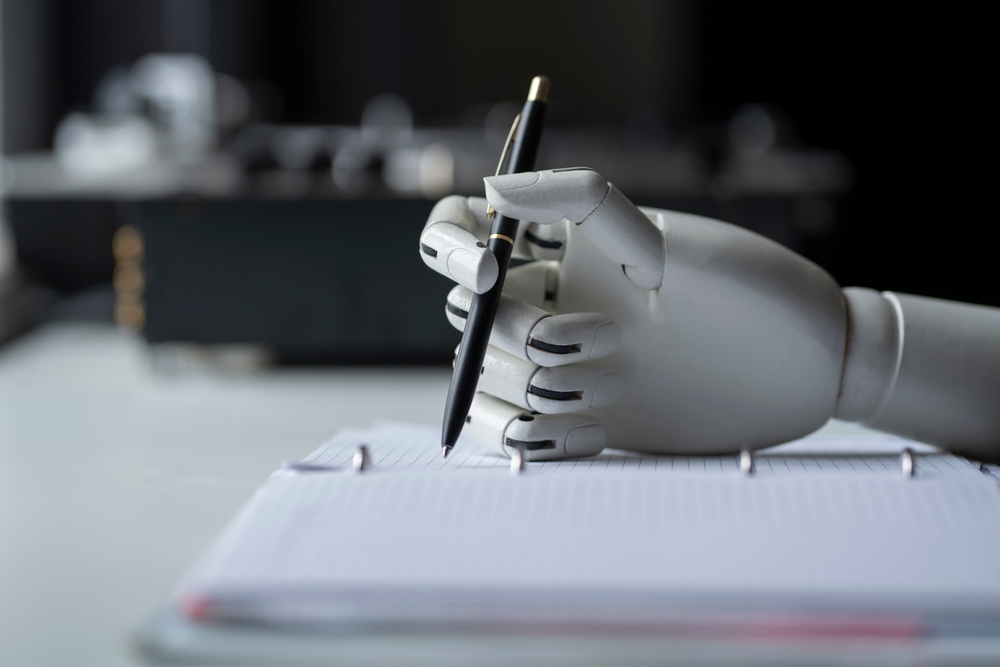
Society trusts that a published scientific study represents real human effort and verified facts. Today, that basic assumption is being actively exploited. A hidden crisis is spreading through academic databases as automated software generates completely fake research papers. Rather than publishing under anonymous pseudonyms, the operators behind these fabricated studies are stealing the identities of real, respected professors to manufacture credibility.
Contents
show
This digital forgery is quietly polluting the scholarly record, threatening the foundation of knowledge that the modern world relies on for everything from new medicines to structural engineering.
Eroding Trust in Scientific Research

Deceptive online journals are publishing completely machine-written papers, attaching the names of real, respected professors to them without their knowledge.
This is not just a strange form of identity theft; it is a direct threat to public safety. Society relies on scientific studies to show which medicines are safe, how to build stable bridges, and what is happening to the climate. When fake studies slip into databases, that trust erodes.
The numbers show how quickly this problem is growing. A study by researchers at Cornell and UCLA found 146,900 fake citations across major academic databases. Another study by Swedish researchers from Lund University and the University of Borås found 139 entirely fabricated papers on Google Scholar. Alarmingly, 62 percent of those papers did not mention that they were written by software.
These fake citations act like a slow poison to academic progress. When a computer program invents references to support its claims, it makes tracking down real facts incredibly difficult.
Usha Haley, a professor of management at Wichita State University, emphasizes how dangerous this is. “Fake or AI-generated citations undermine trust in the scholarly record that provides the foundation on which peer review and cumulative knowledge rest,” she explains.
The Real Experts Attached to Fake Studies
Behind the alarming statistics are real professionals whose reputations are being hijacked. Kazumichi Fujii, a senior researcher specializing in soil science at the Forestry and Forest Products Research Institute in Japan, recently experienced this digital forgery firsthand. He discovered two academic papers published online that falsely listed him as the author.
The fabricated papers were written in English and focused on subjects Fujii had studied previously. However, the software that generated them made glaring errors, such as linking him to nonexistent organizations at the University of Tokyo. When Fujii contacted the website operator to have the fake work removed, his request was ignored. Instead of deleting the paper, the site operators simply replaced his name with another fabricated identity.
For scientists, their published work is their legacy. Having their name attached to machine-generated content threatens the trust they have spent decades building.
Fujii expressed his frustration clearly. “It annoys me when people think I wrote it,” he stated. He emphasized the broader impact of this fraud, noting, “This is an unforgivable act that damages the credibility of scientific papers.”
His situation is not unique. Researchers from institutions like Texas A&M and Washington University have also found their identities attached to fake studies in predatory journals. These journals often use the names of established experts to make their websites look legitimate, allowing them to charge fees to other unsuspecting authors. The result is a growing web of deception that traps real experts in a cycle of digital fraud.
A Scientist Turns Detective

Sometimes, the targets of these academic scams decide to fight back. This was the case for Diomidis Spinellis, a computer science professor, when a colleague alerted him to a strange publication. A paper titled “Global Business Strategies in the Digital Age” had been published under his name in a questionable journal. Spinellis had absolutely nothing to do with the article, which lacked any real scientific data.
Rather than just ignoring the digital forgery, Spinellis used his technical expertise to investigate. He built a custom computer script to download and scan every single article published on that specific journal’s website.
The results of his deep dive were published in the legitimate journal Research Integrity and Peer Review. Spinellis found that out of 53 articles he analyzed, 48 were almost certainly generated by software. Several of these fabricated papers even scored a perfect 100 percent on detection tools.
The investigation also uncovered the grim reality of how these predatory journals operate. The fake papers falsely credited real scholars from prestigious universities, including Penn State and the University of California, Berkeley. Shockingly, Spinellis found that two of the named authors had already passed away before the papers were even published.
The motive behind this mass fabrication is purely financial. These fake journals do not care about advancing science. By stealing the names of respected academics and elite universities, they create the illusion of a prestigious publication. This false credibility is then used to trick honest researchers into submitting their own real work and paying steep publication fees, turning academic trust into a profitable scam.
Catching Fake Data at the Source

Scientific repositories function as the waiting room for modern research. Before a study is formally published in a journal, authors frequently upload their work to databases like arXiv so the global scientific community can access it immediately. Because of this open door, these platforms are now on the front lines of the battle against synthetic science.
Steinn Sigurdsson, the scientific director at arXiv, is one of the gatekeepers actively fighting this digital flood. He has witnessed firsthand how quickly machine-written content can overwhelm legitimate research. When scientists use chatbots to draft citations without verifying the output, the software often hallucinates, inventing entirely fake references that look surprisingly real.
To stop this pollution, Sigurdsson and his organization are taking decisive action. ArXiv recently implemented strict new measures to ban authors who submit work containing hallucinated citations or unchecked machine-generated content. The goal is to catch these errors before they have a chance to spread and misinform the public.
For Sigurdsson, the stakes are incredibly high. The introduction of fake data does not just trick a few readers; it weakens the entire foundation of scientific discovery.
“The corpus of science is getting diluted,” Sigurdsson stated. “A lot of the AI stuff is either actively wrong or it is meaningless. It is just noise.” He further highlighted that this influx of fabricated data creates dangerous roadblocks for real innovation. “It makes it harder to find what is really happening, and it can misdirect people.”
Restoring Trust in Academic Research
The infiltration of synthetic research into academic databases is actively altering how the scientific community operates. The established systems of peer review and publication are now forced to adapt to a landscape where the origin of a text is constantly in question.
In response, major academic institutions and database managers are shifting their focus toward detection and enforcement. Repositories are increasingly utilizing advanced software to screen for machine-generated patterns before a paper becomes publicly available. Furthermore, many journals are rewriting their submission guidelines to explicitly forbid the undisclosed use of automated drafting tools.
The burden of verification has expanded. Researchers reading new literature must now assess not only the methodology of a study but also the likelihood that the text was written by a human. The traditional assumption of authenticity is no longer a given.
While artificial intelligence offers tools for data analysis, its misuse in drafting fabricated research creates significant roadblocks. As the volume of synthetic science grows, the academic community continues to grapple with the complexities of maintaining a reliable and factual record of human discovery.