
Your cart is currently empty!
Man Dumps Hundreds of Tires on Farmer’s Property and Instantly Regrets It

Most people who discover illegal waste on their property would likely contact local authorities and wait for an investigation to begin. The process can be slow, frustrating, and expensive, especially when the cleanup falls on the victim. For many landowners, there is little choice but to follow official procedures and hope for a resolution. One British farmer, however, decided he was not willing to quietly accept the situation.
Contents
show
After finding hundreds of discarded tires dumped on his farmland, the farmer was left facing a costly problem. The massive pile of waste had transformed part of his property into an unwanted dumping ground overnight. Rather than simply absorbing the financial burden, he began searching for answers. What he uncovered eventually led to a response that captured international attention.
The farmer’s actions quickly became the subject of news reports and social media discussions. People were fascinated by the unusual way he handled the situation and the message behind it. Many viewed his response as a rare example of immediate accountability in action. Others saw it as a powerful statement against environmental negligence.
Years later, the story continues to circulate online because it touches on universal themes of fairness and responsibility. Most people understand the frustration of dealing with problems created by someone else. Few have the opportunity to respond in such a memorable way. That is exactly why this farmer’s story continues to resonate with audiences around the world.
A Shocking Discovery on Rural Farmland
Illegal dumping has become a growing concern for farmers and rural landowners across the United Kingdom. Known as fly tipping, the practice involves abandoning waste on land without permission or proper disposal. The consequences often fall on innocent property owners who must pay for cleanup and removal. This ongoing issue affects thousands of people every year.
Farmer Stuart Baldwin experienced this problem firsthand when he arrived at his property near Stockport in Greater Manchester. What he found waiting for him was both shocking and frustrating. A huge pile of discarded tires had been dumped on his land without warning. The waste covered a significant area and immediately created a major headache.
Reports later revealed that the total number of tires reached an astonishing 421. The sheer volume made the incident particularly difficult to ignore. Removing such a large quantity would require time, labor, and considerable expense. For many landowners, that cost alone would have been overwhelming.
The discovery left Baldwin facing a difficult situation that was not of his making. Someone else had created the problem, yet he was expected to deal with the consequences. While many people would have begun arranging cleanup services, Baldwin started thinking differently. He was determined to find out who was responsible before taking his next step.
Following the Trail Back to the Source
The enormous pile of tires did not appear to be a random act without clues. As Baldwin examined the waste more closely, he began searching for evidence. People who illegally dump materials often assume they cannot be traced. However, mistakes can sometimes reveal important information.
During his inspection, Baldwin reportedly found items that pointed toward a possible source. The discarded materials allegedly contained clues connected to a local tire-related business. These details gave him reason to believe the waste had originated elsewhere nearby. Instead of immediately accepting defeat, he continued investigating.
The evidence appeared convincing enough for Baldwin to form a strong suspicion about where the tires came from. According to reports, he believed he had identified the property linked to the waste. That realization changed the situation dramatically. The problem was no longer just about cleanup costs but also about accountability.
At that point, Baldwin faced an important decision about how to proceed. He could report his findings and wait for the authorities to handle the matter. |Alternatively, he could take direct action himself in a way that would attract attention. Ultimately, he chose the option that nobody expected.
The Response Nobody Saw Coming
Once Baldwin believed he knew where the tires had originated, he began organizing a bold plan. Rather than leaving the waste where it had been dumped, he prepared to move it. The operation required heavy equipment and careful coordination. It was not a small undertaking by any measure.
Using a tipper truck and machinery, Baldwin loaded the hundreds of tires onto vehicles. The process involved transporting the entire collection away from his farmland. Observers likely assumed the tires were being taken to a disposal facility. Instead, Baldwin had another destination in mind.
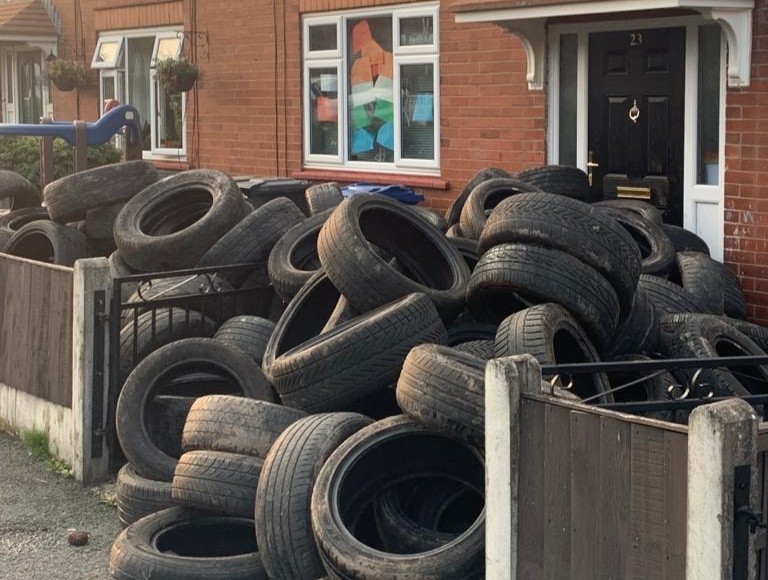
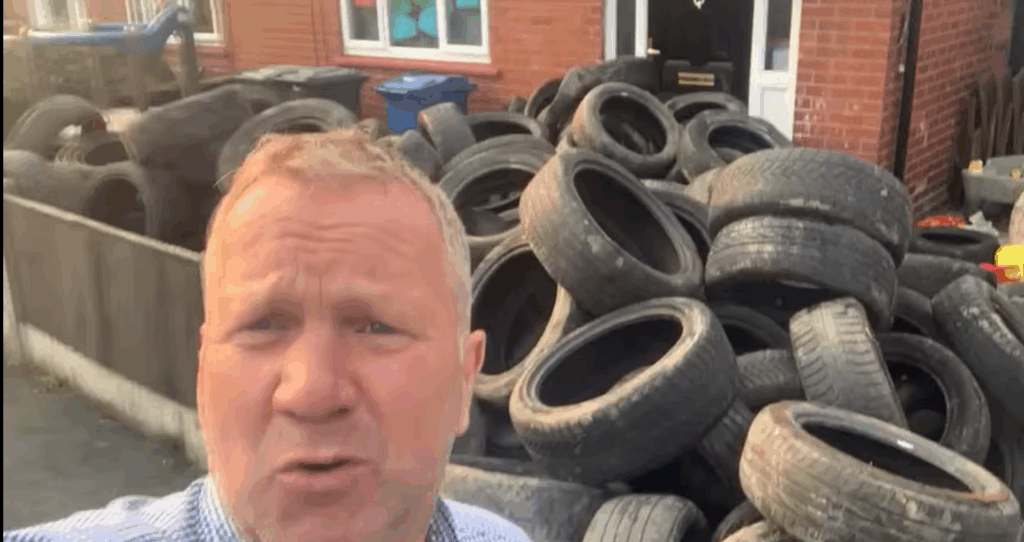
He drove the tires to the location he believed was connected to the dumping. Then he unloaded the entire mountain of rubber outside the property. The dramatic move instantly transformed the situation into a public spectacle. What had once been hidden on rural land was now impossible to ignore.
Photographs from the scene showed an enormous pile stacked outside the entrance area. The tires created a striking visual that quickly attracted attention. Residents, motorists, and eventually journalists took notice of the unusual sight. Within a short time, the story began spreading far beyond the local community.
Why Fly Tipping Is Such a Serious Problem
The incident resonated with many people because it highlighted a widespread environmental issue. Fly tipping affects communities throughout the United Kingdom every year. Local governments and private landowners spend millions dealing with illegally dumped waste. The financial burden can be substantial and long lasting.
Waste abandoned through fly tipping comes in many forms and often creates serious challenges. Household garbage, construction debris, furniture, appliances, and vehicle parts are commonly discarded. These materials can accumulate quickly and become difficult to remove safely. In many cases, specialized disposal methods are required.
Farmers face unique risks when waste is dumped on agricultural land. Discarded materials can damage crops, contaminate soil, and threaten livestock. Hazardous substances may also affect local ecosystems and wildlife habitats. The environmental consequences can extend far beyond the initial dumping site.
One of the biggest challenges is identifying those responsible for the waste. Many offenders believe they can avoid consequences by dumping materials in remote locations. Without evidence, investigations can become difficult and time-consuming. Stories like Baldwin’s draw attention to the importance of accountability and enforcement.
Local Authorities Become Involved
The dramatic return of the tires quickly attracted widespread media coverage. Images of the enormous pile appeared in newspapers and online publications. As the story spread, public interest continued to grow. Soon, local authorities also became aware of the situation.
The incident sparked discussions about responsibility and proper waste disposal procedures. Environmental regulations generally require waste to be handled through approved channels. Questions emerged regarding who should ultimately remove the tires. The unusual circumstances added complexity to the debate.
Many members of the public sympathized with Baldwin’s frustration. People familiar with fly tipping understood the financial burden victims often face. They argued that landowners should not be forced to pay for someone else’s actions. This perspective fueled support for the farmer’s response.
At the same time, the case renewed conversations about enforcement and penalties. Some observers questioned whether existing punishments were strong enough to deter offenders. Others pointed to the growing impact of illegal dumping on rural communities. Regardless of differing opinions, the images remained unforgettable.

Similar Cases of Creative Pushback
Although Baldwin’s response became famous, he is not the only person to challenge illegal dumping. Landowners around the world have developed creative ways to protect their property. Many have grown tired of repeatedly cleaning up waste left by others. Their efforts often focus on prevention and accountability.
Some property owners install surveillance cameras to monitor vulnerable areas. Video footage can help identify vehicles and individuals involved in dumping. The presence of cameras alone may discourage potential offenders. Technology has become an important tool in combating environmental violations.
Others rely on community involvement and public awareness campaigns. Residents frequently share information through social media and local networks. These efforts help expose repeat offenders and encourage reporting. Community cooperation can significantly improve enforcement efforts.
Experts generally agree that prevention requires multiple strategies working together. Education, enforcement, monitoring, and public participation all play important roles. Even so, few anti-fly-tipping efforts have attracted as much attention as Baldwin’s. The image of 421 tires being returned remains difficult to forget.
The Lasting Legacy of a Viral Revenge Story
Years after the incident occurred, people continue sharing the story online. Its lasting appeal comes from themes that are easy to understand. Most individuals have experienced situations where they inherited someone else’s problems. That shared experience makes the story highly relatable.
The image of hundreds of tires being returned to their alleged source remains powerful. It represents a rare moment when accountability appeared immediate and visible. Rather than disappearing quietly, the issue was placed directly in public view. That symbolism continues to resonate with audiences today.
Whether viewed as protest, retaliation, or poetic justice, the farmer achieved something remarkable. He transformed a frustrating environmental problem into a national conversation. The incident encouraged discussions about responsibility and illegal dumping. It also highlighted the challenges faced by rural landowners.
Those responsible may have expected the tires to vanish into the countryside unnoticed. Instead, the dumping became the center of a widely shared news story. The episode served as a reminder that actions can have consequences. For many people, that lesson is exactly what makes the story unforgettable.