
Your cart is currently empty!
Is This Microbe Evolving Into a Virus Right Before Our Eyes?
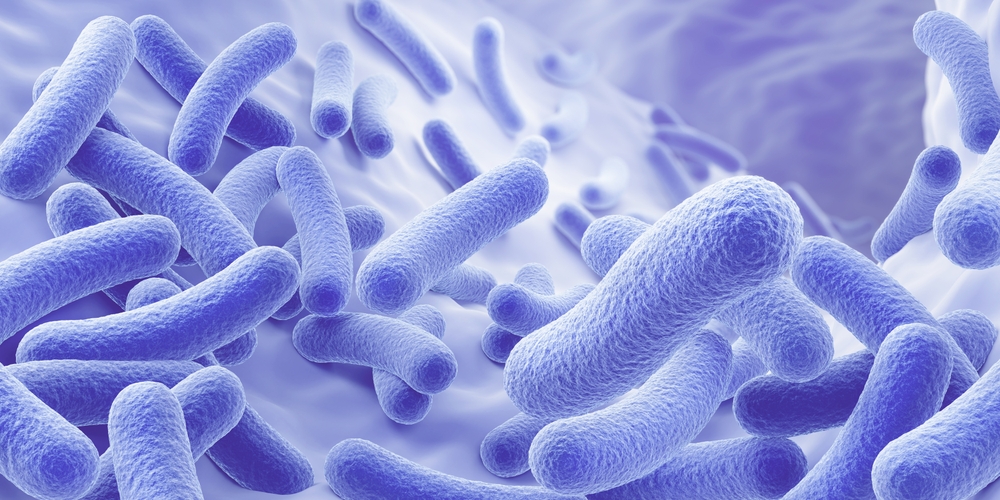
Historically, science has drawn a strict line between living cells and non-living viruses. Yet, a newly discovered microbe hidden inside a marine plankton is erasing that boundary. This biological anomaly has stripped away nearly every trait of a living organism, completely abandoning the ability to generate energy or process nutrients. By examining this state of extreme reduction, researchers are getting an unprecedented, real-time look at how a self-sustaining cell slowly downgrades into a dependent virus.
Contents
show
An Entirely New Branch of Life Found in the Sea
Biologists have long debated what a living cell truly needs to survive. Recently, researchers exploring ocean waters uncovered a microscopic organism that answers this question in an unexpected way. Known as Sukunaarchaeum, this newly discovered microbe takes biological minimalism to an extreme.
Every living thing carries a genetic instruction manual. For Sukunaarchaeum, this manual is remarkably short. Its entire genome contains just 238,000 base pairs of DNA. To put that into perspective, this is less than half the size of the smallest genetic code previously found in its biological family, known as the archaea.
To achieve this incredibly small size, the microbe discarded almost everything. It let go of the instructions needed to generate energy, process food, or build basic cellular parts. Instead, it kept only the essential tools required to copy its DNA and maintain its core structure.
Because it lacks the ability to sustain itself, this microbe relies entirely on a host organism to provide the nutrients and energy it cannot make on its own. This extreme level of dependence is forcing scientists to rethink the very boundaries of biology. It blurs the line separating a living, breathing cell from a virus, which also depends completely on a host to survive.
Genetic testing shows that Sukunaarchaeum represents an entirely new, hidden branch on the tree of life. It belongs to a diverse family of microbes that have been quietly existing in marine environments, completely overlooked by previous scientific surveys.
Blurring the Line Between Cell and Virus
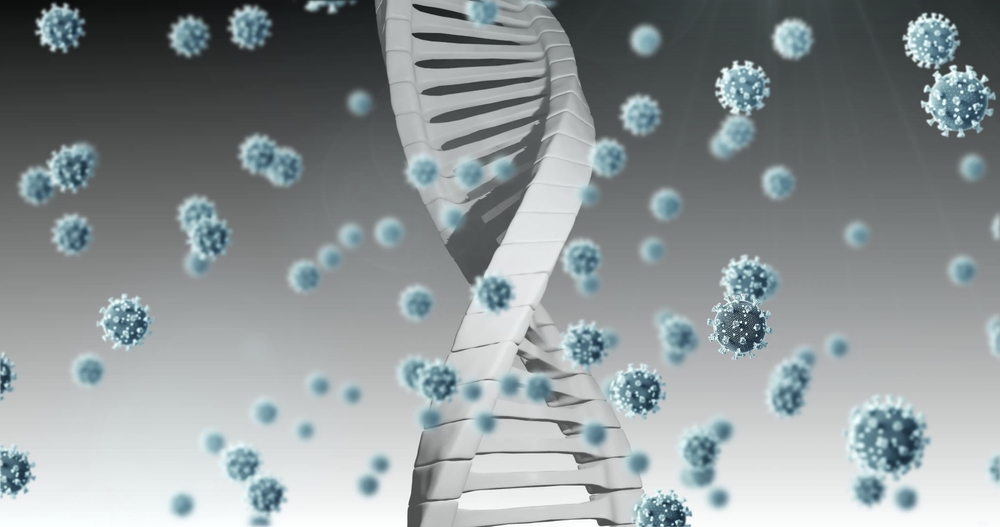
In traditional biology, the boundary separating living organisms from viruses has always been relatively clear. Living cells can sustain themselves and replicate, whereas viruses are generally considered non-living because they must hijack a host’s internal machinery to multiply. However, the discovery of Sukunaarchaeum challenges these strict categories and dances right on the edge of what it means to be alive.
This unusual microbe was discovered deep within the biological environment of a marine plankton called Citharistes regius. By living inside or clinging to this larger host, the microbe operates as an extreme parasite. It offers nothing in return for the shelter and biological resources it takes. Because it has discarded the genes necessary to generate energy or process nutrients, it is completely reliant on the plankton to sustain its basic existence.
Yet, what makes this microbe truly fascinating is the genetic material it chose to keep. Out of its 189 protein-coding genes, more than half are entirely dedicated to a single, specialized purpose: reading and copying its own DNA. Unlike viruses, which must steal their host’s replication tools, Sukunaarchaeum retained the ability to build its own essential proteins, including ribosomes. It is fully equipped to reproduce itself independently, even if it cannot feed itself.
This creates a fascinating evolutionary paradox. It possesses the basic structural architecture of a living cell, yet it behaves with the single-minded focus of a virus. As the research team noted in their findings, “This extreme specialization challenges our fundamental understanding of the minimal requirements for cellular life.”
The Mechanics of Extreme Downsizing
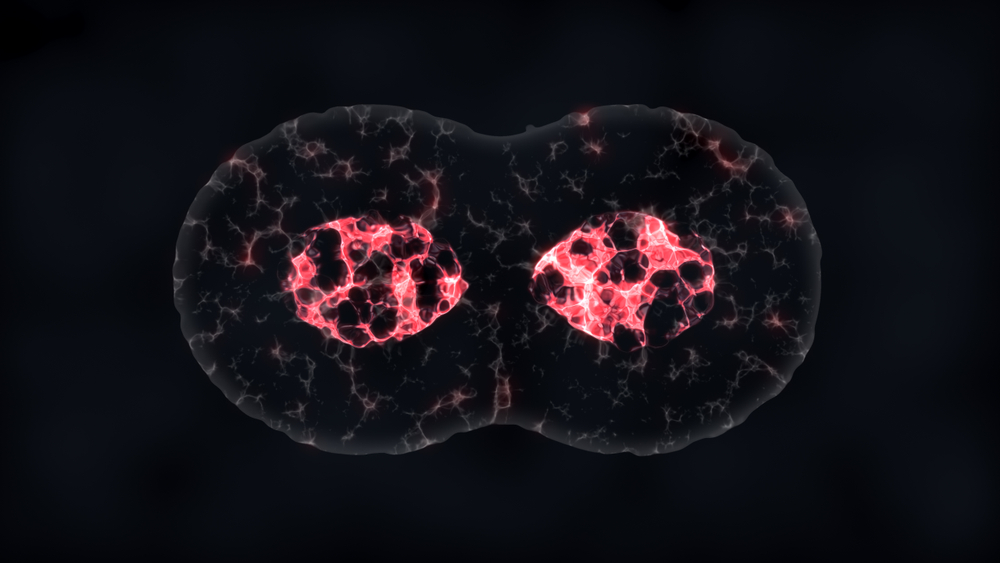
How does a living organism lose so much of its genetic identity? The answer lies in a biological process known as reductive evolution. When an organism takes up residence in a highly stable, nutrient-rich environment, such as the interior of a host cell, it no longer needs to work as hard to survive.
In the case of Sukunaarchaeum, the marine plankton host provided a constant supply of energy, carbohydrates, and vital nutrients. Over countless generations, the microbe’s own genetic pathways for producing these necessities became redundant. Evolution tends to favor efficiency, and maintaining unused genetic code is biologically expensive. Therefore, as mutations naturally occurred, the genes responsible for metabolism and nutrient synthesis were progressively lost and never replaced.
While reductive evolution is common among obligate parasites and symbiotic organisms, Sukunaarchaeum pushes this concept to its absolute limit. Even highly reduced symbiotic bacteria typically retain the ability to generate some energy or synthesize specific amino acids. In stark contrast, this newly discovered archaeon has completely abandoned these functions. The researchers who sequenced the organism describe it as “a viable cell seemingly stripped down to its replicative core” (Harada et al., 2025).
Redefining Biology and Future Exploration
The discovery of Sukunaarchaeum proves that the boundary separating cells from viruses is not a strict wall. Instead, it is a gradual transition. Finding an organism with just 238,000 base pairs operating inside common marine plankton reveals that fundamental biological classifications require an update. Nature routinely ignores rigid definitions.
This finding demonstrates a practical need to expand genomic exploration in marine environments. Traditional biological surveys often overlook symbiotic organisms living entirely inside other hosts. Funding advanced microbial sequencing and deep ocean research will allow scientists to locate more of these transitional species.
Protecting marine ecosystems goes beyond conserving visible wildlife. It secures the microscopic environments where these highly unique evolutionary processes occur. By investing in targeted microbial research, scientists can map the exact origins of viruses, understand the absolute minimum requirements for cellular life, and uncover the biological anomalies that are still waiting to be documented.
Source:
- Harada, R., Nishimura, Y., Nomura, M., Yabuki, A., Shiba, K., Inaba, K., Inagaki, Y., & Nakayama, T. (2025). A cellular entity retaining only its replicative core: Hidden archaeal lineage with an ultra-reduced genome. bioRxiv. https://doi.org/10.1101/2025.05.02.651781