
Your cart is currently empty!
Florida Woman Regains Her Sight After More Than Two Decades Of Blindness
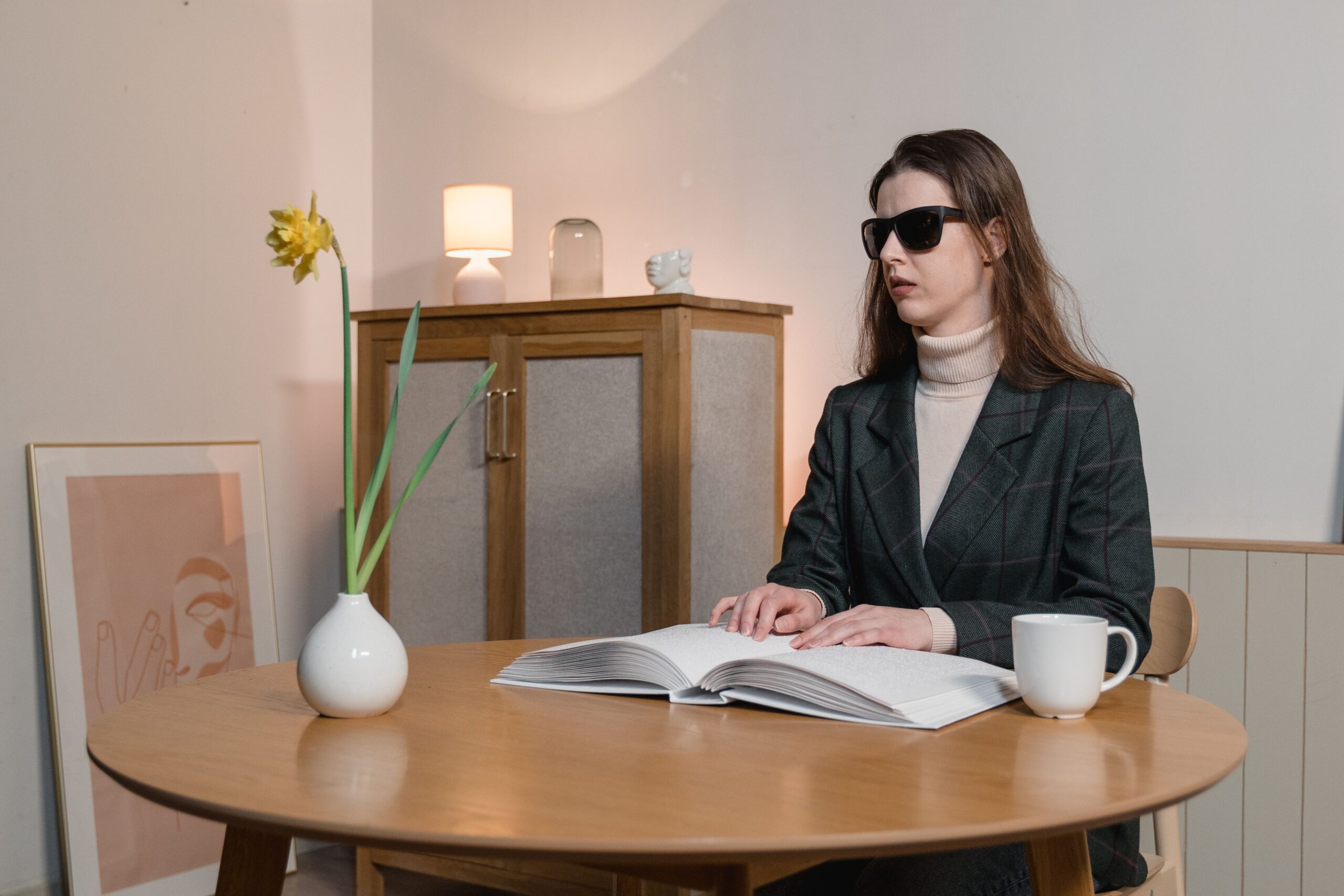
For more than 20 years, Mary Ann Franco lived in darkness.
Contents
show
The Florida woman had adapted to a life without sight after a devastating car accident left her legally blind. She learned how to keep moving forward, how to navigate a world she could no longer see, and how to find joy despite losing one of the senses most people take for granted.
Then something happened that left even her surgeon struggling for answers.
After undergoing what was supposed to be a routine spinal procedure, Franco opened her eyes and discovered she could see again.
What happened next would leave doctors baffled, reunite a grandmother with faces she had never seen, and spark conversations about one of the most extraordinary medical mysteries in recent memory.
A Tragic Accident Changed Everything
Mary Ann Franco’s life took a dramatic turn in the mid-1990s when she was involved in a serious car accident.
The crash left her with severe injuries and set off a chain of medical complications that would alter the course of her life. During treatment, Franco suffered a stroke, and the damage ultimately left her legally blind.
The loss was profound.
According to reports, Franco went from living a normal life to waking up in a world where she could no longer see the people, places, and everyday moments that most people rarely think twice about.
Years later, she recalled the experience in stark terms.
“Nothing. I couldn’t see anything. However hell felt, I felt like I was there,” Franco said when describing the aftermath of losing her vision.
For many people, such a life-changing injury would have been impossible to accept. Yet Franco found a way to adapt.
She pushed herself to keep going.
Instead of allowing the tragedy to define her future, she focused on rebuilding her life around her new reality.
Learning To Live Without Sight

The years that followed were filled with challenges most people can scarcely imagine.
Simple daily tasks became more complicated. Familiar environments became harder to navigate. Every activity required adjustment.
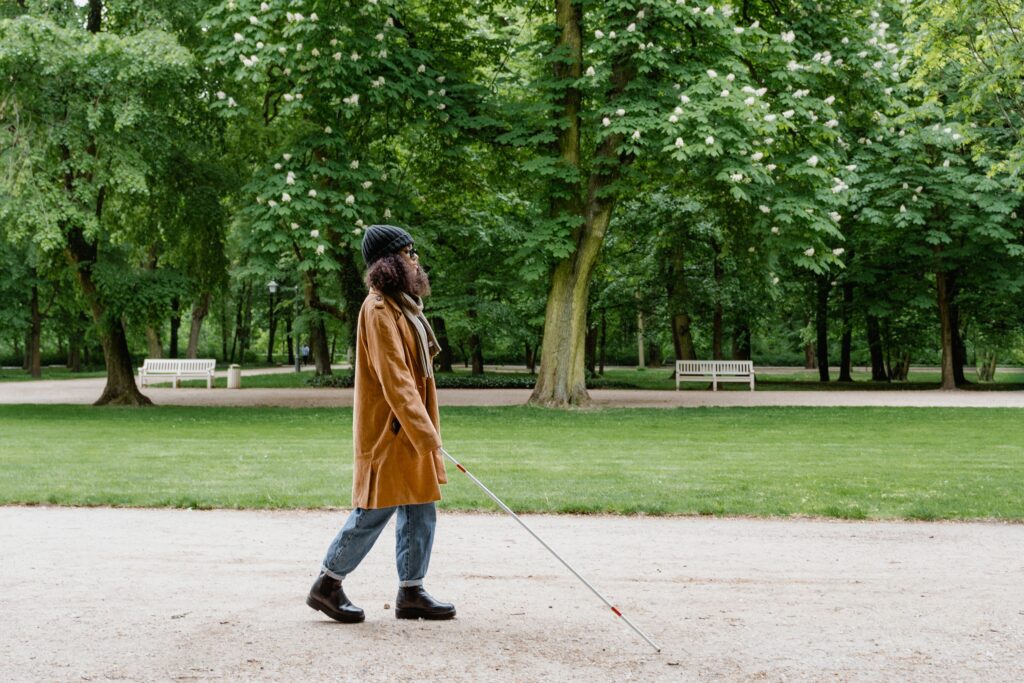
Still, Franco refused to let blindness stop her from living.
Friends and family described a woman determined to maintain her independence despite the obstacles in front of her.
Over time, she learned how to function in a world she could no longer see. She relied on touch, memory, and the support of loved ones.
Her family remained a central part of her life.
As grandchildren arrived and her family grew, Franco was able to hug them, talk with them, and share special moments. Yet there was one thing she could never do.
She could not see their faces.
Years passed.
Then decades.
Eventually, more than 20 years had gone by since the accident that had stolen her sight.
No one expected that to change.
A Simple Fall Led To Another Hospital Visit
The event that would transform Franco’s life began with something surprisingly ordinary.
She slipped and fell inside her Okeechobee, Florida, home.
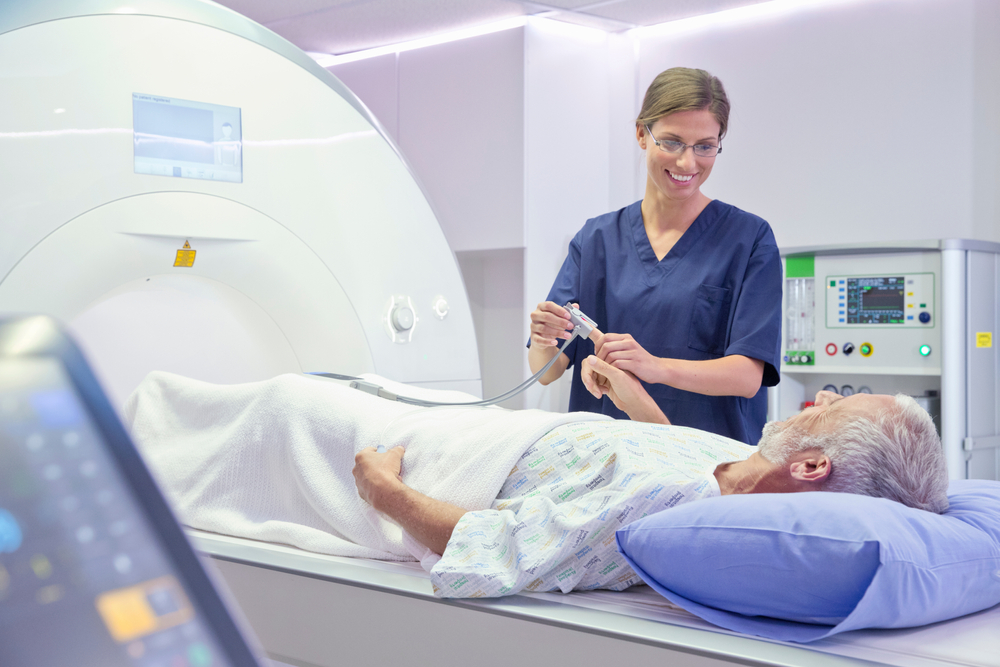
The fall left her with injuries that required medical attention. Doctors determined that she needed surgery to address problems involving her spine, neck, and arm pain.
There was nothing particularly unusual about the procedure itself.
Patients undergo spinal operations every day.
The goal was straightforward. Surgeons hoped to relieve pain and repair the physical damage caused by the fall.
No one entered the operating room expecting anything beyond that.
Franco certainly wasn’t anticipating a miracle.
Neither was her neurosurgeon, Dr. John Afshar.
At the time, restoring a patient’s vision was not part of the treatment plan.
In fact, it wasn’t even being discussed.
Yet something happened during that operation that would leave experienced medical professionals searching for explanations.
The Moment Everything Changed

When Franco woke up after surgery, she immediately noticed something different.
A nurse was nearby assisting her during recovery.
Franco looked at the nurse and made an observation that stunned everyone in the room.
“I said, ‘Lady, you with all that purple on you, come over, give me something for pain,’” she later recalled.
The comment left family members confused.
Her niece immediately questioned what she had just heard.
“What did you say, Mary?”
The reason for the surprise was obvious.
Franco wasn’t supposed to know what color the nurse was wearing.
She wasn’t supposed to be able to see the nurse at all.
But she could.
After more than two decades of blindness, her vision had suddenly returned.
The realization hit everyone almost immediately.
What had begun as a routine recovery had become something far more extraordinary.
Doctors, nurses, and family members found themselves witnessing an event that seemed impossible.
For Franco, the experience was overwhelming.
The world she had not seen in years was suddenly visible again.
A Medical Mystery With No Clear Answer
Cases involving unexpected recoveries often generate questions, and Franco’s story was no exception.
How could someone regain vision after more than two decades?
More importantly, how could a spinal operation accomplish something completely unrelated to eyesight?
Dr. John Afshar has been remarkably candid about the mystery.
“The restoration of Mary Ann Franco’s vision is a true miracle,” he said. “I really don’t have a scientific explanation for it.”
Coming from a neurosurgeon, those words carry significant weight.
Doctors are trained to search for causes, mechanisms, and evidence-based explanations. Yet even Afshar acknowledged that Franco’s recovery did not fit neatly into existing medical understanding.
That does not mean there are no theories.
Afshar proposed one possible explanation involving blood flow.
According to his hypothesis, the original accident may have caused an artery to become bent or compressed. If blood flow to parts of the brain responsible for vision had been restricted for years, it is possible that the spinal procedure somehow corrected the problem.
By restoring normal circulation, the surgery may have allowed visual function to return.
The theory is plausible.
The challenge is proving it.
Medical experts have not identified a definitive explanation, and the unusual circumstances continue to make Franco’s case difficult to fully understand.
The Detail That Makes The Story Even Stranger
As remarkable as the return of Franco’s vision was, another detail made the case even harder to explain.
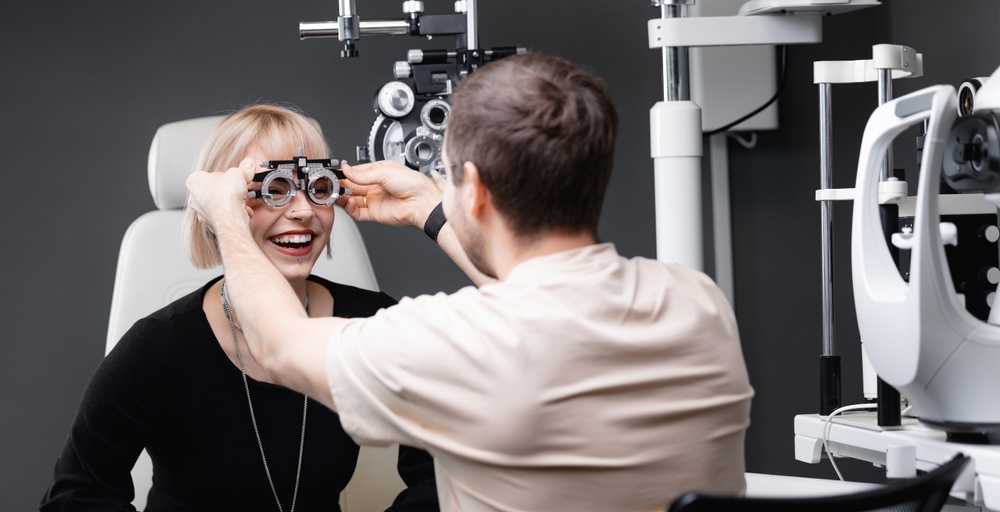
Before the accident that left her blind, Franco was reportedly colorblind.
That condition had existed long before the car crash.
Yet after surgery, she wasn’t simply seeing again.
She was seeing colors.
The distinction is important because it adds another layer of mystery to an already baffling case.
If Franco had merely regained the visual abilities she possessed before the accident, doctors might have had an easier time understanding what happened.
Instead, she appeared to have gained something she never had in the first place.
Soon after surgery, she began identifying colors around her.
Speaking to Dr. Afshar, she commented on the shades of clothing he was wearing.
“You’re in blue and brown, and your tie is kind of brownish,” she told him before joking, “Yeah, you’re so handsome.”
The moment brought laughter.
It also highlighted just how extraordinary the situation had become.
Medical mysteries are uncommon.
Medical mysteries that seem to improve a person’s vision beyond previous levels are even rarer.
Seeing Family For The First Time

For Franco, the scientific questions matter far less than the personal ones.
What she gained was not just eyesight.
She gained moments.
Some of those moments involved people she loved most.
Over the years, Franco had welcomed grandchildren and great-grandchildren into her life. She had hugged them, listened to their voices, and built relationships with them.
But she had never actually seen them.
Now she could.
One of the first things she looked forward to after recovering was spending time with family members whose faces had existed only in her imagination.
Her daughter flew in from Michigan to visit.
According to reports, Franco could hardly stop talking about how her daughter looked.
The experience represented something many families never have the opportunity to witness.
A mother seeing her child again after decades.
A grandmother seeing grandchildren for the first time.
A woman reconnecting visually with a world she thought she had lost forever.
Those moments transformed an already incredible medical story into a deeply human one.
Discovering Everyday Wonders Again

Some of the most powerful parts of Franco’s experience have nothing to do with medicine.
They involve ordinary sights.
Things most people barely notice.
A sunrise.
Trees moving in the wind.
The appearance of a beloved pet.
The shape of a family member’s smile.
For Franco, these details suddenly became extraordinary.
She spoke emotionally about watching sunlight stream through trees outside her home.
“In the mornings I get up and I look out and the sun is coming through the trees and the beams are coming down,” she said. “Oh God, it’s so wonderful to see.”
There is something striking about that reaction.
Many people spend their mornings rushing through routines without paying attention to the scenery outside their window.
Franco spent more than 20 years unable to see any of it.
When her vision returned, the simplest parts of daily life became sources of amazement.
She also looked forward to seeing her pets again.
Animals that had been familiar through touch and companionship now had visible faces.
After decades without sight, every ordinary moment carried fresh meaning.
Why Stories Like This Continue To Fascinate People
Cases like Franco’s capture attention because they exist at the intersection of science and mystery.
Medicine has achieved extraordinary things over the last century.
Doctors perform complex surgeries, replace organs, repair damaged hearts, and treat illnesses that were once fatal.
Yet stories occasionally emerge that resist easy explanation.
Franco’s recovery falls into that category.
Medical professionals can offer theories and possibilities, but certainty remains elusive.
That uncertainty often sparks public fascination.
People are naturally drawn to stories that challenge expectations.
A woman blind for more than two decades suddenly regaining her vision after spinal surgery sounds more like the plot of a movie than a real medical case.
Yet doctors, family members, and Franco herself all witnessed it happen.
The story also resonates because it touches on something universal.
Everyone has experienced taking ordinary things for granted.
Franco’s experience serves as a powerful reminder of how meaningful everyday moments can be when viewed through a different lens.
The ability to see a loved one’s face.
The colors of a sunset.
The sight of sunlight filtering through trees.
For Franco, these are no longer routine experiences.
They are gifts she thought she had lost forever.
A Future She Never Expected
Today, Franco continues embracing a future that once seemed impossible.
She has talked about plans to travel, spend time with family, and enjoy the freedom that comes with seeing again.
Some reports even noted her interest in pursuing a driver’s license.
For someone who spent more than 20 years navigating life without sight, those goals would have sounded unimaginable not long ago.
Her story remains one of the most unusual medical recoveries reported in recent years.
Doctors continue to debate what happened.
Researchers may never uncover a complete explanation.
Franco, however, seems comfortable with that uncertainty.
For her, the result matters more than the mystery.
Each morning brings another opportunity to see the world around her.
After more than two decades in darkness, that is something she never expected to experience again.
And for one Florida grandmother, the view is still worth celebrating every single day.