
Your cart is currently empty!
No U.S. State Has a Minimum Wage High Enough to Afford a Two-Bedroom Apartment
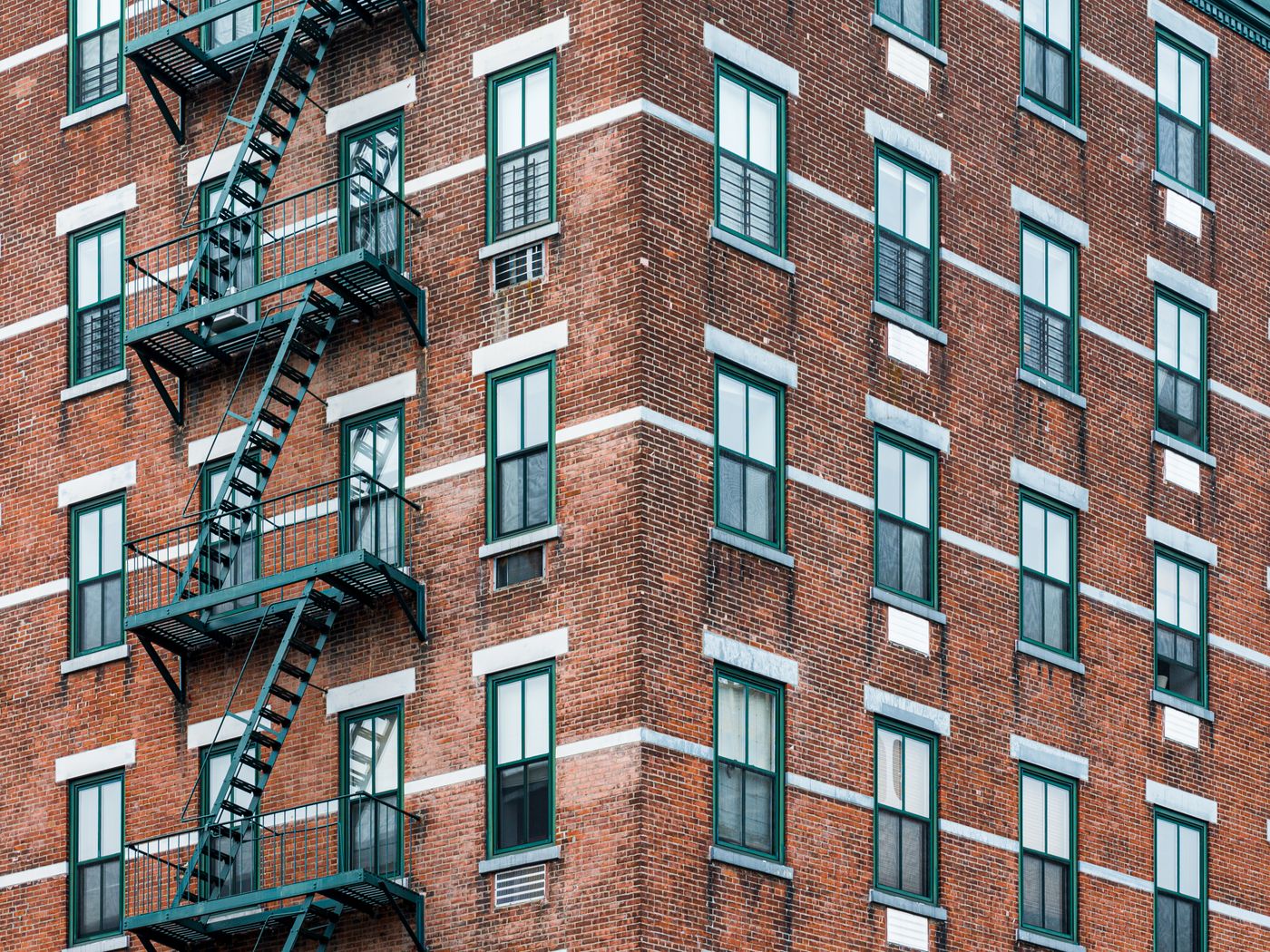
Imagine working forty hours a week, every week, and still not earning enough to rent a modest two-bedroom apartment anywhere in the country. Not in the most affordable rural county, not in the lowest-cost state, not anywhere. For workers earning the minimum wage, that is no longer a hypothetical. It is the reality across all fifty states.
Contents
show
The distance between what people earn at the bottom of the pay scale and what it costs to keep a roof overhead has grown so wide that the usual assumptions about hard work and self-sufficiency no longer hold. A long-running national analysis has put hard numbers to that gap, and those numbers reveal just how far out of reach stable housing has drifted for millions of American workers, along with what it would actually take to close the distance.
The Number That Defines The Gap
The findings come from Out of Reach 2025, the annual report published by the National Low Income Housing Coalition, which for more than 35 years has tracked the disparity between wages and the cost of rental housing in the United States. At the center of the report sits a single figure the coalition calls the Housing Wage, defined as the hourly wage a full-time worker must earn to afford a modest rental home without spending more than 30% of their income on housing, the widely accepted standard of affordability.
This year, that number tells a sobering story. The national Housing Wage stands at $33.63 per hour for a modest two-bedroom rental and $28.17 for a one-bedroom. Both figures are calculated against HUD’s Fair Market Rent, an estimate of what a family moving today can expect to pay for a modestly priced home in a given area.
Set against the federal minimum wage of $7.25 per hour, the gap is staggering. The two-bedroom Housing Wage is more than four times the federal minimum, a rate that has not changed since 2009 and that the report now characterizes as a poverty-level wage. For a worker earning that minimum, the income required to rent a basic apartment is not slightly out of reach. It is multiples away.
What It Would Actually Take To Close The Gap

Translating those hourly figures into hours worked makes the situation even harder to absorb. According to the report, the average minimum wage worker in the United States must work 116 hours per week to afford a two-bedroom rental at Fair Market Rent, which amounts to 2.9 full-time jobs held simultaneously. Affording a one-bedroom requires 97 hours per week, or 2.4 full-time jobs.
There are, in theory, almost no exceptions. A full-time minimum wage worker can afford a one-bedroom rental at Fair Market Rent in only 7% of counties nationwide, and every one of those counties sits in a state with a minimum wage higher than the federal floor. For the overwhelming majority of the country, a single full-time minimum wage job does not stretch far enough to cover even a smaller apartment, let alone a home with room for a family.
Why Raising The Minimum Wage Alone Won’t Fix It

It would be easy to conclude that the answer lies simply in raising the minimum wage, but the report complicates that assumption importantly. Across the country, 64 counties and municipalities have set their minimum wages higher than the federal or applicable state level, taking exactly the step that seems most obvious. Yet in every single one of those jurisdictions, the local minimum wage still falls short of the local Housing Wage for both one-bedroom and two-bedroom homes.
In other words, even the places that have acted to lift wages above the baseline have not managed to lift them far enough to make housing affordable. That detail reframes the crisis as something more structural than a question of wage floors alone. The cost of housing has outrun wages so thoroughly that incremental increases, while meaningful for workers, have not bridged the gap on their own.
The Crisis Reaches Far Beyond Minimum Wage Earners
For all the focus on the minimum wage, the affordability problem extends well above the lowest rungs of the pay scale. The report demonstrates that the wages needed to rent a modest home exceed not just the federal minimum but the median wages of workers in many of the most common occupations in the country. Home health aides, food service workers, and administrative assistants all tend to earn less than what a modest rental requires.
The breadth of the problem is captured in one striking statistic. Almost half of all U.S. workers earn less than the hourly wage required to afford a modest one-bedroom rental home. This is not a crisis confined to a small population of the lowest-paid. It reaches into the everyday workforce that keeps communities running, leaving a substantial share of working Americans unable to comfortably afford even the most basic rental on their own.
How Many Renters Are Already Stretched Too Thin

The consequences of this gap are already evident in the financial strain that millions of renters face. Nearly half of all U.S. renter households are cost-burdened, meaning they spend more than 30% of their income on housing. That translates to roughly 22.4 million households, of which 12 million are classified as severely cost-burdened, spending more than half of their income just to stay housed.
The burden falls hardest on those with the least. Among extremely low-income renters, 87% face some level of cost burden, and 75% face severe cost burden, compared with 49% and 26% of all renters, respectively. Behind those percentages are impossible daily choices. When housing consumes so large a share of income, renters are left unable to afford other necessities, and they remain at constant risk of housing instability, never far from the edge of losing the home they have.
A Closer Look At One State

To see how these national figures play out on the ground, North Carolina offers a useful example. The state’s 2025 Housing Wage is $27.14 per hour for a modest two-bedroom apartment, up from $25.21 the year before. Because North Carolina uses the federal minimum wage of $7.25, the math for a minimum wage worker there is brutal. Such a worker would need 3.7 full-time jobs, or 150 hours per week, to afford a two-bedroom apartment, and 3.3 full-time jobs, or 131 hours per week, to afford a one-bedroom.
The strain is not limited to the state’s cities, though the most populous regions run well above the statewide figure. In the Durham-Chapel Hill area, the Housing Wage reaches $36.00, in Charlotte-Concord-Gastonia it is $35.08, and in the Raleigh metro area it stands at $33.90. Even so, the affordability crisis reaches into the countryside as well. A minimum wage worker living in rural North Carolina would need to work, on average, more than 2.2 full-time jobs to afford a modest one-bedroom rental. As Stephanie Watkins-Cruz, the state’s Director of Housing Policy, framed it in response to the findings: “This report is a critical reminder that we cannot reduce the affordable housing crisis down to individual choice or supply alone. This report reminds us that wages are not keeping up with the cost of living and that more and more North Carolinians are experiencing the strain of cost-burden across our state.”
Rents Easing Isn’t Enough
A reasonable person might wonder whether recent reports of cooling rents offer any relief, and the answer the data provides is discouraging. While rents have stabilized and even slightly decreased in some housing markets, those minor declines are nowhere near large enough to help renters with the lowest or even average incomes remain stably housed.
The gap between wages and housing costs is simply too vast for small market shifts to bridge. A modest dip in rent does little for a worker who would need nearly three full-time jobs to afford an apartment in the first place. The structural distance between earnings and housing costs remains, regardless of whether the market ticks up or down in a given year.
Federal Housing Aid Is On The Chopping Block
Against this backdrop of need, the report highlights a looming threat to the programs that help keep the lowest-income renters housed. Federal housing assistance plays a central role in preventing evictions and homelessness, supporting the construction of affordable housing, preserving existing homes, and bridging the gap between what low-income renters can afford and what the market charges.
Yet the future of that assistance is uncertain. The president’s budget request for fiscal year 2026 proposes a 44% cut to HUD’s overall funding, a reduction the report describes as devastating. Under that proposal, rental assistance programs would be eliminated, five key programs would be consolidated into a single, restrictive State Rental Assistance Block Grant, and a two-year time limit would be imposed on assistance. The report further notes that the administration is expected to pursue regulations making it harder for families to obtain and keep HUD assistance, including burdensome work reporting requirements. These changes, the coalition warns, would arrive precisely when the need for housing support has rarely been greater.
A Crisis Of Dignity, Not Just Dollars

What emerges from Out of Reach 2025 is a portrait of a country where full-time work no longer guarantees a stable place to live, and where the conventional fixes, higher wages, and a cooling market, fall short of the scale of the problem. The report’s authors argue that the issue cannot be solved by any single lever, and that sustained federal investment remains essential to closing a gap that has grown beyond what individual workers can overcome on their own.
Renee Willis, the coalition’s President and CEO, placed the findings in human terms that reach beyond the spreadsheets. “Housing is more than just shelter, it is foundational to well-being and dignity,” Willis said. “This year’s Out of Reach report shows that, despite economic gains for some, low-income renters continue to face impossible choices between paying rent and meeting basic needs.”
For the millions of Americans caught in that gap, the report is less a collection of statistics than a description of daily life. The promise that a full-time job should be enough to afford a home has, for minimum wage workers, quietly disappeared in every corner of the country. Whether that promise can be restored, the coalition suggests, depends not on the market correcting itself but on choices yet to be made about how much the nation is willing to invest in keeping its people housed.
affordable housing, cost-burdened renters, Fair Market Rent, federal minimum wage, housing assistance, housing crisis, housing policy, Housing Wage, HUD, low-income renters, Minimum Wage, National Low Income Housing Coalition, NLIHC, North Carolina housing, Out of Reach 2025, rent affordability, rental housing, two-bedroom apartment, wage gap