
Your cart is currently empty!
Why Some Scientists Believe Humanity Could Vanish Within 17100 Years
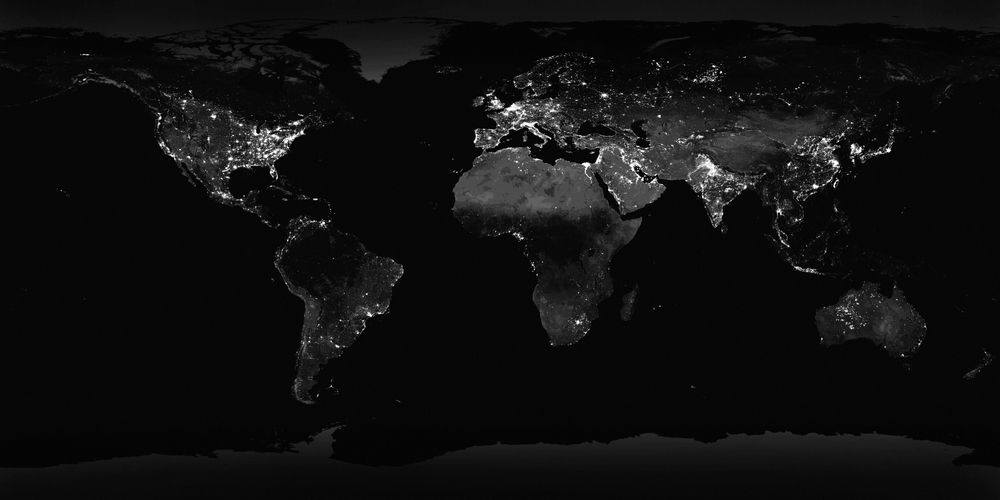
For centuries, people have tried to predict the end of humanity. Some looked to religion. Others looked to war, disease, or environmental collapse. Now, a controversial mathematical argument has once again sparked debate after scientists calculated a possible deadline for our species and claimed there is a 95 percent chance humanity will disappear within the next 17,100 years.
Contents
show
The prediction is not based on climate models, asteroid tracking, or any specific catastrophe. Instead, it comes from a statistical theory known as the Doomsday Argument, a thought experiment that has fascinated philosophers, physicists, and mathematicians for decades.
While supporters believe it offers a surprisingly powerful insight into humanity’s future, critics argue it oversimplifies one of the most complex questions imaginable. The debate touches everything from population growth and climate change to the possibility of colonizing other worlds.
The Theory That Tries To Predict Humanity’s End
The Doomsday Argument was first proposed by astrophysicist Brandon Carter in the 1980s. At its core is a simple but unsettling idea.
The theory begins by estimating how many humans have lived throughout history. Researchers place that figure at roughly 117 billion people.
From there, the argument assumes that any person alive today occupies a relatively random position in humanity’s timeline. In other words, you are not especially likely to be among the very first humans ever born, nor among the very last.
Supporters of the theory argue that if you assume your position is statistically ordinary, then the total number of humans who will ever exist is probably not vastly larger than the number who have already lived.
That assumption leads to a calculation suggesting that humanity’s total population across all of history will likely remain below about 2.34 trillion people.
Based on current birth rates, reaching that number would take approximately 17,100 more years.
According to the theory, there is therefore a 95 percent chance that humanity’s story ends before that threshold is crossed.
Why Supporters Think The Math Makes Sense

The reasoning behind the argument can seem confusing at first, but advocates often explain it using probability.
Imagine two boxes.
One contains ten numbered balls. The other contains 100,000 numbered balls.
If someone pulls out ball number four, most people would assume it came from the smaller box. The odds of randomly drawing such a low number are much higher there.
Supporters argue that humanity can be viewed in a similar way.
Every person who has ever lived can be assigned a theoretical birth rank.
If around 117 billion humans have already existed, then people alive today occupy positions somewhere around that number on the grand timeline of humanity.
Advocates say it would be statistically surprising if humanity eventually produced tens of trillions or even quadrillions of future people. Under that scenario, our current position would appear unusually early in the timeline.
Instead, the theory suggests we are more likely somewhere closer to the middle than the beginning.
That does not identify a specific cause of extinction. It merely proposes a statistical upper limit on how long humanity is likely to continue.
Supporters emphasize that the argument is not predicting an asteroid strike on a particular date. It is making a probability claim about the total size of humanity’s future population.
Climate Change Enters The Conversation
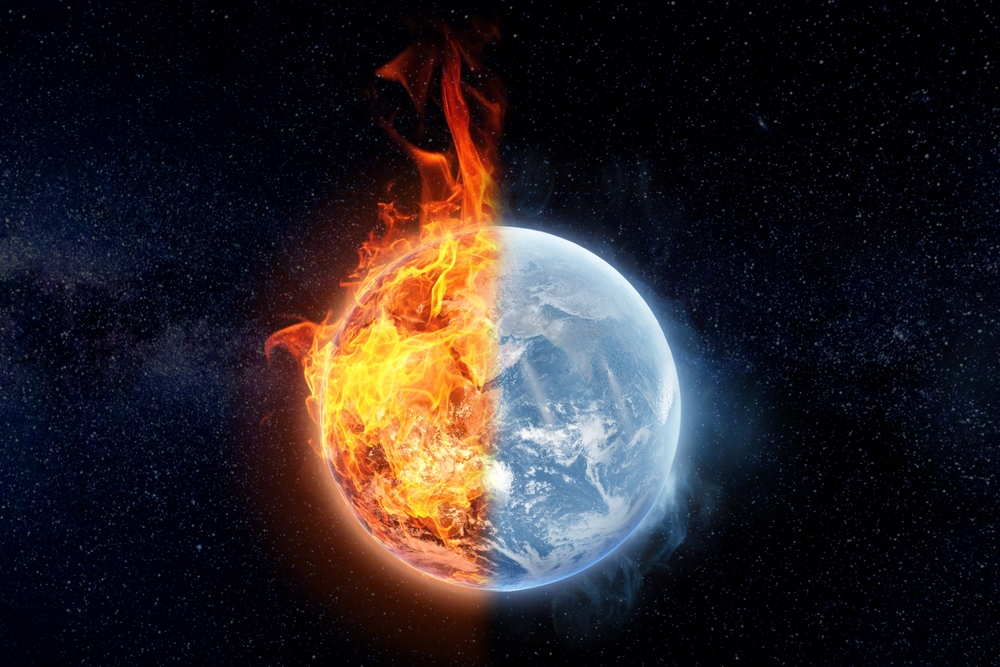
Although the Doomsday Argument itself does not identify a cause of extinction, discussions about the theory frequently lead to questions about real-world threats.
Climate change remains one of the most widely studied risks facing modern civilization.
Scientists have repeatedly warned that rising global temperatures can contribute to food insecurity, water shortages, biodiversity loss, sea level rise, and extreme weather events. Most climate researchers do not claim that climate change alone will necessarily cause human extinction, but many warn it could place enormous stress on societies around the world.
The Doomsday Argument often gains attention because it appears to provide a timeframe within which any major threat could eventually play out.
Potential risks frequently discussed include:
- Climate-driven environmental collapse
- Large-scale nuclear conflict
- Global pandemics
- Resource shortages
- Emerging technological risks
- Asteroid impacts
- Unknown future threats
The list highlights an important distinction.
The theory does not tell us which danger matters most. It simply argues that the total lifespan of humanity may be shorter than many people assume.
A New Population Study Added Another Twist

Interest in humanity’s future intensified after researchers from the University of Milan explored what could happen under severe environmental stress.
Their work examined hypothetical scenarios in which Earth’s carrying capacity suddenly dropped because of major environmental crises.
Under one deliberately extreme scenario, researchers imagined Earth’s sustainable population falling to around two billion people.
The results suggested that global population numbers could decline rapidly under such conditions.
The researchers stressed that their findings were not forecasts.
Instead, they described the exercise as an illustrative mathematical scenario designed to demonstrate how sensitive population systems can be to abrupt environmental changes.
That distinction is important.
Population projections often receive dramatic headlines, but scientists frequently use worst-case scenarios to test how systems respond under pressure.
The purpose is not necessarily to predict the future. It is to understand vulnerabilities before they become real-world problems.
Even so, the study highlighted a broader concern shared by many experts: modern civilization depends on environmental stability more than most people realize.
Agriculture, infrastructure, public health systems, and economic networks all rely on conditions that remain relatively predictable.
When those conditions change rapidly, societies can face serious challenges.
The Critics Who Say The Theory Falls Apart
For every supporter of the Doomsday Argument, there is usually a critic ready to challenge its assumptions.
Many scientists and philosophers argue that the theory relies on an overly simplistic view of humanity’s future.
The biggest criticism focuses on one central question.
Why should anyone assume that people alive today represent a random sample of all humans who will ever exist?
Critics argue that humanity is already living during a highly unusual period.
Global population growth, technological development, medical advances, and scientific knowledge have transformed civilization in ways that previous generations could scarcely imagine.
If today’s world is historically exceptional, then assumptions about randomness become much harder to justify.
Another major criticism involves technology.
The Doomsday Argument struggles when confronted with possibilities that radically change human civilization.
For example:
- Permanent settlements on other planets
- Vast increases in human lifespan
- Artificial intelligence transforming society
- Advanced resource production systems
- Space-based habitats supporting billions of people
Any of these developments could dramatically increase the number of future humans.
If humanity eventually spreads beyond Earth, the assumptions behind the calculation may no longer apply.
Many critics argue that predicting future population limits without accounting for technological breakthroughs is like trying to predict modern society while living in the Stone Age.
The Philosophical Puzzle Behind The Debate
Part of what makes the Doomsday Argument so enduring is that it sits at the intersection of mathematics, philosophy, and human psychology.
Unlike many scientific theories, it does not rely on observing a physical process.
Instead, it asks how people should reason about their own existence.
This has led to decades of debate among scholars.
Some argue that the logic is sound and that people instinctively reject it because its conclusion feels uncomfortable.
Others contend that the entire framework depends on questionable assumptions about probability and observation.
One of the key ideas behind the argument is the Copernican Principle.
This principle emerged from the realization that Earth is not the center of the universe.
Over time, scientists extended that concept to suggest humans generally should not assume they occupy a special position in nature.
The Doomsday Argument applies the same thinking to humanity’s timeline.
Supporters claim we should assume our position among all humans is relatively ordinary.
Critics respond that there is no clear reason why this assumption should hold when discussing intelligent civilizations that evolve over vast timescales.
The disagreement may sound abstract, but it has real implications for how people think about humanity’s future.
Humanity Has Been Wrong About The Future Before
History offers countless examples of experts making predictions that later proved inaccurate.
In the late nineteenth century, some analysts believed major cities would become buried beneath horse manure because transportation depended heavily on horses.
Few anticipated the rapid rise of automobiles.
In the twentieth century, many people expected nuclear power to become almost limitless and nearly free.
Reality turned out to be far more complicated.
Predictions about population have also shifted dramatically over time.
Some forecasts warned of unstoppable growth and widespread famine.
Others predicted sharp declines long before they occurred.
The lesson is not that forecasts are useless.
The lesson is that projecting thousands of years into the future involves enormous uncertainty.
When discussing humanity’s fate over millennia, even small errors in assumptions can produce radically different outcomes.
What The Argument Really Tells Us
Despite the dramatic headlines, the Doomsday Argument is not a countdown clock.
It does not tell us that humanity will vanish in exactly 17,100 years.
It does not identify a specific disaster.
And it certainly does not prove that civilization is doomed.
What it does provide is a provocative framework for thinking about probability.
Supporters see it as evidence that people often underestimate existential risks. Critics see it as an elegant mathematical exercise disconnected from reality.
Both sides agree on one thing.
Humanity’s future remains uncertain.
The challenges facing civilization are real, whether they involve climate change, geopolitical tensions, pandemics, or emerging technologies. At the same time, human history is filled with examples of adaptation, innovation, and resilience.
The next century may shape the next thousand years more than any statistical argument ever could.
For now, the Doomsday Argument remains less a prediction of extinction and more a reminder that the future is not guaranteed. Whether humanity lasts another thousand years or another million may depend far more on the choices people make than on any mathematical formula.