
Your cart is currently empty!
Fewer Gen Z Youth Are Identifying as Nonbinary
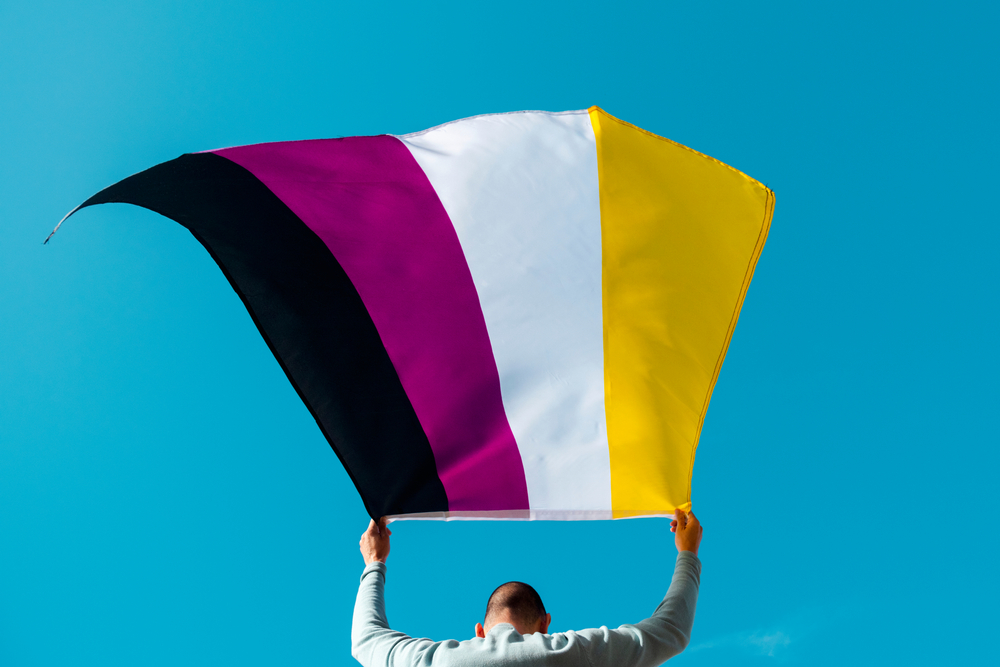
Gen Z fundamentally rewrote the modern dictionary on gender, turning fluid self-expression into a cultural baseline and pushing institutions worldwide to rethink the boxes they ask people to check. Yet, just as society at large has adapted to this new vocabulary, the very pioneers of the linguistic revolution appear to be quietly walking away from its most prominent labels.
Contents
show
A Changing Tide on College Campuses

It was not long ago that pronoun check-ins and identity statements felt like a nearly universal standard in college classrooms. The adoption of “they/them” pronouns and nonbinary labels went mainstream rapidly, championed by a generation deeply focused on expansive self-expression. Yet, recent data indicates a significant and somewhat surprising shift in how Generation Z navigates these identifiers today.
A 2025 report by political scientist Eric Kaufmann, published through the Center for Heterodox Social Science, reveals a sharp drop in the number of young people identifying outside the male-female binary. Drawing on extensive campus surveys, the findings provide a concrete look at this shift. Data from the Foundation for Individual Rights and Expression (FIRE)—which polled over 60,000 undergraduates nationwide—is particularly striking. In 2023, 6.8 percent of surveyed students identified as a gender other than male or female. By 2025, that figure had dropped to 3.6 percent, effectively halving in just two years.
This downward trend is mirrored consistently across the country, particularly within elite educational institutions. At Brown University, the percentage of students identifying as nonbinary fell from 5 percent in 2022 and 2023 to 2.6 percent in 2025. Similarly, at Phillips Academy Andover, the share of students identifying as neither male nor female crashed from 9.2 percent in 2023 to just 3 percent in that exact same two-year span.
Rather than indicating an erasure of these identities, the data points to a generational recalibration. “There’s been a slowdown in the adoption of new gender identities among young people,” Kaufmann noted in his analysis. “It may indicate a move toward stabilization after a period of rapid expansion.”
Colliding With the Culture War: The Rising Cost of Labels
While the numbers point to a clear decline in the use of the term “nonbinary,” the reasons behind this shift are far more complex than a simple change of heart. The data does not necessarily indicate that young people are abandoning their internal sense of self; rather, they are navigating an increasingly fraught social and political landscape. What was once a deeply personal journey of self-discovery has suddenly been thrust into the center of a national debate.
Gender identity has become one of the most volatile flashpoints in modern political discourse. According to Kaufmann’s analysis, this sharp drop in nonbinary identification is heavily influenced by political polarization and shifting cultural pressures. The reality is that identity does not exist in a vacuum. As Kaufmann notes, “We’re seeing identity formation collide with a culture war.”
For many Gen Z students, adopting a highly visible label carries a much heavier social and political weight today than it did just a few years ago. In environments where gender expression is fiercely debated in legislation, on social media, and in the news, publicly claiming a nonbinary identity can feel inherently risky. The initial era of rapid, open exploration has met the harsh reality of public scrutiny. Consequently, the use of these specific categories may be receding not because young people are becoming more traditional, but because the emotional and social cost of public identification has simply gotten too high.
A Shift in Language, Not a Reversal of Identity

If the data shows a sharp decline in the use of the nonbinary label, does that mean Generation Z is retreating to traditional, rigid gender norms? Experts caution that it is far too soon to interpret this drop as a cultural reversal. Instead, the evidence points to a broader, more nuanced evolution in vocabulary.
While the specific term “nonbinary” may be experiencing a downward trend, the underlying rejection of traditional gender constraints remains robust. To put the landscape into perspective, data from UCLA’s Williams Institute estimates that 2.8 million Americans currently identify as transgender, including more than 700,000 individuals under the age of 18. The community and its visibility are undeniably present. What is shifting, however, is how young people choose to articulate their lived experiences. The change lies in the language being used, rather than a sudden mass return to the strict male-female binary.
On many college campuses, students who once embraced the nonbinary label note that they are now leaning toward highly personal descriptors or, conversely, avoiding fixed categories altogether. For a generation that initially relied heavily on specific labels to carve out safe spaces and demand visibility, the need for a universally understood, easily digestible term may simply be waning. Instead of adopting a catch-all category, many are opting to exist fluidly without a definitive title.
As recent reporting on this trend noted, “The numbers have changed, but the idea of gender fluidity hasn’t gone anywhere.” For some young adults, stepping away from the nonbinary label is less about changing their internal sense of self, and more about alleviating the pressure to constantly categorize themselves for the understanding of others. Some describe this shift as language finally catching up to how they have always felt, while others note it is about “taking gender out of the spotlight and focusing on identity in broader ways.” Ultimately, discarding a label does not inherently erase the identity; for many, it removes the heavy burden of having to constantly define it.
A True Decline or a Demographic Plateau?
While the initial reports of a sudden drop in nonbinary identification have garnered significant attention, the scientific and data science communities are actively debating what these numbers actually represent. Is the adoption of these identities truly receding, or is the story within the data far more nuanced?
Eric Kaufmann’s analysis suggests that the downward trend is a genuine sociological reversal, driven by a combination of improving youth mental health and what he describes as a cultural “vibe shift.” In this view, the rapid expansion of nonbinary identification in the early 2020s was partly influenced by shifting social fashions. Kaufmann posits that as these labels become less culturally novel, fewer young people are feeling compelled to adopt them.
However, other researchers and organizations strongly caution against viewing this as a mass exodus, pointing to critical flaws in how these specific survey numbers are interpreted. Critics highlight that Kaufmann’s initial findings rely heavily on unweighted raw data from a select group of elite institutions and voluntary campus surveys. When statistical weights are applied to accurately represent the broader, national student body, a significantly different picture emerges.
According to analyses by the Society for Evidence-Based Gender Medicine (SEGM) and longitudinal data from the American College Health Association—which surveys tens of thousands of college students annually—identification outside the male-female binary is not crashing. Instead, it is plateauing. Their weighted findings suggest that transgender and nonbinary identification among undergraduate youth currently hovers between 4.7 and 6.7 percent, which technically marks an all-time high.
This presents a crucial scientific distinction for those observing generational trends: a stabilization in growth is entirely different from a decline. The exponential, year-over-year surge that defined the past decade of gender exploration has undeniably slowed down. Yet, instead of young people actively abandoning fluidity, the data indicates that this demographic has simply reached a natural stabilization point after a decade of unprecedented and rapid visibility.
The Future of Authentic Identity

The data surrounding Generation Z’s gender identity does not tell a story of retreat, but rather one of maturation. As the initial surge of visibility settles into a demographic plateau, young adults are navigating self-expression with a different set of priorities than they did just a few years ago. Stripped of the pressure to adopt highly politicized or socially rigid labels, many are choosing to exist independent of a specific, universally understood category. This transition away from the term “nonbinary” reflects a generation moving into a quieter, yet arguably more profound, era of self-acceptance.
Ultimately, fixating on fluctuating survey numbers risks missing the deeper human reality at play. Rather than expecting young people to continuously categorize themselves to fit shifting cultural or political frameworks, the broader societal focus must move toward creating environments where individual expression is respected without the prerequisite of a label. When the intense spotlight on terminology fades, what remains is a demographic redefining authenticity on its own terms—proving that a person’s identity does not need to be easily classified to be real.
Source:
- Kaufmann, Eric, The Decline of Trans and Queer Identity among Young Americans (October 10, 2025). Available at SSRN: https://ssrn.com/abstract=6433544 or http://dx.doi.org/10.2139/ssrn.6433544