
Your cart is currently empty!
Military Reinstates Flu Shots for Recruits as Air Force Outbreak Grows

Two months ago, the Pentagon told American troops that the annual flu shot was no longer mandatory, ending a requirement that had stood for eight decades. The message was one of personal freedom, that warriors could decide for themselves whether the vaccine served their interests. Then, at one of the military’s busiest training installations, recruits began falling ill in numbers that climbed by the day.
Contents
show
What started as a policy framed around individual choice has collided with the realities of a fast-spreading outbreak, and the military’s own services have responded in a way that speaks volumes. Quietly, and for their most vulnerable trainees, they have reversed course and started requiring the very vaccine the Defense Secretary had just made optional. The unfolding situation in San Antonio, including a recruit’s death now under investigation, has reopened a contentious debate about readiness, public health, and the consequences of dropping a mandate that dated to the end of World War II.
The Outbreak At Lackland Air Force Base
The center of the crisis is Lackland Air Force Base, the Air Force’s basic training hub and part of Joint Base San Antonio, where a flu outbreak has been steadily worsening. As of Wednesday, the cumulative number of cases linked to the outbreak had reached 275, according to sources familiar with the matter, up from 222 reported just the day before. That figure represented a sharp escalation from the 159 cases counted the previous week, a near-doubling in a matter of days.
The toll extended beyond case counts. Four people had been hospitalized as of Tuesday, double the two hospitalizations reported a week earlier. The Air Force confirmed the situation, describing in a statement a “localized influenza outbreak among trainees at Basic Military Training” over the preceding three weeks. Medical and public health officials, the service said, had implemented measures to isolate and treat symptomatic trainees while monitoring those who had been in close contact with sick members. Symptomatic recruits were receiving appropriate care, including antiviral medications such as Tamiflu, and would return to training once cleared by medical professionals.
A Policy Reversal Driven By The Outbreak
In direct response to the spreading illness, the military’s services have moved to reinstate the requirement they had only recently abandoned. The Army, Navy, and Air Force are once again mandating flu shots for basic trainees, acting under exceptions that the Pentagon granted to the optional-vaccine policy set by Defense Secretary Pete Hegseth.
For the Air Force, the goal is now comprehensive. The service intends to vaccinate every recruit in the current training class and to immunize all recruits arriving at the base going forward. The reversal extends beyond a single installation as well. The Army is preparing in the coming weeks to broaden its own requirement to troops deploying overseas, first responders, child care workers, health care personnel, prison staff, and soldiers taking part in certain large-scale training exercises. The shift is possible because, while the Pentagon sets overall policy, the individual services and their commanders retain broad discretion to adjust how those directives are carried out, whether to address safety concerns or to navigate bureaucratic obstacles.
The Decision That Ended An 80-Year Mandate
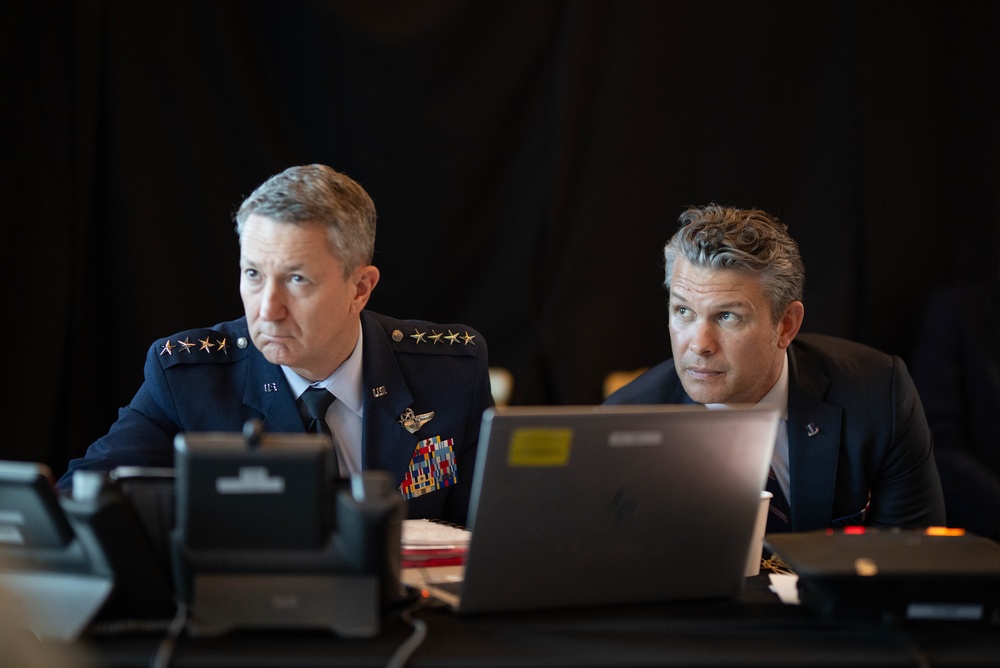
To understand the reversal, it helps to revisit the decision that prompted it. In April, Hegseth announced that the annual flu vaccine would be optional for all U.S. military personnel, both active and reserve, scrapping a requirement that had been in place since 1945 and breaking with longstanding public health directives. He characterized the previous policy as “overly broad and not rational,” and framed the new approach in terms of personal liberty.
“Our new policy is simple: If you, an American warrior entrusted to defend this nation, believe that the flu vaccine is in your best interest, then you are free to take it; you should. But we will not force you,” Hegseth said at the time.
The move was consistent with an earlier decision to make the COVID-19 vaccine optional, part of a broader rethinking of vaccine requirements across the force. At the time, the change drew criticism from public health voices, but its practical consequences would not become fully visible until an outbreak gave them shape.
A Sharp Drop In Vaccination Rates
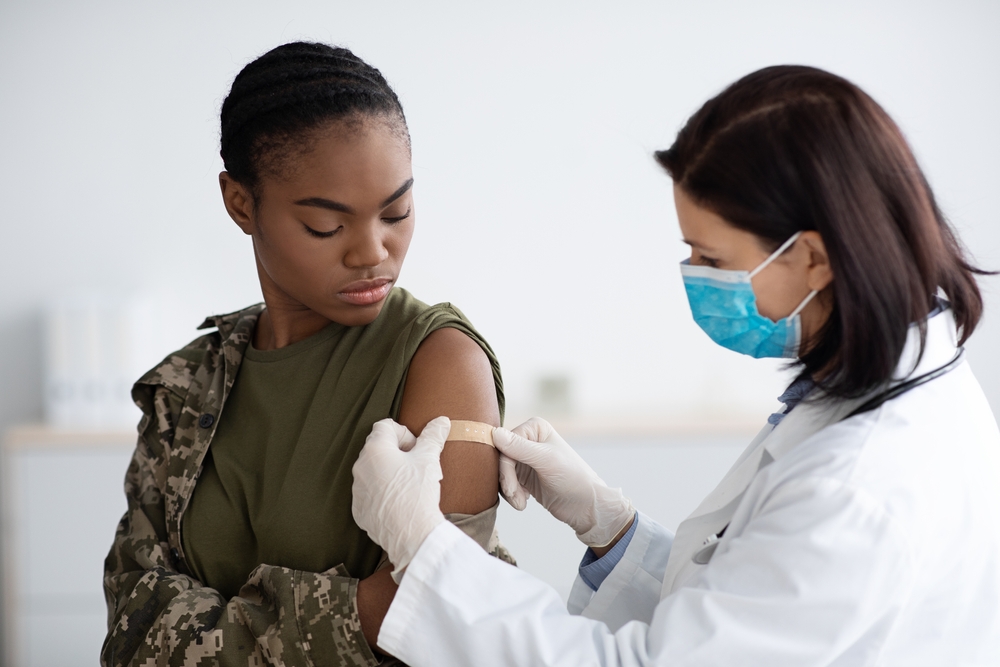
Those consequences showed up clearly in the numbers at Joint Base San Antonio. When the outbreak began in early June, only about 40% of new Air Force trainees at the base had received a flu vaccination, according to two sources familiar with the situation. That figure stood in stark contrast to the rate under the previous mandate, which had been nearly 100%.
The drop is among the most telling details of the entire episode. In the span of a few months, a population that had been almost universally vaccinated saw its protection fall by more than half, and it did so in precisely the kind of setting where infectious disease tends to thrive. Whether that decline directly caused the outbreak is a question the available facts do not definitively answer, but the timing and the magnitude of the change have placed it at the heart of the debate.
Why Basic Training Is A Tinderbox For Illness

The environment of basic training helps explain why a flu outbreak could spread so rapidly. Recruits live in extremely close quarters, sleeping in tightly packed bays, showering communally, and spending much of the day within arm’s reach of one another as they move through drills, instruction, and inspections. In such conditions, illness can move quickly through a population once a single trainee falls sick.
Compounding the risk, recruits are subjected to constant stress and exhaustion, conditions that can leave the immune system more vulnerable to infection. The evidence bears out their particular susceptibility. A study published last year by the Defense Health Agency found that across flu seasons from 2010-11 through 2023-24, the highest rate of influenza hospitalizations among active service members occurred among those under the age of 25, and especially among young recruits. The very population now affected by the outbreak is the one the data identifies as most at risk.
The Death Under Investigation
The most serious development at the base is the death of a recruit, though significant uncertainty surrounds it. Keon McDaniel was in his sixth week of basic training when he experienced a medical emergency on June 12, according to the Air Force. He was transported to Brooke Army Medical Center, where he subsequently passed away.
The cause of his death has not been determined. The Air Force says the medical emergency is currently under investigation and that a comprehensive medical review is being conducted to establish the facts. Crucially, it remains unclear whether his death is connected to the flu outbreak at all, and no link has been established. The case also draws attention to the limits of pre-enlistment screening, which relies largely on a recruit’s medical history and a relatively limited clinical review, meaning underlying conditions are not always caught before service begins. Until the review is complete, the circumstances of McDaniel’s death remain an open question rather than a confirmed part of the outbreak.
The Pentagon’s Justification For The Exceptions
The Pentagon has framed the reinstated requirements not as a retreat but as a deliberate, risk-based adjustment. Chief Pentagon spokesman Sean Parnell confirmed that the Defense Department recently granted exceptions to the optional-vaccine policy for the Army, Navy, Air Force, the National Security Agency, and the Defense Health Agency, issued through the Under Secretary of Defense for Personnel and Readiness.
“The decisions were based upon thorough risk assessments and are designed to maximize operational readiness, lethality, and force generation, while safeguarding at-risk populations,” Parnell said, adding that the services and agencies were responsible for implementing the exceptions and that the department remained committed to the health and readiness of its personnel.
In this framing, the renewed requirements are an intended feature of the policy rather than a contradiction of it, a built-in mechanism allowing the services to mandate vaccination where the risk justifies it. The exceptions, by this account, reflect the system working as designed rather than an admission that the original change was a mistake.
Critics Say The Outbreak Was Predictable

Not everyone accepts that interpretation, and the outbreak has drawn pointed criticism from some quarters. Rep. Joaquin Castro, whose district covers about half of San Antonio, including Lackland Air Force Base, faulted Hegseth’s policy directly in a series of social media posts.
“After Secretary Hegseth scrapped the military’s flu vaccine mandate, it was only a matter of time before an outbreak occurred,” Castro wrote on X. He called it “a reckless decision that put troops in harm’s way and undermined our military readiness,” and in a separate post confirmed that the Air Force had told his office there were 222 cases at the base, adding that “we need answers.”
The concern is not confined to one lawmaker. Public health specialists had warned that ending the vaccination mandate could leave military members exposed to unnecessary complications from the flu, and they have voiced fears that severe cases will continue to climb in subsequent flu seasons if preventive vaccinations are not provided to those most at risk. These are, it should be noted, the arguments of the policy’s critics, offered amid an evolving situation whose full causes have yet to be officially established.
Why The Military Mandated Flu Shots In The First Place
The flu requirement that Hegseth ended was not an arbitrary bureaucratic holdover but a policy with deep historical roots. The vaccine has been mandatory for the military since 1945, at the close of World War II, tied partly to the threat of biological warfare by rival nations and to the memory of the devastation the 1918-1920 flu pandemic inflicted on American troops. During that pandemic, an estimated 20% to 40% of Army and Navy personnel fell ill, and more than 26,000 U.S. soldiers died, according to a 2022 analysis from Wright State University and the U.S. Air Force.
The history also contains a cautionary parallel. The mandate was briefly withdrawn in 1949 after researchers noticed the vaccine’s effectiveness fading, a phenomenon later traced to abrupt and major changes in the flu virus. Once those changes became clearer and more manageable, the mandate was reinstated in the early 1950s. In the decades since, military compliance has run notably high, with vaccination rates among military health care personnel exceeding 95% in past years, compared with less than 75% among their civilian counterparts.
A Situation Still Unfolding
The flu vaccine is currently recommended for everyone over the age of six months, and those who live in group settings face a heightened risk of both acquiring and transmitting infectious disease, a description that fits the crowded bays of basic training almost exactly. The speed with which the services moved to restore the requirement for their recruits suggests they recognized that danger acutely, even as the optional policy remains in place for the broader force.
For now, much remains unresolved. The case count at Lackland continued to climb, the investigation into Keon McDaniel’s death was ongoing, and the Air Force did not immediately respond to requests for specifics about the scope of the outbreak. The larger question lingering over the episode is how the optional-vaccine policy will fare across future flu seasons, and whether the exceptions now being carved out for the most vulnerable will prove sufficient. What began as a debate over individual choice has become, at least in San Antonio, a test of how that choice plays out when illness takes hold in close quarters.
Air Force recruits, basic training, Defense Department, flu outbreak, Flu Vaccine, influenza, Joaquin Castro, Joint Base San Antonio, Keon McDaniel, Lackland Air Force Base, military flu shots, military readiness, military vaccination policy, Pentagon, Pete Hegseth, public health, recruit health, US military, vaccination rates, vaccine mandate