
Your cart is currently empty!
Supreme Court Sides With Monsanto, Shielding Roundup From State Cancer Suits
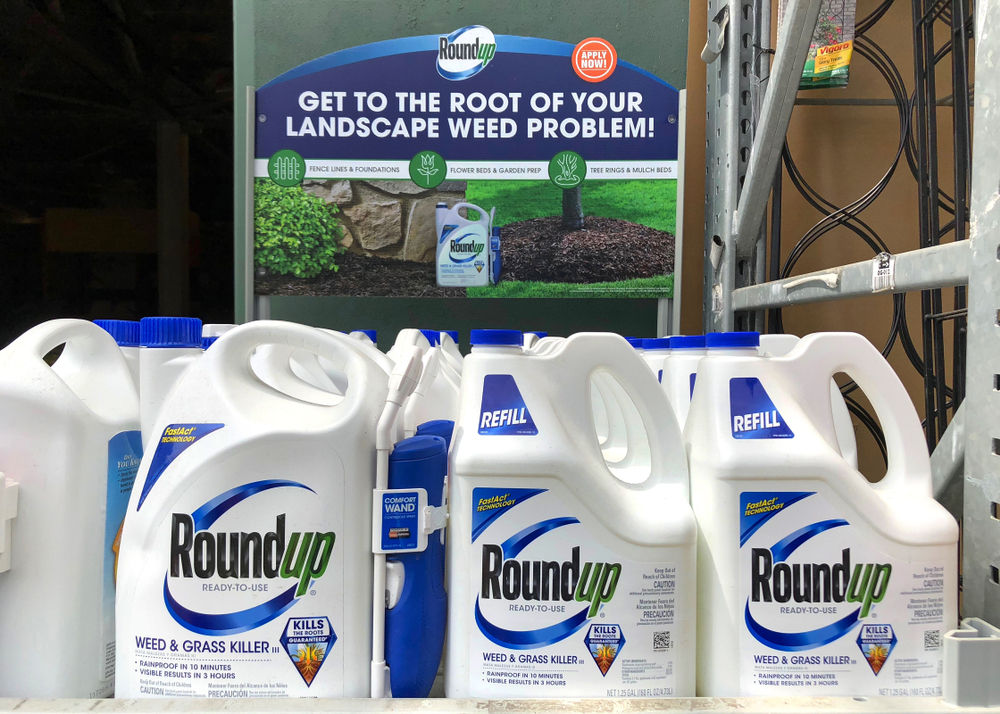
It began with one man, a Missouri gardener who spent two decades killing weeds in neighborhood parks and later came to believe the work had given him cancer. His lawsuit, and the modest jury award that followed, might have remained a single case among many. Instead it traveled all the way to the nation’s highest court, where the justices used it to settle a question that hangs over more than 100,000 lawsuits and one of the most widely used products on the planet.
Contents
show
On Thursday, the Supreme Court delivered its answer, and it landed as a sweeping victory for the company behind Roundup. The decision reshapes whether ordinary Americans can turn to their state courts to hold a chemical giant accountable, and it exposed political fault lines that cut straight through the administration that championed it. For the tens of thousands of people who say the weedkiller made them sick, the ruling represents something closer to a closed door.
What The Court Decided
In a 7-2 decision in the case of Monsanto Co. v. Durnell, the Supreme Court ruled that Monsanto cannot be held liable under state law for failing to warn consumers about the alleged cancer risks of Roundup on its label. The justices found that a federal law governing the sale and labeling of pesticides bars such lawsuits from proceeding in state courts, and on that basis they overturned a Missouri jury verdict that had awarded a man named John Durnell $1.25 million.
The financial markets registered the significance almost immediately. Shares of Bayer, the German company that owns Roundup, jumped roughly 16% in the wake of the ruling, a sharp rebound for a business that had spent years weighed down by the litigation. After nearly a decade of legal battles and some multibillion-dollar verdicts, the decision handed the company the clarity it had long sought, and potentially a way to bring the sprawling fight toward a close.
The Legal Question At The Heart Of The Case
To understand the ruling, it helps to understand the law at its center, a measure called the Federal Insecticide, Fungicide, and Rodenticide Act, known as FIFRA, which Congress enacted in 1947. The law establishes a single national framework for how pesticides are labeled, and crucially, it bars individual states from imposing labeling requirements that differ from or add to the federal ones. The goal is uniformity, one standard rather than fifty.
Layered onto that framework is the role of the Environmental Protection Agency, which for decades has evaluated whether glyphosate, the active ingredient in Roundup, poses health risks including cancer. The agency has repeatedly deemed the product safe to use as directed and has never required a cancer warning on its label. That set up the question the justices had to resolve: could a lawsuit brought under state law force Monsanto to add a warning that the federal regulator had specifically declined to mandate?
The Majority’s Reasoning
Writing for the majority, Justice Brett Kavanaugh concluded that it could not. Because the EPA had determined glyphosate does not cause cancer and had not required any warning, he reasoned, federal law preempts Durnell’s claim. To rule otherwise would force the company to add a cancer warning to a label that federal law simultaneously requires it to use without one, an impossible contradiction.
“With respect to pesticide labels, FIFRA demands ‘[u]niformity’ and expressly preempts state labeling requirements that are ‘in addition to’ or ‘different from’ federal labeling requirements,” Kavanaugh wrote, adding that state tort law may not impose labeling demands beyond what the federal statute requires.
What made the majority notable was its composition, which scrambled the court’s usual ideological lines. Kavanaugh was joined not only by Chief Justice John Roberts and fellow conservatives Samuel Alito, Clarence Thomas, and Amy Coney Barrett, but also by liberal Justices Sonia Sotomayor and Elena Kagan, an alignment that defied any simple partisan reading of the outcome.
Why Two Justices Sharply Disagreed
The two dissenting justices made for an equally unusual pairing. Liberal Justice Ketanji Brown Jackson, joined by conservative Justice Neil Gorsuch, argued that the majority had misread the relationship between state and federal law. In her view, Durnell’s claim did not impose requirements different from FIFRA’s mandates but rather requirements equivalent to them, mirroring the federal law’s own prohibition on misbranding, and therefore should not have been preempted at all.
Jackson did not soften her assessment of the decision. She called the ruling “remarkable and regrettable, for it unjustifiably closes the courthouse doors to state tort plaintiffs like Durnell,” and she pointed out that the majority had broken with what she described as the near-unanimous view of the many state and federal courts that had previously rejected this very preemption argument. The majority, she suggested, should have joined that chorus rather than departing from it.
The Man Behind The Case
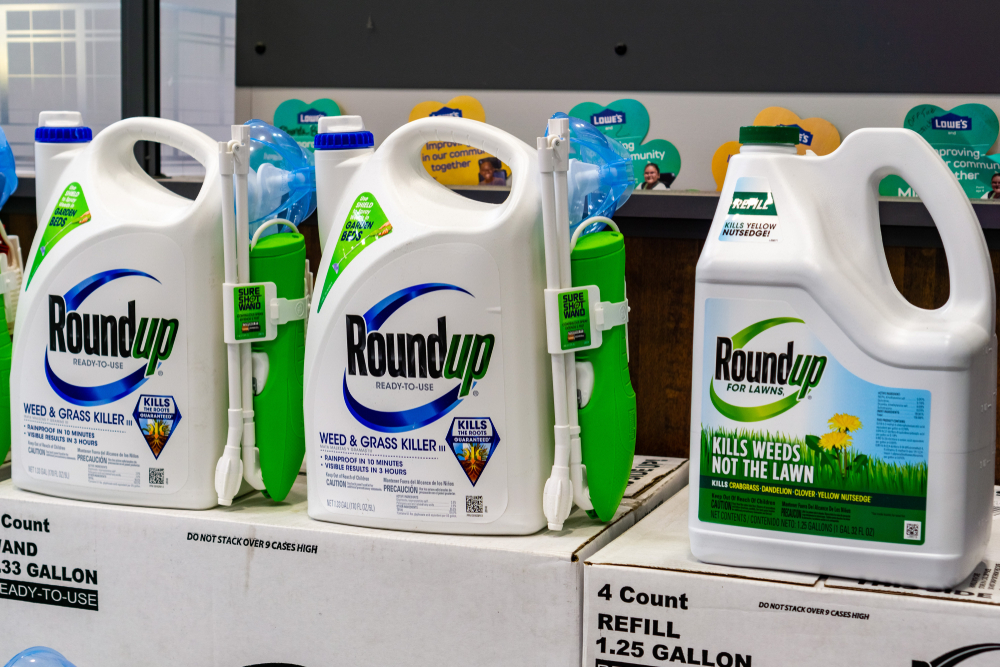
Behind the dense legal arguments stood a real person with a serious illness. John Durnell, a gardener from Missouri, filed his lawsuit against Monsanto in state court in 2019, and his story is a thread that runs through the entire dispute. For about 20 years, beginning in 1996, he served as the “spray guy” for a neighborhood association in St. Louis, killing weeds at local parks, often without protective equipment, according to court papers.
He was later diagnosed with non-Hodgkin lymphoma, a rare and often aggressive cancer that originates in the white blood cells, and he attributed the disease to his long exposure to Roundup. A jury found his argument persuasive, siding with him in 2023 and awarding the $1.25 million in damages that the Supreme Court has now erased. A state appeals court upheld that verdict in 2025, and Missouri’s supreme court declined to review it, leaving the jury’s conclusion intact until the nation’s highest court stepped in. Durnell is just one of more than 100,000 people across the country who have brought similar claims.
The Science Dispute Behind The Lawsuits
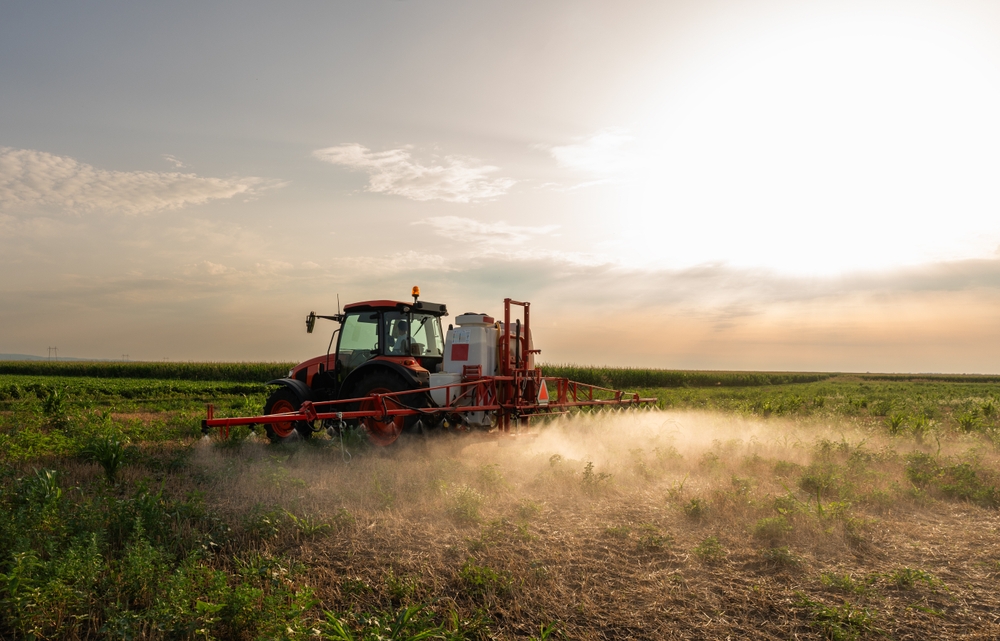
The wave of litigation did not emerge from nowhere, and at its root lies a genuine scientific disagreement between two respected bodies. In 2015, a working group of the International Agency for Research on Cancer, part of the World Health Organization, classified glyphosate as “probably carcinogenic to humans.” That determination opened the floodgates, prompting thousands of plaintiffs to argue that their use of Roundup had caused their cancers.
The EPA, however, reached a different conclusion. After conducting its own examinations of glyphosate’s carcinogenic potential in the wake of the IARC finding, the agency reported the “strongest support” for classifying the chemical as not likely to be carcinogenic to humans. In 2019 and 2020 it concluded that a cancer warning was not warranted, and it has continued to approve glyphosate product labels without one. The two findings sit in direct tension, and the underlying question of whether glyphosate causes cancer remains genuinely contested, a dispute the courts have never definitively resolved.
What It Means For The Flood Of Lawsuits

Whatever the science, the legal consequences of Thursday’s decision are far-reaching. The ruling is expected to block thousands of failure-to-warn claims, which formed the backbone of the vast majority of the more than 60,000 Roundup cases working through the courts. Cory Andrews, general counsel of the Washington Legal Foundation, a free-market group that supported Bayer, described the decision as undercutting the central legal theory that had driven those cases, calling it the easiest and most potent way plaintiffs had to sue the company, now effectively gone.
The door is not entirely shut. Legal experts noted that people might still be able to sue over other issues, such as manufacturing defects. However, such claims were never easy to win and have now become considerably harder to win. Running parallel to the court fight is a proposed settlement that Bayer announced in February, a $7.25 billion plan to resolve tens of thousands of current and future claims, which still requires approval from a Missouri court. Under the proposal, Monsanto would make annual payments for up to 21 years, though the company has said nearly $1 billion in claims fall outside the deal.
Bayer Declares A New Era
For Bayer, the ruling marks a potential turning point in a saga that has dogged the company since it acquired Roundup as part of its $63 billion purchase of Monsanto in 2018. The litigation had taken a brutal toll, with the company’s shares down more than 50% since the acquisition before Thursday’s gains. Bayer welcomed the decision as good for farmers, for science, and for industries that depend on regulatory clarity, and its leadership signaled a desire to move on.
CEO Bill Anderson framed the moment as a long-overdue resolution. “This litigation has enormous costs for the company and has impacted public trust. The decision brings overdue justice on an issue that should have been clarified much earlier. It’s time to put it behind us,” he said. Investors largely shared that sense of a chapter closing. Union Investment fund manager Markus Manns called the ruling a significant milestone and said the company, a decade after the Monsanto acquisition, was entering a new era, even as he acknowledged that future lawsuits were not entirely off the table. The company had already removed glyphosate from the consumer version of Roundup amid the torrent of litigation.
A Disaster For Public Health, Critics Say

Not everyone saw vindication in the ruling, and environmental and public health advocates reacted with dismay. They argued that the decision would slam the courthouse doors on countless people who believe pesticides and the companies that make them have harmed their health, leaving them without recourse.
Tarah Heinzen, legal director at the advocacy group Food and Water Watch, condemned the outcome in blunt terms, saying the Supreme Court had once again sided with big business over people and the environment and calling the ruling a disaster for public health. Others framed the stakes more broadly. Ken Cook, president of the Environmental Working Group, argued that the case was never really about a single company or a single chemical, but about whether states retain the authority to provide stronger protections for their residents when federal regulations fall short, and whether ordinary Americans can hold powerful corporations accountable. To these critics, the decision represented a fundamental narrowing of that power.
The Unusual Political Fault Lines
Perhaps the most surprising dimension of the case lies in its politics, which scrambled ordinary alliances. The Trump administration backed Monsanto, with the Justice Department arguing that federal law assigns the EPA, rather than state juries, the responsibility for deciding whether pesticide warnings are needed to protect public health. Yet that position put the administration at odds with the Make America Healthy Again movement, a vocal part of the president’s political base that wants to rein in pesticide use and felt betrayed by the embrace of glyphosate.
The contradictions run deep. The current Secretary of Health and Human Services, Robert F. Kennedy Jr., a leading figure in that movement, had himself once won a similar Roundup case on behalf of a plaintiff in 2018. President Trump, meanwhile, has pulled firmly in the opposite direction, signing an executive order in February aimed at boosting production of glyphosate-based herbicides, warning that limited access to the chemical threatened the nation’s agricultural productivity and food system. The backlash from MAHA activists was immediate and furious. Kelly Ryerson, an advocate who posts under the moniker “The Glyphosate Girl,” called the ruling historic in its harm and vowed that voters would learn exactly how it had come to pass, a sign of the genuine rift the case has opened within the president’s coalition.
Where The Roundup Fight Goes From Here
The reach of Thursday’s decision extends well beyond a single weedkiller. By affirming that federal pesticide regulation can preempt state-law claims, the ruling reshapes the broader question of whether consumers can use their own state courts to challenge federally approved products, a principle with implications for other regulated industries. The immediate next chapter will play out in Missouri, where the fate of Bayer’s proposed multibillion-dollar settlement is expected to come before a court around July, potentially bringing the long litigation saga closer to a definitive end.
What the decision cannot resolve is the deeper tension it leaves behind. On one side stands the authority of federal regulators and a company that now claims full vindication; on the other stand the powers of individual states to protect their residents and the tens of thousands of plaintiffs who remain convinced they were harmed. The Supreme Court has settled the narrow legal question of where these lawsuits can be brought, but the larger argument over glyphosate, accountability, and who gets to decide what warnings a product must carry is far from over.