
Your cart is currently empty!
DeSantis Says Florida Will Have Cut Spending Four Straight Years as He Signs Tax Bills
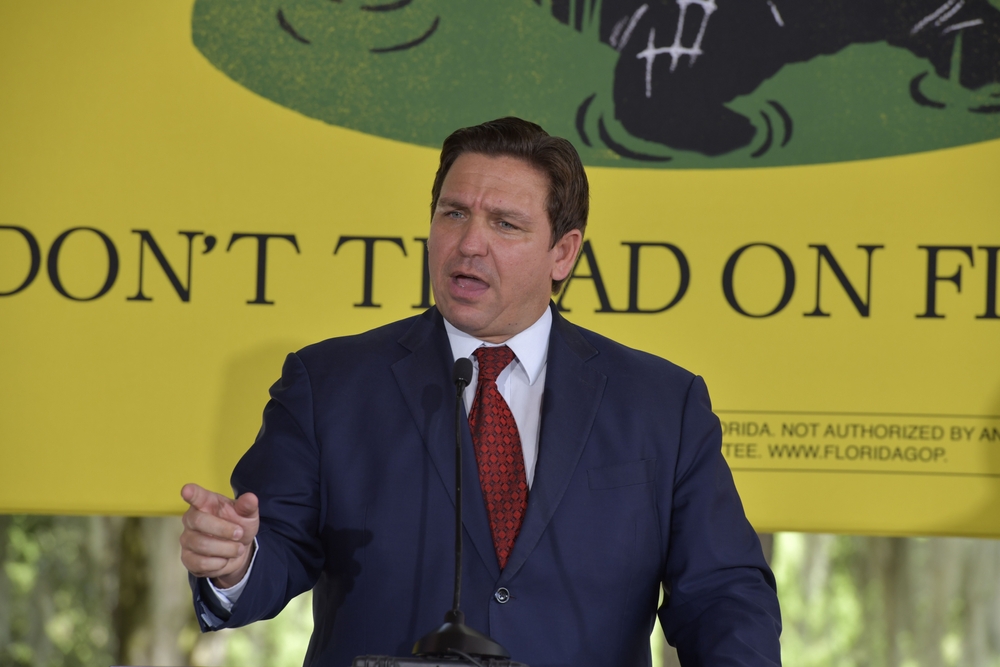
Standing in Bradenton with a state budget waiting on his desk, Governor Ron DeSantis laid claim to a record he says sets Florida apart. Once he finishes reviewing that budget and applies his veto pen, he told the audience, the state will have done something for the fourth year running that few governments manage even once. The assertion came not in isolation but as the centerpiece of a larger campaign, one that has pitted the governor against Florida’s own cities and counties.
Contents
show
What DeSantis was really doing in Bradenton went beyond touting a spending streak. He was signing two pieces of legislation aimed directly at local governments, opening a fresh front in a fight over property taxes that is building toward a consequential vote in November. Behind the governor’s confident framing lies a genuine dispute over money, services, and who gets to decide how much government should cost, a dispute that local officials and his political opponents see very differently than he does.
DeSantis’s Four-Year Spending Claim
At the June 24 bill-signing event, DeSantis pointed to the 2026-27 fiscal year budget currently under his review and made his central boast. After he finishes applying his vetoes, he said, the budget will mark the fourth consecutive year that Florida has reduced spending at the state level. He framed this as evidence of discipline achieved against real headwinds, noting that the leaner budget comes despite both inflation and a growing population, pressures that ordinarily push government spending upward rather than down.
The budget at the heart of the claim is a substantial one, totaling $114.5 billion, and DeSantis has vowed to trim it further before signing off. It is worth noting that the streak he describes remains, for the moment, prospective rather than complete. The reduction depends on vetoes he has not yet made to a budget still sitting on his desk, which is why his own phrasing pointed to what the final document “will represent” rather than what it already does. The claim, in other words, is his characterization of a process still underway.
The Two Bills He Signed
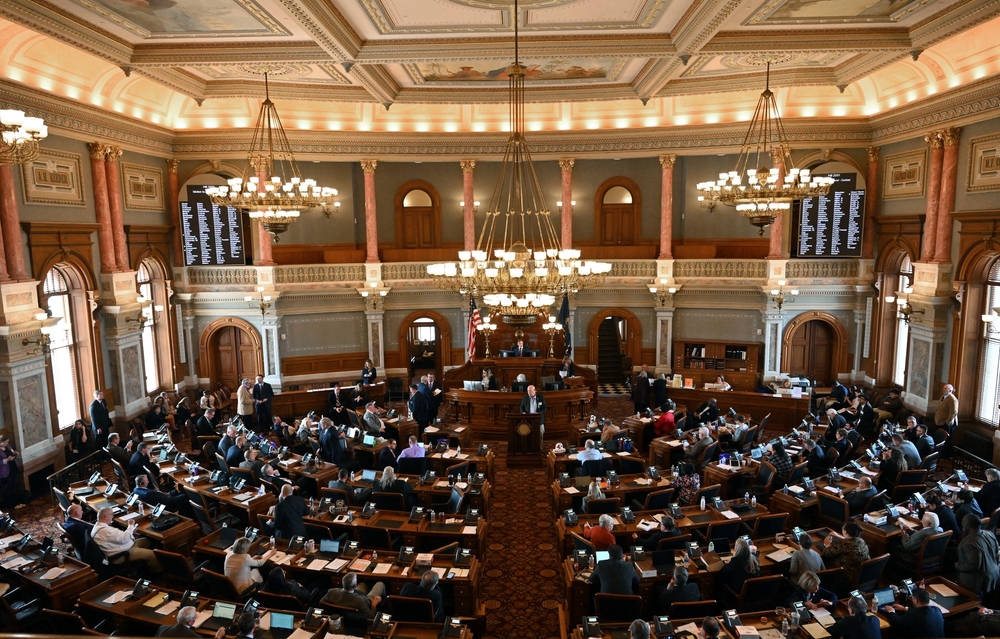
The concrete action behind the Bradenton event was the signing of two bills, both squarely targeting local governments. DeSantis put his signature to Senate Bill 4-F and House Bill 1329, the first designed to limit local governments’ ability to raise property taxes and the second to force more transparency in how they budget and spend. Together, they formed the substance of the day, with the governor and Chief Financial Officer Blaise Ingoglia presenting them as part of a broader push for fiscal responsibility at the local level.
DeSantis summarized the pair’s purpose in plain terms at the event. “We’re going to sign two pieces of legislation, which involve protecting taxpayers — particularly against local government taxes, property taxes and others — and also ensuring transparency in the spending process,” he said. The framing tied the two measures together as complementary tools. One constraining what local governments can collect, and the other exposing how they spend what they already have, both aimed at an audience of taxpayers the administration says have been overcharged.
Senate Bill 4-F: Limiting Local Property Tax Increases

The first bill, Senate Bill 4-F, reaches into the technical machinery of how local property taxes are set. It changes the way local governments calculate the maximum property tax rate they may adopt with a simple majority vote. Under the current system, those governments can raise what is known as the rolled-back rate based on growth in Florida’s per-capita personal income, a formula DeSantis argues lets them quietly collect more money. SB 4-F removes that adjustment and generally caps the maximum at the standard rolled-back rate instead.
For local governments that want to push rates higher, the bill erects new hurdles. Increases up to 110% of the rolled-back rate would require a two-thirds vote of the governing body, while anything above that threshold would demand a unanimous vote, a three-fourths vote for larger boards, or approval from voters through a referendum. The measure also functions as the implementation bill for a proposed constitutional amendment, the “Save Our Homes from Excessive Property Taxes,” and it permits expanded ballot summary language so voters get a fuller explanation when the measure appears in November. DeSantis cast the bill as a corrective to opaque budgeting, explaining that under the current arrangement, local governments can benefit from complicated formulas that allow them to take in more money even when they are not technically raising tax rates.
House Bill 1329: The Transparency And Budget-Cutting Law
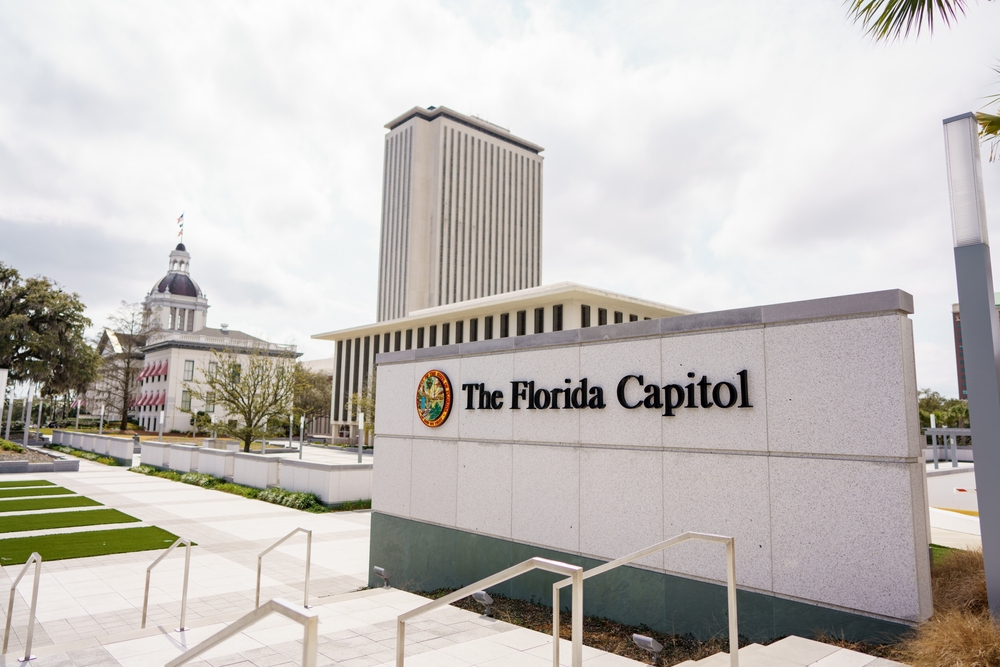
The second bill, House Bill 1329, carries the formal title of the Local Government Financial Transparency and Accountability Act, and it requires counties and municipalities to open their books to public view online. The list of mandated disclosures is extensive, covering budget summaries, revenues and expenditures, departmental spending, staffing information, reserve levels, and fund balances. Beyond that, the law requires quarterly reports listing the names, titles, and salaries of employees in all locally funded positions, along with annual budget development calendars meant to keep the process visible year-round.
The most striking provision, however, concerns spending itself rather than mere disclosure. HB 1329 requires local governments to conduct a budget reduction exercise before adopting a final budget, identifying ways to cut proposed spending by 10% without touching essential services such as law enforcement and fire protection. The administration’s stated logic is that this forces officials to look hard at efficiencies and priorities before they can claim, as the governor’s allies allege they often do, that any tax relief would necessarily mean gutting critical public services. Those proposed cuts, like the rest of the financial information, would have to be posted online for residents to see.
The November Referendum Driving It All
None of this is happening in a vacuum, and the bills make the most sense against the backdrop of the ballot measure that has consumed much of DeSantis’s attention. At his urging, the Legislature placed a property tax initiative before voters for November 2026, one that would raise the homestead exemption dramatically, from $50,000 to $250,000. Such an increase could strip municipalities of millions of dollars in annual revenue, and the governor has been touring the state to make his case for it.
The potential impact comes into focus through the example of Manatee County, where the Bradenton event was held. If the homestead exemption were raised to $150,000, the county government is estimated to lose roughly $81 million in revenue, a figure that would climb to $149 million should the exemption reach the full $250,000. Those are large sums for a single county, and they help explain both why DeSantis is challenging local governments to spend less and why those governments are so alarmed by what is coming. The bills he signed in Bradenton are, in effect, the groundwork being laid ahead of that November vote.
The Administration’s Case
For DeSantis and his administration, the entire effort is a matter of overdue discipline imposed on governments that have grown beyond their means. CFO Blaise Ingoglia, who joined the governor at the press conference, put the argument bluntly, contending that many local governments are expanding faster than residents can afford and that the trend will only worsen without intervention. In his telling, the problem is structural and will not correct itself from within.
“The taxpayers are the ultimate intervention, and that’s why a constitutional amendment on the ballot is so very important, because government is never going to right-size itself; it’s going to have to come from the taxpayer,” Ingoglia said. DeSantis, for his part, sought to reassure residents that the referendum would not cripple well-run local governments. He argued that the amendment would not significantly burden governments that operate efficiently, and that they could continue functioning on what he described as 2019-level spending, adjusted for population and inflation. Efficient governments, in his framing, have nothing to fear.
The Pushback From Local Officials And Democrats
That confidence is far from universally shared, and the governor’s campaign has drawn sharp objections from local officials and Democratic lawmakers alike. Local leaders have warned that if voters approve the November referendum, the consequences would not be trivial efficiencies but drastic reductions in the services residents rely on, with everything from libraries to fire departments potentially on the chopping block. To them, the revenue at stake funds essential functions, not waste.
The transparency bill drew its own criticism, with Democrats arguing it duplicates what local governments already do. Counties, they pointed out, already post their budget information online, making the new requirements redundant and, in their view, an additional layer of bureaucracy. Rep. Lindsay Cross, a St. Petersburg Democrat, voiced that frustration during a House committee hearing earlier in the year, objecting to the granular salary and expense disclosures the law demands. “Our local governments are already providing information about budgets, but the idea that we have to post and make it searchable the salary for every single person, our sanitation workers, maybe someone who cleans the municipal building, the travel expenses for every single mile traveled — I think it’s ridiculous,” she said. She also warned that the broader push risked “creating enemies where we don’t need to,” a sign of how adversarial the relationship between the state and its localities has become.
Part Of A Broader Wave Of New Laws
The two tax bills arrived as part of a far larger legislative moment, with roughly 140 new Florida laws set to take effect on July 1, the start of the state’s fiscal year. The budget itself sits among them, awaiting the governor’s action, alongside a wide-ranging tax cut bill projected to reduce state and local government revenue by an estimated $106.7 million in the coming fiscal year. The breadth of the session was considerable, touching everything from data center regulations to the renaming of public infrastructure.
Within that crowded landscape, the property tax fight stands out as one of the more consequential threads, precisely because it reaches into the core finances of every city and county in the state. The other measures taking effect range widely in subject and significance, but few carry the same potential to reshape the day-to-day operations of local government as the changes DeSantis championed in Bradenton.
The Tax Fight Now Heads To The Ballot Box
The governor’s four-year spending claim and the two new laws all point toward the same destination, the November referendum that will let Florida voters decide how much property tax revenue their local governments may collect. In the administration’s framing, that vote represents a long-awaited chance to rein in spending and deliver relief to taxpayers. In the view of local officials, it threatens the funding that keeps essential services running, a difference of perspective that no amount of legislation has resolved.
For now, the matter remains genuinely unsettled. The $114.5 billion budget still sits on DeSantis’s desk, its final shape dependent on the vetoes that would determine whether his spending streak holds, and the referendum still awaits the judgment of voters in the fall. What is clear is that the governor has chosen to press the issue forcefully, signing bills and touring the state to make his case, while those who govern Florida’s cities and counties brace for a vote that could redraw their budgets for years to come. The outcome, and what it means for taxpayers and services alike, will be decided not in Bradenton but at the ballot box.
2026 election, Blaise Ingoglia, budget cuts, fiscal policy, Florida budget, Florida Legislature, Florida politics, HB 1329, homestead exemption, local government, Manatee County, millage rate, property tax referendum, property taxes, Ron DeSantis, Save Our Homes, SB 4-F, state spending, tax transparency, taxpayer protection