
Your cart is currently empty!
Why an Oregon Man Was Really Jailed Over His Backyard Rainwater Reservoirs
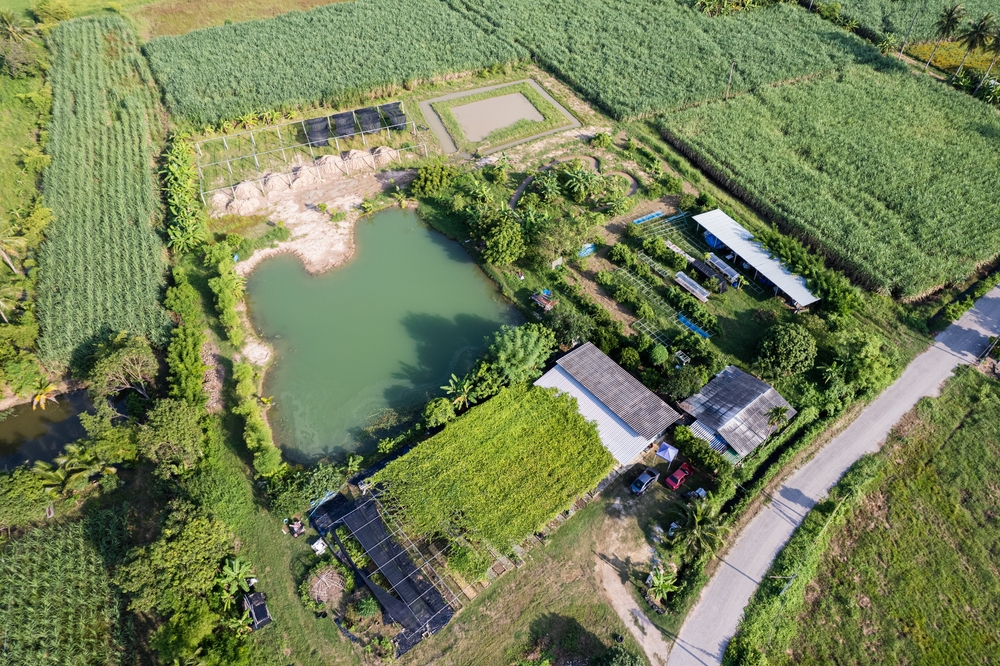
On the surface, it reads like a parable of government gone mad. A man on his own rural property, surrounded by 170 acres of land he owns outright, collects rainwater and snowmelt, and for this he is hauled off to jail and fined. When the story first spread across the internet, that was precisely the version people encountered, a tale of a self-sufficient citizen criminalized for doing something that farmers and homesteaders have done for generations, a sign that the authorities had decided they now owned the very rain falling from the sky.
Contents
show
That framing made Gary Harrington of Eagle Point, Oregon, into something of a folk hero, a property-rights crusader standing alone against an overreaching state. Yet the simple headline that traveled so widely left out a great deal, and the fuller story is considerably more tangled than the outrage suggested. Behind the viral indignation lies more than a decade of legal back-and-forth, a pattern of defied court orders, and a genuine grievance buried within it all, a case that turns out to be far harder to judge than it first appears.
The Story That Went Viral
The version of events that captured the public imagination was a straightforward one. Harrington, the story went, had simply been jailed for collecting rainwater on his own land, and the implication was alarming: new laws had quietly made it illegal for ordinary Americans to do something common and sensible, and the government had effectively laid claim to the rain itself. The narrative resurfaced more than once over the years, including a 2015 revival of a story that had originally circulated in 2012, each time stoking fresh outrage.
It is easy to see why the framing resonated. Collecting rainwater is a popular and legal practice in much of the country, a hallmark of self-reliance, so the notion that a man could be imprisoned for it struck a nerve. Harrington was cast as “Rain Man,” a defiant individualist punished for his independence. But the closer one looks at what he actually built and what actually happened, the more that tidy story begins to come apart.
What Harrington Actually Built

The first thing the viral version obscured was scale. Harrington had not set out a few barrels to catch runoff from his roof. Over the years he constructed three large reservoirs on his Crowfoot Road property, structures that were less like collection tanks and more like proper man-made ponds. Together they held roughly 13 million gallons of rainwater and snow runoff, an amount equal to about 40 acre-feet, or enough to fill nearly 20 Olympic-size swimming pools.
These were serious pieces of engineering. Harrington built dams across channels on his land to impound the water, two of them standing around 10 feet tall and the third reaching about 20 feet. He stocked at least one of the reservoirs with fish, variously reported as largemouth bass, trout, and bluegill, and went so far as to build docks and keep boats on the water. This was the detail that transformed the case from a matter of simple rainwater collection into something the state regarded as an entirely different activity, one that the law treated very differently from a homeowner’s rain barrel.
The Law At The Center Of The Case
Oregon’s approach to water rests on a principle that surprises many people: water in the state is a publicly owned resource, a doctrine the legislature established decades ago. That does not mean rainwater collection is forbidden. Capturing rain from an artificial, impervious surface such as a rooftop, using barrels, is explicitly legal and carries a specific exemption in the state’s water law. The line is crossed only when someone alters the natural movement of water across the land.
“If you build a dam, an earthen dam, and interrupt the flow of water off of the property, and store that water that is an activity that would require a water right permit from us,” explained Tom Paul, deputy director of the Oregon Water Resources Department. Harrington had no such permit. Compounding the problem, his property sits within the Big Butte Creek watershed, and a 1925 state law grants the City of Medford exclusive rights to the waters of that watershed and its tributaries. The state contended that his dams were capturing water that legally belonged to Medford, while Harrington insisted the water was nothing more than diffuse rain and snowmelt that the state had no authority to claim.
The Permits That Were Granted, Then Withdrawn

The most sympathetic thread in Harrington’s story, and the source of his deepest grievance, concerns the permits he very nearly held. In 2002 he applied to the state for three permits covering the water on his land. In March 2003, the Water Resources Department issued orders approving two of those applications, appearing to give him exactly what he sought. Then, only weeks later, the department reversed itself, withdrawing the approvals and denying all three applications on the grounds that the 1925 law had reserved the water for the City of Medford.
To Harrington, this abrupt about-face was the original injustice from which everything else flowed. “They issued me my permits. I had my permits in hand and they retracted them just arbitrarily, basically,” he told CNSNews.com. “They took them back and said, ‘No, you can’t have them.’ So I’ve been fighting it ever since.” Whatever one makes of the rest of the case, this is the part of his account that lends it real weight, the sense of a man who believed he had played by the rules only to have the rules abruptly changed on him.
Harrington’s Case: Property Rights And Fire Safety
From that point forward, Harrington framed his fight in terms of principle and practical necessity. He maintained throughout that the water he collected was strictly rain and snowmelt, not the tributary water the state claimed, and therefore beyond its reach. He also insisted the reservoirs served a vital purpose in a region prone to wildfires, telling the Medford Mail Tribune that the recreational features were beside the point and that the water was “totally committed to fire suppression.” The fish and the docks, he said, were merely icing on the cake.
His rhetoric grew broader as the battle wore on, casting the dispute as one between an ordinary citizen and an overbearing government. He described the state as engaged in bullying and argued that Americans had a duty to resist when their rights were under threat, warning that giving up only emboldens the authorities. To rally support, he set up a website soliciting donations and signatures, presenting his cause to the public as a stand for property rights against government encroachment. These were his sincere convictions, and they animated his refusal to back down.
The State’s Case: A Decade Of Defiance
Yet the state told a very different story, one that the viral accounts almost entirely omitted. According to the Water Resources Department, this was not a sudden arrest but the culmination of a conflict stretching back more than ten years. Officials had identified Harrington’s illegal water use over a decade earlier and had repeatedly sought voluntary compliance before matters ever reached a courtroom. By 2002, the state had enlisted the Oregon State Police, and Harrington pleaded guilty to several violations, was assessed a nominal fine, and was ordered to drain his reservoirs, which he did.
The matter did not end there. In 2004, Harrington closed the head gates again and refilled the reservoirs. He pleaded guilty once more in 2008, was fined and placed on probation, and was again ordered to drain the water, only to refill the reservoirs a short time after his probation expired. The state’s frustration was evident in Paul’s explanation of why the court eventually escalated to a jail sentence. “I think frankly the court felt that Mr. Harrington was not getting the message,” he said, noting that probation had already been tried. The department, for its part, insisted its goal was narrow and consistent: it wanted compliance with Oregon water law, regardless of what the public thought of Mr. Harrington.
What The Judge Said
If anyone punctured the folk-hero narrative most directly, it was the judge who sentenced him. Jackson County Circuit Judge Lorenzo Mejia took the unusual step of rebuking Harrington from the bench, both for his repeated violations and for the way he had presented his case to the public. Harrington, the judge noted, had been convicted again and again over eleven years for illegally storing water without a permit, and had even pleaded guilty in 2008, yet still refused to comply with the court’s orders.
Mejia drew a pointed contrast with how most defendants behave. “Most people, when caught in a criminal act, at least promise not to do the act again,” he observed, adding that Harrington had been “willfully in violation of the orders of the court.” The judge went further, challenging the very image Harrington had cultivated. “You put yourself forward as to the public as some kind of a crusader for property rights,” Mejia told him, while making clear he did not consider Harrington a horrible man, only one who had been dishonest with the court and “nothing but willful.” It was a withering assessment from the person who knew the full record best.
The Courts Sided With The State

The legal questions Harrington raised were not frivolous, but they ultimately did not save him. He argued that the state had no jurisdiction over what he called diffuse surface waters, meaning rain and snowmelt flowing over land before reaching any defined watercourse. In Harrington v. Water Resources Department, decided in 2007, the Oregon Court of Appeals ruled against him, though largely on procedural grounds rather than the substance of his claim. He had filed his challenge too late and through the wrong legal channel, which meant the courts never fully reached the central question of whether the state could regulate the water he described.
That procedural defeat left the underlying legal debate unresolved even as it sealed Harrington’s fate. He was eventually convicted of nine misdemeanors, and after his sentencing in late July 2012, he surrendered himself to authorities and began serving his time at the Jackson County Jail. The 30-day sentence and $1,500 fine that became the headline were, in truth, the end point of a long and exhausting legal saga rather than a sudden bolt from a hostile government.
Separating Fact From The Viral Myth

When the case roared back to life on social media, much of what circulated was misleading. The claim that Harrington had been jailed simply for collecting rainwater ignored the reality of three large illegal reservoirs and years of defying court orders. The suggestion that he had fallen victim to new laws criminalizing water collection was equally false, since the statute at issue dated all the way back to 1925, hardly a recent crackdown. And the assertion that it had just happened recycled a story already years old by the time it resurfaced in 2015.
Crucially, none of it changed the fact that ordinary rooftop rainwater collection remained perfectly legal in Oregon, exactly as it had been throughout the dispute. Correcting these distortions does not require dismissing Harrington’s legitimate complaint about the withdrawn permits, but it does mean acknowledging that the version of events that outraged so many people bore only passing resemblance to what had actually occurred over the preceding decade.
A Case Without Easy Answers
In the end, Harrington’s story refuses to resolve neatly into either of the narratives attached to it. It was not the pure tale of government tyranny that spread across the internet, nor was it simply the case of a scofflaw who got what he deserved. Woven through it are genuine grievances, the permits granted and then abruptly snatched away, the sincere worry about wildfires in a vulnerable region, alongside a decade of defiance that the state insists it tried repeatedly to resolve without resorting to jail.
What the case finally came to represent was something larger than the water itself. It became a battle over property rights, over the limits of government authority, and over the strange question of who can lay claim to a resource that simply falls from the sky. Reasonable people looked at the same facts and reached opposite conclusions, some seeing a martyr and others seeing a man who would not obey the law. Perhaps the most honest verdict is that both the grievance and the defiance were real, and that the truth of Gary Harrington’s case lives uncomfortably in the space between them.
Big Butte Creek, Eagle Point Oregon, fact check, Gary Harrington, government overreach, illegal reservoirs, Jackson County, Oregon water law, Oregon Water Resources Department, ORS 538.430, property rights, public water, rainwater collection, rainwater harvesting, snowmelt, viral myth, water diversion, water permits, water rights, wildfire suppression