
Your cart is currently empty!
American Company Unveils Robots That Hunt Crop Pests With UV Light Instead of Chemicals
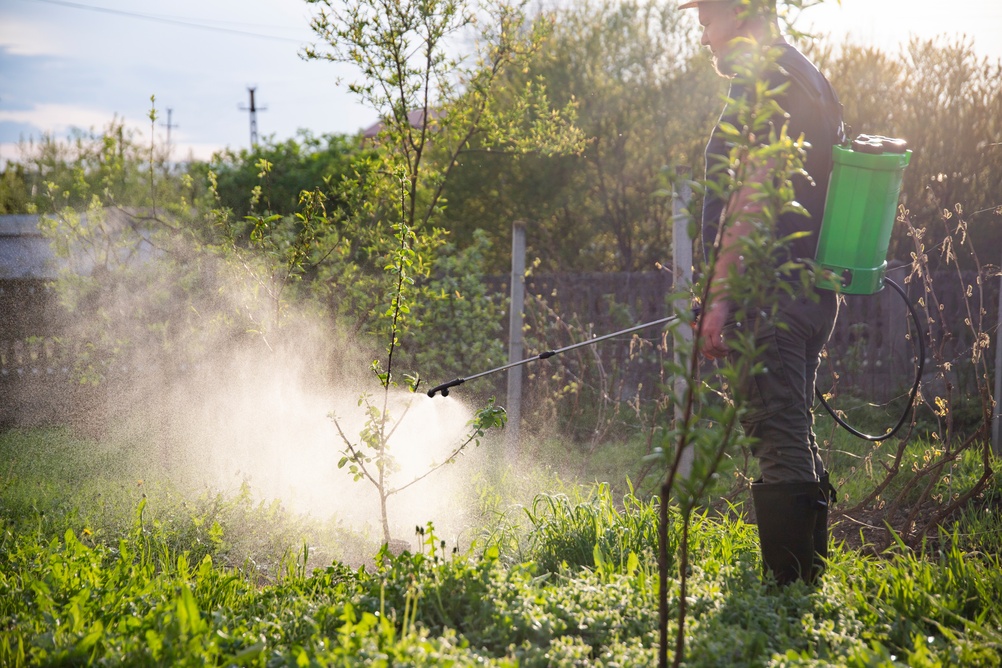
For generations, protecting crops has largely meant reaching for chemical pesticides. They have helped farmers fight insects and disease, but concerns over environmental impact, rising costs, and chemical resistance have continued to grow. As growers search for cleaner and more efficient solutions, one American company believes the answer may not come from another spray. Instead, it could come from autonomous robots quietly moving through fields long after the sun has gone down.
Contents
show
TRIC Robotics, a U.S.-based agricultural technology company, has developed autonomous tractor-sized machines that use ultraviolet light and powerful vacuum systems to control pests without relying on traditional pesticides. The technology is already being used on California strawberry farms, where growers face constant pressure from insects and plant diseases. If the early success continues, the company believes the same approach could eventually be adapted for many other high-value crops, reducing the farming industry’s dependence on chemical treatments.
A New Approach to Fighting Crop Pests
American farms use roughly one billion pounds of pesticides every year to protect crops from insects, weeds, and diseases. While those products have played a major role in maintaining food production, they also bring significant financial and environmental challenges. Farmers must carefully balance effective pest control with growing consumer demand for food produced using fewer chemicals.
TRIC Robotics has taken a completely different approach. Rather than spraying chemicals across fields, its Luna platform moves autonomously through crop rows carrying ultraviolet lights that target pests and diseases. The machines can also be equipped with powerful vacuum systems that physically remove harmful insects from plants without introducing chemical residues into the environment.
The company has focused its first commercial rollout on strawberry farms, a crop known for requiring intensive pest management throughout the growing season. By replacing repeated chemical applications with automated overnight treatments, the company hopes growers can lower their dependence on pesticides while maintaining healthy yields.
Unlike conventional farm machinery, the Luna robots work while most farms are inactive. Their nighttime schedule allows pest management to happen without interrupting harvesting crews or other daytime operations, making better use of hours that traditionally go unused.
Strawberry Growers Are Quickly Embracing the Technology
TRIC Robotics says the response from commercial strawberry growers has exceeded expectations. Farmers dealing with persistent pest problems have shown strong interest in an alternative that reduces chemical applications while remaining practical for large-scale farming.
Speaking about the early rollout, founder and CEO Adam Stager said, “We’re just starting with strawberries, and we’re already seeing commercial traction right away. The farmers are super excited about this and it’s because they’re really struggling to control these pests and diseases.”
California produces most of America’s strawberries, making the crop an ideal testing ground for new agricultural technology. Even small improvements in pest control can translate into major financial benefits because of the crop’s high value and intensive production requirements.
The company initially partnered with larger farming operations to demonstrate that the technology could perform under demanding commercial conditions. After building confidence among growers, it is now preparing to expand access to farms of different sizes.
Why the Company Is Starting With Large Farms
Developing agricultural technology for commercial farming requires more than proving that an idea works in a controlled environment. Large farms provide the scale needed to test equipment under real-world conditions, where weather, changing field conditions, and demanding production schedules can quickly expose weaknesses. That was the strategy TRIC Robotics adopted while introducing its robotic pest-control system.
That gradual expansion could make the technology more accessible across the agricultural industry. Smaller farms often face the same pest pressures as larger operations but have fewer resources to experiment with new equipment. A service model that removes much of the technical complexity may allow more growers to benefit as the company expands its operations.
The approach also helps build confidence within an industry where reliability matters. Farmers typically cannot afford to gamble on equipment that fails during critical stages of the growing season. Demonstrating consistent performance on large commercial farms provides valuable proof before introducing the technology to a wider customer base.
How UV Light and Robotics Work Together
The Luna platform combines multiple pest-control methods into a single autonomous machine. Instead of relying on chemical sprays, the robot uses ultraviolet light treatments alongside mechanical pest removal to protect crops throughout the night.
High-powered vacuum systems physically remove insects from strawberry plants, while ultraviolet light treatments disrupt pests and diseases that threaten crop production. The robot’s multi-row design allows it to cover several planting rows during each pass, making it more efficient than machines designed to work on a single row at a time.
Rather than selling growers an expensive piece of equipment and leaving them to operate it, TRIC Robotics provides the technology as a complete service. The company handles the robotic operations, allowing farmers to focus on managing their crops instead of learning how to operate autonomous machinery.
This combination of automation and precision treatment reflects a broader shift in modern farming. Instead of applying chemicals across entire fields as a preventative measure, growers are increasingly exploring technologies that address problems with greater accuracy while reducing unnecessary inputs.
The Technology Could Help Reduce Chemical Dependence
Pressure to reduce pesticide use has increased across agriculture as consumers become more interested in food produced with fewer chemical treatments. Farmers are also dealing with stricter environmental regulations and rising production costs, making alternative pest-control methods more attractive than they were only a few years ago.
Chemical pesticides remain an important tool for many growers, particularly when severe infestations threaten crops. Even so, technologies that reduce the number of spray applications could lower costs while helping farms meet changing market expectations.
The Luna platform was designed with that goal in mind. By using ultraviolet light and physical pest removal instead of repeated chemical treatments, the system offers growers another option for protecting crops without depending entirely on conventional pesticides.
The company also believes the technology could eventually reduce reliance on products such as glyphosate, although its current commercial focus remains on helping strawberry growers manage pests and diseases more effectively.
Could Robots Solve Farming’s Labor Challenges?

Whenever automation enters agriculture, one concern quickly follows. Many people wonder whether machines will eventually replace workers who have long been essential to planting, harvesting, and maintaining crops. TRIC Robotics believes its technology serves a different purpose by taking over repetitive tasks that are difficult to perform efficiently during the night rather than replacing people working in the fields.
Addressing those concerns, Adam Stager said, “We see the opposite, actually.” He explained that most farms become quiet after dark, leaving valuable hours unused even though pests and diseases continue to affect crops throughout the night.
Expanding on that idea, he added, “You can imagine a farm at night is pretty inactive, but now, we’ve kind of unlocked that night shift. We talk to our farmers and we say, ‘We’re going to make your night shift your most productive shift in the future.’”
Instead of reducing the need for workers, the company argues that autonomous robots can handle overnight pest control while farm employees focus on harvesting, irrigation, equipment maintenance, and other daytime responsibilities that still require human judgment and experience.
Agriculture Is Entering a New Era of Precision Farming
The Luna platform reflects a much broader transformation taking place across agriculture. Farmers are increasingly adopting technologies that use automation, artificial intelligence, sensors, and data analysis to improve efficiency while reducing unnecessary costs. From self-driving tractors to robotic harvesters and automated irrigation systems, technology is becoming a larger part of everyday farming operations.
California’s strawberry industry presents an ideal environment for these innovations. Growers face rising labor costs, strict environmental regulations, and constant pressure to maintain high-quality production. A robotic system capable of working independently throughout the night offers another tool that could help farmers remain competitive without relying solely on traditional chemical treatments.
Although the technology is currently focused on strawberries, there is considerable interest in adapting similar systems for other specialty crops that require intensive pest management. If the results continue to improve under commercial conditions, autonomous UV treatment could eventually become part of routine crop protection across a much wider range of farms.
Every farming operation has different challenges, and chemical pesticides are unlikely to disappear completely. Even so, precision technologies that reduce unnecessary spraying while protecting crop yields are becoming increasingly attractive as growers look for practical ways to improve sustainability and manage rising production costs.
A Technology Farmers Will Be Watching Closely
For decades, protecting crops has largely depended on chemical solutions developed to combat insects and disease. TRIC Robotics is betting that robotics, ultraviolet light, and precision automation can offer farmers another option that fits the changing demands of modern agriculture.
The company is still in the early stages of commercial deployment, but the response from strawberry growers suggests there is strong interest in alternatives that reduce chemical use without sacrificing productivity. If the technology continues to prove itself in the field and expands to other crops, overnight robots may become a familiar sight on farms, quietly protecting harvests while the rest of the operation sleeps.