
Your cart is currently empty!
Man Browsing a Missing Children Website Is Shocked to Find Himself Among the Photos

Most people browse the internet expecting to learn something new. Very few expect it to completely rewrite their identity. That’s exactly what happened to Steve Carter, whose casual visit to a missing children’s website uncovered a truth that had been hidden for more than three decades. A single age-progressed photograph looked so familiar that it set him on a journey ending with a DNA test, a reunited family, and the astonishing revelation that he had unknowingly been living under a different name his entire life.
Contents
show
Steve’s story is one of those incredibly rare cases where curiosity changed everything. While thousands of missing children are reported every year, very few cases end with the missing person discovering themselves. For Carter, what began as a simple internet search became the missing piece of a life story he never knew was incomplete.
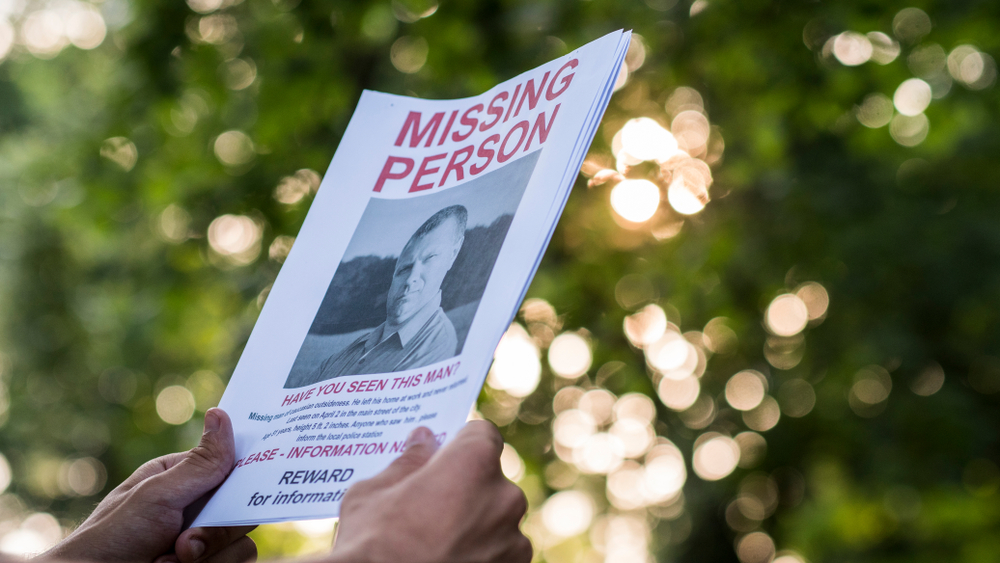
A News Report Inspired Him to Look Into His Own Past
Steve Carter always knew he had been adopted, but he never considered it something that defined his life. Adopted from an orphanage in Honolulu at the age of four, he was raised by Steve and Pat Carter, who gave him what he describes as a loving and supportive childhood. Growing up in New Jersey before later settling in Philadelphia, he says he never questioned the love of his adoptive parents. “I had an amazing childhood,” he later explained on the What It Was Like podcast. “I was adopted and raised by two individuals who are just phenomenal. They’ll always be my parents.”
Like many adoptees, however, Steve carried questions that never completely disappeared. As he got older, married, and began thinking about having children of his own, those unanswered questions became more meaningful. He knew very little about his biological family or the circumstances that had led to his adoption, and he hoped that one day he might learn more about where he came from.
That opportunity appeared unexpectedly in 2011 after Steve watched a CNN report about Carlina White, a woman who had discovered she had been kidnapped as a newborn after recognizing herself on the National Center for Missing & Exploited Children website. The remarkable reunion stayed in his mind throughout the day. After hearing the story again while driving to work and then seeing it appear once more on his iPad, he decided to follow a hunch and search for himself.

One Photograph Immediately Caught His Attention
Steve visited MissingKids.com with no real expectations. He simply searched through missing children’s cases from Hawaii dating back several decades, hoping he might come across something that explained the mystery surrounding his early childhood. Instead, he found something that left him staring at the screen in disbelief.
Among the listings was an age-progressed image created from a photograph of a missing baby. Although the original picture had been digitally aged to estimate what the child might look like as an adult, Steve says the resemblance was impossible to ignore. The longer he looked at the image, the more convinced he became that he was looking at his own face. “I recognized myself immediately,” he later recalled.
Even so, Steve wasn’t ready to assume something so extraordinary could actually be true. He showed the image to several friends, expecting someone to dismiss the similarity as coincidence. Instead, they all reacted the same way, telling him that he needed to contact authorities immediately. Encouraged by their response, Steve reached out to the Honolulu Police Department and explained what he had found. “I let them know my info and they ran with it,” he said. “They were the ones who did all the legwork.”

DNA Testing Confirmed an Incredible Discovery
Investigators arranged for Steve to submit a DNA sample, but the answers did not come quickly. Months passed while forensic experts compared the results against records connected to the decades-old missing child investigation. During that time, Steve had no idea whether he had uncovered an extraordinary coincidence or whether his entire life story was about to change.
When the DNA results finally came back, they confirmed the impossible. Steve Carter was, in fact, the missing child whose age-progressed photograph had caught his attention online. The little boy in the original photograph had been born Marx Panama Moriarty Barnes, and he had disappeared in Hawaii more than 30 years earlier after his mother took him for a walk and never returned. Instead of merely discovering information about his biological family, Steve had solved his own missing person case.
The revelation completely transformed the way he understood his past. For decades he believed he had simply been adopted under unknown circumstances. Instead, he learned that he had unknowingly spent most of his life living under a different identity while authorities had searched for the missing infant he once was. Few missing children’s cases ever receive this kind of ending, making Steve’s discovery one of the rarest reunions investigators have encountered.

A Series of Events Led to Him Being Adopted
The mystery began in Hawaii on June 21, 1977, when six-month-old Marx Panama Moriarty Barnes disappeared after his mother, Charlotte Moriarty, left home with him and failed to return. His father, Mark Barnes, immediately reported both of them missing and spent months desperately searching for answers. According to later reports, Charlotte eventually appeared at a stranger’s home using false names for herself and her baby before authorities admitted her to a psychiatric hospital for evaluation.
Shortly afterward, Charlotte disappeared again, this time without leaving any trace. Because she had provided false identities, officials struggled to determine who the infant really was or reconnect him with his biological father. CNN reported that Steve believes his mother placed him in a Hawaiian orphanage under the name Tenzin Amea, although the network said it could not independently confirm every detail surrounding that account.
Unable to establish the baby’s true identity, authorities placed him into Hawaii’s child welfare system. Several years later, Steve and Pat Carter adopted the little boy, giving him a loving home and a new name. Neither they nor Steve had any reason to believe that the child they welcomed into their family had once been the center of an unsolved missing person case.

Reconnecting With a Family He Never Knew Existed
Learning the truth about his identity answered one lifelong question, but it also opened the door to an entirely new chapter. Steve now knew he had a biological family who had spent decades believing they might never see him again. Although investigators informed his relatives that he had been found, actually reaching out to them was something Steve approached carefully. Rather than rushing into emotional reunions, he wanted to give everyone time to process what had happened.
“They knew I had been located, but they were very surprised,” Steve said after making contact. “You see a lot of these reunion stories and a day later they’re meeting their parents. I’m still going forward, testing the waters.” The situation was emotional for everyone involved, particularly because more than 30 years had passed since the family had last seen the missing baby they knew as Marx.
Among the relatives Steve connected with was his older half-sister, Jennifer Monnheimer, who had been just eight years old when their mother disappeared with her baby brother. For years, Jennifer believed both her mother and brother were gone forever. Refusing to let the case disappear, she later persuaded authorities to reopen the investigation, a decision that ultimately led to the creation of the age-progressed image Steve would eventually recognize. When the siblings finally spoke, Steve said the connection felt immediate. Beyond sharing physical similarities, they discovered they had remarkably similar personalities, interests, and even the same sense of humor.
His Father Never Gave Up Hope
Steve’s biological father, Mark Barnes, had spent years searching for answers after reporting his son missing in 1977. The disappearance turned his life upside down, and despite exhaustive efforts, every lead eventually went cold. Speaking to PEOPLE, Mark recalled driving around Hawaii for months hoping to find Charlotte and his infant son, refusing to believe they had simply vanished without a trace.
“I spent about a year and a half going crazy driving around the island,” he said, describing the desperate search that followed their disappearance. When he finally learned that Steve had been found alive decades later, the news was almost impossible to process. “All I could say was, ‘Wow. Oh wow. Wow,’” he told the magazine after hearing his son’s voice for the first time.
Although Steve and Mark exchanged phone calls, letters, and slowly rebuilt their relationship, they never had the opportunity to meet in person before Mark passed away in 2023. Even so, Steve has said those conversations helped fill in missing pieces of his past and gave both father and son a measure of closure after more than three decades apart.
The Biggest Mystery Remains Unsolved
While DNA testing answered the question of who Steve really was, it could not explain everything that happened during the years leading up to his adoption. The biggest unanswered question surrounds his birth mother, Charlotte Moriarty, whose disappearance has never been solved. After leaving the psychiatric hospital in Hawaii, she was never seen again, and investigators have never established exactly where she went or what happened to her.
Steve has never spoken about his mother with anger. Instead, he has tried to understand the circumstances that may have shaped her decisions. Describing her as someone who struggled with personal issues, he suggested that she may have been trying to cope with challenges few people fully understood. “She was more of a free spirit,” Steve explained. “If you’re not in the right headspace and you’re dealing with other things, you might put the oxygen mask on yourself first. I don’t blame her for anything.”
He has also spent years trying to uncover what happened during the short period between his reported disappearance and his arrival at the orphanage in Honolulu. Those missing weeks remain one of the few parts of his story that investigators have never been able to fully reconstruct.
Stories Like Steve’s Are Exceptionally Rare
According to the National Center for Missing & Exploited Children, thousands of children are reported missing across the United States every year. The majority are eventually found safely, with many involving runaway cases or family disputes that are resolved relatively quickly. Long-term disappearances, however, remain among the most difficult cases for investigators, often lasting years or even decades without resolution.
Steve’s case stands out because the missing child unknowingly became the person who solved the mystery. Instead of investigators tracking him down through new evidence, he recognized his own age-progressed image while browsing online. Robert Lowery, an executive with the National Center for Missing & Exploited Children, has encouraged anyone with unanswered questions about their identity to search the organization’s database, noting that unusual discoveries, while rare, can happen.
Steve himself has become an example of why families continue searching, even after decades without answers. During one bus ride, a woman recognized him from the news and shared that her own child had been missing for 22 years. Steve later said he hoped his experience could give families like hers a reason to keep believing reunions are still possible.
Steve Says His Story Ended Better Than Most
Despite the extraordinary circumstances surrounding his life, Steve has always emphasized that he considers himself fortunate. He never viewed discovering his biological family as replacing the parents who raised him. Instead, he gained a fuller understanding of where he came from while remaining deeply grateful for the family who gave him a happy childhood.
Looking back, Steve described his experience as “a happy ending to a story that usually isn’t a happy ending.” Those words carry extra weight because he knows many missing children’s cases never receive the answers his family finally did. His discovery reunited relatives who had spent decades living with uncertainty while also showing how advances like DNA testing and age-progression technology can sometimes solve mysteries that once seemed impossible.
More than 30 years after he unknowingly disappeared, Steve Carter found himself by recognizing a face on a computer screen. It was a moment that restored a lost identity, reunited a family separated by decades, and proved that even the oldest missing-person cases can still hold unexpected endings.