
Your cart is currently empty!
Public Workers Fired Over Charlie Kirk Posts Are Winning Six-Figure Settlements

Maria Ruhtenberg had spent fifteen years as a public defender for the state of Iowa when a Facebook post ended her career in under a week.
Contents
show
Her account settings were private. What she wrote was visible only to her friends, a list that included one man she could not quite place. “I don’t even know how we became Facebook friends, honestly,” she later said of the person who read her posts and reported them to her employer. That single complaint was the entire body of concern raised against her by anyone she worked with, worked for, or served.
Two days after the complaint arrived, a right-wing outlet in Iowa emailed her office asking for comment. The following day, she was terminated. Fewer than five days had passed since she first hit publish.
What Ruhtenberg had actually written, and what happened to her afterward, turned out to be part of a pattern now playing out in courtrooms across the country. Nine months after the assassination of conservative activist Charlie Kirk, the people who lost jobs over their reactions to it are beginning to win, and the institutions that fired them are writing large checks.
What She Actually Wrote
The posts that cost Ruhtenberg her career were blunt. She wrote “live by the sword, die by the sword” and “you reap what you sow.” She said she disagreed with Kirk’s views on the Second Amendment.
She also wrote that whoever shot Kirk should go to prison. That last sentence sits awkwardly against the reason given for her firing. State public defender Jeff Wright testified during appeals proceedings that Ruhtenberg was let go because her posts were perceived as condoning violence. A woman who explicitly called for the shooter’s imprisonment was terminated for endorsing the shooting.
Ruhtenberg appealed and got her job back in November. The civil service decision restoring her position noted something worth pausing on. The only things that had ever raised concerns about her conduct were the single Facebook complaint and the one media inquiry that followed it.
The Scale of the Firings

Ruhtenberg was not an isolated case. According to an investigation by Reuters, more than 600 people were fired, suspended, or investigated over statements they made about Kirk’s death.
They came from everywhere. Health care workers. Lawyers. Journalists. Waiters and waitresses. Teachers. The common thread was not a profession but a platform, and the speed with which a private post could travel from a friends-only feed into the hands of someone eager to make an example of its author.
There is a meaningful pattern in which of those cases have been resolved. Every currently known resolution involves someone who worked in government or at a public institution. Those employees hold stronger First Amendment protections than private-sector workers do, because their employer is the state, and the state cannot punish citizens for protected speech. That protection is precisely what has turned so many of these firings into expensive mistakes.
The Settlements Adding Up
Ruhtenberg sued the state and Wright in federal court for First Amendment retaliation. In May, they settled, and she was awarded $125,000 in damages.
She was not the largest award, or close to it. Melisa Crook, a high school teacher in Iowa’s Creston Community School District, faced termination after commenting on a family member’s Facebook post that she did not wish death on anyone but that Kirk not being here was a blessing. She settled with the district for $145,000 and full benefits, leaving the school as part of the agreement.
Suzanne Swierc, a health educator at Ball State University in Indiana, was fired over a Facebook post about Kirk. She settled for $225,000 and left the university.
Brittney Brown, a biologist with the Florida Fish and Wildlife Conservation Commission, was fired after reposting a satirical account that pretends to be a whale. The state paid her $485,000.
Darren Michael, a tenured professor at Austin Peay State University in Tennessee, was fired after posting a news story from 2023 with the headline “Charlie Kirk Says Gun Deaths ‘Unfortunately’ Worth it to Keep 2nd Amendment.” He got his job back and received a $500,000 settlement.
Not every case produced a payout. An art professor at the University of South Dakota was fired, then swiftly reinstated without damages. A Clemson University professor had his termination rescinded under confidential terms he would not discuss.
The Man Who Went to Jail Over a Meme
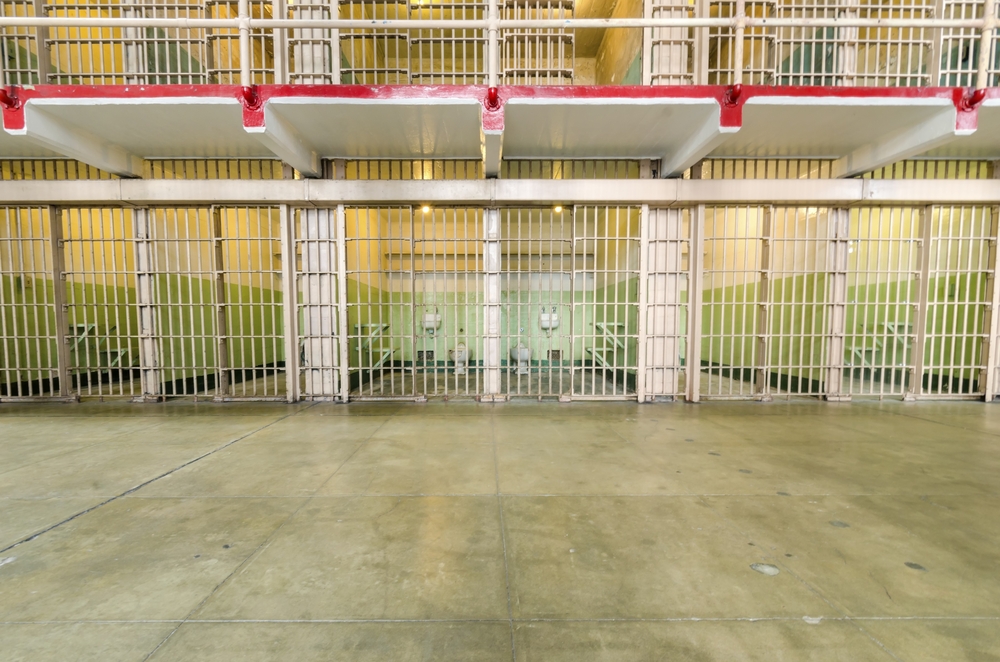
The most extreme case in this collection did not involve a firing at all. Larry Bushart, a retired law enforcement officer in Tennessee, reposted a meme. It quoted President Trump reacting to a 2024 school shooting at Perry High School in Iowa, in which Trump said the country had to get over it. The sheriff’s department in Perry County, Tennessee, claimed the post caused “mass hysteria,” citing the similarity between the two school names.
Bushart was jailed for 37 days on a $2 million bond. After his release, a public records request filed by the Foundation for Individual Rights and Expression, the nonprofit that represented him, turned up something inconvenient for the department. The local school had no communication whatsoever about Bushart’s post. The panic used to justify holding a retired officer in a cell for over a month appears not to have existed. He received an $835,000 settlement.
What the Posts Actually Said
Read together, the posts at the center of these cases do not describe what many people assume they describe. Crook wrote that she did not wish death on anyone. Swierc, in a post written hours after the shooting, called Kirk’s death a tragedy, said she felt for his wife and children, and wrote that while it was difficult, she prayed for his soul. She also criticized him sharply and argued his death reflected violence he had helped sow. Michael posted a two-year-old news headline. Brown reposted a joke account.
This distinction has not gone unnoticed on the right. Writing about the wave of terminations, conservative education commentator Rick Hess argued plainly that some educators genuinely deserved to be fired, that anyone publicly cheering politically motivated murder cannot credibly claim to run a classroom where all students are welcome, and that such firings should proceed through proper professional processes. He then turned to the Swierc post and drew a line.
“To my eye, that’s crass but not a celebration of murder. Indeed, it strikes me as relatively measured in our meme-rage era. If such a remark is going to become grounds for immediate termination in schools and colleges, we’re about to open a door we may wish we hadn’t.” A Facebook post read.
Who Amplified the Campaign
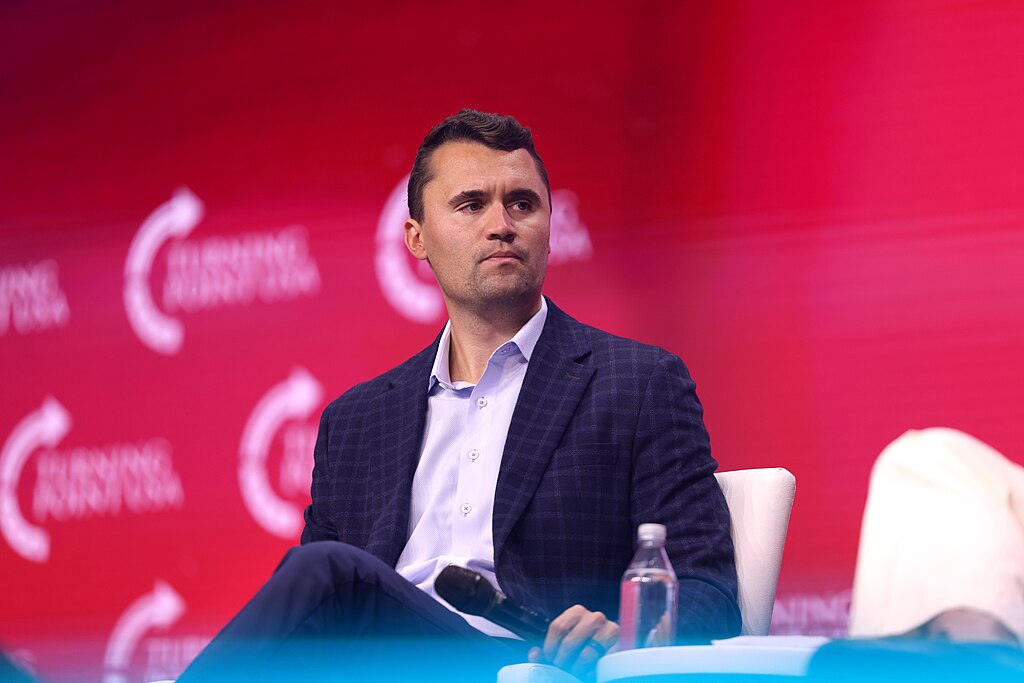
The firings did not happen spontaneously. They were driven by an organized pressure campaign in which pro-Trump influencers, sitting lawmakers, and Vice President JD Vance urged the public to identify offending posts and flood employers with calls, emails, and social media exposure until someone was dismissed.
Brown was fired one day after the account Libs of TikTok, run by Chaya Raichik, highlighted her post and called for her termination. Swierc’s post spread after Indiana Attorney General Todd Rokita publicized it, having urged residents to alert his office to anyone celebrating or glorifying the tragedy. Elon Musk weighed in. The result, according to her lawsuit, was a deluge of phone calls, texts, voice mails, and threats directed at both Swierc and her university.
Greg Greubel, a lawyer with FIRE, said public pressure campaigns are nothing new, but that something about this one was different. “I think the big difference this time was the amount of public officials amplifying these calls for terminations. It created an immediate chilling effect — and ruined a lot of people’s lives.” Greg Greubel said.
The Heckler’s Veto and the Disruption Defense

There is a name in law for what happens when people deliberately manufacture chaos so that a speaker gets punished for their opinion. Cary Davis, an attorney with FIRE who worked on Bushart’s case, calls it the heckler’s veto, and he notes that whether it succeeds as a legal matter depends heavily on the specific facts.
For public employees, the analysis has a few parts. Was the person speaking as a private citizen about a matter of public concern? And crucially, did their conduct actually disrupt the government workplace, making it difficult for the employer to operate?
That disruption question is where most of these cases were won and lost, because employers leaned on it and the evidence frequently failed them. Bushart’s sheriff’s department claimed panic at a school that had never mentioned him. Florida told the court its wildlife agency had fielded hundreds of citizen contacts and multiple media inquiries about Brown, then managed to produce only dozens of complaints during discovery, drawing a sanction from the court. Iowa argued that Ruhtenberg’s words could have created workplace disharmony or harmed operations, on the strength of one complaint and one email.
Ball State’s Defense, and Why These Cases Are Hard to Win
The strongest institutional defense in this group came from Ball State, and it is worth taking seriously.
University President Geoffrey S. Mearns wrote to campus leadership that disruptive and disturbing phone calls, along with more than 130 emails including donor threats to withhold contributions, prevented staff from performing their usual responsibilities. Some employees who fielded those calls reported being threatened with violence and said they felt uncomfortable on campus. Mearns argued Swierc’s post had damaged her credibility with students who did not share her views, and concluded he had the legal authority to terminate her.
He was not inventing a standard. The Supreme Court has held that a public institution can restrict employee speech on matters of public concern when the comments genuinely interfere with the institution’s ability to function. Free speech in the workplace is not as absolute as many people assume.
But there is an obvious wrinkle in relying on that standard here. The disruption Ball State cited was manufactured by an outside pressure campaign specifically designed to produce a firing. If harassment orchestrated by strangers is sufficient grounds for termination, then anyone with enough followers can get anyone fired.
Ball State admitted no wrongdoing. It also paid Swierc $225,000. The ACLU of Indiana, which sued on her behalf, framed the outcome in a single sentence, noting that as a public university, Ball State cannot fire an employee for protected speech made as a private citizen.
The Cost That Settlements Don’t Cover

The checks have cleared. The people who received them are not, by their own accounts, whole. Ruhtenberg describes the nine weeks before her reinstatement as one of the hardest stretches of her life, a period when she believed her career was finished. She no longer discusses politics on Facebook. She felt targeted, she said, and she felt hated, and she does not want to go through it again.
FIRE continues tracking additional lawsuits moving through the federal courts, nine according to NPR’s reporting and thirteen according to The New York Times. More settlements are almost certainly coming, and more public institutions are likely to discover what several have already learned. Firing a government employee for speech made as a private citizen is a decision that tends to get expensive.
ACLU of Indiana, Ball State University, Brittney Brown, cancel culture, Charlie Kirk, employment law, fire, First Amendment, First Amendment retaliation, free speech, heckler’s veto, Larry Bushart, legal settlements, Libs of TikTok, Maria Ruhtenberg, public employee speech, social media firings, Suzanne Swierc, Todd Rokita, wrongful termination