
Your cart is currently empty!
New York Wants to Give Shoppers a 10% Discount for Using Self-Checkout
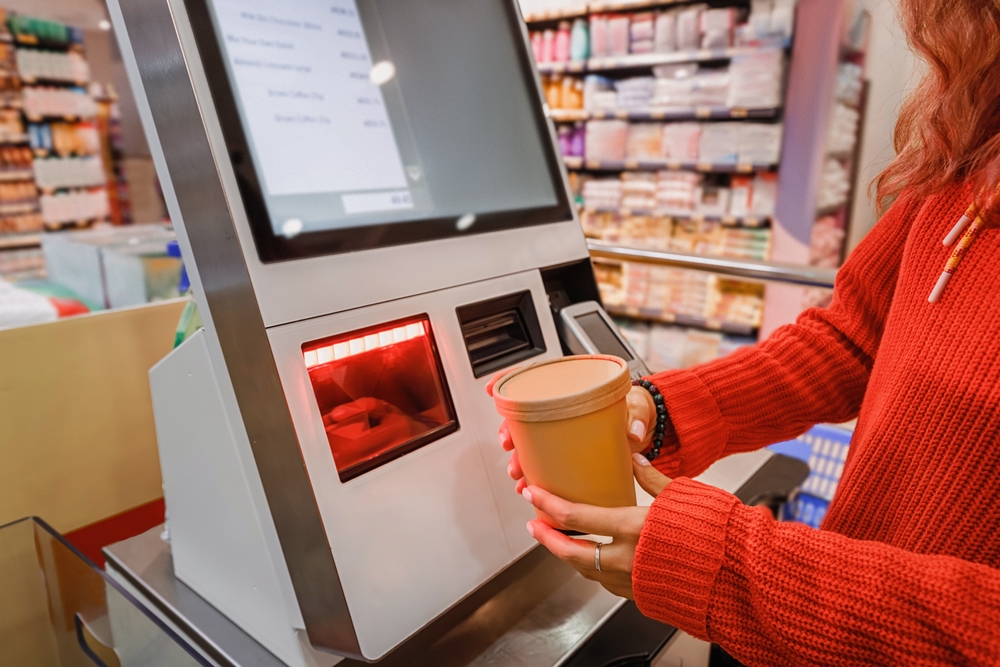
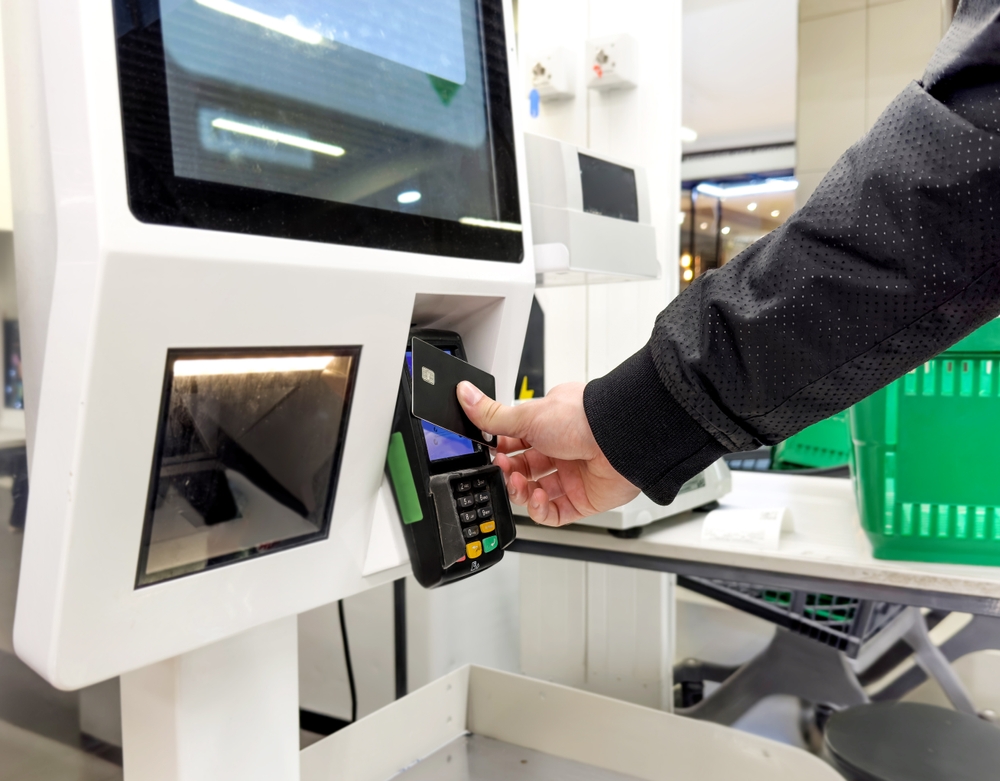
For years, self-checkout machines have been marketed as a faster and more convenient way to shop. Millions of Americans now scan and bag their own groceries without giving it much thought, even though those tasks were once handled entirely by store employees. Now, one New York lawmaker believes customers deserve something in return for doing that work.
Contents
show
A newly proposed bill would require retailers across New York to offer shoppers a 10% discount whenever they use self-checkout kiosks. Supporters say the idea simply shares the savings generated by automation with the people actually performing part of the checkout process, while critics are already questioning how practical the measure would be if it ever became law.
A Proposal That Would Pay Customers for Doing the Work
Assemblywoman Nikki Lucas, a Democrat representing Brooklyn, introduced Assembly Bill A.11501 during the closing weeks of New York’s legislative session. Although the proposal did not advance before lawmakers adjourned, it has already generated discussion about whether retailers should compensate customers who effectively perform part of an employee’s job during checkout.
The legislation argues that self-checkout systems have shifted responsibilities once carried out by paid cashiers directly onto shoppers. Instead of simply selecting products and paying for them, customers now scan barcodes, weigh produce, bag purchases, and often resolve minor checkout issues themselves. Lucas believes those additional responsibilities deserve financial recognition rather than being treated as a normal part of shopping.
In the bill’s legislative justification, Lucas wrote, “Retail businesses increasingly rely on self-checkout systems to reduce staffing and operational costs by shifting responsibilities traditionally performed by employees onto consumers.” She argues that businesses have benefited financially from reducing labor costs while customers have received little more than the promise of shorter lines.
Lucas went on to say, “Since customers are effectively completing portions of the checkout labor themselves without compensation, providing a mandatory discount helps ensure fairness, acknowledges consumer participation in store operations, and allows the public to share in the financial savings created by self-service technology.” Under her proposal, qualifying retailers would be required to automatically apply a 10% discount to purchases completed through self-checkout kiosks.
Why Supporters Believe the Proposal Makes Sense
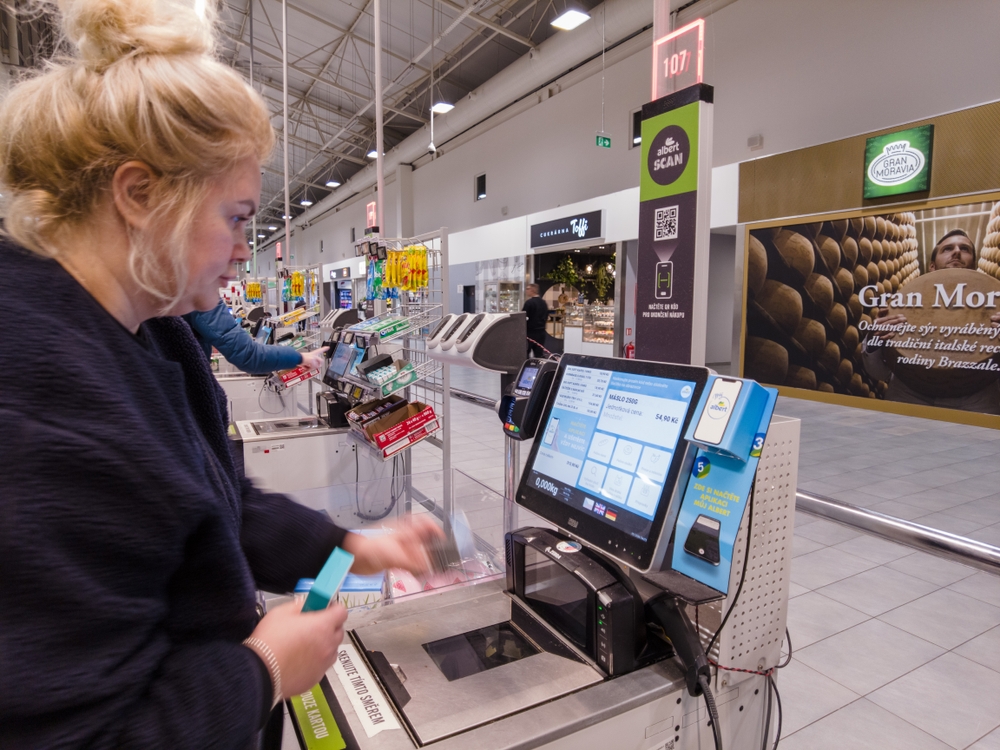
The proposal reflects a growing frustration among shoppers who feel self-checkout has gradually become less of a convenience and more of an expectation. While automated lanes were originally introduced to reduce waiting times, many retailers now dedicate far more space to kiosks than traditional cashier lanes, leaving customers with little choice but to complete transactions themselves.
Supporters argue that retailers have embraced self-checkout because it reduces payroll expenses while allowing fewer employees to supervise multiple checkout stations. Every customer who scans and bags their own groceries performs work that previously required paid staff, creating savings that remain almost entirely with the retailer.
Advocates say a mandatory discount would simply allow consumers to benefit from the efficiencies they help create. Rather than viewing the proposal as compensation for labor, they see it as sharing the financial advantages made possible by widespread automation. As technology continues replacing routine retail tasks, they argue shoppers should not shoulder additional responsibilities without receiving something in return.
The proposal also raises broader questions about the future relationship between businesses and consumers. As more industries introduce self-service technology, lawmakers and consumer advocates are increasingly asking whether the savings created through automation should benefit only companies or also the customers who actively participate in the process.
Self-Checkout Has Become a Growing Issue Across the United States
New York is far from the only state reconsidering how self-checkout should operate. Across the country, lawmakers have introduced proposals aimed at balancing convenience with concerns about theft, customer service, and staffing levels. While New York’s bill focuses on discounts, several other states have taken a different approach by proposing tighter regulations on automated checkout systems.
California, Connecticut, Ohio, Rhode Island, Massachusetts, and Washington have all considered legislation related to self-checkout in recent years. Many of these proposals would require retailers to maintain a minimum number of staffed checkout lanes or place limits on how many self-service kiosks can operate at the same time.
Another common feature involves restricting the number of items customers can purchase through self-checkout. Several bills have suggested limiting transactions to 15 items or fewer, with the goal of reducing theft while encouraging larger purchases to move through traditional cashier lanes where employees can provide assistance and monitor transactions more closely.
Although each proposal addresses different concerns, they all reflect a growing recognition that self-checkout has transformed retail shopping much faster than many state regulations have evolved. Legislators are now attempting to determine what balance should exist between automation, customer convenience, employee oversight, and consumer rights.
How Other States Are Responding to Self-Checkout
New York’s proposal may be grabbing headlines because of its 10% discount, but lawmakers elsewhere have largely focused on limiting self-checkout rather than rewarding shoppers for using it. Rising concerns over retail theft, customer frustration, and reduced staffing have prompted several states to introduce legislation aimed at tightening oversight of automated checkout lanes.
In California, Senator Lola Smallwood-Cuevas introduced Senate Bill 442 earlier this year. The proposal would have required retailers offering self-checkout to keep at least one traditional checkout lane staffed at all times while also limiting customers to 15 items per self-checkout transaction. However, Smallwood-Cuevas later announced she would no longer pursue the bill, bringing that proposal to a halt.
Connecticut lawmakers have taken a similar approach through Senate Bill 438, which would require grocery stores to maintain one staffed checkout lane for every two self-checkout stations. The proposal would also prevent stores from operating more than eight self-checkout kiosks at once. Rhode Island lawmakers have introduced comparable legislation after initially considering a customer discount similar to New York’s before shifting their attention toward staffing requirements.
Ohio has also entered the debate. State Senator Thomas F. Patton introduced Senate Bill 415, which would require grocery stores to operate at least one employee-manned checkout lane while assigning one worker to supervise every three self-checkout stations. The proposal would also prohibit customers from purchasing alcohol, tobacco products, and merchandise with theft-deterrent devices through self-checkout, while limiting transactions to 15 items.
New York City Is Already Considering Separate Restrictions
The statewide discount proposal isn’t the only effort to regulate self-checkout in New York. Earlier this year, New York City Council Member Amanda Farías introduced legislation aimed at changing how pharmacies and food retailers operate self-service checkout stations within the city.
Her proposal would establish a maximum of 15 items per self-checkout transaction while requiring retailers to provide one employee for every three self-checkout kiosks. Unlike Assemblywoman Lucas’ proposal, the city legislation focuses on improving supervision and customer assistance rather than providing financial incentives for shoppers.
Both measures reflect growing concerns about the increasing reliance on automated checkout systems. While one seeks to compensate customers for the additional work they perform, the other focuses on ensuring retailers continue providing enough human staff to assist shoppers and monitor transactions.
Although neither proposal has become law, they demonstrate that policymakers are paying closer attention to the rapid expansion of self-checkout technology and its impact on consumers, employees, and businesses alike.
What the Proposal Could Mean for Walmart and Other Retailers
If a mandatory 10% self-checkout discount were ever approved, it could affect some of the nation’s largest retailers. Companies such as Walmart, Target, Kroger, Costco, and numerous regional supermarket chains have invested heavily in self-checkout technology over the past decade, making automated lanes a standard feature in many stores.
For retailers, self-checkout has generally been viewed as a way to improve efficiency while reducing labor costs. A small team of employees can monitor several kiosks simultaneously, allowing businesses to operate with fewer cashiers during busy shopping periods. Supporters of Lucas’ proposal argue those labor savings should be shared with customers who now perform much of the checkout process themselves.
Retail industry groups, however, would likely oppose any requirement forcing businesses to provide automatic discounts. Grocery stores often operate on relatively thin profit margins, and a mandatory 10% reduction on thousands of daily transactions could significantly affect revenue, especially for retailers where self-checkout accounts for a large share of sales.
Businesses could also argue that self-checkout remains an optional convenience rather than a requirement. While many stores still offer staffed checkout lanes, critics note that customers frequently encounter long lines or limited cashier availability, leaving self-checkout as the fastest or only practical option.
Will New York Shoppers Actually See a 10% Discount?
For now, the answer is no. Assembly Bill A.11501 did not advance out of committee before New York’s legislative session concluded, meaning the proposal cannot move forward in its current form unless lawmakers reintroduce it during a future session.
Even so, the bill has succeeded in starting a conversation that extends well beyond New York. As retailers continue investing in automation, lawmakers across the country are increasingly questioning whether consumers should receive some benefit when they take on responsibilities that were once performed by paid employees.
Whether the solution comes in the form of discounts, stricter staffing rules, or limits on self-checkout transactions, one thing is becoming clear. The debate over automated checkout lanes is far from over, and future legislation could reshape the way millions of Americans shop every day.
As more stores embrace self-service technology, customers may begin expecting more than just shorter lines. If New York’s proposal gains traction in the years ahead, scanning and bagging your own groceries could eventually come with a financial reward instead of simply becoming another part of the shopping routine.