
Your cart is currently empty!
Why Tyson Foods, One of America’s Largest Meat Companies, Backs Lab-Grown Meat
There is a version of this story that sounds like a mistake. One of the biggest names in American chicken, a company whose brand is practically a synonym for the drumstick, has spent years quietly funneling money into technology designed to produce meat without raising or killing a single animal.
Contents
show
It is not a mistake, and it is not a small side project. Tyson Foods has been placing this bet since 2018, and rather than backing away as the idea grew controversial, it has deepened its involvement, joining funding rounds that value cultivated-meat startups in the billions. The company that dominates the conventional meat aisle is hedging, deliberately and repeatedly, against the possibility that the meat aisle of the future may not look like the one it built its fortune on.
What Tyson saw coming, why it keeps writing checks, and why its bet has run headlong into a wall of state-level bans is a story about where protein itself may be heading, and about a legacy giant determined not to be left behind if it does.
Where It Started
Tyson’s first move came in January 2018, when Tyson Ventures, the food company’s venture-capital arm, took a minority stake in a San Francisco startup then called Memphis Meats. The startup grew beef, chicken, and duck directly from animal cells, no livestock required, and had unveiled a lab-grown meatball back in 2016 that drew considerable attention.
It was not Tyson’s first foray into alternative protein. Two years earlier, the company had put $13 million into Beyond Meat for a roughly 5% stake in the plant-based burger maker. But the Memphis Meats investment was different in kind, because this was not a plant-based imitation. It was actual meat, grown in a bioreactor instead of on a farm.
Tyson framed the decision around a single word that connects everything it sells, from chicken to sausage to deli turkey. The company’s public explanation put it plainly, describing a strategy built to serve current and future demand at once. “This isn’t an ‘either or’ scenario; it’s a ‘yes and’ scenario.”
The logic, as Tyson laid it out, was that consumers wanted more protein, the global population was climbing toward roughly 10 billion by mid-century, and the world would need substantially more food produced sustainably. Traditional meat would keep doing the heavy lifting, but exploring new approaches was, in the company’s telling, simply intuitive for a business whose entire identity rested on protein.
The Company It Was Keeping
Part of what made the 2018 news notable was the roster of investors Tyson joined. Memphis Meats had already attracted Bill Gates, Richard Branson, and, tellingly, Cargill, the second-largest beef producer in the world. Two of the largest players in conventional meat were now financially invested in a technology that could, in theory, disrupt conventional meat.
The startup’s co-founder and chief executive, Uma Valeti, a cardiologist who traced the idea to a stem-cell trial he observed at the Mayo Clinic, understood exactly why that appealed to meat companies rather than threatening them. His pitch drew a sharp line between what he was building and the plant-based products crowding grocery shelves. “For the first time, we’re replacing meat with meat – not a meat alternative. That gets Tyson and Cargill enormously excited because they’re in the meat business.”
For a company like Tyson, which was selling around $30 billion a year of beef, poultry, and pork, that distinction mattered. Cultivated meat was not competition from outside the industry. It was a potential extension of the industry itself, one Tyson could help shape from the inside.
The Obstacle That Justified the Bet
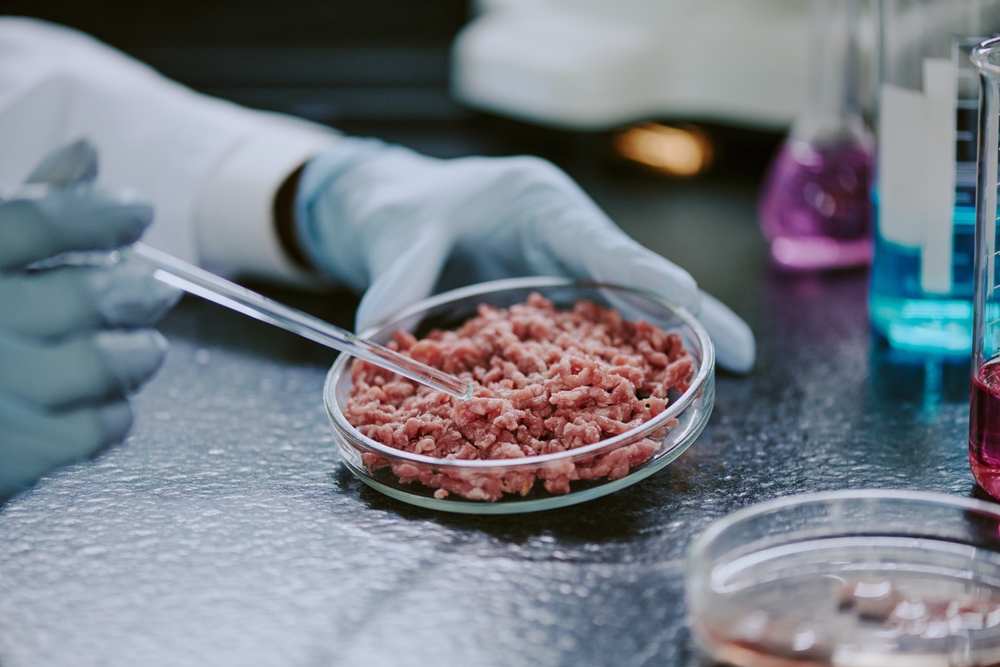
In 2018, the technology had one glaring problem, and it was the reason a partner like Tyson was worth having. Producing a single pound of cultivated meat cost somewhere around $2,400. The startup had impressed the world with a meatball but had commercialized nothing, and at those prices, it could not.
This was precisely where a giant with global scale, industrial cold storage, and vast distribution could help. Valeti told Forbes that cost was the central focus and predicted that cultivated meat would eventually undercut conventional meat on price. Tyson’s own venture chief, Justin Whitmore, framed the investment as insurance against disruption, the idea being that if the way protein gets produced or delivered fundamentally changes, Tyson intends to be present rather than blindsided.
From Experiment to Strategy
Here is where the seven-year gap in the original story matters, because Tyson did not simply make one investment and move on. Memphis Meats renamed itself UPSIDE Foods, and Tyson stayed with it. When UPSIDE closed a $400 million round to build a commercial-scale facility, Tyson joined again, alongside Cargill, Temasek, the Abu Dhabi Growth Fund, and Bill Gates, a raise that pushed the company’s valuation past $1 billion.
Tyson also widened its bets beyond a single startup. Through its venture arm, it backed Israel-based Future Meat Technologies, whose approach blends plant protein, cell-based meat, and lab-grown fat to cut costs, and which later closed what was at the time the largest funding round the cultivated-meat sector had seen. Industry analysts now routinely list Tyson among the notable public companies with exposure to lab-grown meat, describing a legacy processor using early-stage investments to secure a front-row seat to the scaling of bioreactor technology while its core chicken and pork businesses keep generating cash. Tyson reported first-quarter 2026 revenue of $13.65 billion, up more than 4% year over year, driven largely by those traditional segments.
The strategy that seemed counterintuitive in 2018 has become, in Tyson’s own positioning, a way to future-proof the business against resource scarcity, climate pressure, and shifting consumer tastes without abandoning the meat that pays the bills.
The Wall It Ran Into
If Tyson’s bet was that cultivated meat would eventually reach American plates, that outcome has grown considerably more complicated than the technology alone would suggest. The science cleared its regulatory hurdles. The politics did not.
Federal regulators have signed off. UPSIDE Foods received an FDA “no questions” letter on its cultivated chicken back in 2022 and cleared additional USDA review, and a second company, GOOD Meat, earned similar clearance. On paper, cultivated chicken is a federally inspected, federally approved product that can move in interstate commerce.
Then the states intervened. Beginning with Florida and Alabama in 2024, a growing list of states, including Mississippi, Montana, Nebraska, and Texas, has enacted laws banning or restricting the sale and manufacture of cultivated meat, with Indiana imposing a temporary moratorium and others adding aggressive labeling rules. The result is a genuine regulatory collision. Federal agencies say the product is safe and inspectable, while a bloc of state legislatures says it cannot be sold at all.
UPSIDE has fought back in court, suing Florida and later Texas because state bans conflict with federal poultry law and unlawfully discriminate against interstate commerce. The litigation has been a mixed bag. A federal appeals court upheld Florida’s ban in March 2026, rejecting the argument that federal poultry law preempts it, though other claims and other states’ laws remain unsettled. As of early 2026, lab-grown meat was not actually being produced for sale on American grocery shelves, caught between federal approval and a patchwork of state prohibitions.
What Tyson Is Really Betting On
Seen against that backdrop, Tyson’s position looks less like enthusiasm for a finished product and more like a long, patient wager placed by a company that can afford to be wrong for a while. Its core business is not going anywhere; US red meat consumption has stayed high, and Tyson’s traditional segments remain its engine. The cultivated investments offload the execution risk onto startups while giving Tyson a stake in whatever comes next.
That framing has been consistent from the start. Tyson has argued that no one knows exactly what the future of food will look like, which is the entire reason for exploring several paths at once. Some approaches will resonate with consumers and some will not, but the company’s contention is that every attempt moves the business, and the broader effort to feed a growing population, a step forward.
Whether that future arrives on schedule or arrives at all in states now racing to ban it remains an open question. What is clear is that the country’s most recognizable chicken company decided years ago that it would rather help build the alternative than be replaced by it, and nothing in the years since has persuaded it to fold that bet.
alternative protein, Beyond Meat, Cargill, cell-cultured meat, cellular agriculture, cultivated meat, cultivated meat ban, FDA approval, Florida SB 1084, food innovation, food technology, Future Meat Technologies, lab-grown meat, meat industry, Memphis Meats, sustainable protein, Tyson Foods, Tyson Ventures, Uma Valeti, Upside Foods