
Your cart is currently empty!
Grandfather Tossed in the Air by a Yellowstone Bison Comes Out of Surgery Grateful
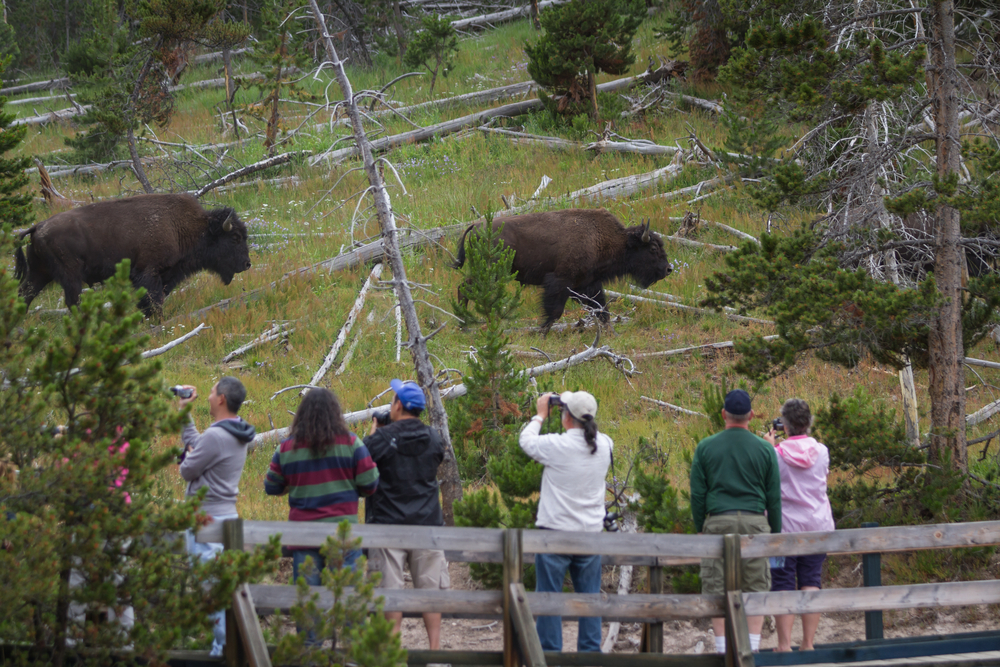
It was supposed to be a quiet end to an ordinary day. A 65-year-old grandfather and his 13-year-old grandson had finished dinner at their campground in Yellowstone National Park and set out for an after-dinner walk, the kind of unremarkable moment that fills a yearly family trip. Somewhere along the road, they rounded a corner and found a bison.
Contents
show
What happened next was captured on video and seen by millions of people around the world. The grandfather’s body flipped roughly eight feet into the air, tossed like something weightless by an animal that outweighed him by nearly a ton, before he came down hard on his side.
The footage was violent enough that the photographer filming it dropped his camera to intervene. The man on the ground would leave the park with his strongest bone shattered in four places and a two-hour ambulance ride ahead of him. And yet, once he was through surgery and able to speak, the message he chose to share about the animal that nearly killed him was not the one anyone expected.
The Man Behind the Viral Clip
The grandfather is Carl McDaniel, also identified in reporting as Carl Isom-McDaniel, a 65-year-old retiree from Kendall, Washington. He is not a careless tourist chasing a photo, but a community leader who holds seats on multiple boards back home, and the trip to Yellowstone was an annual tradition he shared with his grandson.
That distinction matters, because in the days after the video spread, McDaniel became a meme, his airborne silhouette turned into a punchline across the internet. The reality underneath the clip was a serious injury to a grandfather who had done, by every account, nothing wrong.
What the Video Shows
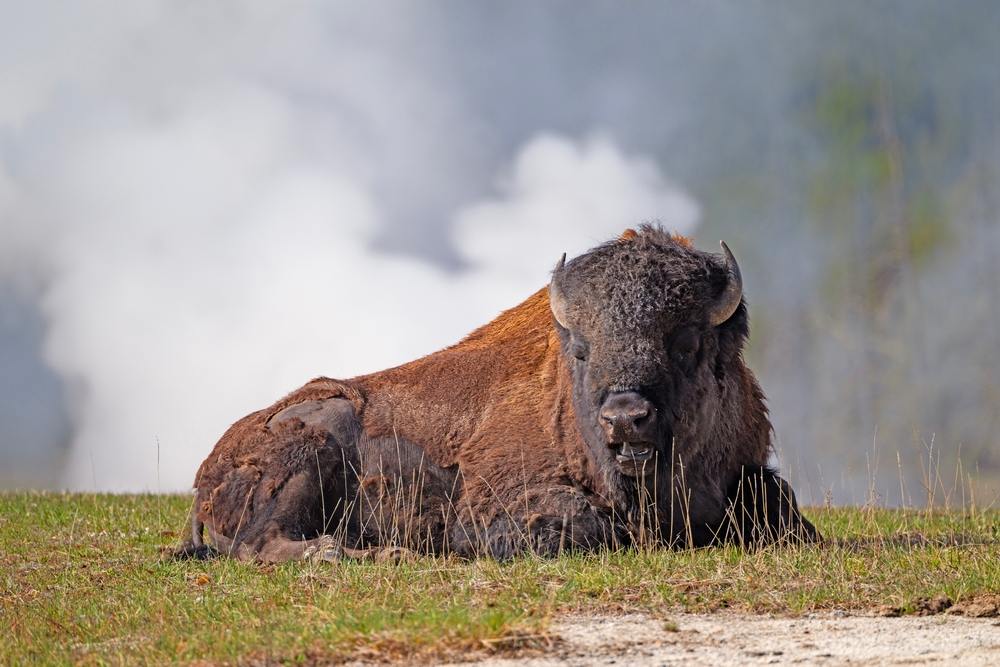
The encounter began calmly enough. McDaniel and his grandson came upon a large bison rolling around in the dust near a picnic area, appearing untroubled and untroubling. They kept their distance, roughly a hundred yards, and stopped to take a few photographs before planning to continue on their way.
McDaniel himself described those first moments as entirely peaceful, recalling that the animal showed no signs of aggression and seemed content in the dirt. But as they watched, the bison sat up and turned its attention toward them, and McDaniel’s instincts sharpened. According to Mike MacLeod, the photographer documenting the scene, the grandfather read the shift immediately.
“When the bison started to get up, the grandfather’s like, ‘OK, time to leave,’ and they moved off behind these trees,” MacLeod said.
They had done the right thing. They had kept their distance, and at the first hint of trouble, they moved to leave. It should have been enough.
The Truck That May Have Set It Off
What appears to have escalated the situation was not the grandfather or his grandson at all. As they took their photos, a white pickup truck drove past, and the driver leaned on the horn, seemingly trying to prod the bison out of the way.
McDaniel believes that horn is what tipped an already restless animal into aggression. The widely shared video has no audio, so this piece of the story comes from his account rather than the footage, but the timing lines up with what witnesses saw. The bison, agitated, first turned its attention toward the truck, which kept driving and disappeared from view. With the truck gone, the animal’s focus swung back to the two people who had taken cover in the trees.
The Charge and the Split-Second Choice
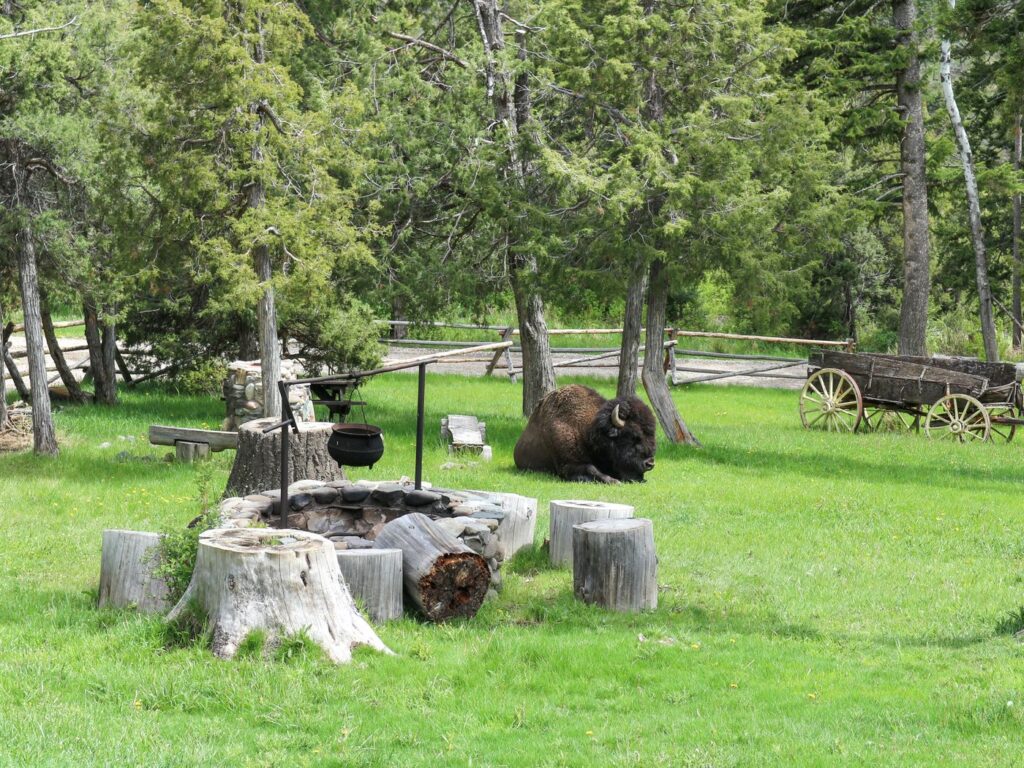
There was almost no time to react. The bison was within a hundred yards and, as McDaniel knew, capable of covering that ground in seconds. He made a fast decision, telling his grandson to run one direction while he bolted the other, hoping to split the animal’s attention and draw it toward himself.
The grandson got away with some quick footwork, darting clear of the charge. His grandfather was not as lucky. The bison chased him around a stand of pine trees as he tried to escape, and then it caught him. MacLeod, watching through his lens, described the moment the animal struck.
“The bison hooked him with his left horn on his hip and tossed him in the air. He made a perfect flip and landed on his side,” MacLeod said, noting the animal was at least six feet tall and that McDaniel sailed well above it.
The Photographer Who Charged a Bison
Mike MacLeod is a professional photographer from Bozeman, Montana, and a former Army combat photographer, which may explain both why he was steady enough to keep filming and why he recognized when it was time to stop. He had been shooting the bison for a while, watching it move through the campground in an agitated state, and he could see trouble building.
When McDaniel hit the ground and lay there unable to move, the bison did not simply run off. It stood over him, shaking its head in a display of aggression, and MacLeod became convinced the animal was about to gore the helpless man. So he put the camera down and made himself the target instead, running at the two-thousand-pound animal, arms pumping, yelling as loudly as he could, trying to look as large and threatening as possible.
Others nearby saw what he was doing and joined in, rushing toward the bison and shouting until the animal finally turned and took off. It was a genuinely dangerous thing to do, and it very likely spared McDaniel far worse injuries.
The Bystanders Who Stepped In
With the bison gone, the strangers who had witnessed the attack converged on the injured grandfather, and by every account they handled it beautifully. A nurse who happened to be nearby began tending to his leg. One person held his head, another held his hand, and someone else kept watch in case the bison circled back. A woman got on the phone with 911.
Park emergency medical personnel arrived within about ten minutes and took over. McDaniel later spoke with warmth about the people who surrounded him in those minutes, describing them as amazing and relentlessly positive, doing everything they could to help a man they had never met. His own first concern, MacLeod said, was not himself but his grandson.
The Injuries and the Surgery
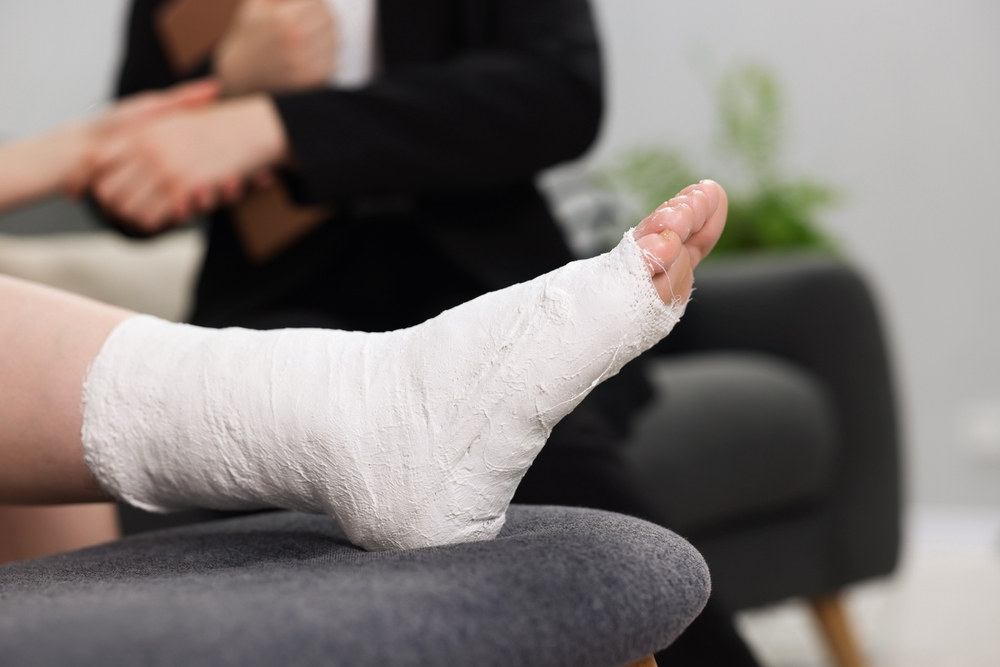
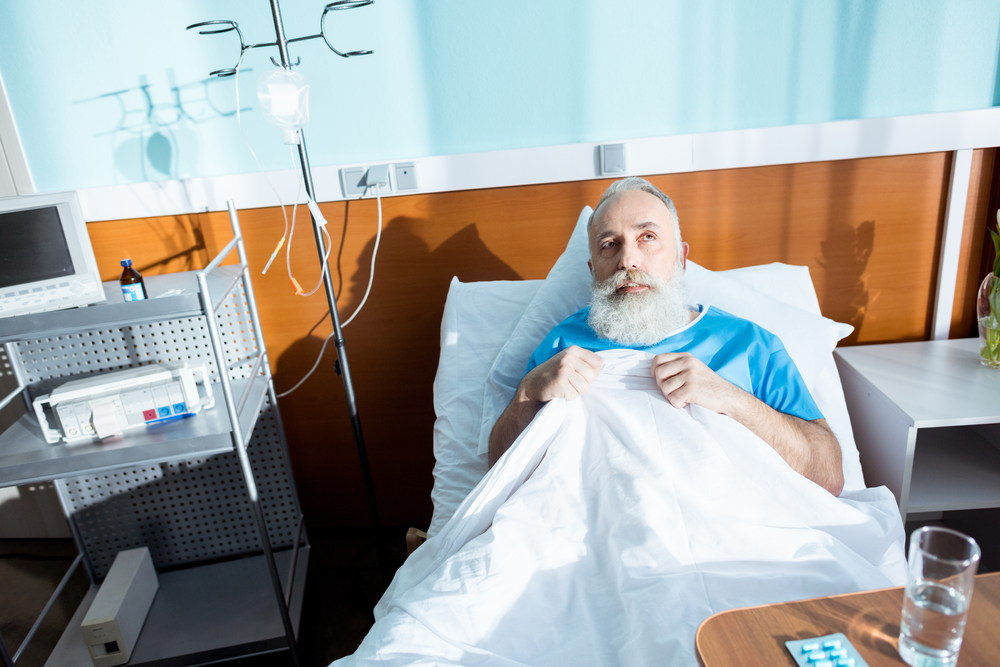
The damage was significant. McDaniel had broken his femur, the strongest bone in the human body, in four separate places near his hip, along with a scattering of bruises. From Yellowstone he was transferred two hours away to a hospital in Bozeman, a journey he endured in intense pain and remembered gratefully because of the paramedic who helped him through it.
He had surgery on Sunday, and by Monday he was already able to stand, with physical therapy ahead of him to get walking again. Considering how the video looks, the outcome could have been far worse, a fact McDaniel himself was quick to point out, saying the ordeal was not nearly as catastrophic as it might have been.
His Surprising Message From the Hospital Bed
Here is where the story turns into something other than a cautionary tale, because the man who was gored and flipped and left with a shattered leg came out of surgery with kind words for the animal that did it.
From his account of lying immobile on the ground with the bison directly over him, McDaniel kept returning not to fear or anger but to a strange gratitude. The animal, he pointed out, had every opportunity to finish what it started. It could have stomped him, gored him, done nearly anything to end his life as he lay there unable to move, and it simply did not. He credited the bison for that restraint, treating the moment less as an attack survived than as a mercy received.
He shared his relief publicly, too. Late in the weekend he posted a brief message to Facebook, “Thank you everyone I am OK,” accompanied by a thumbs-up. And according to MacLeod, one of McDaniel’s biggest worries in the aftermath had nothing to do with his own injuries. He was anxious that people would assume he had provoked the animal, and he wanted to see the video for himself just to be sure the whole thing had not somehow been his fault.
Nobody’s Fault: A Bison Looking for a Fight
It was not his fault, and MacLeod has been emphatic on that point. From his vantage, every visitor he watched that evening, McDaniel and his grandson included, kept a respectful distance and did nothing to invite the charge. McDaniel was roughly a hundred yards from the bison, far beyond the twenty-five-yard minimum the park requires.
The animal, by contrast, had been spoiling for a confrontation. Earlier that day it had charged a group of teenagers, who scattered safely, and it moved through the campground agitated enough that people were shouting warnings to one another. MacLeod described a bull that had arrived, in his words, with a chip on its humped shoulder, charging anything and everything in its path. What puzzled him most was why it fixated on these two in particular when the campground was full of people, many of them closer to the animal than the grandfather and grandson ever were. He has been around bison for years, and even to him, this behavior was strange.
Why Bison Turn Dangerous in Summer
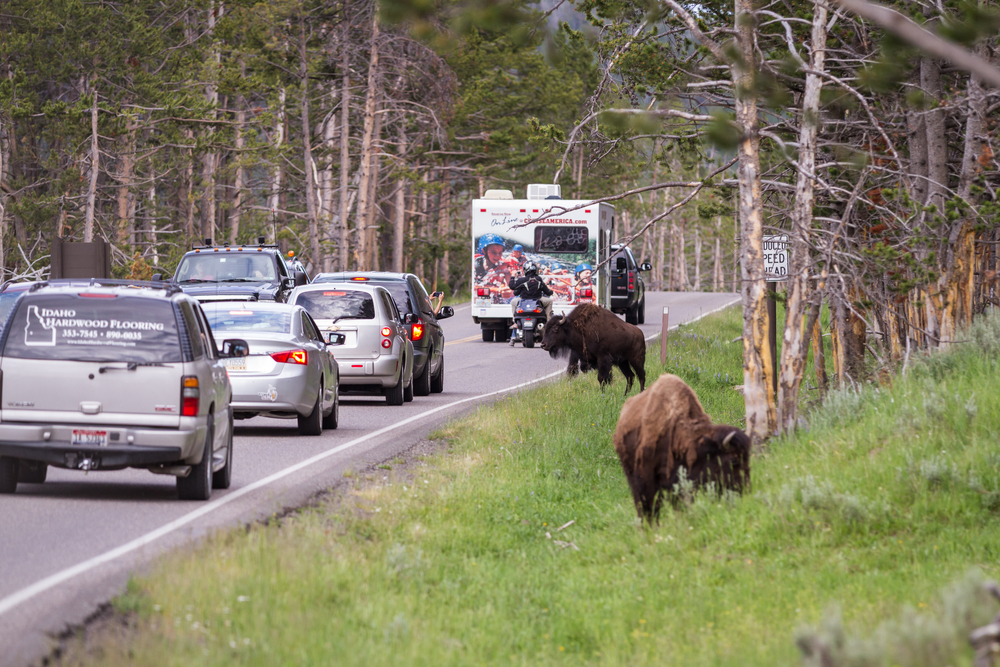
There is a biological explanation for at least part of it. Yellowstone’s bison enter their annual rut roughly from June through September, and during that stretch the bulls surge with energy and aggression as they compete for dominance and for mates. That window happens to overlap with the height of the park’s tourist season, putting the most volatile version of the animal in front of the largest crowds of the year.
The raw numbers underline why that combination is so dangerous. Male bison can weigh up to two thousand pounds, they can run three times faster than a human, and they have injured more people in Yellowstone than any other animal in the park. An agitated bull is not a photo opportunity. It is one of the most hazardous things a visitor can encounter.
A Pattern of Close Calls, and the Rules That Prevent Them
McDaniel’s injury was the second bison attack in Yellowstone this year. Two weeks earlier, on June 26, a twelve-year-old was hurt near Mud Volcano, an incident the park said remained under investigation. Two victims in a matter of weeks is a reminder that these encounters are not freak occurrences but a recurring hazard of the season.
The National Park Service asks visitors to stay at least twenty-five yards away from bison, elk, and other large animals, and at least a hundred yards from bears and wolves. If a bison approaches, the guidance is to move away rather than hold your ground, and if it follows, to use bear spray while retreating and seek cover behind trees or vehicles. Never approach, never crowd, never assume a calm-looking animal is safe.
The hardest lesson in McDaniel’s story is that he followed those rules and it happened anyway. He kept his distance, he read the danger early, he tried to lead the animal away from his grandson, and a bull bison having a bad day singled him out regardless. The distance rules exist precisely because wild animals are unpredictable, and even a careful, respectful visitor can round a corner on the wrong evening. That McDaniel walked away from it, eventually, and chose to thank the animal rather than curse it, is its own kind of remarkable.
Animal Attack, bison, Bison Attack, bison rut, Bridge Bay Campground, broken femur, Carl McDaniel, grandfather bison, human wildlife conflict, mating season, Mike MacLeod, National Park Service, park safety, tourist safety, Viral Video, wildlife encounter, wildlife safety, Wyoming, Yellowstone bison attack, Yellowstone National Park