
Your cart is currently empty!
Scientists Say Intelligent Aliens May Never Need Physical Bodies
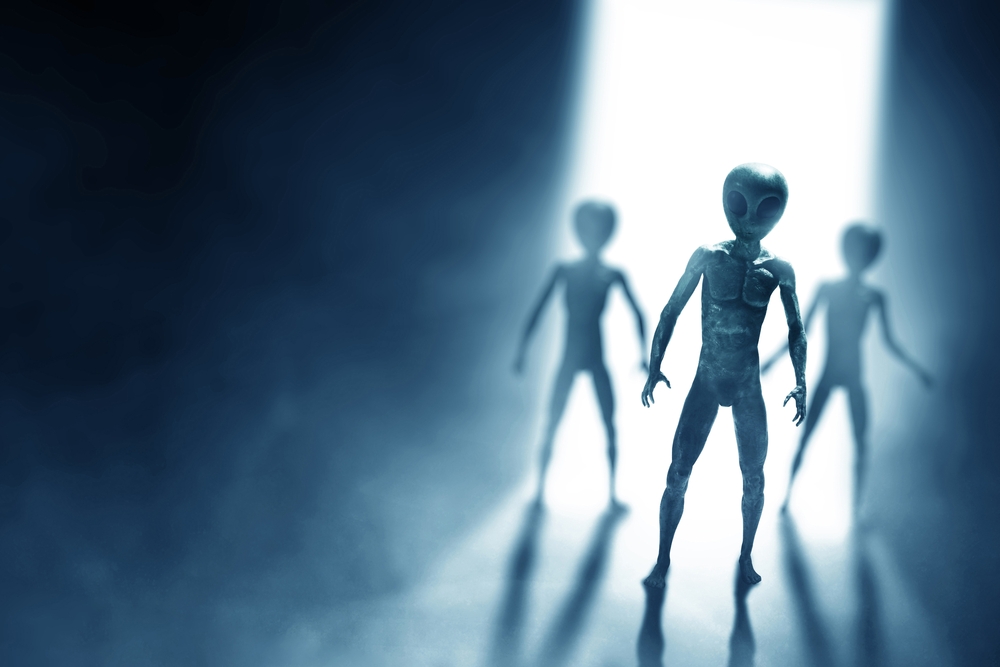
For decades, science fiction has trained us to imagine extraterrestrials as creatures with eyes, limbs, and faces that are at least vaguely familiar. Even the strangest movie aliens usually share one assumption with humans. They exist inside bodies.
Contents
show
A growing philosophical argument suggests that assumption could be one of the biggest mistakes we’ve ever made. If conscious life exists elsewhere in the universe, it may not resemble any organism we know. In fact, it might not even require a body in the way we understand the term.
A New Theory Challenges Humanity’s Favorite Assumption
The idea comes from philosophers Eric Schwitzgebel of the University of California, Riverside, and Jeremy Pober of the University of Lisbon. In a recent working paper, the researchers explore whether consciousness must be tied to Earth-like biology or whether it could emerge in forms that seem completely foreign to us.
Rather than attempting to solve the mystery of consciousness itself, they focus on a more specific question. Is there any reason to believe awareness depends on flesh, blood, neurons, or even carbon-based life?
Their answer is surprisingly simple. Probably not.
According to the researchers, humans often assume that intelligent life elsewhere would share many of our biological features simply because our own consciousness depends on a human brain. They argue that this conclusion may reveal more about human thinking than about the universe itself.
“The universe may contain minds stranger than we can imagine,” Schwitzgebel said.
That possibility pushes the search for extraterrestrial life into unfamiliar territory. Instead of looking only for beings that resemble animals or people, scientists and philosophers may also need to consider entirely different kinds of conscious systems.
Consciousness May Depend On Complexity, Not Biology
At the center of the paper is a concept philosophers call “substrate flexibility.”
The idea suggests that some properties are not limited to a single material. A drinking cup can be made from glass, metal, wood, or plastic. A book can exist on paper or as a digital file. Music can be stored on vinyl records, compact discs, or computer servers.
The material changes, but the essential function remains.
Schwitzgebel and Pober argue that consciousness may work in much the same way. If awareness depends on the right type of organized complexity rather than one specific biological ingredient, then there could be many different paths toward conscious experience.
That would mean human brains are only one example among countless possibilities.
Instead of assuming consciousness requires neurons identical to ours, the theory suggests other physical systems could potentially support awareness if they organize information in sufficiently sophisticated ways.
The researchers stop well short of claiming they have proven this idea. Their point is that nothing currently demonstrates consciousness must remain exclusive to Earth’s biology.
Earth May Be A Tiny Sample Of What Nature Can Produce
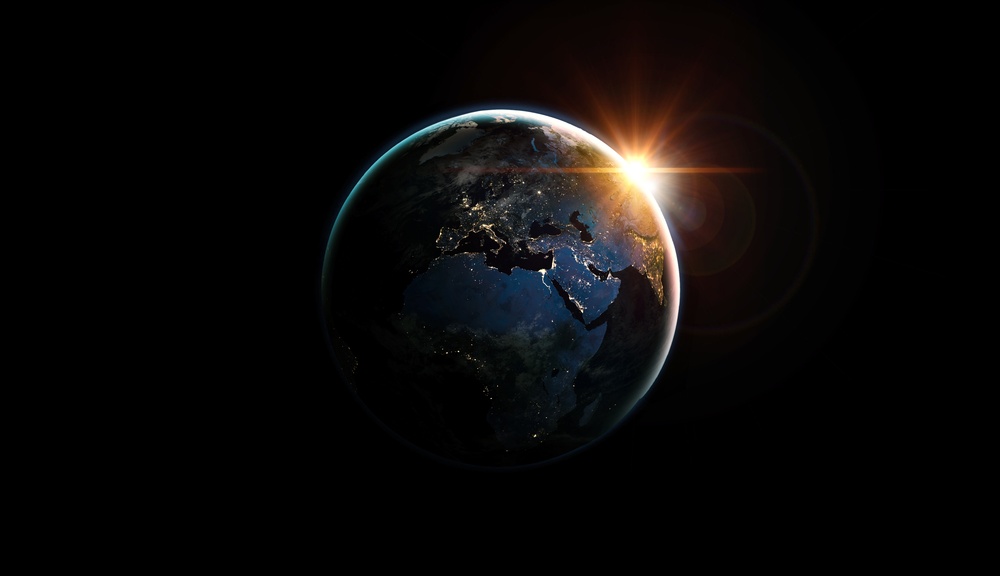
The scale of the universe gives the theory additional weight.
Astronomers estimate that the observable universe contains roughly one trillion galaxies. Each galaxy contains enormous numbers of stars, many of which host planets with environments vastly different from Earth’s.
If even a small fraction of those worlds developed life, evolution would have had countless opportunities to experiment with different chemical ingredients and biological designs.
Our own planet already demonstrates nature’s creativity.
Octopuses solve problems using nervous systems unlike those of mammals. Bees process information through brains that are tiny compared with ours. Dogs experience the world through senses that humans can barely imagine.
Despite these dramatic differences, each species displays sophisticated behavior shaped by millions of years of evolution.
If one planet can produce such diversity, the researchers argue that the universe could contain life forms whose physical makeup lies far beyond anything found on Earth.
Some scientists have even explored whether alien organisms might rely on alternative amino acids, unfamiliar solvents, or chemical structures completely unlike those used by terrestrial life.
The result could be living systems that challenge almost every expectation humans currently hold.
Why Human Thinking May Be Holding Us Back
The researchers introduce a term that captures this tendency to place Earth at the center of every discussion about life.
They call it “terrocentrism.”
The word describes the assumption that Earth provides the universal blueprint for biology and consciousness throughout the cosmos.
History suggests humanity has fallen into similar traps before.
For centuries people believed Earth occupied the center of the universe. Later discoveries showed that our planet circles the Sun, the Sun occupies an ordinary position within the Milky Way, and our galaxy is only one among billions.
Each scientific breakthrough forced humanity to accept a less privileged place in the cosmos.
Schwitzgebel and Pober argue that consciousness may represent the next step in that same progression.
If advanced civilizations have evolved under dramatically different conditions, there is little reason to expect every conscious species would arrive at the same biological solution.
Assuming otherwise may simply reflect human bias.
Science Fiction May Be Closer Than We Think
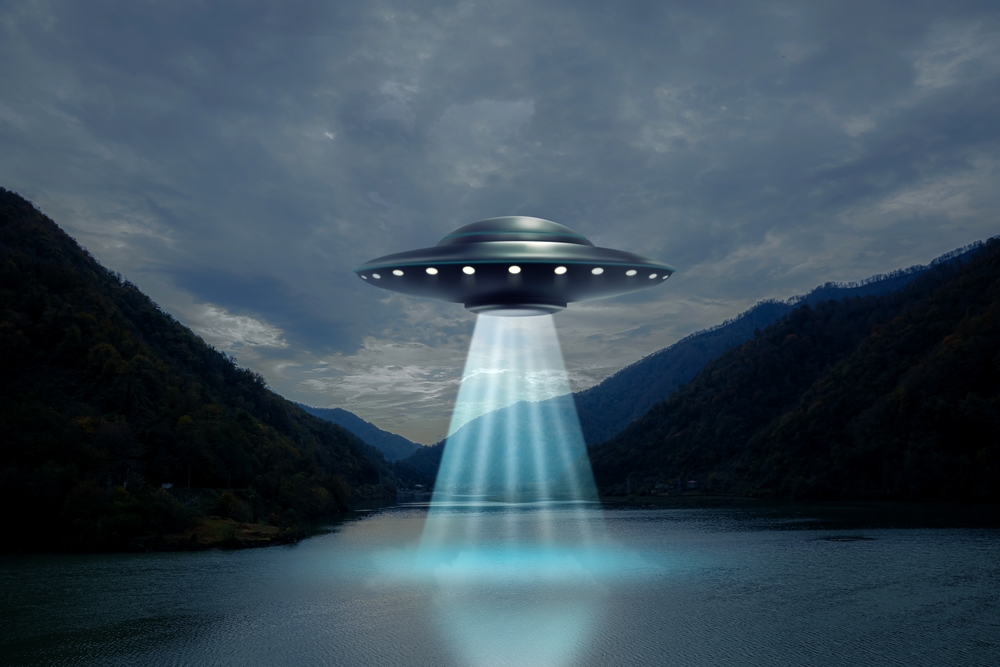
Popular culture has long imagined alien species with unusual appearances, but most fictional civilizations still possess recognizable bodies.
Whether it’s large-headed visitors in classic UFO stories or towering extraterrestrials from blockbuster films, audiences generally expect intelligent life to have limbs, organs, and faces.
Some modern science fiction has begun exploring more unconventional possibilities.
Andy Weir’s novel Project Hail Mary presents an alien species that evolved under conditions radically different from those on Earth. Its members possess mineral-like outer shells, crystal-based brains, steam-powered muscles, and biological systems adapted to an environment saturated with ammonia.
Although fictional, examples like this illustrate the central point made by the researchers.
Once evolution begins under different planetary conditions, there is no guarantee it will produce organisms that resemble humans.
Reality could prove even stranger than fiction.
Instead of finding creatures with familiar anatomy, future explorers might encounter forms of intelligence built upon physical principles that have never existed on Earth.
A Bigger Universe Means Bigger Possibilities
One of the strongest arguments behind the theory is not based on biology alone. It comes from probability.
The researchers estimate that at least one thousand behaviorally sophisticated extraterrestrial civilizations may have existed somewhere during the history of the observable universe. They describe this estimate as conservative, given the enormous number of galaxies and planets available for life to emerge.
Even if only a tiny percentage developed intelligence, evolution would have played out under vastly different environmental conditions across billions of years.
That creates opportunities for nature to produce solutions that humans have never imagined.
The implication is difficult to ignore.
If consciousness has appeared many times throughout cosmic history, expecting every intelligent species to think, function, and exist like humanity becomes increasingly difficult to defend.
Instead, the universe may be filled with minds that experience reality through forms completely unlike our own.
The Copernican Principle May Apply To Consciousness Too

The researchers draw inspiration from one of the biggest shifts in scientific history.
When Nicolaus Copernicus proposed that Earth revolved around the Sun rather than the other way around, he challenged humanity’s belief that our planet occupied a privileged place in the universe. Later discoveries revealed that the Solar System itself is not special. The Milky Way is just one galaxy among countless others, and even our galaxy sits in no particularly remarkable location.
Schwitzgebel and Pober believe consciousness deserves a similar change in perspective.
They refer to this idea as the “Copernican principle of consciousness.” The principle argues that humans should be cautious about assuming our version of consciousness is the only possible model simply because it is the only one we currently know.
From this perspective, Earth becomes one example rather than the standard against which every other form of life should be measured.
If evolution has unfolded independently on thousands or even millions of distant worlds, there is little reason to expect every successful pathway to produce brains, bodies, and senses like ours.
Instead, consciousness itself could be far more adaptable than human experience suggests.
Could Artificial Intelligence Eventually Become Conscious?

Although the paper focuses primarily on extraterrestrial life, its conclusions naturally extend to one of today’s biggest technological debates.
If consciousness is not limited to biological brains, could machines eventually become conscious?
The two philosophers approach this question differently.
Jeremy Pober argues that accepting multiple possible biological substrates does not automatically mean every material can support conscious experience. Silicon chips and computer processors may never possess the right properties, regardless of how powerful they become.
Eric Schwitzgebel takes a more open position.
He argues that once people abandon the assumption that consciousness requires human biology, it becomes more difficult to dismiss artificial systems solely because they are built from silicon instead of organic tissue.
Rather than focusing on whether computers can perfectly imitate the human brain, he believes researchers should ask a broader question.
What kinds of systems are capable of producing conscious experience?
That shift in thinking could influence future research into artificial intelligence just as much as it influences the search for alien life.
Current AI systems are remarkably capable of processing language, recognizing patterns, and solving complex problems. Whether any of those abilities amount to genuine awareness remains one of the most controversial questions in science and philosophy.
The new paper does not attempt to answer it.
Instead, it suggests that humanity may be asking the wrong question altogether.
Consciousness Might Exist In Forms We Would Never Recognize
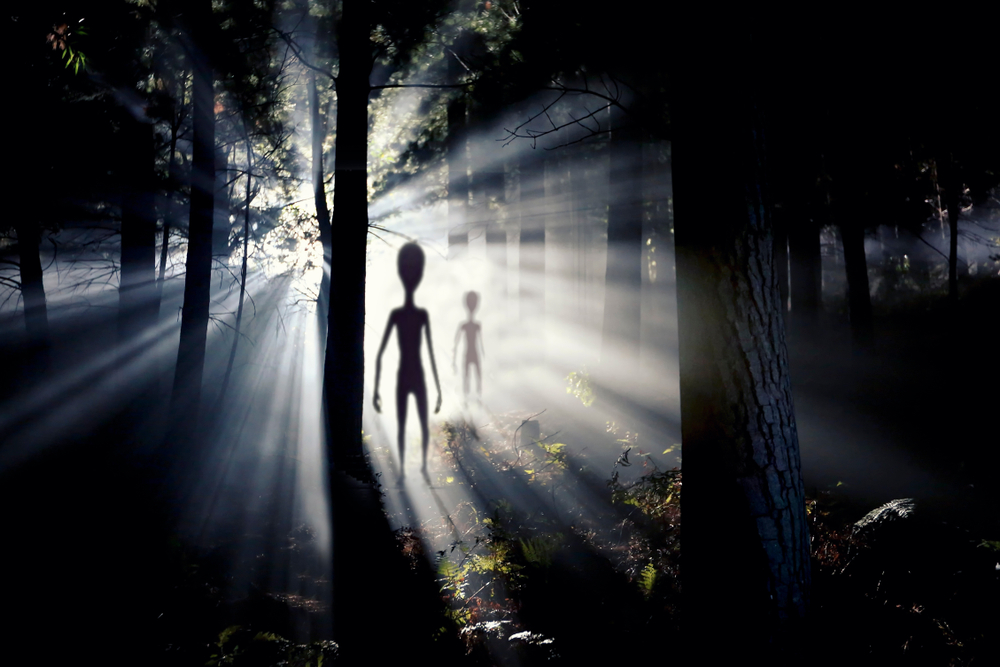
One challenge raised by the theory is surprisingly practical.
If alien consciousness looks nothing like our own, would we even recognize it?
Most searches for extraterrestrial intelligence rely on assumptions rooted in human experience. Scientists often look for radio transmissions, visible technology, industrial pollution, or planetary environments that resemble Earth’s.
Those methods make sense if intelligent civilizations develop along paths similar to ours.
But what if they do not?
A conscious system built from unfamiliar chemistry, distributed across enormous physical structures, or operating on entirely different timescales might leave behind signs that humans would overlook completely.
Communication presents another obstacle.
Scientists have already suggested that advanced civilizations might use technologies far beyond conventional radio signals.
Some researchers have explored the possibility that highly advanced species could communicate through gravitational waves, subtle ripples in spacetime first confirmed by scientists less than a decade ago.
Even if humanity detected such signals, understanding them would represent another enormous challenge.
An advanced civilization thousands or millions of years ahead of our own might communicate using physical principles that remain completely unknown to us today.
That possibility means our apparent cosmic silence may not indicate an empty universe.
It could simply reflect the limitations of human perception.
The Theory Connects With One Of Astronomy’s Biggest Mysteries
The discussion also intersects with the famous Fermi paradox.
Physicist Enrico Fermi famously questioned why humanity has found no convincing evidence of intelligent extraterrestrial civilizations despite the immense size and age of the universe.
If life is common, where is everybody?
Numerous explanations have been proposed over the decades.
Some researchers suggest intelligent civilizations destroy themselves before mastering interstellar travel.
Others argue alien societies may be separated by such enormous distances that meaningful contact becomes almost impossible.
Another possibility is that advanced civilizations exist but use communication technologies humanity cannot detect.
The new theory introduces an additional consideration.
Perhaps we are searching for the wrong kinds of intelligence.
If conscious beings exist in forms unlike anything found on Earth, they may leave traces that do not match humanity’s expectations.
Our instruments, search strategies, and even our imagination could all be shaped by assumptions that are far too narrow.
Rather than revealing an empty universe, the absence of contact may simply highlight how much remains unknown.
A Humbling Reminder About Humanity’s Place In The Cosmos
Throughout history, science has repeatedly challenged ideas that once seemed obvious.
People believed Earth occupied the center of creation.
They believed only our planet could support life.
Many assumed intelligence itself was uniquely human until studies revealed remarkable cognitive abilities in animals ranging from dolphins and elephants to octopuses and crows.
Each discovery expanded humanity’s understanding while shrinking the list of qualities that make us truly unique.
The new theory follows that same tradition.
It does not claim alien consciousness has already been discovered.
It does not argue that invisible minds are hiding throughout the universe.
Instead, it encourages scientists to remain open to possibilities that extend beyond familiar biological models.
That mindset could prove valuable as astronomy enters an era of increasingly powerful telescopes, planetary surveys, and searches for biosignatures on distant worlds.
Every new discovery reminds us that the universe often refuses to match our expectations.
Looking Beyond Familiar Ideas
The search for extraterrestrial life has always been driven by curiosity, but curiosity works best when it is not constrained by assumptions.
Whether future explorers discover microbial organisms beneath icy moons, complex ecosystems on distant exoplanets, or signs of civilizations unlike anything imagined in science fiction, each finding will reshape humanity’s understanding of life itself.
Schwitzgebel and Pober’s proposal offers no guarantees that exotic conscious beings exist.
What it does provide is a reminder that the universe has repeatedly surprised us.
If consciousness can emerge wherever the right conditions and complexity exist, then humanity’s version may represent only one chapter in a much larger story. Somewhere among the trillions of galaxies scattered across the observable universe, minds unlike any we have ever conceived could already be experiencing reality in ways we have yet to imagine.