
Your cart is currently empty!
Why Americas Water Crisis Is Closer Than Many People Think

For most Americans, turning on the kitchen tap is an act so ordinary it barely registers. Water arrives instantly, clean and reliable, with little thought given to where it comes from or how long it will last. That assumption has held true for generations, even in places that regularly battle drought.
Contents
show
But along the Texas Gulf Coast, that certainty has been shaken.
Corpus Christi, a city of more than 300,000 people and the economic heart of one of America’s largest petrochemical corridors, has spent the past year confronting an unsettling possibility. Officials warned that if conditions continued to deteriorate, the city could eventually face a future unlike anything seen in modern American history. Reservoirs were shrinking, demand remained high, and emergency planning shifted from theoretical exercises to practical discussions about how residents, businesses, schools, and hospitals would cope if supplies continued to decline.
Then, in a dramatic twist, weeks of rainfall changed the immediate outlook.
The storms bought the city valuable time, delaying the projected timeline for its first official water emergency. Yet officials insist the rain has not solved the problem. Instead, it has highlighted an uncomfortable reality that extends far beyond one Texas city. As climate change intensifies drought cycles and populations continue to grow, many communities across the United States are discovering that water can no longer be treated as an unlimited resource.
Rain Delivered Relief, But Not a Lasting Solution
Just months ago, Corpus Christi appeared to be moving rapidly toward a critical milestone.
City projections suggested officials could declare a Level 1 water emergency as early as late 2025. At one stage, engineers feared available water supplies could become dangerously limited during the summer as reservoirs reached historic lows. The situation prompted urgent discussions about mandatory conservation measures, emergency infrastructure projects, and how industries that consume millions of gallons every day would respond.
Then the weather shifted.
Heavy rains across parts of South Texas replenished several of the reservoirs supplying the city. Updated forecasts released by city officials now project that a Level 1 water emergency would not likely be needed until September 2027, nearly two years later than previously expected.
The improvement was significant enough that Corpus Christi Mayor Paulette Guajardo initially thought the revised projection contained an error.
“This is such good news,” she said after learning of the updated timeline, while also emphasizing that the city cannot afford to slow its long-term planning.
The biggest gains came at Lake Corpus Christi, where storage climbed dramatically after months of severe depletion. Lake Texana also rebounded to full capacity following the rainfall, although that reservoir has historically filled and emptied quickly depending on weather patterns. Choke Canyon Reservoir, however, received far less rain and continues to remain at critically low levels despite holding a large share of the region’s remaining water.
The improved outlook may have postponed the emergency, but city leaders repeatedly stressed that the underlying vulnerability has not disappeared.
Officials described the additional time as an opportunity to accelerate new water projects rather than celebrate the end of the crisis.
How Did Corpus Christi Reach This Point?
The city’s predicament did not emerge overnight.
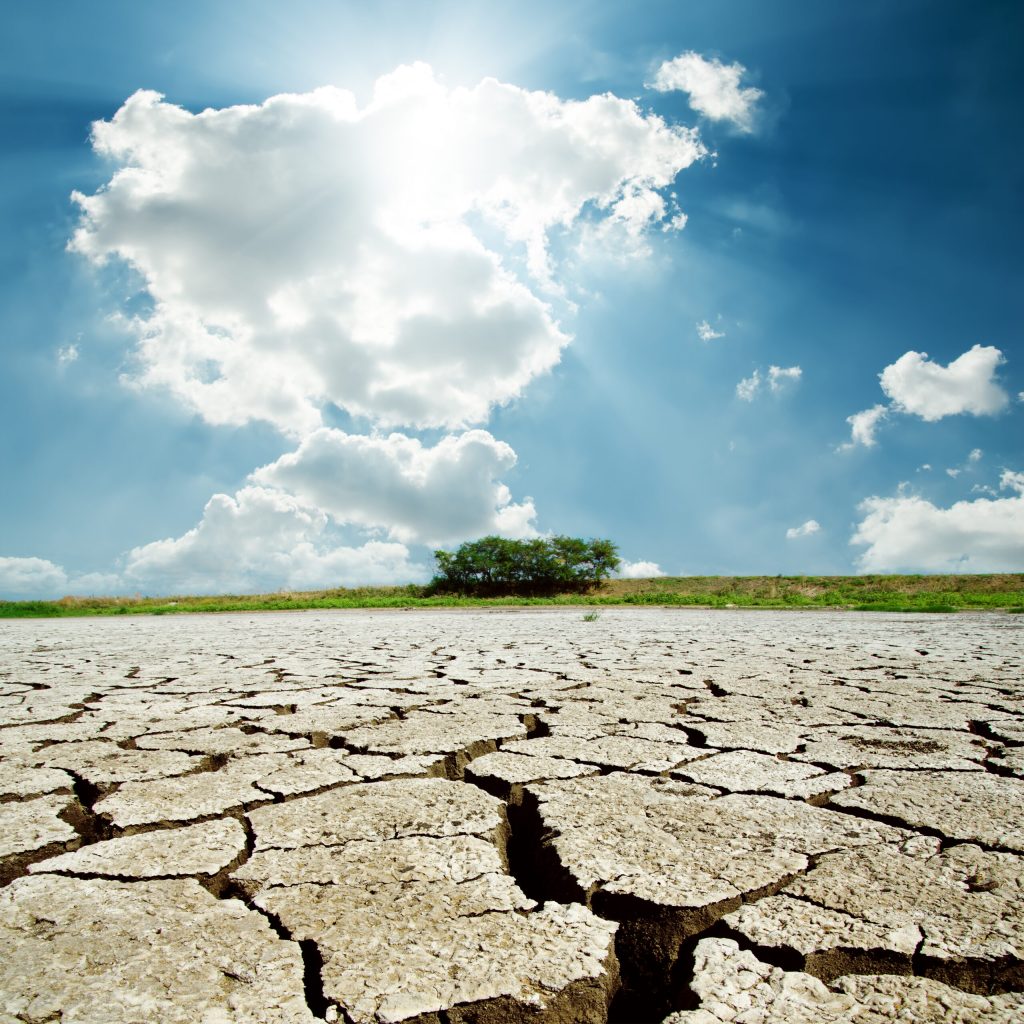
For years, South Texas has endured persistent drought conditions that steadily reduced inflows into lakes and reservoirs. Unlike sudden disasters such as hurricanes or floods, drought develops slowly. Rainfall decreases, reservoirs gradually decline, groundwater becomes increasingly important, and eventually supply begins struggling to keep pace with demand.
Scientists classify this progression in several stages.
Meteorological drought begins with prolonged periods of below-average rainfall. Hydrological drought follows when rivers, reservoirs, and lakes begin shrinking. Agricultural drought affects crops and livestock, while socioeconomic drought emerges when water shortages begin influencing businesses, households, and local economies.
Corpus Christi now finds itself confronting several of these stages simultaneously.
Climate experts have long warned that warming temperatures across the southern United States are making droughts more intense. Higher temperatures increase evaporation from reservoirs and soil while also raising overall water demand from homes, farms, and industries.
The result is a system under increasing pressure.
While drought alone is a powerful force, population growth and industrial expansion have amplified the challenge.
Over the past decade, Corpus Christi transformed into one of the nation’s fastest-growing energy and manufacturing hubs. Massive petrochemical plants, refineries, steel facilities, and liquefied natural gas export terminals arrived with promises of economic growth, thousands of new jobs, and billions of dollars in investment.
They also brought enormous water demand.
The Industry That Depends on Water
Few cities illustrate the tension between economic development and natural resources quite like Corpus Christi.
The region supplies water not only to residents but also to some of the world’s largest industrial companies. Facilities operated by ExxonMobil, Valero, Occidental, Flint Hills Resources, and other manufacturers rely on enormous volumes of freshwater to cool equipment, manufacture plastics, refine petroleum, and sustain daily operations.
Collectively, major industrial customers account for more than half of the city’s water consumption.
That statistic has become one of the defining aspects of the public debate.
While residents have faced lawn watering bans since 2023 and have steadily reduced household consumption, officials estimate that roughly 70 percent of homes are already using less water than emergency restrictions would require.
The imbalance has prompted growing public scrutiny.
One frequently cited comparison illustrates the scale of industrial demand. City swimming pools and splash pads together consume around two million gallons of water over an entire summer. A single plastics manufacturing complex operated by Exxon and SABIC reportedly uses approximately 13 million gallons every day.
Those figures have fueled questions about whether households are being asked to sacrifice while industrial facilities continue operating largely as normal.
Industry representatives argue that the issue is more complicated.
Large manufacturing plants often recycle significant portions of their water internally and continue searching for additional conservation methods. Companies also warn that dramatic reductions could affect production, disrupt supply chains, and threaten thousands of jobs across South Texas.
Because these facilities compete globally, executives have revealed little publicly about how they might respond if mandatory cuts become necessary.
Former Corpus Christi Water executive Drew Molly explained that businesses have likely spent months developing contingency plans but are unlikely to disclose them because operational strategies remain commercially sensitive.
That uncertainty has left local officials preparing for legal, economic, and political challenges if water restrictions eventually become unavoidable.
What a Water Emergency Would Actually Mean

The phrase “running out of water” naturally creates alarming images of dry taps and empty reservoirs.
In reality, Corpus Christi’s emergency system is designed to intervene long before that scenario occurs.
A Level 1 Water Emergency is triggered when projections show that water demand could exceed available supply within six months if no action is taken. It is intended as an early conservation measure rather than a declaration that drinking water has already disappeared.
Even so, the proposed restrictions would represent one of the most significant conservation efforts ever attempted by a major American city.
Current plans call for every customer connected to the regional water system to reduce water use by 25 percent.
For households, officials proposed establishing monthly baseline limits. Residents exceeding those limits would face escalating financial penalties based on additional water consumption.
Outdoor watering has already been prohibited for years, but emergency measures could also strengthen restrictions on activities such as washing cars or filling swimming pools.
Commercial customers would receive customized usage targets based largely on previous years’ consumption.
Enforcement remains one of the most controversial aspects of the proposal.
Early plans suggested repeat violations could eventually result in suspended water service, a possibility that immediately drew opposition from Mayor Guajardo, who publicly stated she could not support disconnecting households from essential water supplies.
That disagreement reflects the broader challenge facing city leaders.
Every restriction carries consequences, whether financial, political, or humanitarian.
Determining where those sacrifices should fall has become one of the defining questions of Corpus Christi’s water planning.
Searching for New Sources Before Time Runs Out

City officials have been clear that conservation alone cannot secure Corpus Christi’s future.
Reducing consumption may slow the depletion of reservoirs, but lasting water security will require entirely new supplies.
That realization has accelerated several major infrastructure projects that could reshape how the city obtains water over the coming decades.
Among the most closely watched proposals is a large-scale seawater desalination plant capable of converting Gulf Coast seawater into drinking water. Supporters argue desalination offers one of the few drought-proof sources available because the Gulf of Mexico provides an effectively limitless supply.
The project, however, comes with a price tag approaching one billion dollars and continues to generate debate over environmental impacts, energy consumption, and the discharge of highly concentrated saltwater back into coastal ecosystems.
At the same time, Corpus Christi has expanded groundwater development by drilling dozens of wells in Nueces County while also investing in advanced wastewater recycling projects designed to reuse treated water rather than discharge it.
Together, these initiatives represent a fundamental shift in how the city thinks about water.
Instead of depending primarily on rainfall to refill reservoirs, officials are attempting to build a more diversified system capable of withstanding increasingly unpredictable weather patterns.
That effort may ultimately determine whether Corpus Christi becomes an example of successful adaptation or a warning for cities across the American Southwest.
The Human Cost Extends Far Beyond Household Water Bills

Whenever discussions about water shortages arise, attention often turns to residential conservation. People picture shorter showers, brown lawns, or stricter limits on filling backyard pools. Yet in Corpus Christi, officials acknowledge that household conservation alone cannot bridge the gap between supply and demand.
Residents have already been doing much of the heavy lifting.
According to city data, roughly 70 percent of households are already using less water than proposed emergency restrictions would require. That means additional savings from residential neighborhoods are relatively limited. The larger challenge lies elsewhere.
Schools, hospitals, restaurants, manufacturers, and critical public services all depend on reliable water every single day. Any prolonged shortage forces difficult choices that reach far beyond individual homes.
Schools have already begun considering contingency plans. While district officials say they do not expect classrooms to close if a water emergency is declared, administrators are preparing for increased operating costs and exploring additional groundwater wells to supplement existing supplies. Athletic fields have already been affected by irrigation restrictions, while routine operations such as sanitation and food preparation become more complicated when conservation measures tighten.
Hospitals present an even greater challenge.
Medical facilities cannot simply reduce water use by one-quarter without considering patient safety. Sterilization, surgeries, dialysis, emergency care, and sanitation all require dependable water supplies. City officials have indicated that hospitals would likely receive exemptions for certain essential services, but acknowledged that each situation would need careful evaluation rather than a one-size-fits-all policy.
Small businesses face another layer of uncertainty.
Restaurants, laundromats, hotels, bakeries, and car washes all rely on water as part of their daily operations. Some businesses can adapt relatively easily by installing more efficient equipment or changing operating practices. Others have far fewer options.
Car washes, for example, could face outright prohibitions on using municipal water under emergency rules. Restaurants might have to rethink cleaning procedures while remaining compliant with public health regulations. Manufacturing facilities could see production schedules altered if water allocations become more restrictive.
The economic ripple effects could spread well beyond Corpus Christi itself.
The city serves as a major logistics and industrial hub along the Gulf Coast. Disruptions to refinery operations, chemical production, and export facilities could affect supply chains extending across Texas and into international markets.
Can Technology Solve the Water Crisis?

As reservoirs continue to fluctuate with changing weather patterns, many experts argue that conservation alone cannot secure the long-term future of water supplies in drought-prone regions.
Instead, cities will likely need to combine multiple solutions.
Corpus Christi has already begun pursuing several major initiatives designed to reduce dependence on rainfall.
Desalination remains the highest-profile proposal.
The technology removes salt from seawater, producing freshwater suitable for drinking and industrial use. Because the Gulf of Mexico provides an effectively unlimited source of seawater, supporters see desalination as one of the few climate-resilient options available for coastal cities.
Several desalination projects have been discussed in South Texas over the past decade, but high construction costs and environmental concerns repeatedly delayed progress.
Environmental groups remain concerned about the disposal of concentrated brine, the highly salty wastewater left behind after desalination. If not carefully managed, that discharge can affect nearby marine ecosystems. The facilities also require significant amounts of electricity, raising questions about long-term operating costs and carbon emissions.
Another proposal involves expanding groundwater production through the Evangeline Groundwater Project.
The project would transport groundwater into the Corpus Christi region through an extensive pipeline system. Supporters argue it could provide an important supplemental supply during prolonged drought.
Critics, however, warn that excessive groundwater pumping can create its own environmental consequences.
Lowering aquifer levels may contribute to land subsidence, reduce water availability for neighboring communities, and threaten ecosystems that depend on underground water reserves. Nearby communities have already expressed concerns that increased pumping could affect their own long-term water security.
Wastewater recycling represents another growing piece of the strategy.
Instead of treating used water and discharging it, advanced treatment technologies allow communities to clean wastewater to extremely high standards so it can be reused for industrial purposes or even eventually returned to drinking water systems after additional treatment.
Although once controversial, water recycling has become increasingly common in drought-prone regions such as California, Arizona, and parts of Australia.
For cities confronting an uncertain climate future, every drop reused is one less drop taken from shrinking reservoirs.
A Warning Sign for the Rest of America
It would be easy to view Corpus Christi as an isolated case caused by unfortunate weather.
Scientists caution against that assumption.
Climate researchers increasingly describe the situation as an example of broader trends unfolding across the United States.
Higher temperatures increase evaporation from lakes and reservoirs. Population growth raises water demand. Expanding industries compete with residential communities for finite supplies. Longer and more frequent droughts reduce the reliability of traditional water sources.
Taken together, these pressures create challenges that many cities have never previously faced.
Technical due diligence specialist Damian Gavaghan notes that water shortages are emerging in different forms across the country.
San Antonio continues grappling with pressure on the Edwards Aquifer. Phoenix faces ongoing concerns linked to declining Colorado River supplies. Interstate disputes over shared rivers and groundwater have become increasingly common as states compete for limited resources.
Even regions not traditionally associated with drought have experienced unusually dry conditions in recent years.
The National Integrated Drought Information System regularly reports moderate or worse drought affecting large portions of the country. Conditions shift from season to season, but the overall trend points toward increasing variability rather than dependable rainfall patterns.
Texas offers perhaps the clearest illustration of the scale of the challenge.
State analyses estimate that communities could require approximately $174 billion in water infrastructure investment over the next fifty years to reduce the risk of severe shortages.
That investment includes new reservoirs, groundwater projects, recycling facilities, pipeline networks, conservation programs, and advanced treatment technologies.
The price may seem staggering.
Yet many experts argue the cost of failing to invest would ultimately be much higher.

Water Is Becoming One of the World’s Most Valuable Resources
For decades, discussions about climate change often focused on rising sea levels, stronger hurricanes, melting glaciers, or record-breaking temperatures.
Water is increasingly becoming the issue that connects them all.
Communities are beginning to realize that economic growth depends not only on energy, transportation, and housing but also on something far more fundamental: reliable access to freshwater.
The debate is expanding beyond heavy industry.
Across North America, rapidly growing data centers have also attracted attention because of the enormous quantities of water required to cool computing equipment. In several communities, proposed facilities have faced public opposition over concerns about local water supplies.
These conversations reflect a larger shift in public awareness.
Businesses, investors, and city planners are increasingly evaluating whether regions possess enough water to support future development. Water security is becoming an important factor in determining where companies build factories, technology campuses, and distribution centers.
That represents a profound change from previous generations, when dependable water was often assumed rather than carefully measured.
Experts now argue that responsible water stewardship should be viewed much like financial planning.
Communities that diversify supplies, improve efficiency, modernize aging infrastructure, and prepare for changing climate conditions are likely to be far better positioned than those relying solely on historical weather patterns.
Corpus Christi’s experience demonstrates how quickly assumptions can change when nature no longer behaves as expected.
The Rain Bought Time, Not Certainty
The storms that swept across South Texas undoubtedly changed the immediate outlook for Corpus Christi.
Instead of racing toward an imminent water emergency, the city now has additional months, and potentially years, to complete projects that could strengthen its water system for decades to come.
That is undeniably good news.
But city officials have consistently emphasized that the rainfall should not be mistaken for a permanent solution.
The reservoirs remain vulnerable to future drought. Population growth continues. Industrial demand remains substantial. Climate scientists expect periods of extreme weather, including both floods and droughts, to become more common in many parts of the United States.
Perhaps the most important lesson from Corpus Christi is not that one city nearly faced an unprecedented water crisis. It is that the crisis exposed vulnerabilities that exist in many other communities as well.
For generations, Americans have largely viewed clean running water as one of modern life’s few guarantees.
Corpus Christi serves as a reminder that even the most dependable resources require careful planning, responsible management, and long-term investment. The recent rains offered a welcome reprieve, but they also delivered a message that extends far beyond South Texas: in a changing climate, water security can no longer be taken for granted.