
Your cart is currently empty!
Man Who Moved to the Amazon for Love Was Horrified by One Ancient Tribal Custom
Justin Alvo thought moving to the Amazon would mean adjusting to life without the comforts he had grown up with. He expected unfamiliar wildlife, a slower pace of life, and learning the traditions of the Indigenous Shuar community. What he didn’t expect was that one of the biggest cultural hurdles would arrive in a handmade bowl, served with genuine hospitality, and leave him questioning whether he could ever get used to his new home.
Contents
show
The 23-year-old American left behind the routine of life in the United States to settle in Tres de Noviembre, a remote village in Ecuador’s Amazon rainforest where his father had spent part of his childhood. What started as a personal search for something more meaningful quickly turned into a life-changing adventure. He fell in love, got married, started a family, and embraced a culture that was completely different from the one he had always known. Yet one centuries-old tradition almost pushed him to his limit before he eventually came to appreciate it.
He Left His Old Life Behind in Search of Something Different
Before moving to South America, Justin says life in America had begun to feel repetitive. Every day seemed to follow the same pattern. He would wake up, head to work, return home, and repeat the routine the next morning. While there was nothing particularly wrong with his life, he couldn’t shake the feeling that something important was missing.
That feeling eventually convinced him to make a decision that many people would never seriously consider. Instead of chasing another job or moving to another city, he packed up and relocated to the Ecuadorian Amazon. The destination wasn’t completely unfamiliar. His father had grown up in the region, giving Justin a personal connection that made the move feel less like escaping and more like returning to a place that had always been part of his family’s story.
Living in Tres de Noviembre meant exchanging traffic, shopping centers, and apartment blocks for dense rainforest, winding rivers, and a community deeply connected to nature. Daily life suddenly revolved around the rhythms of the forest rather than office hours or deadlines. The sounds outside his home changed from passing cars to parrots flying overhead and monkeys calling through the trees, creating an environment unlike anything he had experienced in the United States.
The move also gave Justin a new purpose. He wanted to document the lives and traditions of the Shuar people through videos and documentaries, sharing a way of life that many people around the world know very little about. That goal would soon lead him to the person who changed his life forever.
@thejustinalvo I challenged a tribal girl to say ten words in english!
♬ original sound – JustinAlvo
A Simple Conversation Led to a New Life
Not long after arriving in the Amazon, Justin met Maria while she was working as a chef at a local restaurant. Rather than overthinking how to approach her, he decided to be completely honest about both his feelings and his ambitions.
Justin recalled exactly how their relationship began.
“I basically said, ‘Hey, I like you a lot, you’re really cute, and I want to make documentaries and videos about the Shuar people.’ She said yes, let’s do it.”
That straightforward conversation became the beginning of something much bigger than either of them probably expected. Their relationship grew as Justin became more involved in the local community and learned more about Shuar customs and traditions. Instead of feeling like an outsider passing through, he gradually became part of everyday village life.
The couple have since married and welcomed their first child, making the Amazon not simply the place where they met but the place they now call home. Justin regularly shares moments from their lives online, giving millions of viewers a glimpse into a culture rarely seen through the eyes of someone who has fully immersed himself in it.
The Drink That Left Him Completely Horrified
While adapting to life in the rainforest brought plenty of surprises, nothing shocked Justin quite like his introduction to chicha, one of the Shuar community’s most important traditional drinks.
Chicha is made from cassava root, a staple crop throughout much of the Amazon. Unlike commercially produced alcoholic drinks, its preparation follows a tradition that has been passed from generation to generation. Women chew cooked cassava for several minutes before placing it into a large container, where natural enzymes begin the fermentation process. After about a week, the mixture develops into a mildly alcoholic drink that is shared during family gatherings, celebrations, and visits between households.
For someone unfamiliar with the tradition, watching the process unfold can be difficult to understand. Justin admitted his first reaction was one of complete disbelief.
“Another culture shock was chicha, a fermented drink. It’s made from cassava root. The women chew it up for around five minutes to soften it, spit it into a big container, and let it ferment for about a week, and it becomes an alcoholic drink.”
Seeing it prepared was one thing. Realizing he was expected to drink it was something else entirely.
Refusing the Drink Wasn’t Really an Option
As strange as the preparation seemed to him, Justin quickly realized that saying no wasn’t an acceptable choice. Chicha is much more than a local beverage. Within the Shuar community, offering someone a bowl is a sign of friendship, respect, and hospitality. Refusing to drink it can be interpreted as rejecting the person who invited you into their home, something Justin desperately wanted to avoid as he tried to become part of the community.
He decided to put his doubts aside and take his first sip. Unfortunately, his body wasn’t nearly as welcoming as the people around him.
Justin admitted the consequences arrived almost immediately.
“The first time gave me the worst stomach ache of my life, and bad diarrhoea. But after about a year and a half of drinking it, I’ve got used to it. I actually love it now.”
For many people, an experience like that would probably have been enough to swear off the drink forever. Justin, however, understood that adapting to a different culture often means accepting customs that feel uncomfortable at first. Rather than avoiding chicha, he continued drinking it whenever he visited friends and family, gradually allowing both his stomach and his mindset to adjust.
It Took Nearly Two Years Before He Finally Enjoyed It
Justin says it wasn’t a quick adjustment. It took around 18 months before drinking chicha stopped making him feel ill. Over time, his body became accustomed to the drink, and something he once dreaded slowly became part of everyday life in the Amazon.
His experience highlights something many travelers and researchers have long observed. When people move to completely different environments, their digestive systems often need time to adapt to unfamiliar foods, local bacteria, and traditional preparation methods. While the first few experiences can be unpleasant, repeated exposure often helps the body build tolerance.
Today, Justin says he genuinely enjoys drinking chicha with the people who have welcomed him into their community. In fact, his biggest challenge now isn’t the taste.
According to Justin, the drink is much stronger than most visitors would expect.
“It gets me very drunk. If I’ve had three bowls of it, I’m stumbling.”
Despite its simple ingredients, the week-long fermentation process creates an alcoholic drink that remains a central part of social gatherings throughout many Indigenous Amazonian communities.
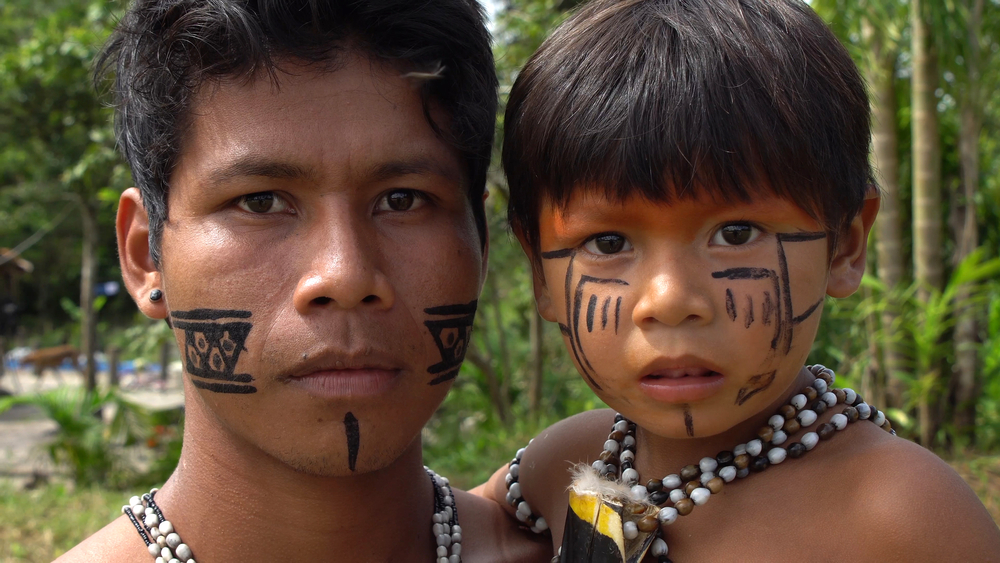
Every Part of the Tradition Reflects Shuar Culture
The experience of drinking chicha goes far beyond what is inside the bowl. Justin explained that even the cups used to serve it are handmade using techniques that have been preserved for generations.
Rather than drinking from glass or plastic containers, members of the community carve large gourds into sturdy bowls that can be reused for years. The cups themselves carry cultural significance and reflect the community’s close relationship with the rainforest, where many everyday objects are created from natural materials instead of manufactured products.
“They drink it from cups carved out of huge gourds grown on rain trees, cut in half and scooped out, so the cups themselves are handmade, traditional pieces.”
For visitors, the preparation method often attracts the most attention. For the Shuar people, however, chicha represents something much deeper. Sharing the drink strengthens relationships, welcomes guests into a home, and keeps traditions alive that have existed long before modern roads, electricity, or social media reached the Amazon.
Some of the customs surrounding chicha include:
- Guests are typically offered a bowl shortly after arriving.
- Accepting the drink is considered a gesture of respect.
- Cassava root remains the main ingredient in traditional recipes.
- Handmade gourd bowls are commonly used instead of modern cups.
- Families often prepare the drink together before community gatherings.
From Living “In a Box” to Raising a Family in the Rainforest
Looking back, Justin says the contrast between his old life and his current one couldn’t be greater. In America, his days followed the same predictable cycle of work, home, and sleep. While the routine was comfortable, it lacked the sense of connection he had been searching for.
His life today revolves around the rainforest instead. Mornings begin with birds flying overhead and monkeys calling from the trees. Daily interactions are shaped by community traditions rather than busy schedules, and the natural world has become an ordinary part of family life instead of something experienced only during holidays.
That decision to follow his instincts also led him to Maria, the woman who encouraged his dream of documenting Shuar culture. Together they have built a family and welcomed their first child, creating a future that Justin admits he never imagined when he first boarded a plane to Ecuador.
His story continues to attract millions of viewers online, not simply because he moved to one of the world’s most remote regions, but because he chose to embrace its traditions, even when they challenged him in ways he never expected.
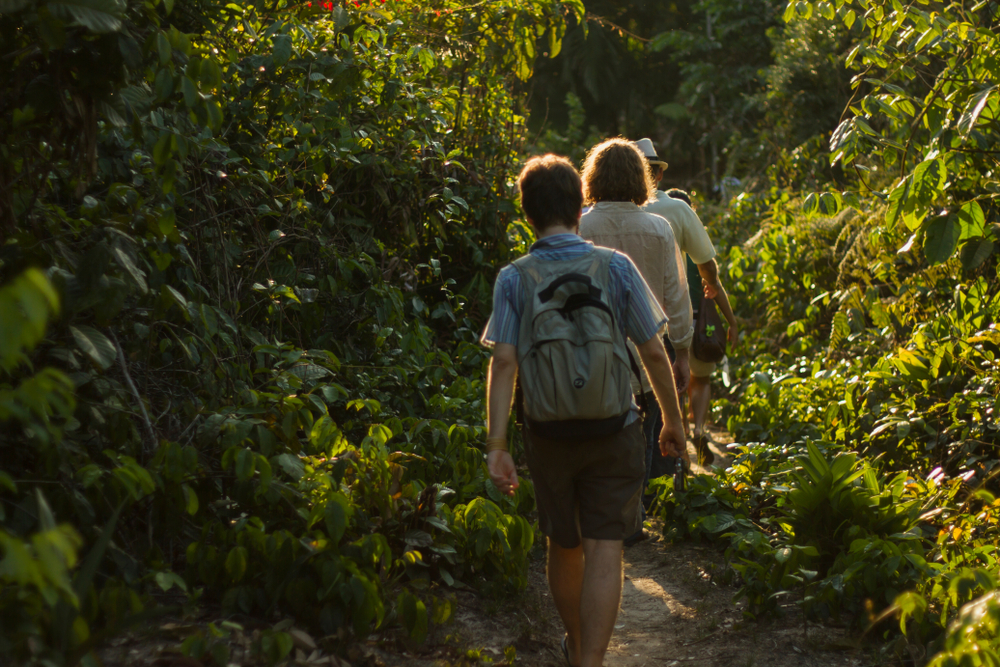
One Bowl Changed His Understanding of Another Culture
Justin’s first experience with chicha was painful enough to make almost anyone think twice. Yet the drink that once left him with the worst stomach ache of his life eventually became one of the customs he values most.
For outsiders, it’s easy to focus on how unusual the preparation sounds. For the people who have shared the tradition for generations, it represents hospitality, trust, and community. Justin’s willingness to look beyond his first impression allowed him to experience a culture in a way that very few visitors ever do, proving that some of life’s biggest adjustments begin with accepting an invitation that initially feels impossible to accept.