
Your cart is currently empty!
Scientists Build Underwater Habitat Where Humans Can Live Beneath the Ocean
For generations, the ocean has remained one of Earth’s greatest frontiers. It covers more than 70 percent of the planet, regulates the climate, supports countless species, and produces much of the oxygen humans breathe. Yet despite its importance, scientists have explored only a fraction of its vast depths.
Contents
show
A newly installed underwater habitat in the Florida Keys could begin changing that reality. Called Vanguard, the subsea habitat is designed to let researchers live and work on the ocean floor for days at a time, dramatically extending the amount of time they can spend studying marine ecosystems without repeatedly returning to the surface.
A New Chapter in Underwater Exploration
The UK-based ocean engineering company DEEP has spent several years developing Vanguard, an underwater habitat intended to serve as a stepping stone toward a future where humans can maintain a continuous presence beneath the sea. After months of construction, engineering, and testing, the habitat has now been installed at Tennessee Reef within the Florida Keys National Marine Sanctuary.
Positioned 17 meters, or nearly 60 feet, below the surface, Vanguard can house up to four aquanauts during missions lasting at least five days. The deployment represents the first open-ocean human habitat to be built, tested, and installed in the United States in almost four decades.
Unlike a submarine, Vanguard is not designed to travel through the water. Instead, it functions as a stationary underwater research station where scientists can live in a dry, pressurized environment while carrying out extensive fieldwork directly on the seabed.
The installation itself required careful coordination. Engineers first secured a foundation on the ocean floor before lowering the habitat onto the platform. A nearby surface support buoy was then connected to provide communications, breathable air, electrical power, and remote monitoring capabilities throughout each mission.
According to DEEP Chief Technology Officer Norman Smith, the project represents years of work finally becoming reality.
“Installing Vanguard at Tennessee Reef was a carefully choreographed marine operation with a lot of moving parts, and the culmination of 18 months of intense design, build, and testing efforts. Today is a huge milestone and an experience I’ll never forget.”
He added that the successful deployment moves the company closer to achieving one of its biggest ambitions.
“Successful deployment gets us closer to enabling a continuous human presence in the ocean and is a major step forward in DEEP’s mission to make humans aquatic.”
Why Scientists Want to Live Underwater
Most people imagine marine research as a series of short scuba dives. Scientists descend, collect samples, make observations, then return to the surface before their available air runs out.
That approach has always created serious limitations.
Even experienced recreational divers typically have about an hour underwater before they must begin their ascent. Professional scientific dives can sometimes last longer depending on equipment and conditions, but decompression requirements still place strict limits on working time.
Those constraints affect almost every aspect of marine science.
Researchers often spend more time preparing for dives, traveling to sites, and decompressing afterward than they do actually studying reefs, marine animals, or underwater ecosystems.
Living underwater changes that equation completely.
Instead of repeatedly traveling between the surface and the seabed every day, scientists remain at the same pressure as their surroundings. They can leave the habitat for multiple long dives throughout the day before returning to eat, sleep, analyze samples, and prepare for the next outing.
The result is significantly more productive research time.
According to DEEP, Vanguard will support projects involving:
- Coral reef restoration
- Long-term reef monitoring
- Climate impact studies
- Marine ecology surveys
- Human physiology research
- Testing underwater sensors
- Sampling new marine organisms
- Training for astronauts and other extreme environments
- Educational outreach programs
Each mission has the potential to gather far more information than traditional day trips from research vessels.
The Science Behind Staying Underwater
The idea of spending several days beneath the ocean may sound dangerous, but it relies on a principle that scientists have understood for decades.
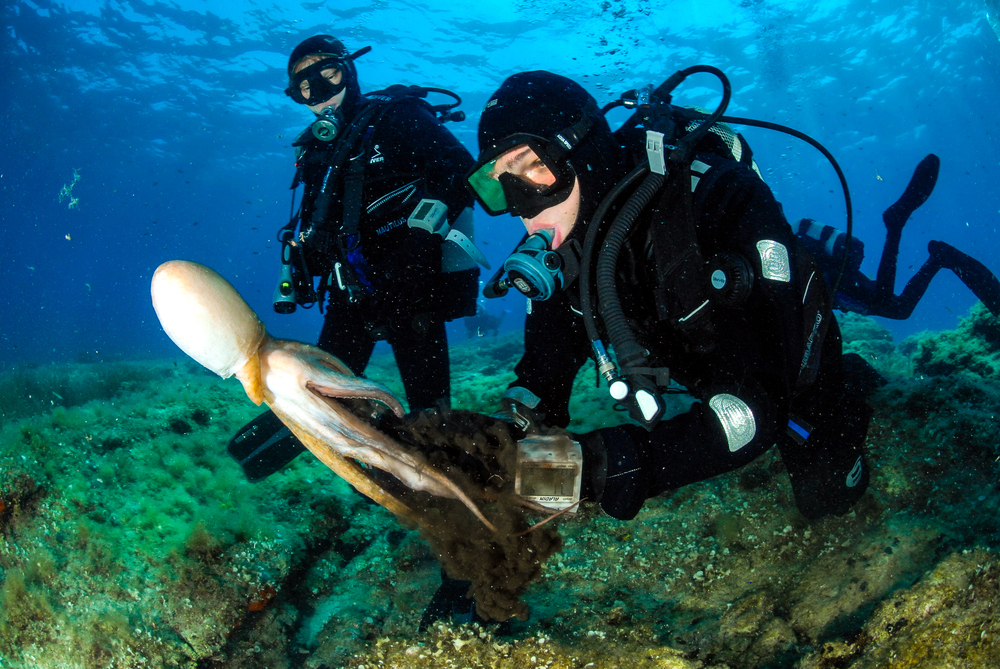
When divers descend underwater, increased pressure causes nitrogen from their breathing gas to dissolve into body tissues. The longer they remain underwater, the more nitrogen their bodies absorb.
Eventually, however, something important happens.
After roughly 24 hours at a constant depth, the body’s tissues become fully saturated. At that point, they cannot absorb significantly more nitrogen.
Rather than increasing decompression time every additional day, saturation diving allows people to remain underwater for extended periods before completing one carefully controlled decompression process at the end of the mission.
Dawn Kernagis, DEEP’s Director of Scientific Research, described it as a unique feature of human biology during an interview cited by ScienceAlert.
“It’s like you have been scuba diving for a really long time and your tissues and your blood get saturated with nitrogen, the inert gas that you are breathing.”
She continued by explaining the advantage.
“Essentially, once you are saturated, you could stay down there for weeks, months at a time.”
Inside Vanguard, crew members live at ocean pressure inside the sealed habitat. Each morning they can leave through a moon pool, an opening in the floor that provides direct access to the surrounding seawater without flooding the habitat itself.
Using this system, aquanauts can spend hours working outside before returning to the habitat to rest, recharge equipment, and process their findings.
Building an Underwater Habitat Is About More Than Engineering
Constructing a habitat capable of supporting human life beneath the ocean requires much more than assembling steel structures.
Every system must operate reliably under constant pressure while keeping its occupants safe.
That challenge led DEEP to involve DNV from the earliest stages of development.
DNV is one of the world’s leading classification societies, providing independent engineering standards, testing, certification, and technical oversight for complex maritime projects.
Rather than waiting until construction was nearly complete, DEEP brought DNV into the project from the beginning.
The company reviewed design concepts, manufacturing methods, material selection, pressure testing, and subsystem development throughout the process.
According to DEEP, Vanguard is working toward becoming the first underwater habitat ever classified under DNV’s dedicated rules for live-in underwater habitats.
The organization has also helped pioneer standards for underwater systems and crewed submersibles, making it uniquely positioned to oversee projects that have few modern comparisons.
Representatives from DNV praised the partnership while emphasizing the importance of rigorous engineering standards.
“We have worked with DEEP for several years, building an excellent cooperation.”
The organization added that DEEP engaged them during the earliest design stages to ensure materials and engineering systems followed the highest standards while pushing forward new possibilities for underwater exploration.
The classification process extends well beyond reviewing blueprints.
Individual habitat components have already undergone independent inspection and pressure testing above their intended operating limits.
The habitat’s wet porch, living chamber, and foundation assembly each received manufacturing approval before final integration.
Even now that Vanguard rests on the seabed, additional work remains before certification is complete.
Final Testing Before Scientists Move In

Although Vanguard has reached the ocean floor, its journey toward becoming a fully operational research habitat is not over.
Engineers are currently conducting sea acceptance testing and commissioning, the final stages required before the habitat begins supporting scientific missions.
These evaluations examine every major system together rather than individually.
Life support equipment, electrical systems, communications, remote monitoring, emergency procedures, and interactions between the habitat and its surface support buoy must all function exactly as designed.
DNV will independently witness these tests before reviewing the complete installation for final approval.
Once every requirement has been satisfied, Vanguard can receive its official class certification.
That milestone would confirm the habitat meets stringent engineering standards for sustained human occupancy underwater while establishing an important benchmark for future subsea habitats.
At the same time, DEEP is preparing the people who will operate the system.
The company has assembled an operations team led by Roger Garcia, whose 23 years of experience managing the famous Aquarius Reef Base gives him firsthand knowledge of what it takes to safely support humans living beneath the sea.
Training programs and operational procedures are now being developed alongside the engineering work, ensuring that every mission is backed by careful planning as well as advanced technology.
How Living Underwater Could Transform Marine Science
For decades, one of the biggest frustrations for ocean researchers has been the race against time. Every dive begins with careful planning, but it also comes with an unavoidable countdown. Once divers collect samples, they have to return to the surface before their air supply or decompression limits force them to end the mission.
That process introduces another problem that many people never consider.
Some marine specimens begin changing almost immediately after they are brought to the surface. The dramatic shift in pressure can alter delicate biological and chemical processes before scientists have the chance to examine them.
DEEP believes Vanguard could help solve that challenge.
Because researchers will be living directly at depth, they can study organisms much closer to their natural environment. Samples can be analyzed almost immediately after collection instead of spending valuable time traveling back to research vessels or laboratories onshore.
Dawn Kernagis has suggested this could even prompt scientists to revisit findings from earlier marine research.
Many previous studies relied on specimens that had already undergone decompression before examination. Studying marine life while it remains under natural pressure may reveal details that have been difficult or impossible to observe until now.
The longer scientists remain underwater, the more opportunities they have to witness natural behavior that is often missed during short visits.
Fish and other marine animals frequently change their activity when divers arrive. Remaining on the seafloor for several days allows researchers to become part of the background, making it easier to observe ecosystems behaving naturally over extended periods.
A Wide Range of Research Could Take Place Inside Vanguard
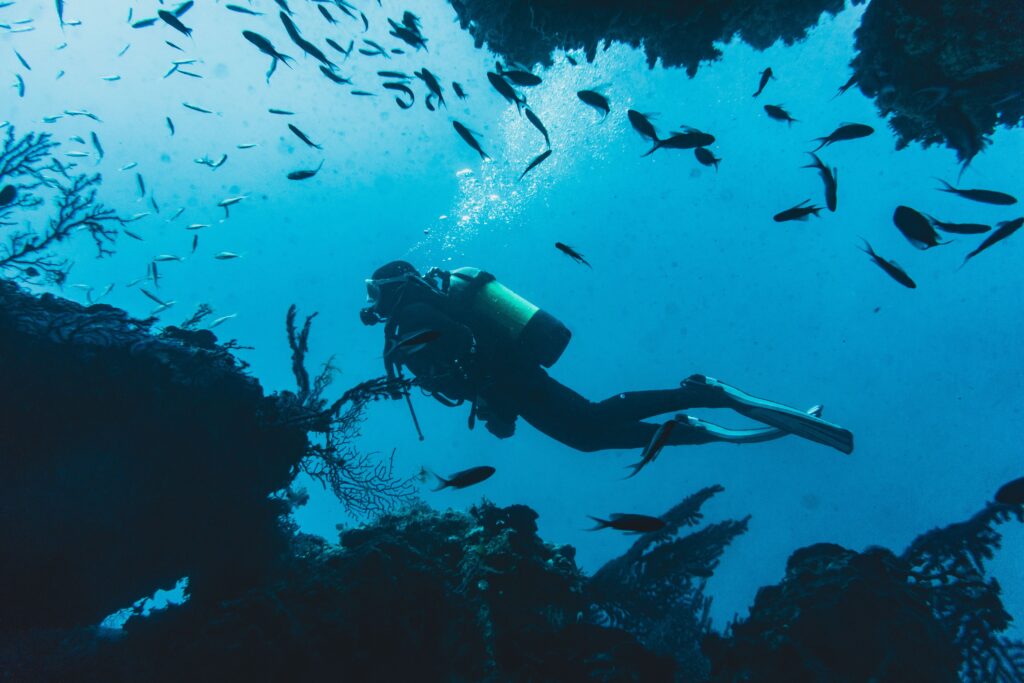
Although coral reefs are expected to be one of Vanguard’s primary areas of focus, the habitat has been designed to support many different scientific disciplines.
Researchers expect the station to become a platform for projects ranging from marine biology to human physiology.
Some of the planned research includes:
- Monitoring coral reef recovery over long periods.
- Studying how climate change affects marine ecosystems.
- Conducting biodiversity surveys.
- Testing new underwater sensors and scientific instruments.
- Collecting biological samples with minimal disturbance.
- Researching human performance in extreme environments.
- Supporting educational programs through live underwater broadcasts.
Coral reefs remain one of the habitat’s most important priorities.
The Florida Keys National Marine Sanctuary protects one of the largest coral reef ecosystems in North America, yet those reefs continue facing pressure from warming oceans, pollution, disease outbreaks, and stronger storms.
Scientists often need repeated observations over days or weeks to fully understand how reefs respond to changing conditions.
An underwater habitat gives researchers the flexibility to monitor those changes far more closely than occasional dives allow.
The habitat may also become a valuable testing ground for new technologies.
Autonomous underwater vehicles, remotely operated robots, advanced imaging systems, and environmental sensors can all be evaluated under real-world conditions while researchers remain nearby to monitor their performance.
Building on a Legacy of Underwater Habitats
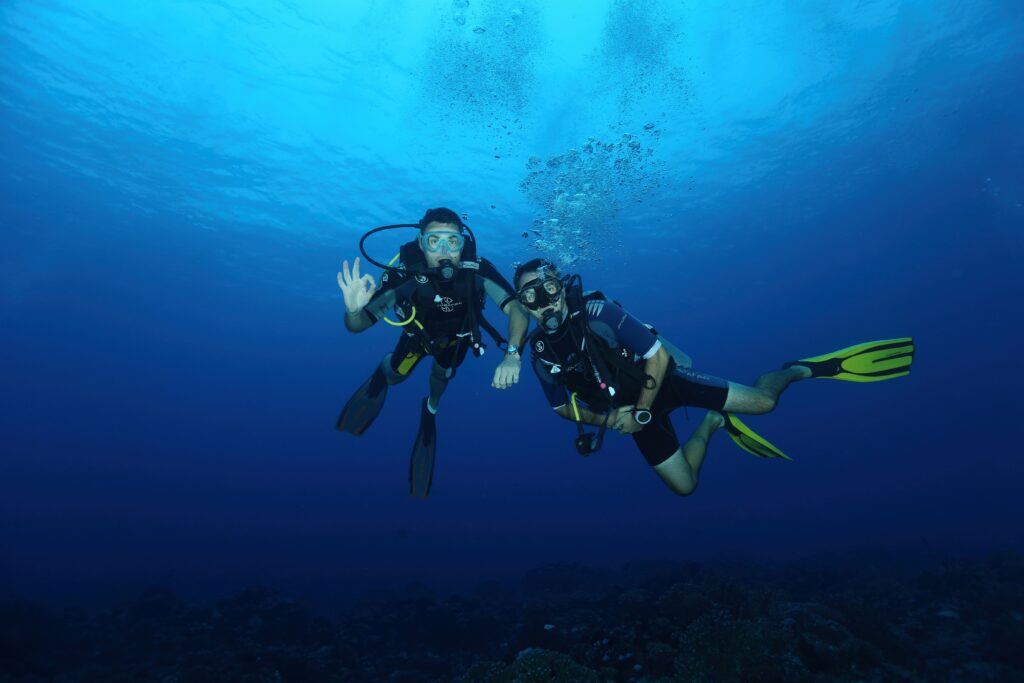
Although Vanguard represents a major technological milestone, it is not the world’s first underwater habitat.
Scientists and engineers have experimented with underwater living since the 1960s.
One of the best-known examples is Aquarius Reef Base, another habitat located in the Florida Keys. For years it has supported marine science missions and NASA’s NEEMO program, where astronauts train underwater to simulate some of the challenges of working in space.
Roger Garcia, who now leads Vanguard’s operational readiness program, previously spent more than two decades managing Aquarius.
His experience provides an important link between earlier underwater habitats and the next generation of subsea research stations.
NOAA has also supported underwater habitat research for decades.
Eddie Kertis, superintendent of the Florida Keys National Marine Sanctuary, welcomed Vanguard’s arrival, saying the new habitat builds upon a long history of scientific collaboration.
“For decades, NOAA has supported using subsea habitats as a platform to reveal ground-breaking discoveries that inform the sanctuary’s management well into the future.”
He added that placing another habitat inside the sanctuary creates new opportunities for marine science while strengthening existing research infrastructure.
The Tennessee Reef site itself has been designated as a research-only zone, making it an ideal location for long-term scientific studies without interference from recreational activities.
Vanguard Is Only the Beginning
As ambitious as Vanguard appears, DEEP views it primarily as a proving ground for something much larger.
The company is already developing Sentinel, a modular underwater habitat system intended to support much longer deployments and a broader range of scientific missions.
Where Vanguard accommodates four people for missions lasting several days, Sentinel is envisioned as something closer to a permanent underwater station.
Plans released by DEEP describe private living quarters, communal dining areas, laboratories, configurable workspaces, and direct access to the surrounding ocean.
The company also expects Sentinel to operate alongside a fleet of advanced submersibles capable of supporting scientific research across much greater ocean depths.
If development continues as planned, DEEP hopes Sentinel could begin supporting semi-permanent deployments on continental shelves as early as 2027.
That vision extends beyond traditional marine science.
Future underwater habitats could assist with environmental monitoring, conservation projects, commercial research, engineering, and even astronaut preparation.
Life beneath the ocean and life in space share many operational challenges.
Both environments are isolated, hostile to human survival, and dependent upon carefully engineered life-support systems.
Astronauts have long trained underwater because floating in water can simulate some aspects of working in microgravity.
Living underwater for days at a time could provide an even more realistic environment for testing equipment, procedures, and teamwork before future space missions.
The Ocean May Become Humanity’s Next Frontier
Space exploration often captures global attention, but the ocean remains one of the least understood places on Earth.
Scientists estimate that most of the deep ocean has never been directly explored. Countless species remain undiscovered, while many marine ecosystems continue changing faster than researchers can study them.
Projects like Vanguard suggest that understanding those environments may require more than occasional expeditions.
Instead of treating the ocean as a place humans briefly visit, engineers are beginning to design systems that allow people to live and work there for extended periods.
That shift could reshape marine science in much the same way that permanent research stations transformed exploration in Antarctica.
Rather than planning individual dives around strict time limits, researchers could spend days observing marine ecosystems through changing tides, weather conditions, daylight cycles, and animal behaviors.
The amount of data collected during a single mission could far exceed what has traditionally been possible.
There are also practical benefits beyond science.
Better understanding coral reefs can improve conservation efforts. Studying marine ecosystems more closely may reveal new biological compounds with medical potential. Long-term monitoring could also strengthen efforts to protect coastal communities from environmental change.
Every additional hour spent underwater increases opportunities to answer questions that have remained out of reach.
A Careful Step Toward Continuous Ocean Living
DEEP has been careful not to describe Vanguard as the final destination.
The habitat remains in its commissioning phase, with sea acceptance testing and DNV classification still underway before routine missions can begin.
Engineers will continue evaluating life-support systems, communications equipment, electrical infrastructure, emergency procedures, and overall operational readiness before researchers move in.
Even after certification, regular inspections will remain part of the habitat’s operating life to ensure every component continues meeting strict safety standards.
That emphasis on independent verification reflects the reality of human life beneath the sea.
Unlike many research facilities, underwater habitats leave little room for error. Every valve, electrical system, pressure seal, and emergency procedure must perform exactly as intended.
Yet if Vanguard succeeds, it could mark the beginning of a very different relationship between humans and the ocean.
For centuries, the sea has been a place people crossed, fished, or briefly explored. Vanguard points toward another possibility: one where scientists can remain beneath the waves long enough to truly understand the world hidden below the surface.