
Your cart is currently empty!
Bride Becomes the Eleventh Woman to Wear Her Family Wedding Dress
Some wedding dresses are carefully packed away after a single walk down the aisle, treasured as keepsakes but never worn again. Others become family heirlooms, appearing at anniversaries or displayed in memory boxes. Very few, however, continue telling their story for more than a century.
Contents
show
For one Pennsylvania family, a Victorian wedding dress first worn in 1895 has connected generations of mothers, daughters, sisters, and granddaughters. By the time Abigail Kingston prepared for her wedding in 2015, the gown had already witnessed 10 marriages. Its fabric had aged, its style had evolved, and its condition suggested the remarkable tradition had finally reached its end. Yet the family was determined to give the dress another chance.
A Wedding Dress That Became a Family Legacy
Long before Abigail Kingston became engaged, she had already chosen the wedding dress she hoped to wear.
Growing up in Bethlehem, Pennsylvania, she spent countless hours practicing piano in her family’s home. Hanging above the piano were framed wedding portraits that quietly told the history of her family. Each photograph showed a different bride wearing exactly the same Victorian gown.
For Abigail, those portraits became part of childhood.
Rather than seeing the dress as an antique, she saw it as a living tradition that linked every generation together. Every wedding photograph represented another chapter in a story that stretched back more than 120 years.
“I knew I wanted to wear the dress,” Abigail later recalled. “I just didn’t know if it was possible or not.”
That uncertainty would only grow after she became engaged.
The Story Began With One Bride in 1895
The dress first appeared at a Pennsylvania wedding in 1895.
Abigail’s great-great-grandmother, Mary Lowry Warren, chose the elegant Victorian silk satin gown for her marriage, beginning a family story no one could have predicted would last well into the twenty-first century.
At the time, the dress reflected the fashion of its era.
It featured long sleeves, luxurious satin, a dramatic train, and the refined silhouette that defined Victorian bridal style. Like many dresses of the period, it had been designed for one special occasion rather than decades of future use.
Interestingly, the tradition did not begin immediately.
Mary’s daughter chose not to wear the heirloom, instead embracing the fashionable flapper styles of the 1920s. For a brief period, it appeared the family gown might simply remain tucked away as an old keepsake.
Everything changed in 1946.
Mary’s granddaughter, Jane Woodruff, decided to revive the dress for her own wedding, transforming what had been a forgotten family possession into a lasting family tradition.
From that moment onward, the gown continued appearing at weddings across multiple generations.
Eleven Brides Across More Than a Century
Each generation added another chapter to the gown’s remarkable history.
Rather than remaining hidden inside a preservation box, the dress traveled between relatives, waiting patiently for the next bride who wished to wear it.
Among those who continued the tradition was Abigail’s mother, Leslie Kingston, who wore the Victorian gown during her own wedding in 1976.
Her sister and other relatives followed, including Sara “Sally” Seiler, who wore it in 1960 before carefully preserving it and eventually passing it to both of her daughters for their weddings in 1989 and 1991.
By the time Abigail became engaged, the dress had already appeared in 10 weddings.
Each bride saw herself not as the owner of the dress but as its temporary caretaker.
That sense of responsibility became one of the family’s strongest traditions.
Every Bride Changed the Dress
Unlike museum pieces that remain untouched, this gown evolved with every generation.
Every bride had a different height, body shape, and personal taste. Instead of preserving the dress exactly as it had been in 1895, each woman made practical alterations to suit her wedding day.
Leslie Kingston explained that the changes became visible simply by looking at family photographs.
Every bride had adjusted the fit.
Several shortened the train.
Others modified the sleeves or updated details to match changing fashion trends.
During the 1980s, lace was even added to conceal damage that had accumulated after decades of use.
Rather than weakening the tradition, these alterations became part of the gown’s identity.
The dress told the story of every woman who had worn it.
Childhood Dreams Became Wedding Plans

As a little girl, Abigail never imagined choosing another gown.
The photographs above the family piano had already made that decision.
Whenever she looked at them, she saw more than elegant wedding portraits.
She saw mothers, grandmothers, great-aunts, and great-grandmothers connected by one shared symbol.
Unlike many brides who spend months searching bridal boutiques for the perfect dress, Abigail already knew exactly what she hoped to wear if she ever got married.
The only question was whether the gown could survive another wedding.
That answer would not come until shortly after her engagement.
Searching for the Family Heirloom
Abigail became engaged in September 2014.
Almost immediately, she and her mother began searching for the Victorian gown.
Tracking down the dress required contacting relatives across different states before they discovered it had been carefully stored in Vermont by Abigail’s great-aunt, Sara Seiler.
The dress eventually arrived at the Kingston home packed carefully inside archival tissue paper and shipping boxes.
The careful packaging reflected how valuable the heirloom had become.
But nothing could prepare them for what they found inside.
Excitement Quickly Turned Into Doubt
Years of careful storage had protected the dress from complete destruction.
Time, however, had still left unmistakable marks.
The brilliant white satin had transformed into a deep brown color.
The sleeves had deteriorated almost completely.
Small holes covered sections of the fabric.
Several previous alterations had changed the dress so dramatically that it barely resembled the elegant Victorian gown shown in the oldest family photographs.
Abigail’s excitement quickly faded.
“I thought, ‘It’s just not possible. I’m just not going to be able to wear it,’” she recalled.
The dress looked far older than its 120 years.
Instead of a treasured heirloom, it resembled an artifact that belonged inside an archive.
One Unexpected Problem Nobody Could Fix With Alterations Alone
The fabric wasn’t the only obstacle.
Height presented another challenge.
Standing 5 feet 10 inches tall, Abigail discovered that decades of shortening the gown had dramatically changed its proportions.
Originally designed as a full-length Victorian wedding dress, repeated alterations had gradually transformed it into a tea-length gown.
Each previous bride had trimmed away a little more fabric to match the fashion of her own era.
Now there was no extra material left.
Abigail later joked that when she first tried it on, the dress looked almost like a crop top.
Its original train had disappeared long ago.
Its proportions reflected the history of every woman who had worn it.
Yet despite those challenges, Abigail never considered abandoning the tradition completely.
Instead, she began searching for someone capable of restoring what remained.
Finding Someone Willing to Save the Dress
Cleaning alone would never solve the problem.
The gown required careful reconstruction by someone experienced with fragile historical garments.
Leslie Kingston reached out to Pennsylvania bridal designer Deborah LoPresti, whose reputation for restoring vintage wedding dresses made her one of the few people willing to accept such a delicate project.
Even before beginning repairs, LoPresti understood the challenge ahead.
This was not simply another bridal alteration.
The gown represented more than a century of family history.
Every stitch carried emotional value.
Every repair needed to preserve as much of the original craftsmanship as possible while ensuring Abigail could safely wear it.
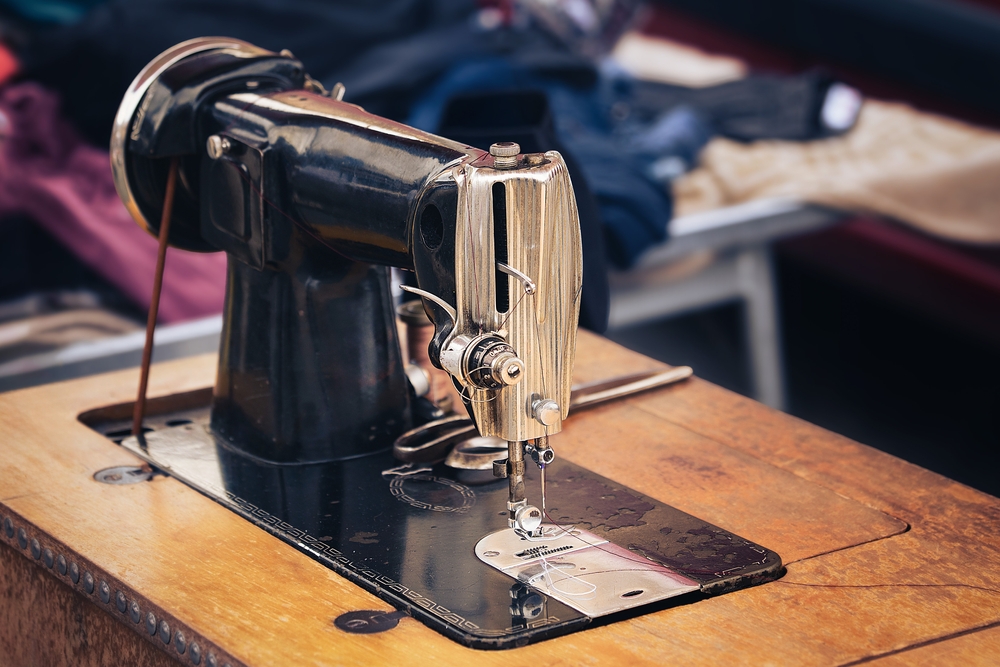
The restoration would ultimately demand more than 200 hours of painstaking work.
It would also require creativity, patience, and careful decisions about which parts of the original dress could still be saved.
Restoring History One Stitch at a Time
The first task involved carefully hand-cleaning the fragile satin.
Unlike modern wedding dresses, the Victorian fabric could not simply be sent to a dry cleaner.
Each section required individual attention to remove decades of discoloration without causing further damage.
The sleeves presented perhaps the greatest challenge.
They had deteriorated so badly that replacement became unavoidable.
LoPresti removed the remaining original material, using usable sections to repair other damaged parts of the gown while sourcing matching fabrics for the sleeves.
Finding suitable materials proved difficult enough to require several trips to New York City.
The goal was never to modernize the dress.
Instead, LoPresti worked to recreate the appearance Mary Lowry Warren would have recognized in 1895.
When the restoration finally neared completion, the once-darkened satin had transformed into a soft champagne shade.
The gown no longer looked abandoned by time.
It looked ready to become part of another wedding.
Seeing the Dress Come Back to Life
Months of painstaking work slowly transformed what had once looked beyond saving into something extraordinary.
The brown discoloration that had hidden the satin for decades gradually disappeared. Tears were repaired, delicate stitching was reinforced, and replacement sleeves blended naturally with the remaining Victorian craftsmanship.
For Abigail, the first fitting after the restoration felt almost unreal.
The gown no longer resembled the fragile garment that had arrived inside two shipping boxes. Instead, it reflected the elegance her ancestors had worn more than a century earlier.
“I felt like Cinderella the first time I put everything on,” Abigail said. “I seriously felt like I got the dress in rags and turned it into riches.”
The comparison captured exactly how dramatic the transformation had been.
The family had expected preservation.
Instead, they witnessed a rebirth.
Embracing the Dress’s New Character
Although Deborah LoPresti restored much of the gown’s original beauty, some changes made throughout its history could not be reversed.
The repeated shortening of the skirt over several generations meant the dress now fell around Abigail’s knees.
Rather than viewing that as a disappointment, she decided to celebrate the gown exactly as it had evolved.
Its tea-length silhouette suited contemporary bridal fashion surprisingly well.
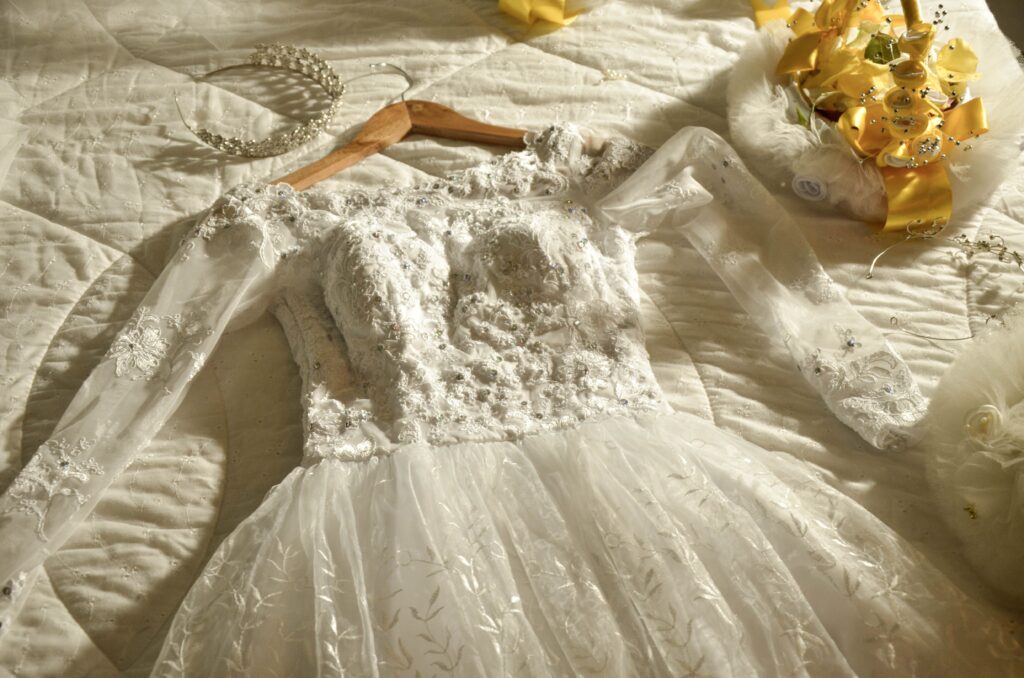
To complete the look, Abigail paired the Victorian dress with sparkling gold shoes, creating a combination of nineteenth-century elegance and modern style.
The shoes added a playful touch without distracting from the true centerpiece of the outfit.
Every detail acknowledged that the dress had lived many different lives.
Why the Family Chose Preservation Over Perfection
Many antique textiles are permanently retired once they reach a certain age.
Museums carefully preserve garments inside climate-controlled displays where they are protected from light, moisture, and handling.
The Kingston family made a different choice.
Their goal was never simply to preserve the dress as a historical artifact.
They wanted future generations to experience wearing it.
That philosophy shaped every restoration decision.
Rather than replacing large sections with modern materials, Deborah LoPresti worked to save as much of the original gown as possible.
Pieces removed from one damaged area were sometimes used to strengthen another.
Repairs respected the history already written into the fabric.
The dress remained imperfect in some ways.
Small reminders of its extraordinary journey still existed beneath the restoration.
For Abigail and her family, those imperfections carried meaning.
Each repair represented another generation refusing to let the tradition disappear.
A Wedding Day Filled With Family History
On October 17, 2015, the long-awaited day finally arrived.
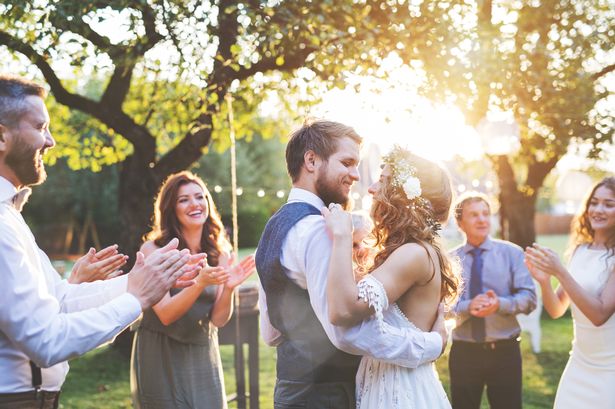
Abigail married Jason Curtis at The Lake House Inn in Perkasie, Pennsylvania, becoming the 11th bride in her family to wear the treasured heirloom.
Because the Victorian gown remained extremely fragile, she chose not to wear it throughout the entire celebration.
Instead, she reserved it for the cocktail hour before changing into a modern Rivini wedding gown for the outdoor ceremony.
The decision balanced tradition with preservation.
Guests still had the opportunity to see the remarkable family heirloom while reducing the risk of further damage during a full day of festivities.
More Than One Family Treasure
The wedding dress was not the only meaningful heirloom Abigail incorporated into her celebration.
She also wore her great-grandmother’s wedding ring.
Around her neck rested her grandmother’s treasured locket.
For her “something blue,” she selected her grandmother’s blue star sapphire ring.
Together, these family keepsakes created a wedding day woven together by memories spanning several generations.
Every heirloom represented someone who had helped shape the family’s history.
The dress simply happened to tell the longest story.
A Mother’s Emotional Moment
Few people understood the significance of the dress more deeply than Leslie Kingston.
She had once stood in the same gown herself decades earlier.
Now she watched her daughter continue the tradition.
The experience proved almost overwhelming.
“I can’t stop crying every time I see her in the dress,” Leslie told TODAY. “It’s one thing that I wore it, but for it to have been your great-great-grandmother’s dress is just incredible.”
Her words reflected something that photographs alone could never fully capture.
The dress connected women who had never met each other.
Mary Lowry Warren could never have imagined that more than a century after her wedding, another descendant would still be walking down the aisle in the same gown.
Yet that is exactly what happened.
The Secret Behind the Dress
People often focused on the gown’s age.
Others admired the detailed restoration.
Leslie believed both observations missed the real story.
According to her, the dress itself was never the true family treasure.
“It is not the style or the fit or the condition of the gown that matters,” she explained. “But rather the love that has been handed down through the generations.”
She later expressed the same thought even more simply.
“It’s not just the dress that’s been handed down. It’s the love.”
That idea helped explain why every generation continued protecting the heirloom despite the enormous effort involved.
The gown represented shared family history.
Each bride inherited not only fabric and lace but also memories of the women who had worn it before.
How the Dress Changed With Every Generation
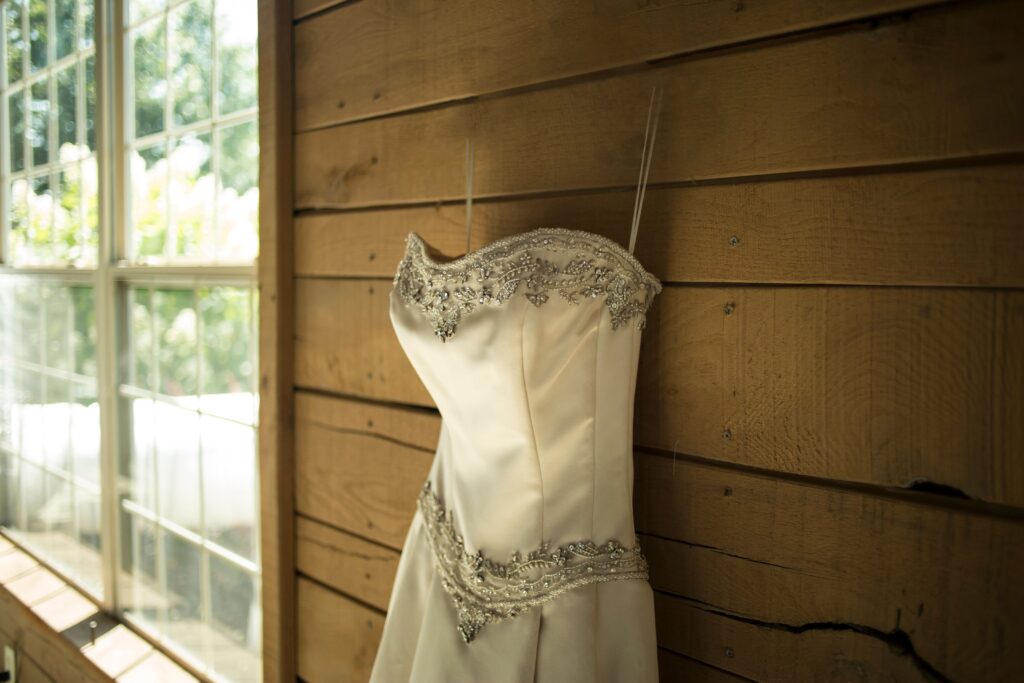
Unlike many famous historical garments, this Victorian gown never remained frozen in time.
Its evolution tells its own fascinating story.
Over 130 years, brides adapted the dress to suit changing styles and practical needs.
Some of the most significant changes included:
- A shorter hemline: Repeated alterations gradually transformed the original floor-length Victorian design into a tea-length gown.
- Custom tailoring: Every bride adjusted the fit to match her own body shape rather than forcing herself into the original silhouette.
- Lace additions: During the 1980s, lace was added to cover damaged areas while keeping the dress wearable.
- Professional restoration: Deborah LoPresti’s 200-hour restoration stabilized fragile fabric and carefully recreated missing elements without erasing the gown’s history.
- Modern styling: Abigail’s sparkling gold shoes demonstrated that even historic heirlooms can feel fresh when paired with contemporary accessories.
Rather than weakening the tradition, these changes allowed it to survive.
Without adaptation, the dress might have disappeared generations ago.
Why Stories Like This Continue to Capture Attention
Family heirlooms often become valuable because they are rare.
This wedding dress became remarkable because it remained useful.
Generation after generation resisted the temptation to retire it permanently.
Instead, they accepted the responsibility of protecting it while allowing another bride to experience its history firsthand.
That balance between preservation and participation is uncommon.
Many families inherit jewelry, furniture, or photographs.
Far fewer continue using those heirlooms exactly as earlier generations intended.
Perhaps that is why Abigail Kingston’s story continues to resonate years after her wedding.
It celebrates continuity in a world where traditions often disappear within a generation or two.
The dress has become far more than a beautiful piece of Victorian clothing.
It serves as a physical record of one family’s history, carrying memories from bride to bride for more than 130 years.
And according to Abigail’s relatives, another young family member has already expressed interest in becoming the 12th bride to wear it.
If that happens, the remarkable journey of this Victorian gown will continue, adding yet another chapter to a story that began in 1895 with one bride and a dress no one expected would still be making wedding memories more than a century later.