
Your cart is currently empty!
Archaeologists Reveal Stunning Crystal Dagger Hidden for 5000 Years
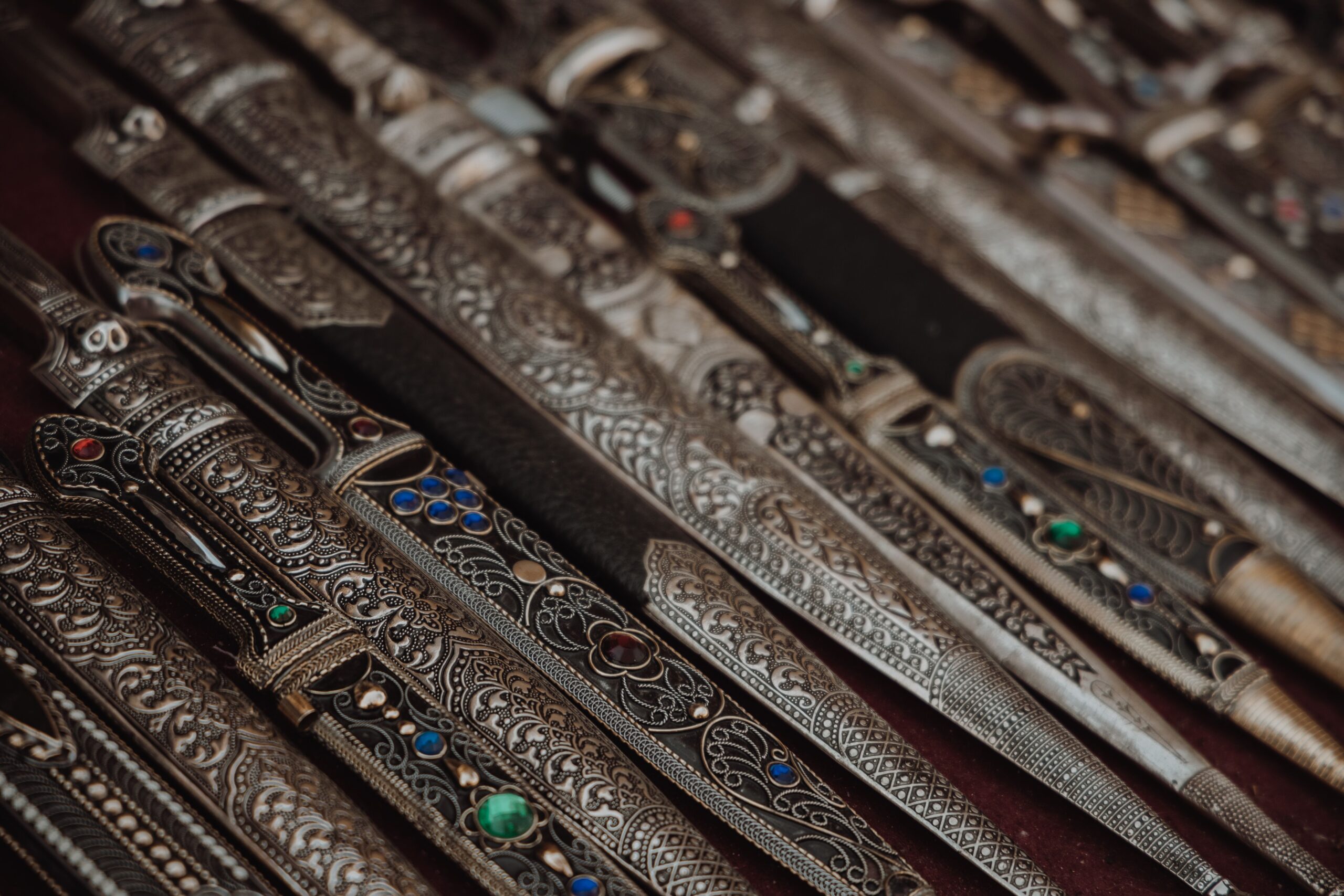
Most prehistoric weapons uncovered by archaeologists are made from practical materials like flint or stone. They were built to cut, hunt, or fight, and their rough appearance reflects a world focused on survival. That is why one extraordinary discovery in southern Spain continues to captivate researchers years after it first emerged from the ground.
Contents
show
Hidden inside a monumental burial complex for roughly 5,000 years was an elegant dagger carved entirely from transparent rock crystal. Its flawless craftsmanship, rare material, and mysterious placement inside the tomb suggest it was never an ordinary weapon. Instead, it may have represented power, prestige, and beliefs that have largely disappeared with the civilization that created it.
A Remarkable Discovery Inside an Ancient Megalithic Tomb
The extraordinary artifact was uncovered during excavations at the Montelirio tholos, one of the most important prehistoric monuments at Valencina de la Concepción near Seville, Spain. Archaeologists worked at the site between 2007 and 2010, revealing a massive ceremonial structure that dates to around 3000 BCE.
The tomb itself reflects the ambitions of the people who built it. A corridor stretching nearly 39 meters leads visitors toward a circular chamber before continuing into a secondary chamber. Even before the crystal dagger was discovered, the structure had already demonstrated that Valencina was far more sophisticated than many had imagined.
Researchers recovered the remains of at least 25 individuals from within the monument, along with an astonishing collection of grave goods. These included ivory objects, fragments of gold blades, amber ornaments, elaborate garments decorated with tens of thousands of perforated beads, and finely crafted flint arrowheads.
Yet among all of these valuable objects, one item immediately stood apart.
The crystal dagger measured approximately 8.5 inches long and was discovered in association with an ivory hilt and sheath. Although its shape resembles other Copper Age daggers found across Iberia, its material makes it completely exceptional.
Rock crystal was rarely used for large weapons during this period because shaping it demanded an extraordinary level of technical precision. A single mistake could shatter the entire piece, making the successful production of such a weapon a remarkable achievement.
Researchers later described the collection as “the most technically sophisticated and esthetically impressive collection of rock crystal material culture ever found in Prehistoric Iberia.”
Crafting Crystal Was Far More Difficult Than Stone

During the Copper Age, prehistoric communities throughout Europe generally relied on flint and chert for making tools and weapons. These materials were plentiful, durable, and responded predictably when shaped through stone knapping.
Rock crystal presented a completely different challenge.
Unlike flint, crystal fractures differently and contains natural weaknesses that make every strike risky. Producing a symmetrical blade required patience, remarkable planning, and years of accumulated experience.
That difficulty alone may explain why crystal artifacts remain extremely rare compared with traditional stone tools.
Researchers believe only highly skilled specialists could have produced objects like the Montelirio dagger. Such expertise may have been passed through generations within select groups of craftspeople whose abilities elevated them to an important place within society.
The finished weapon demonstrates this remarkable skill. Its blade is long, balanced, and carefully shaped with precision that continues to impress modern archaeologists.
The discovery also included crystal arrowheads and crystal cores used in manufacturing, suggesting the dagger was not an isolated experiment but part of a broader tradition involving highly specialized craftsmanship.
The Tomb Revealed a Society Rich in Ceremony
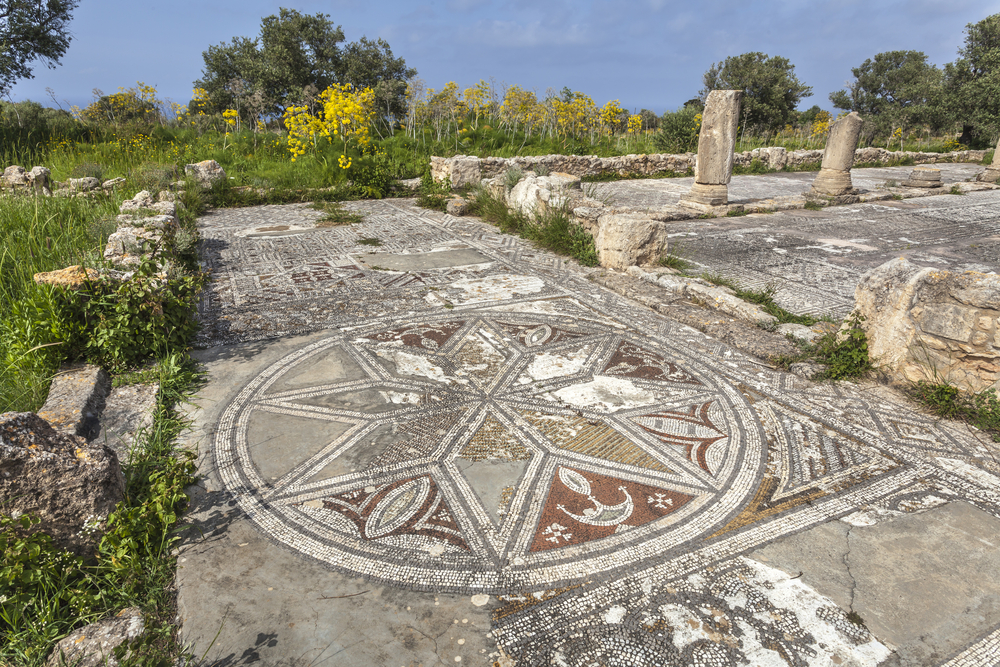
The crystal dagger becomes even more fascinating when viewed alongside everything else discovered inside the burial complex.
Rather than finding scattered artifacts throughout the chambers, archaeologists noticed a striking pattern.
Many of the finest objects had been deliberately grouped together near the entrance to the main chamber.
The crystal arrowheads, luxury goods, and other valuable offerings appeared carefully arranged rather than randomly deposited. Researchers believe these clusters may have formed part of ceremonial rituals performed during funerary events.
The study notes that this arrangement resembles offerings found elsewhere within the monument, where groups of arrowheads were associated with an altar and plant remains.
This careful organization suggests the burial ceremonies followed established traditions rather than spontaneous acts of mourning.
The wealth placed inside the tomb also reveals access to materials that originated far beyond the surrounding region.
Among the imported items were ivory, amber, gold, and the crystal itself.
Transporting these resources across long distances would have required extensive exchange networks connecting communities throughout prehistoric Iberia and perhaps beyond.
Such connections indicate that Valencina was not an isolated settlement but an influential center participating in wide-ranging social and economic relationships.
A Weapon That May Never Have Been Used in Battle
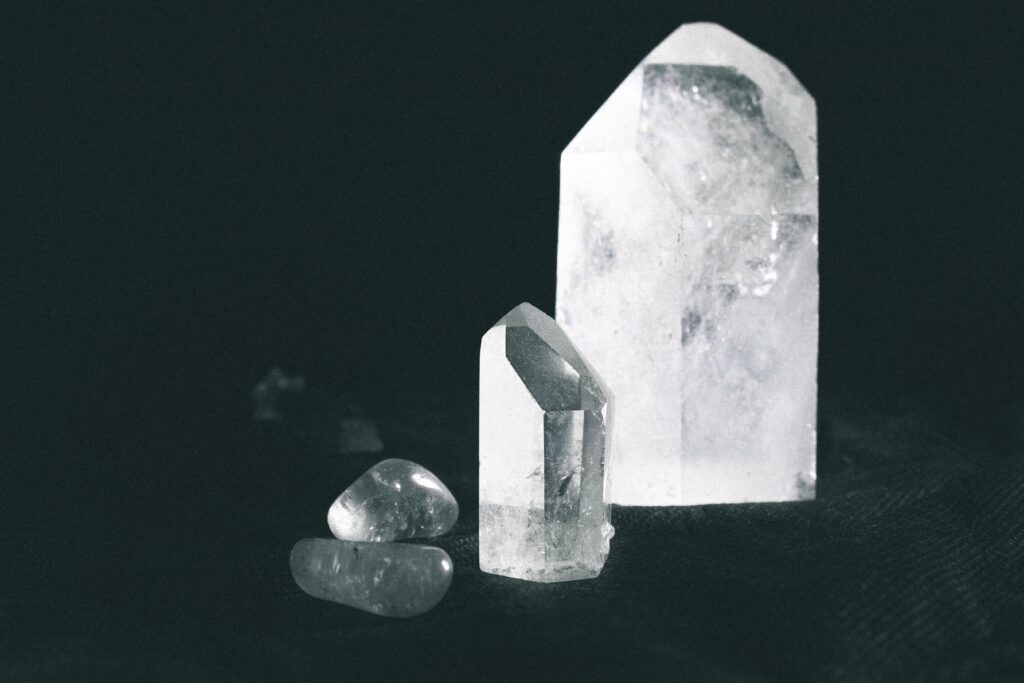
Although archaeologists describe the object as a dagger, many believe its true purpose extended far beyond combat.
A weapon carved from crystal would have been much more fragile than one made from flint or metal. While capable of cutting, it would not have been practical for repeated fighting or hunting.
Its greatest value may have been symbolic.
Researchers suggest the dagger represented status and authority rather than military strength.
Several factors support that interpretation.
First, no nearby sources of the required quartz exist around Valencina, meaning the raw material had to be transported from distant locations.
Second, transforming crystal into such an elaborate object required extraordinary technical knowledge that only a handful of specialists likely possessed.
Finally, the ivory handle and sheath further increased both its rarity and prestige.
According to the researchers, these objects “probably represent funerary paraphernalia only accessible to the elite of this time-period.”
That conclusion paints a picture of a society in which certain individuals possessed objects far beyond the reach of ordinary members of the community.
The dagger may have functioned as a ceremonial emblem carried during important rituals, displayed during public gatherings, or reserved exclusively for burial rites honoring powerful members of society.
New Evidence Changed Who Researchers Believed Led This Society
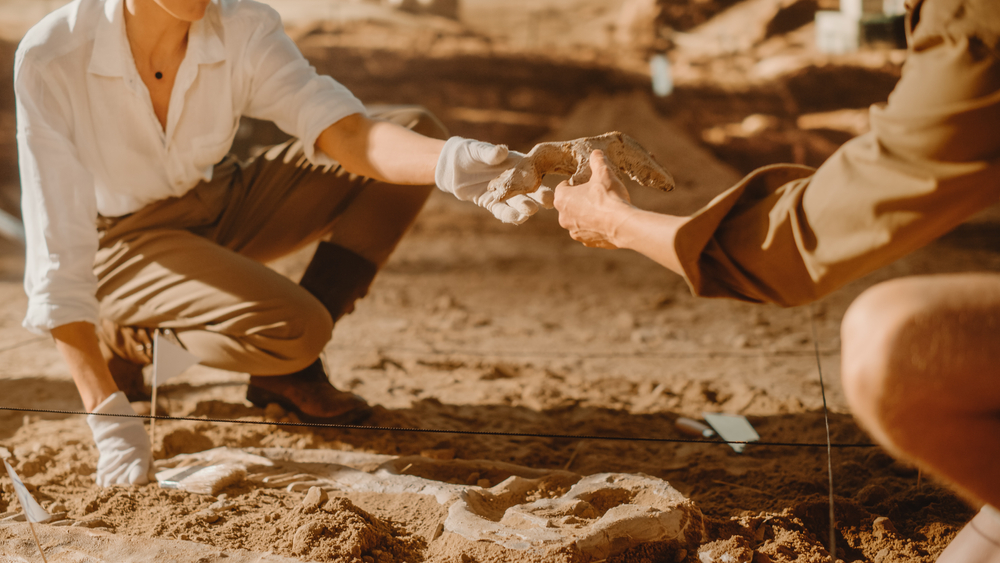
The remarkable artifacts found at Valencina gained even greater significance after later scientific analysis reshaped understanding of one of the site’s most important burials.
For years, archaeologists believed an individual buried with extraordinary grave goods was male. The burial became widely known as the “Ivory Man” because of the valuable ivory objects surrounding the skeleton.
Advances in scientific techniques eventually challenged that assumption.
By examining proteins preserved within tooth enamel, researchers determined the individual was actually female.
The discovery transformed the interpretation of the burial.
Renamed the “Ivory Lady,” she appears to have occupied one of the highest social positions within her community.
Archaeologist Leonardo García Sanjuán suggested she may have been an exceptionally influential individual whose reputation endured long after her death.
“He or she must have been a highly charismatic person. She probably traveled or did have connections with people from faraway lands,” García Sanjuán explained after the new findings emerged.
Even more intriguing, archaeologists found that burials continued to be placed around her tomb for nearly two centuries after her death.
That enduring respect suggests her influence extended across multiple generations.
Whether the crystal dagger was directly connected to her burial remains uncertain, but together these discoveries challenge long-held assumptions about leadership, status, and gender within Copper Age Iberian society.
The Mystery of Poisoned Burials and Carefully Planned Rituals
The people buried inside the Montelirio tholos continue to raise questions that archaeologists cannot fully answer. Alongside the remarkable collection of luxury artifacts, researchers found evidence suggesting that several of those interred may have died under unusual circumstances.
Earlier analyses indicated that at least one male and several females may have died after ingesting poison. Their remains were arranged in a deliberate circular pattern within one chamber, while another chamber contained the crystal dagger together with its ivory hilt and sheath.
The careful placement of these objects has become one of the site’s greatest mysteries.
Unlike many prehistoric burials where valuable items are scattered throughout a tomb, Montelirio displays a level of organization that appears highly intentional. The finest artifacts were concentrated in specific locations, hinting that each chamber may have served a distinct ceremonial purpose.
Researchers noted that the cluster of crystal arrowheads near the entrance resembled offerings found elsewhere in the monument, where groups of weapons were associated with an altar and plant remains. Such arrangements suggest that funerary ceremonies followed carefully established traditions rather than spontaneous acts of remembrance.
While archaeologists cannot determine every detail of these rituals, the evidence points toward a society where death was marked through elaborate ceremonies involving symbolic objects, precious materials, and carefully planned spaces.
A Material That May Have Held Magical Meaning
The crystal itself is one of the discovery’s most intriguing aspects.
Rock crystal was far more than a difficult material to shape. Researchers believe it may also have carried deep symbolic importance for prehistoric communities.
In their study, the team explained that crystal likely possessed meanings beyond its practical use. They pointed to historical examples from other societies where quartz and rock crystal symbolized vitality, supernatural power, and a connection with ancestors.
Unlike ordinary stone, crystal catches and reflects light in striking ways. Its transparent appearance may have seemed almost otherworldly to people living five millennia ago.
Combined with the rarity of the material and the immense effort required to shape it, the dagger may have become an object that inspired reverence as much as admiration.
Researchers wrote that crystal “must have had a symbolic significance as a raw material invested with special meanings and connotations.”
Although the exact beliefs of the Valencina people have been lost to history, discoveries like this suggest that prestige objects often carried spiritual importance alongside their social value.
Long-Distance Trade Connected Prehistoric Communities
One reason the Montelirio discoveries continue to surprise archaeologists is the variety of exotic materials recovered from the tomb.
The crystal itself did not originate near the burial site.
Neither did the ivory used to create the dagger’s handle, nor the amber beads found among the elaborate clothing, nor many of the other luxury goods uncovered during excavation.
This means the community at Valencina maintained access to extensive trade networks stretching across large parts of prehistoric Europe and possibly beyond.
Transporting valuable raw materials over hundreds of miles would have required cooperation between distant communities, specialized traders, and established exchange routes.
The settlement near modern-day Seville was clearly more than a small farming village.
Instead, many archaeologists now view Valencina as one of the most significant population centers in Copper Age Iberia, where wealth, craftsmanship, and ceremonial traditions came together on an impressive scale.
The crystal dagger serves as powerful evidence of those connections. Every stage of its creation, from obtaining the raw quartz to carving the finished blade and attaching the ivory hilt, depended upon resources and skills that were anything but ordinary.

Why the Crystal Dagger Still Fascinates Archaeologists
Thousands of prehistoric weapons have been unearthed across Europe, but very few inspire the same level of fascination as the Montelirio dagger.
Part of its appeal comes from its extraordinary craftsmanship.
Even with modern tools, shaping a flawless crystal blade without causing fractures would require patience and precision. Accomplishing the same task using prehistoric techniques demonstrates an astonishing understanding of the material.
Its rarity also sets it apart.
Researchers described the collection of crystal artifacts from Montelirio as the finest ever discovered in prehistoric Iberia. That assessment reflects not only the quality of the workmanship but also the uniqueness of finding so many crystal objects together in one ceremonial setting.
Perhaps the greatest mystery is that the dagger refuses to fit neatly into any single explanation.
It was a weapon, yet probably never intended for combat.
It was an object of exceptional craftsmanship, yet it disappeared into a tomb instead of remaining in public view.
It represented wealth, but it also appears to have carried symbolic meanings that extended beyond material value.
Each discovery made at the site answers one question while raising another.
Ancient Discoveries Continue to Rewrite History
The Montelirio excavation has transformed archaeologists’ understanding of prehistoric Iberian society.
For decades, many people imagined Europe’s Copper Age communities as relatively simple societies with limited social organization. Finds like the crystal dagger reveal something much more complex.
These communities possessed skilled artisans capable of producing technically demanding objects. They maintained trade networks that reached distant regions. They held elaborate funerary ceremonies and invested enormous resources in honoring certain individuals after death.
The later identification of the Ivory Lady added another unexpected layer to the story by challenging long-held assumptions about leadership and social hierarchy in prehistoric Europe.
Together, these discoveries paint a picture of a sophisticated civilization whose beliefs, craftsmanship, and social structures were far more advanced than previously believed.
Many mysteries remain unresolved, and future research may continue to reshape archaeologists’ understanding of Valencina and the remarkable people who lived there.
What is already clear, however, is that the crystal dagger represents far more than an ancient weapon.
It is a rare glimpse into a world where artistry, ritual, long-distance trade, and social status were woven together thousands of years before written history began. Buried beneath the Spanish countryside for five millennia, this remarkable artifact has become one of the most compelling windows into Europe’s distant past, reminding us that some of archaeology’s greatest discoveries are not the largest monuments, but the objects that quietly preserve the stories of forgotten civilizations.