
Your cart is currently empty!
Ancient Maya Dentists Used Antibiotic Cement to Set Jade Teeth and It Still Holds After 1,000 Years
A tiny piece of green stone is sitting exactly where an ancient Maya dentist put it more than a thousand years ago.
Contents
show
The strange part is not only the jade. It is what held it there. Researchers studying Maya dental work have found complex plant-based sealants packed with organic compounds, including substances known for antibacterial and antifungal activity.
“Some of these inlays are so precise that when you put it in a tooth, you can hear a click,” he told National Geographic.
The Jade Was Meant To Stay
During the Classic Maya period, roughly A.D. 250 to 900, people in areas that now include southern Mexico, Guatemala, Belize and Honduras sometimes had stones such as jade and pyrite placed into their front teeth.
The practice was associated with appearance and status. The materials were valuable, and altering the teeth required considerable skill.
“Each ingredient has a specific task,” Hernández Bolio said.
Yet the most remarkable evidence comes from what happened after the people themselves were gone.
More than half of the modified teeth recovered from Maya archaeological sites still contain their original inlays. The stones were not simply found lying beside the teeth after centuries in the ground. They remained seated inside carefully prepared cavities.
That means the material holding them in place survived burial, groundwater and changing soil conditions for around a millennium.
For modern observers, that raises an obvious question: what exactly did the ancient dentists put into those holes?
The answer is more complicated than the viral claim that the Maya simply invented an ancient antibiotic glue.
There was no modern concept of antibiotics involved. Researchers have found something more interesting in its own way: carefully prepared mixtures of plant resins and other organic ingredients that appear to have been developed according to local traditions.
The sealants were strong enough to hold decorative stones in place for centuries.
Some may also have contained ingredients with antimicrobial properties.
That distinction matters.
The evidence shows what was in the sealants. It does not prove that Maya dentists deliberately created an antibiotic treatment.
The Dentistry Was Far More Precise Than It Sounds
Putting a piece of jade into a living tooth was not a job for someone simply making a hole and filling it.
The drilling had to be deep enough to create a cavity for the stone while avoiding the pulp, the soft tissue containing nerves and blood vessels at the center of the tooth.
Going too deep could cause serious damage.
The surviving teeth offer clues about how the work was performed.
Researchers examining the cavities found rounded marks consistent with drilling. The actual tool used to make those marks has not been recovered, but its work remains visible on the teeth.
That is one of the stranger aspects of archaeological dentistry. The instrument may have disappeared completely, but the tooth preserved evidence of what it did.
Dental anthropologist Elma Vega-Lizama described one cavity as “so perfect.”
That precision becomes even more striking when the tooth is examined with modern imaging.
One inlaid tooth studied with cone beam CT showed calcification inside the pulp chamber. The finding is consistent with the tooth responding to the drilling and subsequently healing.
In other words, these were not decorative objects placed into dead teeth.
People were undergoing the procedure while alive.
They had to sit through the drilling. The stone had to fit. The sealant had to hold.
And in many cases, it did.
The Ancient Cement Had A Surprisingly Complicated Recipe
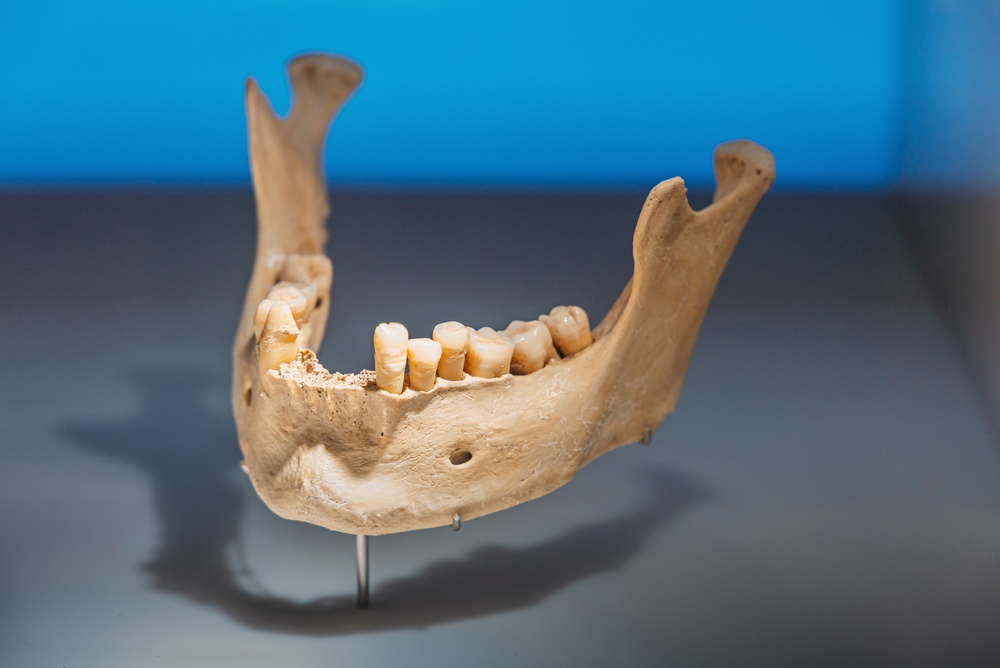
In 2022, researchers led by biochemist Gloria Hernández Bolio examined eight ancient Maya dental sealants.
The team used techniques including infrared spectroscopy and gas chromatography to identify organic compounds preserved in the material.
The analysis revealed roughly 150 organic molecules.
Much of the material consisted of plant resin, with pine playing a major role. But the mixtures were not identical.
Two samples contained sclareolide, a compound associated with Salvia plants and known from separate research to have antibacterial and antifungal properties.
Samples from the Copán region also contained essential oils from the mint family, which are associated with anti-inflammatory properties.
The researchers did not find evidence of one universal Maya dental formula.
Instead, the samples appeared to fall into four groups associated with different geographical regions.
That suggests local practitioners may have maintained their own recipes.
As Archaeology Magazine reported, “the sealants’ contents varied based on location, suggesting that local practitioners had their own recipes.”
That detail makes the discovery considerably more interesting.
The Maya were not necessarily using one standardized substance across every community. Different groups appear to have developed mixtures using materials available in their own surroundings.
Pine resin could form part of one recipe.
Other plants and oils could be added.
The resulting material needed to do one very important job: stay attached to the tooth.
The ingredients may also have provided other useful properties.
Among the substances detected by researchers were compounds with known biological activity, including antibacterial and antifungal effects.
But calling the whole substance an ancient antibiotic goes beyond what the research demonstrates.
A Mysterious Molar Is Changing The Picture
For years, the surviving evidence suggested that Maya dental inlays were primarily associated with visible front teeth.
That makes sense.
A stone placed into a front tooth could be seen when someone smiled, spoke or displayed their teeth.
Then researchers encountered something that did not fit neatly into that explanation.
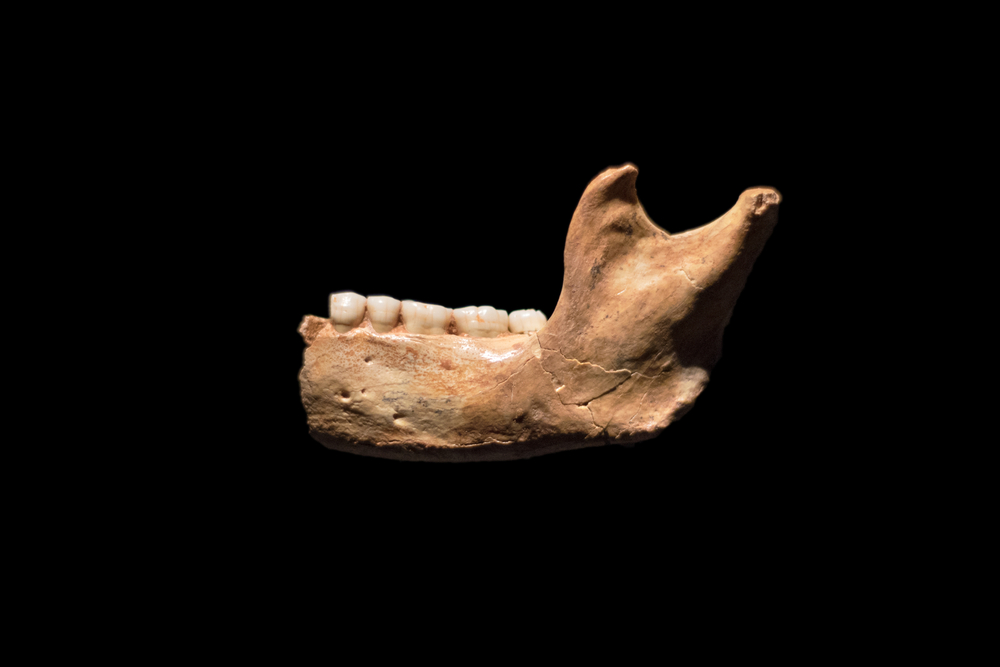
In April 2026, a study published in the Journal of Archaeological Science: Reports examined a lower left first molar containing a green stone believed to be jadeite.
A molar is buried toward the back of the mouth.
Nobody sees it during ordinary speech or smiling.
The researchers pointed out the obvious problem themselves: “Molar teeth are not visible during speech or display.”
So why place an inlay there?
The team, which included bioarchaeologist Andrea Cucina, suggested that the tooth might have been treated for a practical reason rather than appearance.
One possibility is pain or damage associated with a diet heavily dependent on maize.
If that interpretation is correct, the Maya may have used some dental techniques for more than decoration.
But there is a catch.
The researchers did not find clear cavity damage at the site of the inlay. Their interpretation remains speculative.
Dental historian Roger Forshaw described the health-related explanation as “plausible,” but that is a long way from proving what happened.
One unusual molar cannot rewrite the entire history of Maya dentistry.
It can, however, force researchers to ask better questions.
Children Wore It Too
The other 2026 surprise came from three loose teeth in the Popol Vuh Museum in Guatemala City, each set with jade, each belonging to a child between about seven and ten years old.
Researchers could tell from the root tips, still open and unsealed, the way a child’s permanent teeth are before they finish forming.
Scholars had long assumed this was late adolescent or adult work, a rite tied to coming of age. Small children in the chair hints at something else, perhaps a marker of childhood itself.
Three teeth with no recorded find site is thin evidence, and the researchers say so plainly. As one summary of the work put it, the idea “stays a possibility rather than a settled explanation.”
A Thousand Years Later, The Stone Is Still Doing Its Job
At its core, the most striking part of this story is how relatable it is. Someone simply wanted a piece of jade in their tooth, and a local expert had the skill to put it there.
They drilled the tooth, shaped the stone, and mixed a plant-based glue to hold it all together. Over the next thousand years, the world around them completely changed. Their civilization transformed, the people faded into history, and their original tools turned to dust. But that tiny piece of jade never budged.
Whether or not the Maya were using a true “ancient antibiotic” is still up for debate. But what we know for sure is just as impressive: their dentists mastered natural materials so well that their handiwork has survived for centuries. The greatest proof of their skill isn’t written in a history book—it’s still sitting exactly where they left it.