
Your cart is currently empty!
A Lost Maya City With a Towering Pyramid Has Been Found Beneath Mexico’s Dense Jungle
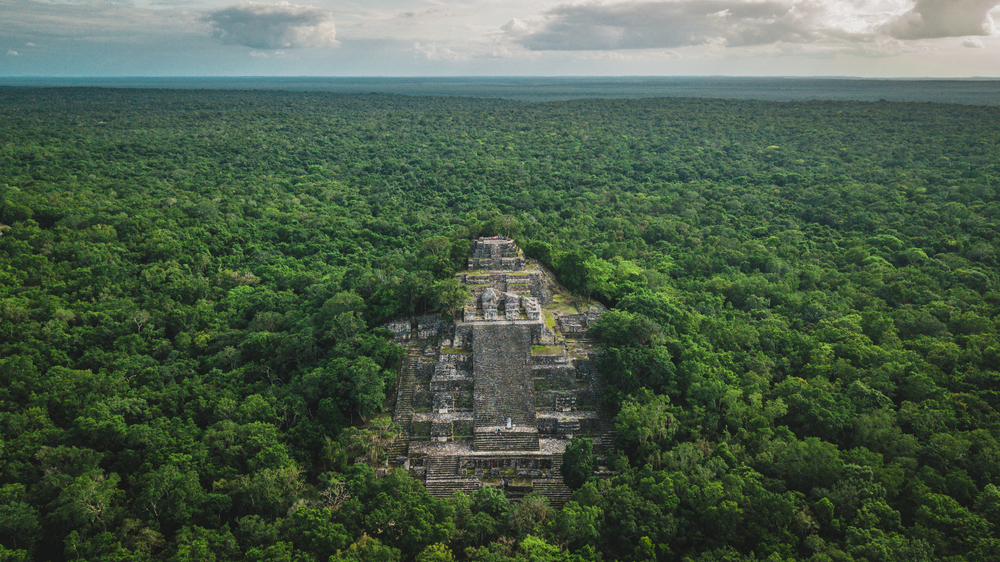
Deep in Mexico’s Calakmul Biosphere Reserve, archaeologists just uncovered an entire city that had sat untouched in the jungle for over a thousand years.
Contents
show
The site has a 43-foot pyramid, palace buildings, farming terraces, water channels, and 14 carved stone monuments. Mexico’s National Institute of Anthropology and History (INAH) announced the discovery on June 22, 2026, and named it Minanbé — from the Yucatec Maya words for “there is no path.”
Found From the Air
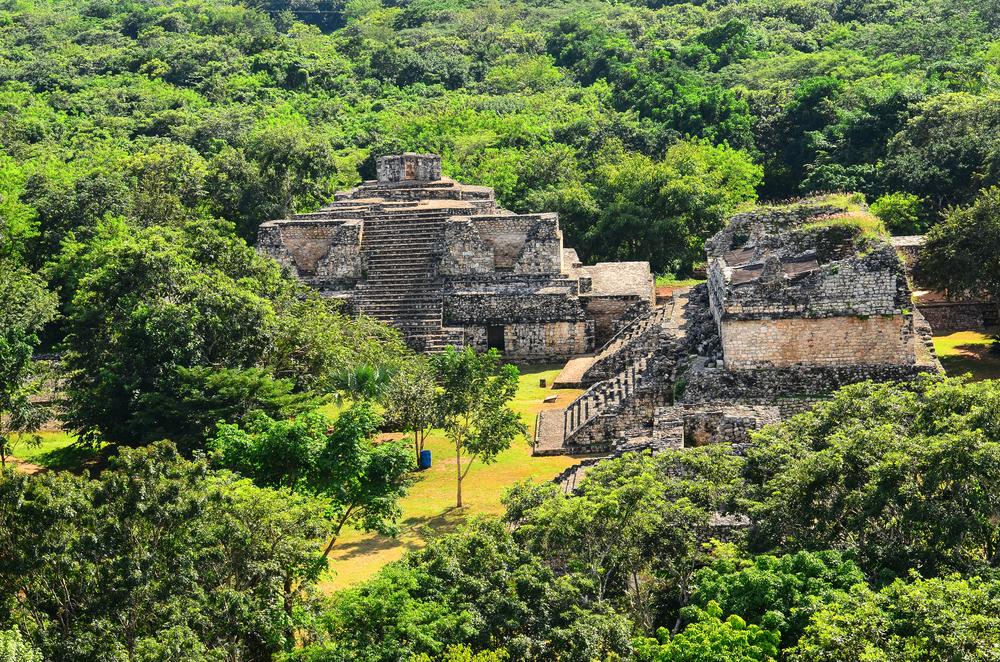
The team, led by archaeologist Ivan Šprajc and made up of Mexican and Slovenian researchers, didn’t stumble onto the city by wandering the forest. They found it with lidar, a laser-scanning technology that maps the ground even under thick jungle canopy.
From ground level, an ancient building can look like nothing more than a hill covered in trees. Lidar strips that away and reveals the geometry underneath — plazas, pyramids, terraces, shapes that don’t occur in nature.
Once the scans flagged something worth checking, the team still had to cut their way in and confirm it on foot. What they found was an organized city covering about 15 hectares (roughly 37 acres): plazas ringed by palaces and religious buildings, engineered farmland, and wetlands laced with water channels. At its center stood a stepped pyramid over 13 meters (43 feet) tall, built in a local style known as Río Bec.
Šprajc has spent decades surveying this part of the Yucatán Peninsula, still one of the least-explored corners of the ancient Maya world. He says ruins out here often blur into each other — it’s frequently hard to tell where one ancient community ends and the next begins. Minanbé stood out enough to justify the machetes.
Minanbé’s Last Monuments
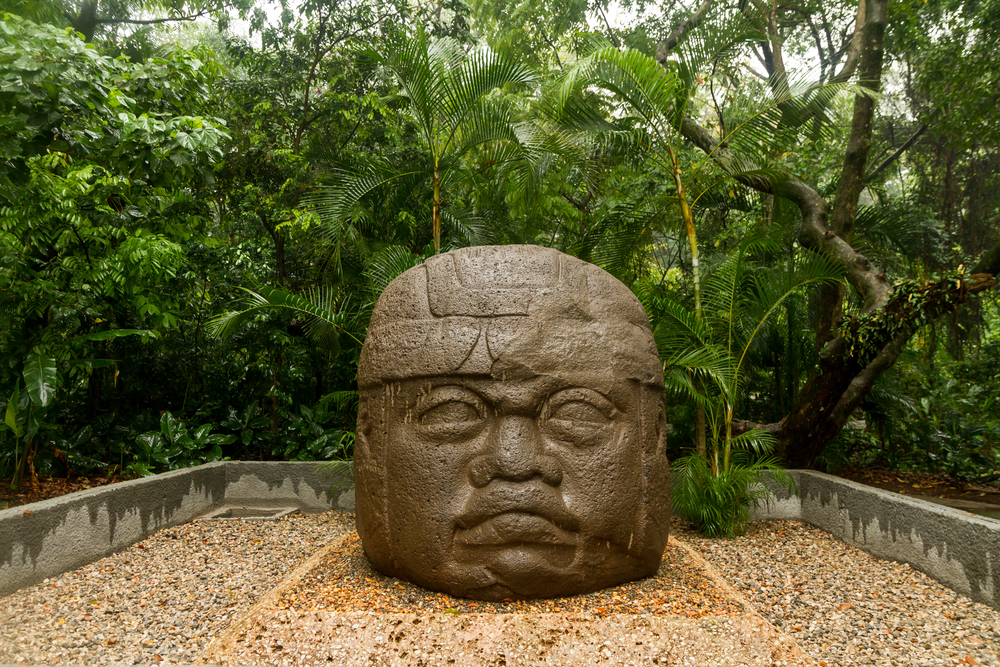
At the end of a stone causeway linking two parts of the city, the team found 14 carved stelae and altars — stone monuments covered in imagery and hieroglyphic writing. That’s an unusual number for a city this size, and researchers think it points to Minanbé having real political weight in its region, likely backed by surplus food from its farming terraces.
One monument stands out from the rest. Stela 1 shows a carved figure mid-swing with a knife or axe, decapitating another person. Next to the scene is a calendar glyph reading 5 Ajaw — the year 849 on our calendar. Project epigraphist Octavio Esparza Olguín notes that these monuments went up not long before Maya cities across the region were abandoned in the 10th century.
During the Late Classic period (600–900 CE), these lowlands may have held as many as 10 million people. Minanbé’s carvers were putting up monuments right as their civilization headed toward collapse.
The City With No Path
When Mexico’s National Institute of Anthropology and History announced the find on June 22, 2026, the team gave the site a name that doubles as a trail report. Minanbé comes from the Yucatec Maya mina’an, meaning “there is no,” and be, “path.” The city with no way in.
The fieldwork was carried out by a joint Mexican and Slovenian research team working under INAH’s authorization, the latest chapter in a partnership that has been redrawing the map of this region for years.
The name undersells what the path finally led to. This was not a scatter of mounds. It was a whole urban core: plazas ringed by palace buildings and religious structures, farming terraces, and wetlands laced with channels that once managed the city’s water.
Above it all rose a pyramid temple more than 13 meters high, roughly 43 feet, built in the distinctive Río Bec style. A tower of shaped stone, standing in the green dark for a thousand years while the world forgot the way in.
Why The Maya Built A City So Deep In The Forest
Minanbé’s location looks remote today, but nothing about the city itself looks accidental.
The farming terraces cut into the surrounding hillsides show people reshaping the land on purpose, turning difficult terrain into usable cropland. The channels running through the wetlands did the same job for water, managing a supply that this landscape doesn’t offer freely. Together, the terraces and channels point to a population well past simple survival — this was infrastructure, built to support a city, not a village scraping by.
The 14 stelae and altars tell a different part of the same story. Producing and displaying that many carved monuments wasn’t something a settlement on the margins of Maya society typically did. It took resources, skilled labor, and a reason to advertise power. Minanbé was plugged into the same political and religious culture as the larger cities of the lowlands, even sitting at a harder-to-reach edge of that world.
And hard to reach didn’t mean cut off. The Central Maya Lowlands were stitched together by a dense network of roads, causeways, and trade routes, cutting through jungle that looks impassable from the outside. Minanbé’s own causeway is a small piece of evidence for this: it runs from one part of the city to another, ending precisely at that row of monuments rather than trailing off into open space. Nobody builds a road like that by accident. Someone decided exactly where people should walk, and why.
Minanbé Waits
Researchers say deeper excavation is essential, but that creates an obvious problem: doing it properly would mean building a road into a city whose name literally means there isn’t one. For now, study will likely continue in short, difficult expeditions rather than a sustained dig.
That patience may pay off. Minanbé is a rare case — a major site found with its monuments, plazas, and stelae still in their original positions, untouched by looters and largely undisturbed by time. Every future season here has a chance to add real detail to a period of Maya history that ended, abruptly, within a generation of those carvings going up.
Until then, the city stays much as the team found it: pyramid still standing, 14 stones still lined up at the end of their causeway, one carved figure still frozen mid-swing beside a date that reads 849. Whatever answers Minanbé holds about how — and why — this civilization unraveled will wait in the jungle a little longer.