
Your cart is currently empty!
People Are Doing Double Takes Over This Bizarre Alpaca Photo
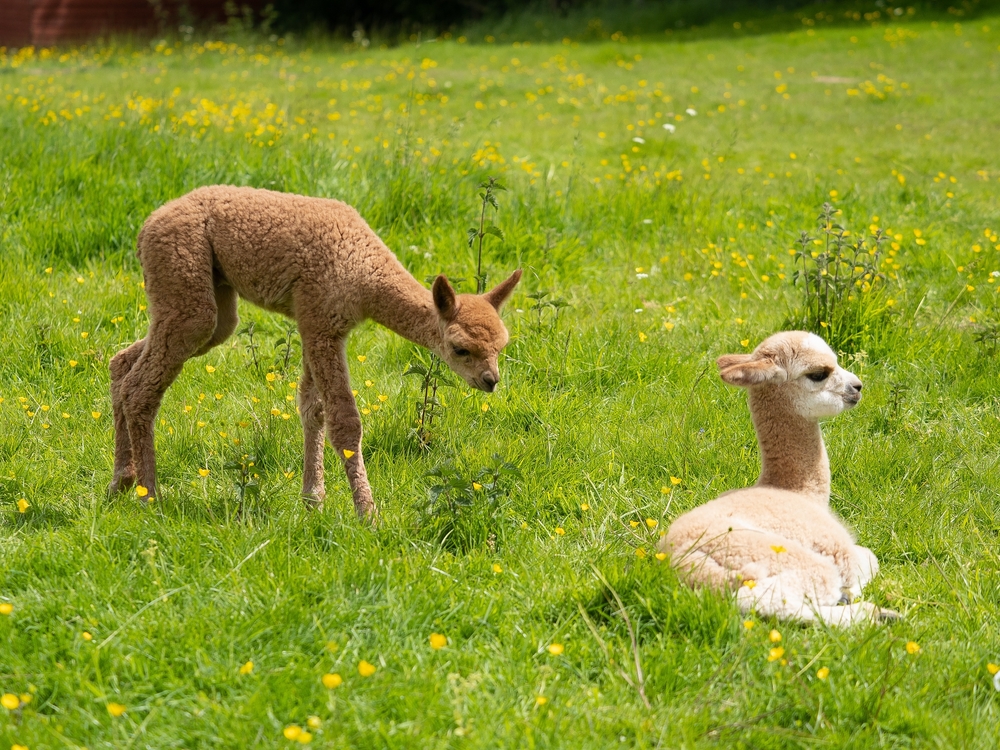
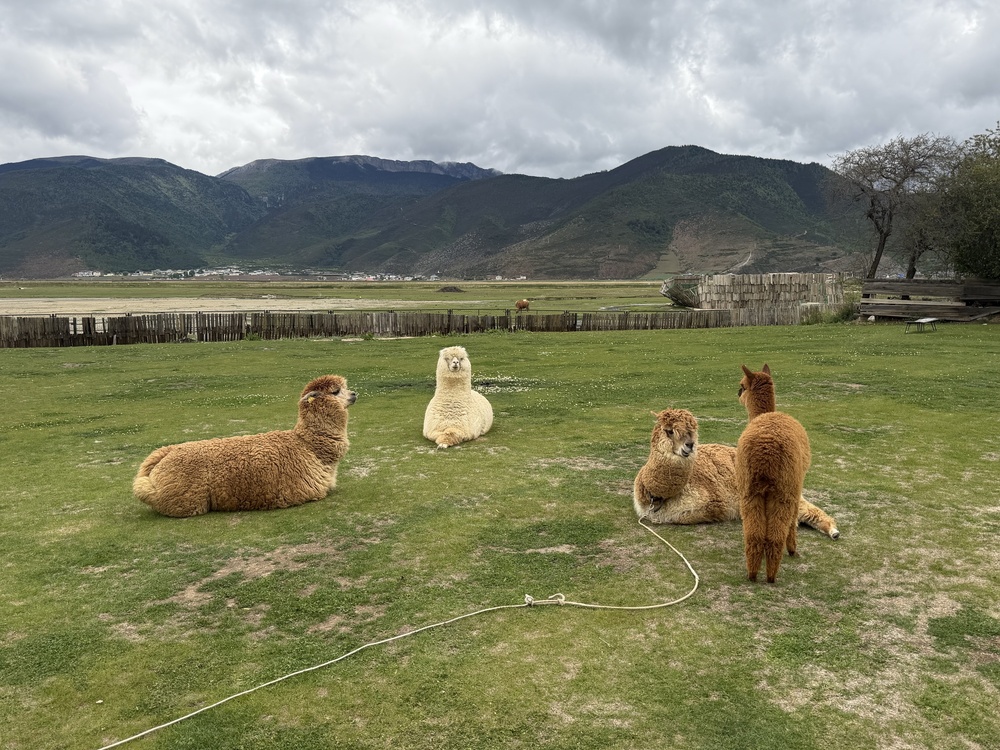
For a few seconds, an ordinary photograph of three alpacas appears to show something that should be impossible. A white alpaca seems to be suspended above a grassy field, with a dark shape underneath it that looks remarkably like a shadow. There is no obvious explanation for how the animal could be hovering there, and that is exactly what has sent people back to the image for a second, third and sometimes fourth look. The photograph was taken by Mark Stebnicki, a videographer and photographer for the North Carolina Farm Bureau, whose Pexels portfolio contains hundreds of images from farms, waterways and rural landscapes. His photographs have reportedly attracted more than 243 million views, but this particular image has managed to stand out for a very different reason.
Contents
show
The picture shows three alpacas beside a narrow gravel track, photographed from an elevated angle. Two of the animals appear to be resting normally on the grass, while the white alpaca looks as though it has somehow escaped the ground altogether. The image was later shared by the Facebook page Ozzy Man Reviews, where the caption admitted that even the person posting it had briefly fallen for the illusion. One commenter then made the confusion even funnier by asking how the photographer could have taken the picture if the photographer was apparently floating too. The strange part is that there is no digital trick hiding behind the photograph. The alpaca really is on the ground, but the way the animals and gravel line up makes the scene look completely different at first glance.
The Photograph That Made People Question Gravity
The photograph shows three alpacas lying in a grassy field beside a narrow gravel road. The elevated camera angle is crucial because it changes the way the ground and animals appear in relation to one another. The white alpaca’s fleece is close in color to the pale gravel, making the boundary between the animal and the surface difficult to identify. That alone might create some confusion, but the animal positioned beneath it provides the detail that turns the ordinary photograph into a convincing optical illusion.
The black alpaca is sitting in just the right position to be mistaken for a shadow. Once the brain makes that assumption, the white alpaca appears to have a dark shadow floating underneath its body. The viewer is then left with a scene that looks as though the animal is hovering several inches above the field. Nothing has actually moved, but the photograph has provided enough misleading information for the first interpretation to feel completely reasonable.
The image gained attention after Ozzy Man Reviews shared it on Facebook. The post openly admitted that the illusion had worked, with the caption saying, “I’m ashamed to say that even I fell for this one for a second.” That confession encouraged other viewers to inspect the photograph themselves, and the comments quickly became part of the entertainment. One person joked, “You’re the one who’s floating. How did you take the picture?”
The Black Alpaca Is The Secret To The Trick
The explanation is much simpler than the photograph initially suggests. The white alpaca is lying on the ground, but its pale fleece blends visually with the gravel track. Because the photograph was taken from above, the viewer does not get the normal perspective that would make the animal’s position immediately obvious. The pale surface and pale animal effectively become part of the same visual shape.
Then the black alpaca changes everything. Its dark body creates the appearance of a shadow beneath the white animal, even though it is actually another alpaca lying on the ground. Once those two details are combined, the brain is given a very convincing visual story: a white animal is hovering, and a dark shadow is sitting beneath it.
One commenter explained the illusion by writing, “The black alpaca looks like a shadow, therefore making the one white one look like it’s floating…” That is essentially the entire mystery. There is no supernatural explanation and no evidence that the photograph was manipulated. The scene simply contains several shapes and colors that happen to confuse the way viewers normally interpret depth.
The funniest part is what happens after the explanation becomes obvious. Once someone points out that the black shape is another alpaca, the illusion becomes much harder to see. The white animal immediately returns to the ground in the viewer’s mind. The photograph has not changed at all. The interpretation has.
Plenty Of People Were Never Fooled
Not everyone looking at the photograph saw a levitating alpaca. Some commenters said they immediately recognized three animals lying in the grass and could not understand why anyone found the picture confusing. One viewer wrote, “None of them looks like they’re floating. Not even close,” while another questioned the supposed shadow because “Its not even facing the right way if it was actually a shadow.”
Other viewers landed somewhere between the two camps. They could understand why the photograph fooled people, but said they personally saw three alpacas from the beginning. One commenter admitted, “I get it. But didn’t see it initially. Saw 3 laying down from the start.” That difference is what makes the photograph more interesting than a simple joke image.
The same photograph can produce completely different first impressions depending on what a person notices first. If the viewer recognizes the black alpaca immediately, the illusion disappears. If the dark shape is interpreted as a shadow before the animals are properly identified, the floating effect becomes surprisingly convincing.
That is also why optical illusions can become so addictive online. People do not simply want to know whether they were fooled. They want to know why they were fooled. The moment the explanation clicks into place, the image changes from something mysterious into something obvious.
The floating alpaca is part of a much larger internet fascination with images that challenge people’s perception. A Storyboard18 analysis examined the popularity of optical illusion communities on Reddit, including groups such as r/opticalillusions and r/FindTheSniper. These communities attract people who enjoy searching for hidden objects, identifying visual tricks and arguing over what they think they can see.
There is a simple reason these images work so well on social media. They require participation. A normal photograph can be viewed in a second and forgotten, but an optical illusion creates a tiny problem that the viewer wants to solve. People zoom in, rotate their phones, read the comments and look again after someone gives them a clue.
Storyboard18 described optical illusions as “safe, enjoyable deception.” That description fits this alpaca photograph particularly well because nobody is actually being deceived by another person. The photograph is genuine. The trick comes from the viewer’s own interpretation of what is happening.
That makes the image especially harmless in an internet environment where manipulated photographs and artificial videos can be much harder to identify. There is no fake alpaca and no fabricated farm scene. The picture simply takes a completely normal moment and presents it in a way that causes the brain to jump to the wrong conclusion.
Your Brain Is Filling In The Missing Information
Human vision is not simply a matter of the eyes recording everything in front of them. The brain constantly interprets shapes, colors, distance and position so people can understand the three-dimensional world around them. Most of the time, those rapid judgments work so well that people never notice them happening.
The alpaca photograph exposes that process because the visual information is unusually misleading. The brain sees a pale animal against a pale surface, then notices a dark shape beneath it. If that dark shape is interpreted as a shadow, the brain has already created a possible explanation for the scene.
From there, the rest of the image appears to support the same conclusion. The white alpaca looks elevated. The dark shape appears underneath it. The gravel seems to form the surface below. What began as several ordinary visual details turns into one apparently impossible event.
That is why the photograph can feel so convincing even after viewers know it is an illusion. The first interpretation happens quickly, before the viewer consciously starts analyzing the scene. Once the brain has identified the objects correctly, the mystery disappears.
The Camera Angle Makes The Illusion Possible
The photographer’s position also deserves some credit. If the same alpacas had been photographed from ground level, their relationship to the grass would probably have been much easier to understand. The elevated viewpoint compresses the scene and removes some of the depth cues people normally use to determine where objects are sitting.
The pale gravel creates another problem. The white alpaca and the surface beneath it share similar colors, which makes their edges less obvious. Instead of immediately seeing an animal resting against the ground, the viewer can perceive one pale shape separated from the field by a darker form.
The black alpaca then completes the illusion. Its body occupies the exact visual position where a shadow could plausibly appear. The brain has enough information to construct a believable scene, but not enough information to make the correct interpretation immediately obvious.
It is a perfect example of how a completely ordinary photograph can become extraordinary through composition alone. The animals did not need to do anything unusual. The camera simply caught them at exactly the right angle.
The Internet Found A Puzzle Where Nobody Expected One
There is something particularly funny about the fact that the original scene was so ordinary. Three alpacas were apparently doing what alpacas do, resting in a field beside a gravel track. There was no dramatic event taking place and no unusual behavior that needed documenting.
The photograph became interesting because viewers supplied the mystery themselves. One person saw a floating animal. Another saw three alpacas. Someone else saw the supposed shadow and immediately understood the trick. A completely ordinary farm scene suddenly became an online debate about what the human eye can be trusted to see.
The image also demonstrates why simple visual puzzles continue to perform so well on social platforms. They require almost no explanation to attract attention. The moment someone sees a white alpaca apparently hovering above the ground, curiosity does the rest.
People want to solve the picture before they scroll away. Then they want to show someone else and see whether that person falls for it too.
The Alpaca Never Actually Left The Ground
There was no levitation, no camera trick and no mysterious force involved. The white alpaca was simply resting on solid ground while another alpaca occupied the perfect position beneath it. The gravel and the elevated camera angle did the rest, creating an illusion that managed to fool at least some viewers for a few seconds.
That is what makes the photograph so effective. The answer was visible from the beginning, but the brain needed a moment to interpret the evidence correctly.
The internet may have found a floating alpaca, but the farm never had one.
Three animals were lying in a field. One photograph made them look like something else entirely.