
Your cart is currently empty!
August 12 Could Be The Biggest Night For Skywatchers In 2026
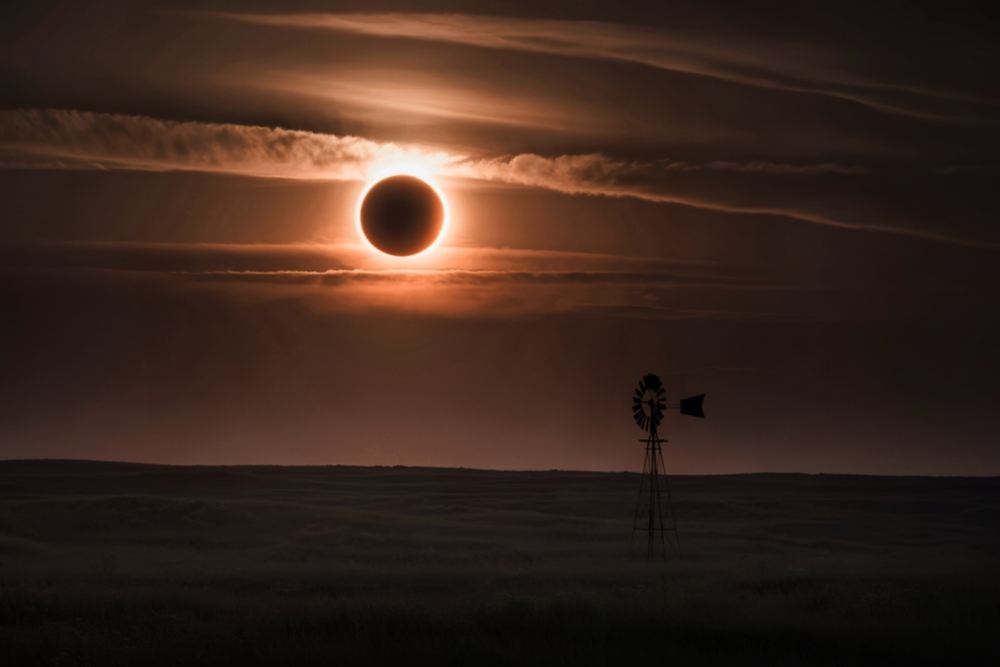
August 12, 2026, could be an unusually busy day for anyone who likes looking up at the night sky. A total solar eclipse will cross parts of the Northern Hemisphere, while the annual Perseid meteor shower reaches its peak around the same time, creating a rare stretch of days when several major celestial events compete for attention.
Contents
show
The events are not connected, and there is no hidden cosmic mechanism making them happen together. The eclipse is caused by the Moon passing between Earth and the Sun, while the Perseids come from debris left behind by a comet. But the timing is enough to turn August 12 into a date worth marking on the calendar, especially for people who can escape city lights and find a clear view of the sky.
The Solar Eclipse Will Transform The Daytime Sky
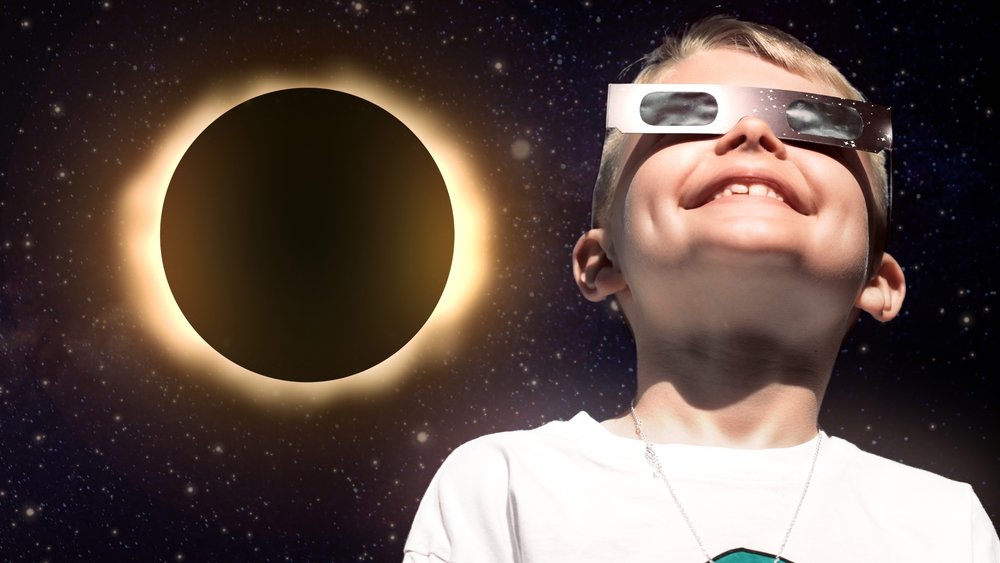
The biggest event arrives during daylight hours. On August 12, the Moon will pass directly between Earth and the Sun, producing a total solar eclipse along a narrow path across the planet.
The path of totality will cross Greenland, Iceland and Spain, while parts of northeastern Africa and western Europe will experience a significant partial eclipse. Parts of North America will also see the Moon cover a portion of the Sun, although most locations there will not experience totality.
A total solar eclipse happens because the Moon can appear almost exactly the same size as the Sun when viewed from Earth. When the alignment is precise, the Moon can completely cover the Sun’s bright surface even though the Sun is vastly larger.
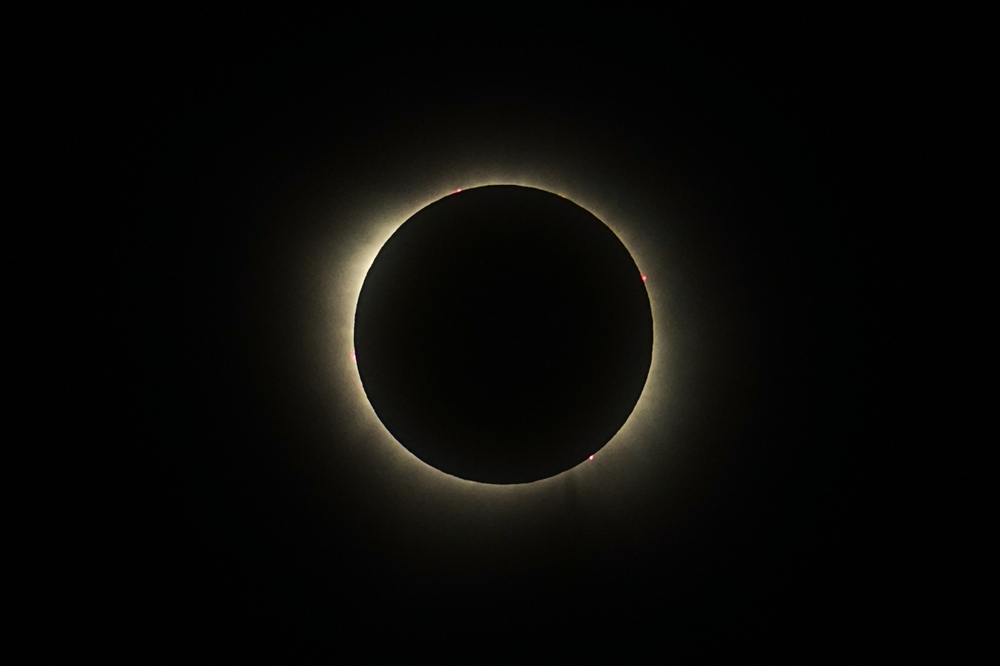
For anyone inside the path of totality, the experience can be dramatic. Daylight fades, the sky changes appearance and the Sun’s outer atmosphere becomes visible around the dark silhouette of the Moon. The period of complete coverage, however, will last only a short time.
Millions Will See A Partial Eclipse Instead
Totality is limited to a relatively narrow strip, but the eclipse itself will be visible across a much wider area.
Parts of Canada and the northeastern United States will see the Moon pass across the Sun without completely covering it. Much of western Europe and northeastern Africa will also experience a partial eclipse.
The amount of coverage will vary significantly depending on where someone is standing. Northern Maine, for example, will see around 29% of the Sun covered at the eclipse’s peak, while some locations in Michigan will see considerably less.
That means two people watching the same eclipse from different cities could have very different experiences. One observer might see a noticeable bite taken out of the Sun, while another could see only a small portion disappear.
There is also one rule that matters more than anything else during the eclipse: never look directly at the Sun without proper solar eye protection. Ordinary sunglasses are not enough, and binoculars or telescopes can cause severe eye injury if they are used without specially designed solar filters.
The Perseid Meteor Shower Will Take Over After Dark
Once the eclipse has come and gone, the sky will have another spectacle waiting.
The Perseid meteor shower is already active by August, but its peak arrives around August 12 and 13. The shower occurs every year when Earth travels through the stream of dust and debris left behind by Comet 109P/Swift-Tuttle.
As those tiny particles slam into Earth’s atmosphere at enormous speeds, they heat up and glow. The result is the familiar streak of light commonly called a shooting star.
The Perseids are considered one of the year’s strongest annual meteor showers. Under ideal conditions, the shower can produce a theoretical maximum of around 100 meteors per hour, although most observers will see considerably fewer.
That number should not discourage anyone. A dark sky and an hour of patient observing can still produce several bright meteors, and particularly bright streaks can appear suddenly without warning.
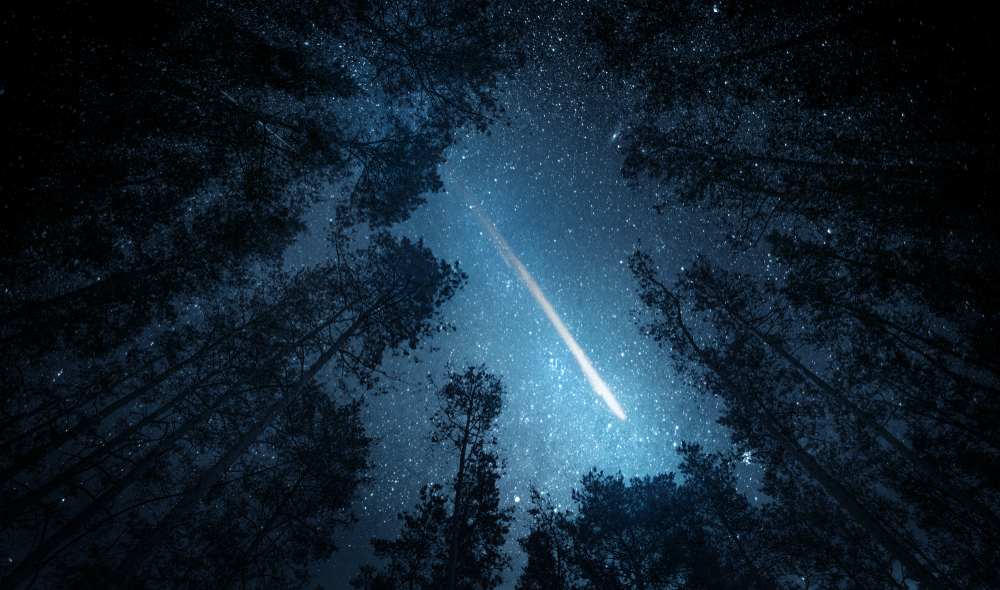
You Won’t Need A Telescope To See The Perseids
The Perseids are one of those astronomical events where expensive equipment can actually be less useful than simply finding a comfortable place to lie back and look upward.
Meteors can streak across huge portions of the sky, so using a telescope would restrict the amount of sky visible at any one time. Your own eyes provide a much wider field of view.
The biggest obstacle is usually light pollution. Bright city lights make faint meteors harder to see, which is why traveling to a darker location can dramatically improve the experience.
The best viewing will generally come during the early morning hours before sunrise. Give your eyes time to adjust to the darkness, stay outside for a while and resist the temptation to give up after a few quiet minutes.
For the best chance of catching the Perseids:
- Find darker skies: Get as far away from bright city lights as practical.
- Look across a wide area: Meteors can appear in almost any part of the sky.
- Stay outside: A longer viewing session gives you more opportunities to catch brighter meteors.
- Watch before sunrise: The early morning hours are generally among the best times to observe the shower.
The meteor shower also lasts for several nights, so missing one particularly good meteor does not mean the show is over.
A Six-Planet Alignment Adds Another Reason To Look Up
The meteor shower and eclipse are already enough to make August interesting, but the date has another celestial attraction for skywatchers: a six-planet alignment.
Several planets can appear grouped along the same broad section of the sky because the planets orbit the Sun in roughly the same plane. From Earth, that can create the appearance of a planetary parade.
It is worth remembering that the planets are not actually lined up in a perfect row through space. Their positions are separated by enormous distances, and the apparent alignment is largely a consequence of perspective.
For casual skywatchers, however, the visual effect can still be striking. The planets appear along the ecliptic, the same general path followed by the Sun and Moon across our sky.
Some of the planets will be easier to identify than others. Bright objects such as Jupiter and Mars can stand out, while the more distant and faint planets may require binoculars or a telescope to pick them out under good conditions.
The Three Events Are A Cosmic Coincidence
It may sound as though the eclipse, meteor shower and planetary alignment are somehow connected.
They aren’t.
The Perseids occur every year because Earth’s orbit carries the planet through the debris trail associated with Comet Swift-Tuttle. The solar eclipse is determined by the positions of the Sun, Moon and Earth. The planetary alignment comes from the apparent positions of several planets along the ecliptic.
Those separate astronomical processes simply happen to overlap around the same period.
That distinction actually makes the timing more interesting. There is no single event causing everything to happen. Instead, several independent pieces of celestial mechanics happen to produce a crowded calendar for skywatchers.
The Perseids are especially well placed for observers in 2026 because the shower’s peak occurs around the time of a New Moon. With little moonlight washing across the sky, faint meteors should have a better chance of being visible when local weather and viewing conditions cooperate.
Location Will Decide How Much You Actually See
The August sky will not look the same from every part of the world.
Someone standing along the eclipse’s path of totality could experience one of the most dramatic astronomical events visible from Earth. Someone hundreds or thousands of miles away might see only a partial eclipse.
The planetary lineup will also depend on the observer’s location, horizon and local sunrise time. A clear view toward the horizon will be particularly useful for planets appearing relatively low in the sky.
Then there is the Perseid meteor shower, where darkness becomes the priority. A location with a clear sky and little artificial light can make a far bigger difference than expensive equipment.
Weather may be the final deciding factor. Even the most perfectly timed celestial event disappears behind thick cloud, which means anyone planning to watch should check local conditions and be prepared to move if necessary.
August 12 Is A Date Skywatchers Should Remember
There will be no single moment when all three events suddenly appear together above everyone’s head. The eclipse happens during the day, the planetary lineup is best viewed around dawn, and the Perseids become a nighttime attraction.
That separation is part of what makes the date so appealing. Instead of one brief astronomical moment, August 12 offers several chances to step outside and see something unusual, with different parts of the sky becoming the main attraction at different times.
The eclipse will demand careful eye protection. The planets will reward early risers. The Perseids will favor anyone willing to sit under a dark sky and wait.
For a day that begins with the Moon blocking the Sun and ends with meteors flashing overhead, August 12 has plenty of reasons to keep people looking up.