
Your cart is currently empty!
Mom Finds A Genius Way To Help Her Nonverbal Son Talk When Technology Fails
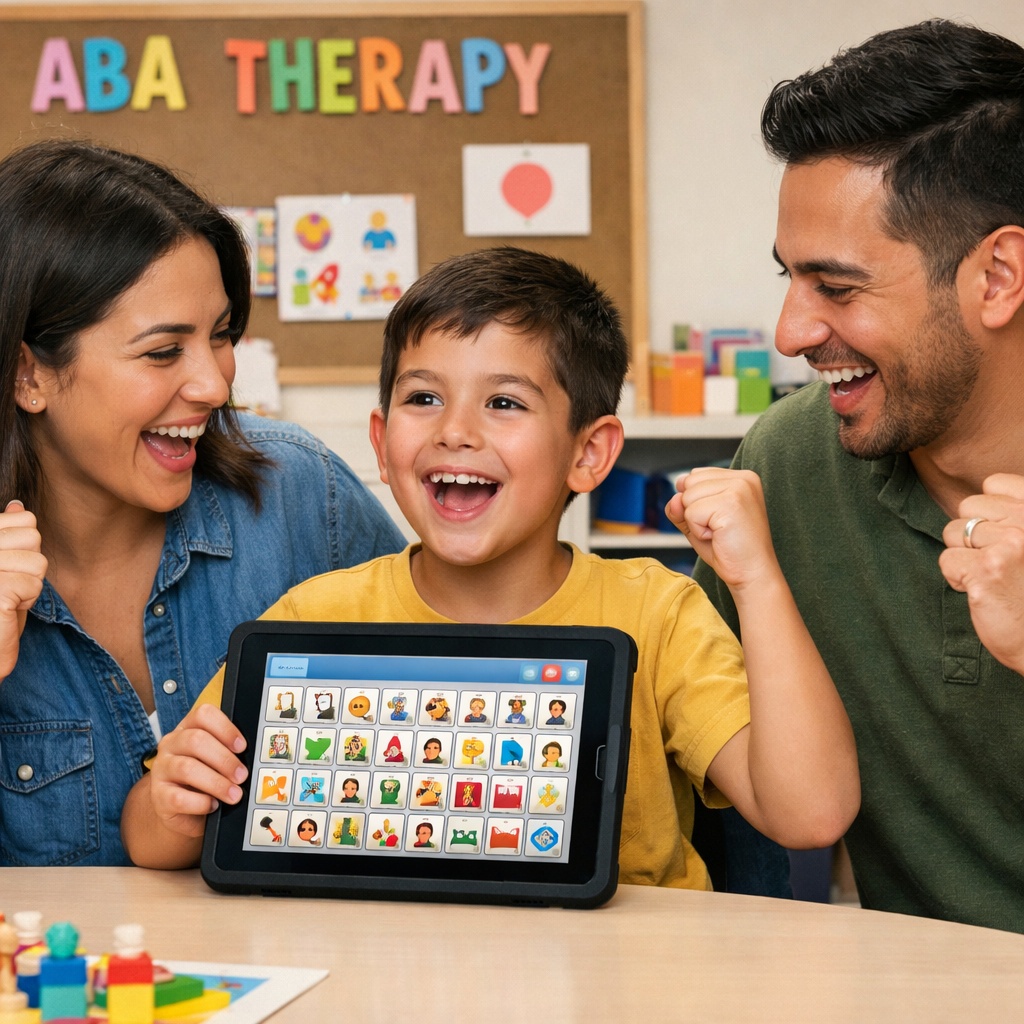
When 11-year-old Hunter’s communication device suddenly died during a meal, his mother Jessica Fletcher was left facing a problem that could have brought their conversation to an abrupt stop. Hunter is nonverbal and uses an Augmentative and Alternative Communication device to select words and symbols, but the technology was suddenly useless when its battery ran out. Then Hunter reached for a napkin, drew a keyboard and began pointing to the letters to tell his mother what he wanted.
Contents
show
Jessica watched her son find a solution without the device and realized she could create a backup that would never need a charger. She eventually had a keyboard tattooed across her forearm, complete with letters, symbols, a happy face, a sad face and an “I heart you” button. What began as a desperate answer to a dead battery has since turned into a viral story, inspired keyboard shirts for Hunter’s classmates and even prompted tattoo artists to offer similar designs to other families.
A Dead Battery Gave Jessica An Idea
Jessica was eating out with Hunter when his AAC device suddenly ran out of power. The tablet plays an important role in helping Hunter communicate, allowing him to select words and symbols to express what he wants to say. For Jessica, watching the device stop working was frustrating because she knew her son still had things he wanted to communicate, but the technology he normally relied on was no longer available.
Hunter, however, did not simply give up. He grabbed a napkin and drew a keyboard on it, then began pointing out the letters to communicate his order. The improvised system was basic, but it worked. Hunter had found another way to make himself understood, and that small moment gave his mother an idea that would eventually become a permanent part of their lives.
“That sparked the idea for me that I can’t limit him to technology because technology does fail us,” Fletcher told CTV News in Canada. The experience made Jessica think about how quickly a dead battery could turn a useful communication device into something unavailable. She wanted Hunter to have another option that was always within reach, even when electronics failed.
The solution was unusual, but it followed the same basic principle Hunter had already demonstrated with the napkin. If a keyboard could help him communicate, Jessica could simply make sure one was always available. She decided that the most reliable place to keep it would be somewhere she would carry everywhere.
Jessica Turned Her Arm Into A Communication Tool
Jessica worked with a tattoo artist to create a keyboard across her forearm, turning the temporary napkin solution into something permanent. The tattoo includes the alphabet as well as several symbols designed to give Hunter additional ways to communicate. There is a happy face, a sad face and an “I heart you” button, giving him options beyond simply spelling out individual words.
When Jessica finally showed Hunter the tattoo, he immediately put it to use. The first word he communicated was “Mama,” a small but powerful moment that showed the tattoo could become much more than a backup for a broken tablet. Whenever Hunter is with his mother and needs to communicate, he can now tap out what he wants to say directly on her arm.
The tattoo also solved another problem that Jessica had not initially focused on. Hunter’s AAC device can speak his selected words aloud, which means people nearby may hear whatever he is communicating. His mother’s tattoo gives them another option when they want to keep a conversation private, allowing Hunter to quietly tap out a message without broadcasting it to everyone around them.
For Jessica, the permanent design became a physical symbol of her commitment to making sure her son always has a way to communicate. She has said she would endure far more than one tattoo if it meant giving Hunter another opportunity to express himself. “I’d give my body a thousand scars if it gave my son one more way to communicate,” she said.
A Canadian mother got a keyboard tattooed on her arm so her 11-year-old nonverbal autistic son could always communicate with her.
— NO CONTEXT HUMANS (@HumansNoContext) August 17, 2026
The idea came after his AAC device died at a restaurant and he drew his own keyboard on a napkin to order food.
His first word using the tattoo was… pic.twitter.com/ojawywtuzG
Jessica later shared a video showing Hunter using the keyboard tattoo to communicate with her, and the moment quickly spread across social media. According to the reference report, the video received more than two million likes, bringing widespread attention to the unusual communication method and the story behind it. What had started as a solution inside one family suddenly became something other families were discussing and considering for themselves.
The response extended beyond parents. Jessica said nurses, doctors, first responders and families from around the world reached out after seeing the idea. Some wanted to find ways to help autistic children communicate in schools, hospitals and family environments. Tattoo artists also offered to create similar keyboard designs for parents free of charge, suggesting that the concept had struck a chord with people who understood how important communication access can be.
Jessica’s message behind the tattoo was equally important. She wanted people to recognize that nonspeaking people have thoughts, preferences and things they want to share, even when they cannot communicate through spoken language. The technology used to help them can be extremely valuable, but having another option available can make a difference when circumstances suddenly change.
“When we remove communication barriers, we’re giving non speakers the chance to show us who they really are,” Fletcher told the Canadian news station. That idea helps explain why the tattoo captured so much attention. People were not simply reacting to an unusual tattoo. They were watching a mother find another way to make sure her son could participate in conversations when his normal technology was unavailable.
A Canadian mother got a keyboard tattooed on her arm so her 11-year-old nonverbal autistic son could always communicate with her.
— NO CONTEXT HUMANS (@HumansNoContext) August 17, 2026
The idea came after his AAC device died at a restaurant and he drew his own keyboard on a napkin to order food.
His first word using the tattoo was… pic.twitter.com/ojawywtuzG
Hunter’s School Friends Wanted Keyboard Shirts
The idea became even more personal when Hunter’s school friends decided they wanted a way to communicate with him too. Jessica said the children wanted keyboard shirts so they could talk to Hunter while they were playing on the playground. They wanted to be able to “whisper and tell their secrets,” Fletcher said, showing that the children were thinking about communication in the most ordinary way possible: as something friends should be able to share.
Jessica partnered with a clothing company to create shirts with keyboards printed down the sleeve. The concept gives other people a physical keyboard they can use to communicate with someone who relies on typing or pointing. Instead of requiring every person around Hunter to understand his electronic device, the keyboard can simply be brought into the interaction through clothing.
For Hunter’s classmates, that could make everyday communication feel much easier. Children might want to tell him something funny, ask a question or share a private thought during a normal school day. Having another communication option can help those moments happen without turning every interaction into a complicated process.
The shirts also show how Jessica’s original idea has grown beyond her own relationship with her son. The tattoo began as a solution for a mother who did not want a dead battery to silence her child. The shirts turn that same principle into something classmates can participate in, giving Hunter more opportunities to communicate with the people around him.
Jessica Wants Hunter To Have Every Chance To Be Heard
At its core, Jessica’s tattoo is about access. Hunter already has a communication system that helps him express himself, but the restaurant incident showed how vulnerable any technology can be when it depends on a battery. Her response was to create another option that could be available whenever he needed it, rather than waiting until another technical problem left him without his usual tool.
That does not mean the tattoo replaces his AAC device. Instead, it gives Hunter another method that can be used in circumstances where his electronic system is unavailable or when a quieter form of communication is preferable. The simplicity is part of its appeal: there is no battery to charge, no screen to turn on and no device that can suddenly stop working because its power has disappeared.
Jessica’s experience also puts attention on a basic part of everyday life that many people rarely have to think about. People communicate constantly, from ordering food and answering questions to telling someone they are uncomfortable or sharing a private joke. When a person cannot rely on speech, having dependable alternatives can affect how easily they can take part in those ordinary moments.
For Hunter, that alternative now sits permanently on his mother’s arm. A dead tablet battery led to a napkin, the napkin led to a tattoo and the tattoo led to an idea that other families are now adapting in their own ways. Jessica’s message is simple: “I hear you.” And after seeing what her son did when his technology failed, she made sure he would always have a way to say what he needed to say.