
Your cart is currently empty!
Dad Learns 3D Printing To Build Arms For Children
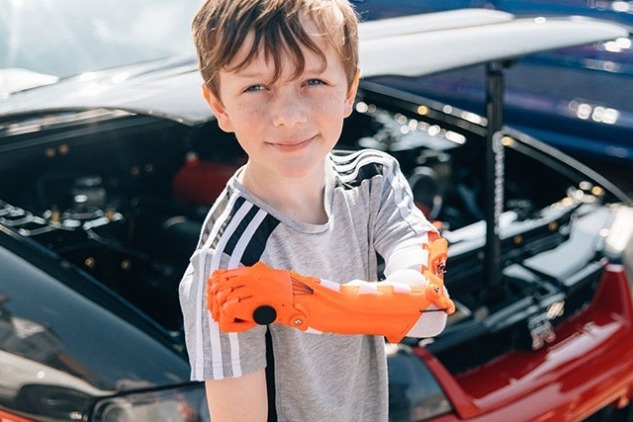
Callum Miller was told his 10-year-old son could face an 18-month wait for a robotic arm. Rather than accept the delay, the dad bought a secondhand 3D printer despite having no experience with the technology.
Contents
show
Six weeks later, he had built a prosthetic arm for his son Jamie. Then, after seeing another young child’s story online, Miller decided his new skills could help someone else too.
Taking Matters Into His Own Hands
Jamie Miller was born without his left hand, but his father said the boy had never allowed it to stop him from enjoying a normal childhood. A friend sent Callum information about Team UnLimbited, a charity that designs and prints robotic limbs, and he began looking into getting one for his son.
“Jamie was born without one hand but he honestly never made an issue of it,” Miller told 3DPrint.com. “He still does everything any other little kid would. He’s always been out playing and enjoying himself with friends.”
The family soon learned Jamie could face an estimated 18-month wait. For Miller, that felt like far too long when his son was already 10 and had never worn a prosthetic hand.
Miller was 51 and lived in Stockton, England. He had never used a 3D printer, but he decided to buy one anyway and see whether he could create something himself.
A Secondhand Printer Became The Solution
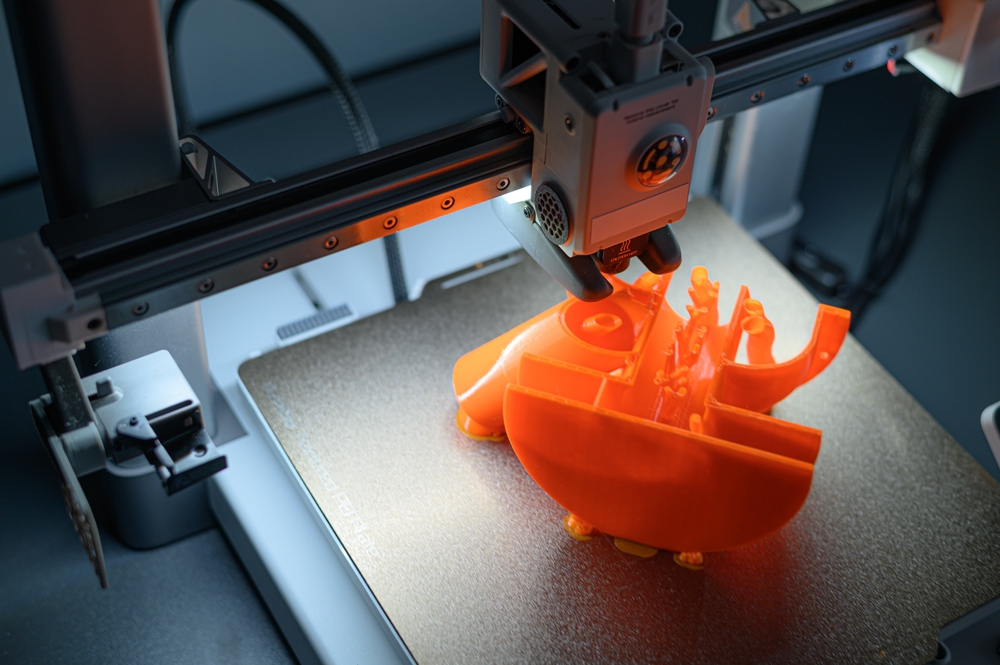
Miller found a reasonably priced printer on eBay, with reports at the time putting its cost at around £160. He taught himself how the machine worked and used a design made available through Team UnLimbited.
Six weeks later, the first complete arm came off the printer. Miller had gone from having no experience with the technology to producing a working prosthetic device for his own son.
The design relied on straightforward mechanical parts. Miller said the arm contained around 10 to 15 components, with pieces connected using pins that were also printed on the same machine.
The arm was molded using hot water and a rolling pin, while elastic bands helped the fingers spring open. Fishing braid underneath pulled the fingers closed, allowing the wearer to grip objects.
Jamie Said He Felt Like A Superhero
When Jamie tried on the arm, he quickly began discovering what he could do with it. The device gave him a new way to grip objects, catch a ball, and handle everyday activities.
“I feel like a bit of a superhero. I can catch a ball, hold stuff, and play games,” Jamie said. “I think my new hand is really cool and I like using it a lot.”
His father said Jamie adapted to the arm with little hesitation, even though other people were sometimes more cautious.
Miller was also quick to point out that his son’s abilities had never depended on having two hands.
“Other people can be a bit cautious about it but he can still do everything,” Miller said. “He plays the PS4 better than most people with two hands.”
The first arm was only the beginning. Jamie eventually had several versions in different colors and designs, including some with flashing lights, a Batman-themed version, and a gold-and-bronze steampunk design.
He Also Helped Create New Designs
Miller said his son also became involved in coming up with ideas for new arms. “Jamie comes up with designs as well as I do,” his father said.
Miller was also considering more advanced designs, including a version connected to Jamie’s own muscles. The project had started with one simple goal, but it was quickly developing into something much bigger.
A Helping Hand for Keira
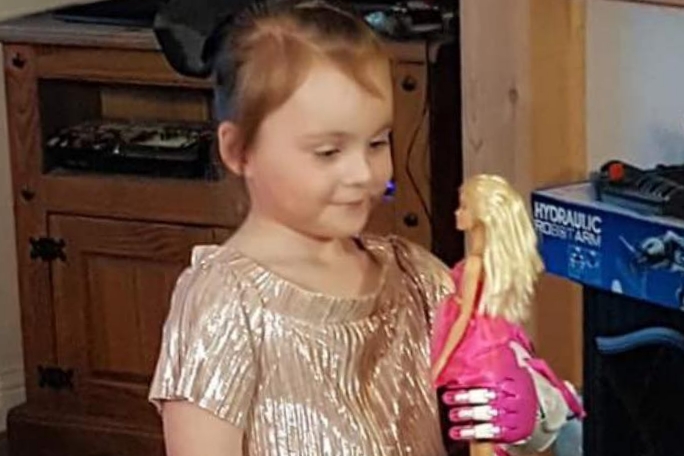
Keira Campbell was born without her left hand, just like Jamie. ITV Tyne Tees reported that she was five years old when her story was filmed, although some later accounts listed her as six.
Her family had reportedly been told that a prosthetic limb would not be suitable for her. Unlike Jamie, Keira was not facing a lengthy waiting list because she had effectively been ruled out before the process could begin.
Miller saw Keira’s story on social media and offered to help. The father who had taught himself 3D printing for his own son decided to use those skills for another family.
He made Keira two arms and charged nothing for them. The devices allowed her to grip and pick up objects with her left hand in ways she had not previously been able to.
Small Wins, Big Impact
Keira’s mother, Nikki Campbell, described how her daughter had responded to the new arms. She said the devices were helping Keira become more independent as she learned how to use them during everyday activities.
“She can now hold stuff properly which she couldn’t before, she’s loving it. She’s becoming more independent,” Nikki said.
Keira gradually became more comfortable using the arm and was even able to put it on herself. Her mother recalled one ordinary moment that showed how useful the device had become.
“She can put it on herself now and she was using it to drink a milkshake,” Nikki said. “She’s becoming more independent and I just can’t thank Callum enough for what he has done.”
Holding a milkshake might seem like a small thing to most people. For Keira and her family, it represented a new ability and another step toward greater independence.
Nikki also noticed a change in how her daughter felt about returning to school. “I’ve never seen her this excited to go back to school,” she said.
Jamie Wanted To Follow His Father’s Example
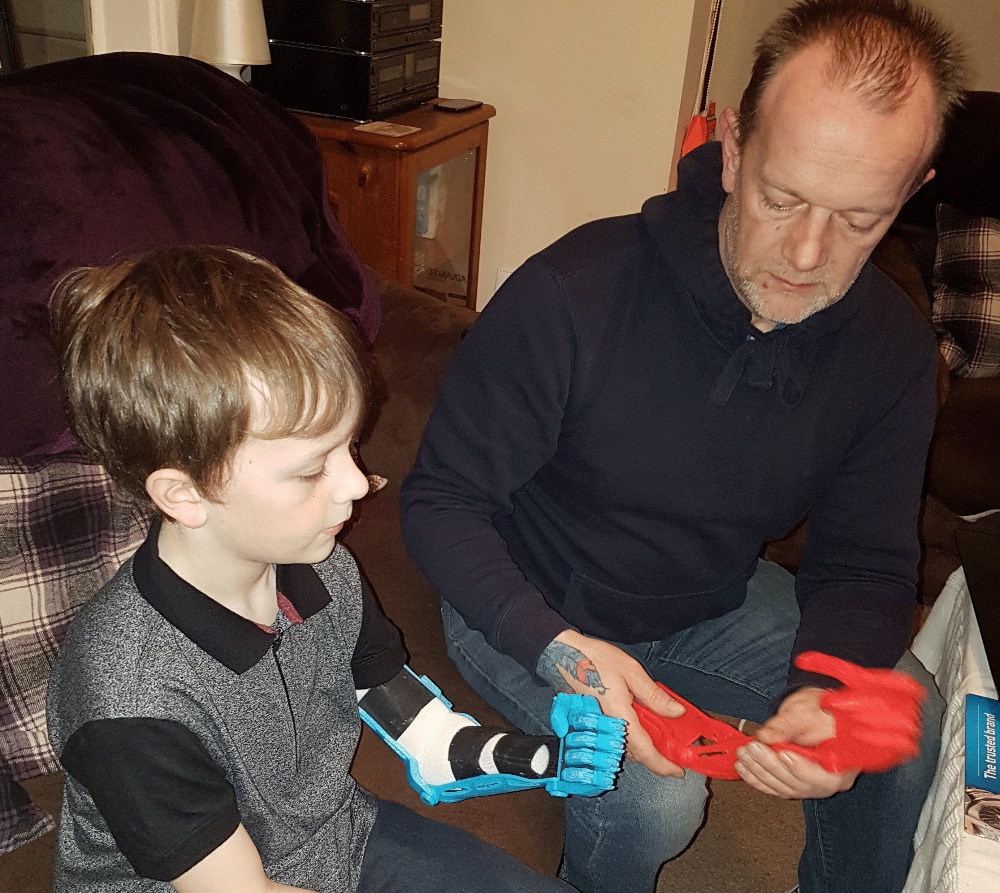
The experience also influenced Jamie’s plans for the future. He had watched his father start with no experience, learn how to operate a printer, and then use that knowledge to help another child.
“In the future I would like to learn how to make them like my dad so I can help other people,” Jamie said.
Miller’s project started because his family did not want to spend 18 months waiting. It eventually became a way to provide practical help to children whose options were limited by cost, availability, or decisions about prosthetic suitability.
A Lifeline for the Next Child
Callum Miller did not begin the project as an engineer or prosthetics specialist. He was a father looking for a solution for his son, so he bought a secondhand printer and began teaching himself.
That decision helped Jamie get his first prosthetic arm and later gave Keira an opportunity her family had been told might not be available. Miller’s plan to keep building free arms meant the next child who needed help could benefit from the skills he first learned for his own son.
Featured Image Source: Callum Miller‘s @GoFundMe