
Your cart is currently empty!
The Richest 10 Percent Are Causing Trillions in Environmental Damage
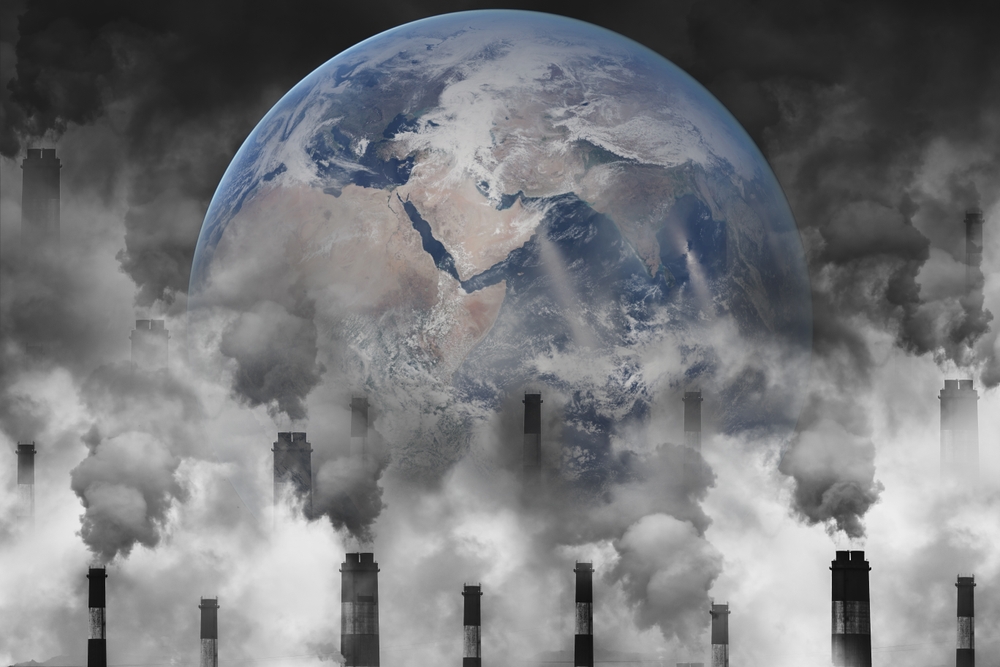
The people causing the most environmental damage may not be limited to billionaires with private jets and superyachts. A new study suggests the world’s top 10% of consumers are responsible for trillions of dollars in environmental damage every year.
Contents
show
The more surprising detail is who qualifies for that group. According to reporting on the research, an annual after-tax income of roughly $27,000 can be enough to place someone in the global top 10%.
Scientists Put a Price on Environmental Damage
Researchers at Leiden University’s Institute of Environmental Sciences attempted to calculate the monetary cost of environmental damage linked to the world’s highest-consuming households. Inge Schrijver worked on the research alongside Rutger Hoekstra and Paul Behrens, while acknowledging the difficulty of assigning a financial value to nature.
“While I find it uncomfortable to put a price on the environment, as nature’s true value is infinite, showing total damage in money terms does show the size of both the damages and responsibility of the top 10%,” Schrijver said.
The study, published in Communications Sustainability on June 18, 2026, estimated that the global top 10% of consumers cause between $1.7 trillion and $5.7 trillion in environmental damage each year, measured in 2017 dollars. That works out to roughly $2,300 to $7,500 per person.
Measuring the Toll on Earth’s Systems
The researchers examined four areas where human consumption places pressure on Earth’s systems. Their model covered climate change, biosphere integrity, biogeochemical cycles and freshwater use.
The study examined Brazil, China, Egypt, Germany, India and the United States. The authors estimated that the top 10% of global consumers are responsible for between one-third and two-thirds of the overshoot of individual planetary boundaries.
The categories included:
- Climate change: Damage associated with greenhouse gas emissions and rising temperatures.
- Biosphere integrity: Losses connected to declining biodiversity and damaged ecosystems.
- Biogeochemical cycles: Environmental disruption involving nitrogen and phosphorus.
- Freshwater use: Pressure placed on freshwater resources.
The figures are estimates rather than actual invoices. Their purpose is to place a financial value on environmental harm that is currently absorbed by wider society.
Biodiversity Loss Was the Biggest Cost
One of the study’s most striking findings is that climate change was not the largest source of estimated damage. Biodiversity loss accounted for between 47% and 56% of the total, while climate change represented between 36% and 45%.
Nitrogen contributed around 6% to 8%, while phosphorus and freshwater use each accounted for less than 2%. The calculations suggest that the destruction of ecosystems and the loss of living species carry a massive economic cost.
Climate change dominates environmental debates, political promises and corporate targets. Carbon taxes, emissions pledges and offset schemes have all attempted to put a price on part of the problem.
Biodiversity loss has no equivalent global system. The researchers used price data from the Environmental Prices Handbook to estimate the damage, although they acknowledged that putting a monetary value on nature remains deeply contested.
The Global Top 10% Is Bigger Than Many Think
The estimated income threshold of roughly $27,000 after tax changes how the findings may be viewed. The group responsible for a large share of environmental damage includes far more than billionaires and corporate executives.
More than half of the population of the United States falls within the global top decile, according to figures cited in reporting on the study. Around 40% to 45% of people in the European Union also fall into that group.
More than 60% of the world’s top 10% live in the United States or the European Union. The category can include nurses, teachers and office workers whose lifestyles appear relatively ordinary within wealthy countries.
Being in the global top 10% does not mean everyone has the same environmental footprint. The study found a dramatic difference between the estimated impacts of high-consuming groups in the United States and India.
For a person in the top 10% in the United States, estimated annual environmental damage ranged from $19,000 to $63,000. For someone in India’s top 10%, the figure ranged from $410 to $1,400 per person.
The difference reflects major variations in consumption and resource use. The same broad income category can therefore contain people with dramatically different environmental footprints.
The Damage Could Help Fund Environmental Solutions
The estimated environmental costs exceed major international financing gaps for climate and biodiversity action, according to the source material. Schrijver said directing money toward solutions could make a significant difference.
“The damage bill is higher than the money needed internationally for climate and biodiversity funds,” Schrijver said. She stressed that preventing environmental damage remains more important than attempting to pay for destruction after it has already occurred.
“If the polluter pays and that money goes to solutions, it would make a huge difference. But it is not just about money. Most importantly, damage must be prevented. Apart from financial measures, stricter rules and regulations are crucial.”
An Unpaid Debt to Our Planet
The study does not provide a final price for environmental destruction, and its estimates will continue to face debate. Its central finding, however, exposes a cost that modern economies often leave off the balance sheet.
A damaged ecosystem or disappearing species does not arrive with an invoice attached. The consequences move elsewhere, while the people with the greatest financial influence continue to hold enormous power over which industries grow and which ones begin to change.