
Your cart is currently empty!
ICE Eyes $2 Million Robot Dog Purchase for Immigration Enforcement Operations
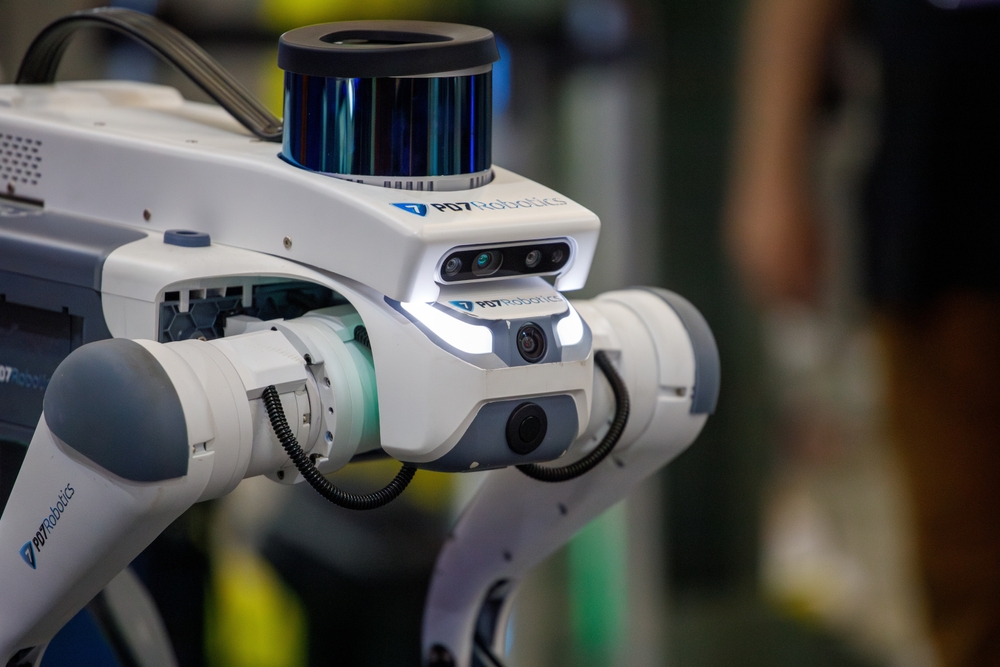
Four-legged robots that once looked like something from a science-fiction film could soon become part of U.S. immigration enforcement operations. U.S. Immigration and Customs Enforcement is looking to spend up to $2 million on Boston Dynamics’ Spot robots, according to a federal procurement notice outlining plans to use the machines for inspections, situational awareness, and hazard assessments. The technology would give officers a remotely operated way to examine potentially dangerous environments before sending personnel inside, adding another unusual piece of equipment to the agency’s growing collection of specialized tools.
Contents
show
The proposal has drawn attention because Spot robots are difficult to mistake for ordinary technology. The four-legged machines can move across uneven terrain, use cameras and sensors to inspect their surroundings, and carry an extendable arm capable of interacting with objects, including opening certain doors. While they cannot attack like traditional police dogs, their growing use by law enforcement agencies has made robotic patrol technology increasingly visible. ICE’s potential purchase would bring the futuristic-looking machines into another high-profile area of federal enforcement.
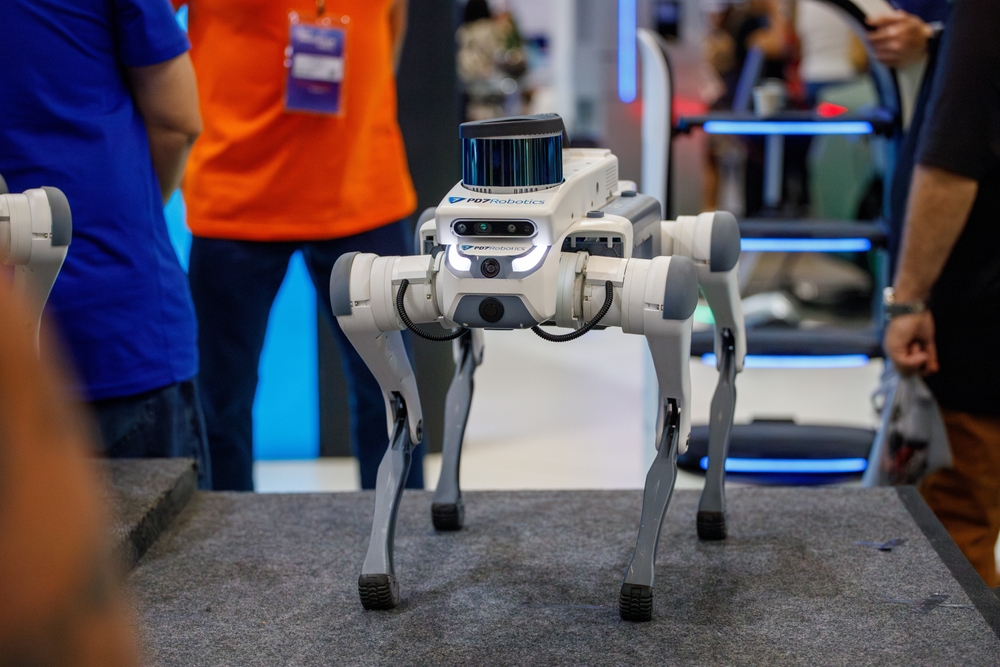
ICE Wants Robot Dogs for Hazardous Operations
The procurement notice describes the planned robots as a way to support public safety and law enforcement operations in places that could pose risks to personnel. ICE wants a remotely operated capability for inspection, situational awareness, and hazard assessment, allowing officers to gather information about an environment before physically entering it. The notice also connects the proposed technology to border security and infrastructure protection, suggesting the robots could be used across several types of operations where conditions are uncertain or potentially dangerous.
“This capability helps improve officer safety, supports informed operational decision-making, and enhances DHS’s ability to respond to incidents involving dangerous, confined, unstable, or difficult-to-access areas,” the procurement notice states. The emphasis is on sending a machine into a location first when officers need more information about what may be inside. That could include spaces with limited visibility, unstable structures, suspected hazards, or conditions that make immediate human entry difficult.
The proposal does not describe the robots as tools for apprehending people. Their intended role is to inspect locations and provide information to human operators, who would remain responsible for directing the machines and making decisions based on what they observe. The distinction separates Spot from the image many people associate with police K-9 units, since these robotic machines are designed around surveillance, sensing, and remote access rather than chasing or physically restraining someone.
ICE’s interest also reflects a wider shift toward technology that can reduce the amount of uncertainty officers face before entering a scene. A remotely controlled robot can potentially move ahead of personnel, transmit visual information, and inspect areas that would otherwise require someone to enter without knowing exactly what conditions are waiting inside. For an agency operating across a wide range of environments, that capability appears to be the central reason behind the proposed purchase.
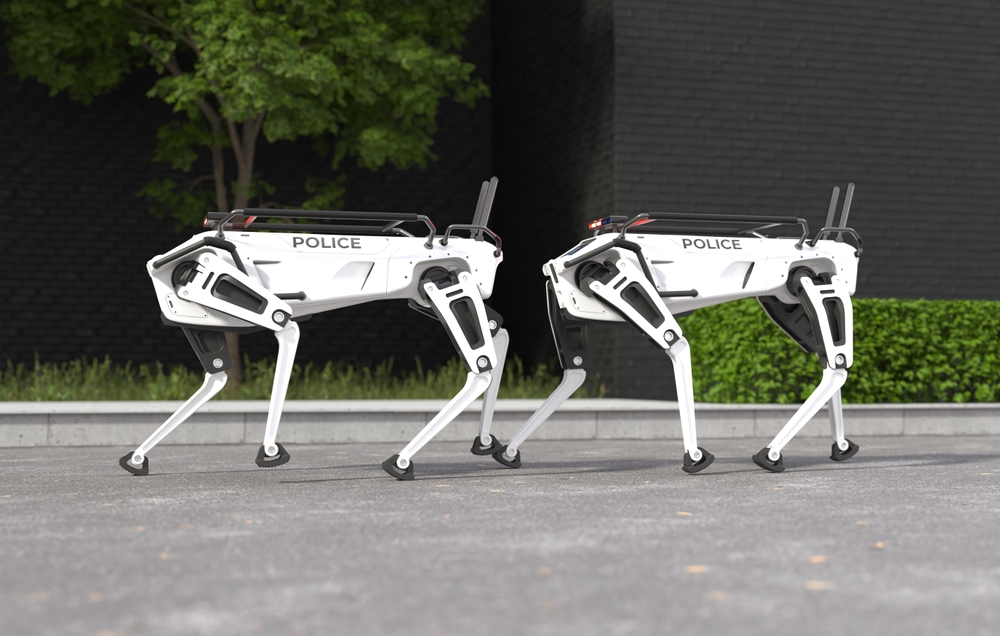
What Boston Dynamics’ Spot Robots Can Actually Do
Spot is a four-legged robotic platform designed to move through environments that may be difficult for conventional machines. Boston Dynamics says the technology can be equipped with cameras and sensors capable of collecting information about its surroundings, including potential hazards such as gas, radiation, and vibration. Its ability to walk rather than roll gives it an advantage on uneven surfaces, stairs, and other terrain where a standard wheeled device may struggle to operate.
The robots can also be fitted with an extendable arm, allowing them to interact with objects from a distance. That capability has included opening certain doors and examining locations that may present a risk to people. The combination of mobility, cameras, sensors, and remote control makes Spot particularly useful for situations where authorities want to see what is happening before committing personnel to a potentially dangerous space.
The technology’s core capabilities include:
- Remote inspection: Operators can examine areas without immediately sending personnel inside.
- Camera and sensor systems: The robots can collect visual and environmental information.
- Movement across difficult terrain: Four legs allow the machines to travel through spaces that may challenge wheeled robots.
- Hazard assessment: Sensors can help identify certain environmental risks.
- Object interaction: An extendable arm can allow some models to manipulate objects and open certain doors.
Boston Dynamics has also established limits on how its robots are intended to be used. The company says in its ethics policy that it does not authorize its robots for use as weapons or autonomous targeting systems. That means the machines are designed to operate as remotely controlled tools for gathering information and carrying out specific tasks rather than functioning as armed autonomous systems.
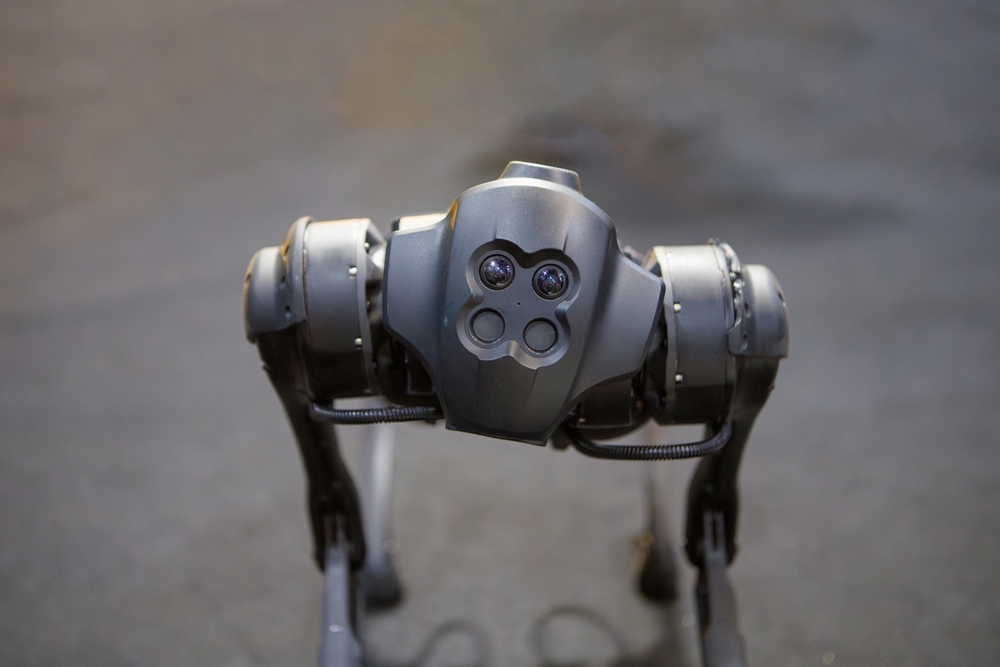
These Robot Dogs Cannot Attack Like Police K-9s
The comparison with a police dog is largely based on appearance and movement. Spot has four legs and can walk, turn, climb, and move through spaces in a way that gives it an animal-like appearance, but it does not function like a traditional K-9 unit. It cannot bite or physically attack in the way a trained police dog can, and the proposed ICE role centers on inspection and situational awareness rather than physical apprehension.
That has not stopped the machines from becoming closely associated with modern law enforcement. Their unusual appearance can make their presence particularly striking during public demonstrations and security operations. For many people, seeing a robotic machine walking through a police operation creates an immediate sense that technology once limited to research laboratories and science-fiction films has entered ordinary government work.
Police departments in several major U.S. cities have already experimented with or deployed the technology during high-risk situations. The Los Angeles Police Department previously demonstrated a Spot robot examining a crime scene for possible firearms and explosives, allowing the machine to enter and inspect the area before officers moved further into the location. The example showed how law enforcement agencies view the technology as a way to gather information while reducing direct exposure to potential hazards.
That practical use is central to ICE’s proposed purchase. The robots would not replace officers or independently conduct enforcement actions, according to the planning documents provided in the references. Instead, they would serve as an additional layer between personnel and an unknown environment, giving operators more information before deciding how to proceed.

Americans Have Already Seen Them Guarding Mar-A-Lago
Spot robots became widely recognizable to many Americans after videos of the machines patrolling President Donald Trump’s Mar-a-Lago property spread across social media in 2024. The robots were being used as part of U.S. Secret Service security operations, and their presence generated widespread interest because the sight of a robotic dog moving through the grounds looked dramatically different from traditional security patrols.
The viral videos showed that the technology was no longer confined to product demonstrations or technology conferences. A machine that had previously seemed futuristic was being used around one of the country’s most closely watched political figures. The footage also introduced a broader audience to the idea that robotic systems could play a role in security operations without functioning as weapons or replacing human personnel.
Spot has since become a familiar example of how law enforcement and security agencies are experimenting with remotely operated technology. Federal agencies, state authorities, and local police departments have explored ways to use robots for tasks involving hazardous environments, suspicious objects, difficult terrain, and situations where sending a person first could create unnecessary risk.
ICE’s proposed purchase would add another major federal enforcement operation to that growing list. Because immigration enforcement remains one of the country’s most politically charged areas of government activity, the introduction of robotic technology could attract far more attention than similar deployments during specialized police or security operations.
The Purchase Follows ICE’s Other Technology Plans
The proposed robot dog purchase comes shortly after ICE moved forward with a major contract for electric shock gloves intended for officers. According to the reference material, the contract is worth about $16.7 million and would provide thousands of the specialized devices as the agency continues expanding the equipment available during enforcement operations.
That proposal has already faced criticism from civil rights organizations and some Democratic lawmakers, who have raised concerns about the use of additional force-related technology. Critics have argued that the agency should direct greater attention toward de-escalation training and accountability measures rather than expanding its access to specialized enforcement equipment.
The robot dogs represent a different type of technology, with the procurement notice focusing on inspection and officer safety rather than physical force. Even so, both purchases point toward a broader effort to equip ICE personnel with increasingly specialized tools. Cameras, sensors, remotely operated machines, and other devices are becoming more common across law enforcement as agencies look for ways to collect information and reduce certain operational risks.
The growing use of advanced technology also creates questions about oversight and public perception. A robot inspecting a dangerous location may have a clear safety purpose, but the appearance of increasingly sophisticated machines during enforcement operations can still fuel debate about surveillance, government power, and how technology should be used in encounters involving the public.

Why The Technology Could Become More Common
The strongest argument for using robots in hazardous operations is straightforward: a machine can enter a dangerous environment without putting a human directly in harm’s way. If a location contains a potential weapon, explosive device, structural danger, or another unknown hazard, remotely gathering information can give officers a clearer understanding of the situation before they enter.
Spot’s design allows it to perform several tasks that would be difficult for a stationary camera or ordinary drone. A drone may be limited indoors or in confined spaces, while a wheeled robot may struggle with stairs and uneven surfaces. A four-legged machine can move through environments in a way that gives operators access to areas that would otherwise be harder to inspect remotely.
The technology could be particularly useful in locations that are confined, unstable, or difficult to reach. ICE’s procurement notice specifically identifies those kinds of environments as potential situations where the robots could provide value. The machine can transmit information back to an operator while keeping personnel outside until they have a better understanding of the risks involved.
As robotic technology becomes more capable and agencies become more familiar with operating it, machines like Spot could become a more regular part of specialized law enforcement work. The biggest change may not happen through one dramatic deployment. It could happen gradually, as robots move from rare demonstrations into the standard equipment used when officers face an uncertain or potentially hazardous environment.
A Science-Fiction Image Is Becoming Government Reality
For years, videos of robotic dogs generated attention because they looked like previews of a distant technological future. Now, the machines have appeared at police departments, major security operations, technology events, and the grounds of Mar-a-Lago. ICE’s proposed $2 million purchase suggests that another federal agency could soon put the technology to work during real-world operations.
The procurement documents describe a specific purpose: inspect dangerous spaces, improve situational awareness, and reduce risks to personnel. The robots are not described as arresting people, and Boston Dynamics says its machines are not authorized for use as weapons or autonomous targeting systems. Still, their arrival in immigration enforcement would place an unmistakably futuristic machine inside one of the country’s most heavily debated government operations.
The image of a four-legged robot walking into a hazardous building may soon stop looking unusual. As agencies continue investing in machines that can see, sense, and move where people might face danger, the robot dog could shift from a viral curiosity into another piece of standard government equipment.