
Your cart is currently empty!
Norway’s New Museum Looks Like a Whale Diving Into the Sea
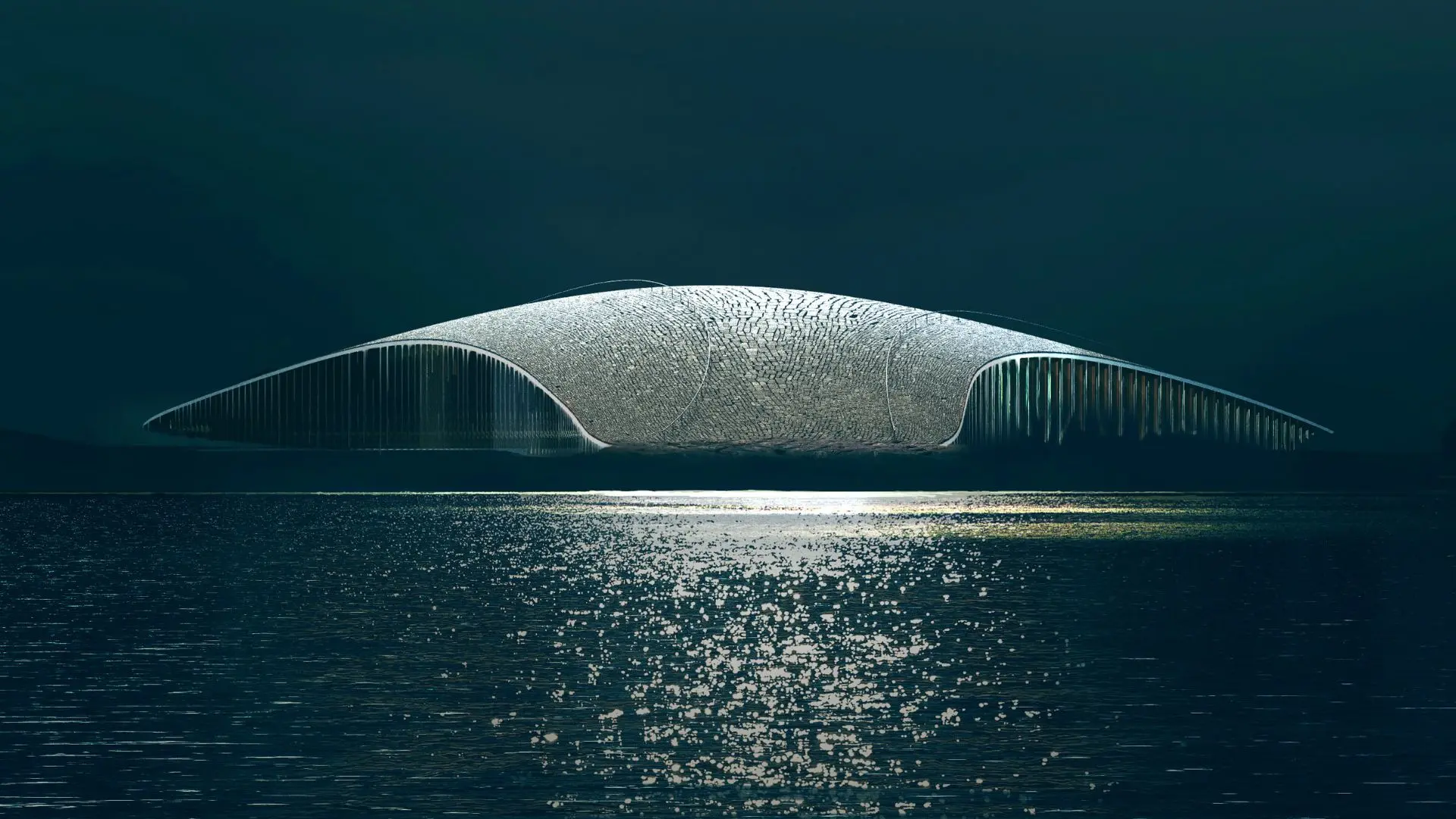
A huge structure rising from Norway’s rocky coastline is set to become one of the country’s most unusual attractions. It looks like a giant whale disappearing beneath the waves, and visitors will actually be able to walk across its enormous roof.
Contents
show
The Whale, a new knowledge and experience center in northern Norway, is scheduled to open on June 4, 2027. The building will combine dramatic architecture with immersive exhibitions about the marine giants living in the North Atlantic waters nearby.
A Giant Whale Shape Is Rising From The Coast
The Whale is being built in Andenes, a coastal village on Andøya island in northern Norway. Its location places the museum close to waters already famous for whale watching and encounters with some of the ocean’s largest animals.
The building was designed by Danish architecture firm Dorte Mandrup, which won an international competition for the project in 2019.
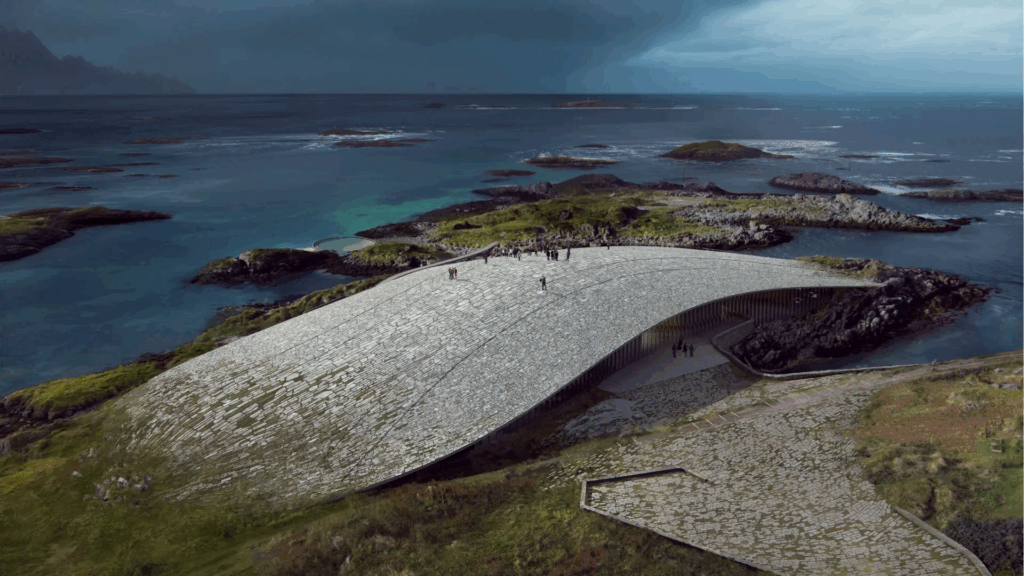
Image Credits – Website @TheWhale
The museum’s enormous curved form is designed to resemble a whale diving into the North Atlantic.
From the rugged coastline, the sweeping concrete structure appears to rise from the land before curving back toward the sea. The design gives the building the appearance of a massive marine animal disappearing beneath the surface.
The Design Was Inspired By The Horizon
The architects wanted the building to become part of the landscape instead of dominating it. Chief architect Dorte Mandrup-Poulsen explained the thinking behind the project with the question, “What if this is about the horizon, and not about the connection between earth and sky?”
That idea led to a low, horizontal structure that follows the natural curves of the coastline. Rather than creating a tall museum that competes with the surrounding scenery, the design visually extends the rocky landscape toward the ocean.
The result is a building with a dramatic shape but a relatively low profile. Its most striking feature is visible from outside, yet much of its design is focused on keeping visitors connected with what surrounds it.
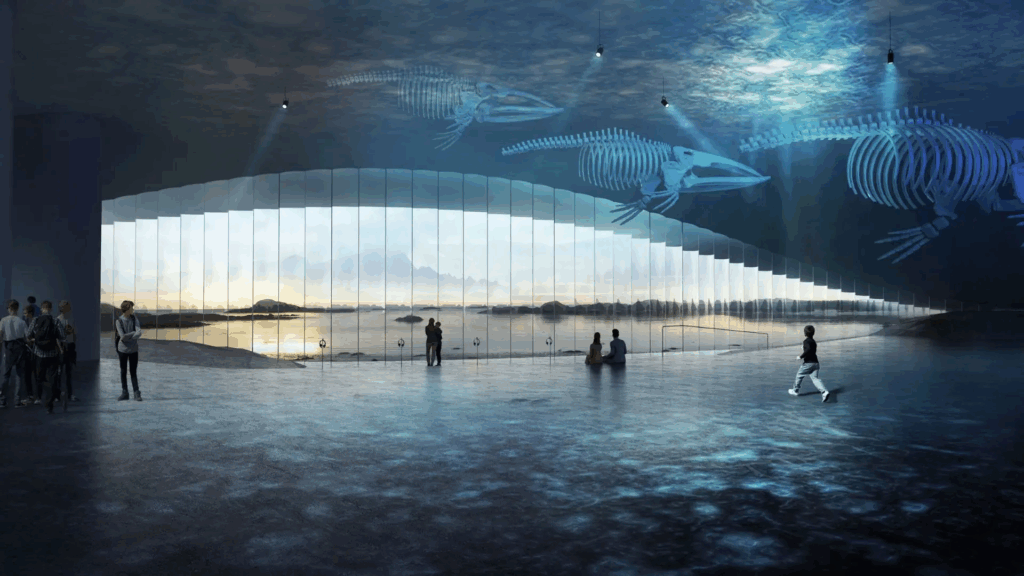
Image Credits – Website @TheWhale
The Enormous Roof Needs No Interior Columns
The Whale’s most unusual architectural feature is not only its whale-like appearance. The massive roof is formed from a single curved concrete shell that touches the ground at just three points.
That structural approach allows the main interior space to remain free of columns. Visitors will be able to move through a large exhibition area without rows of supports interrupting the view or dividing the space.
The open interior also gives exhibition designers more flexibility when arranging large installations. That could be particularly important in a museum dedicated to animals whose enormous size is one of their most defining characteristics.
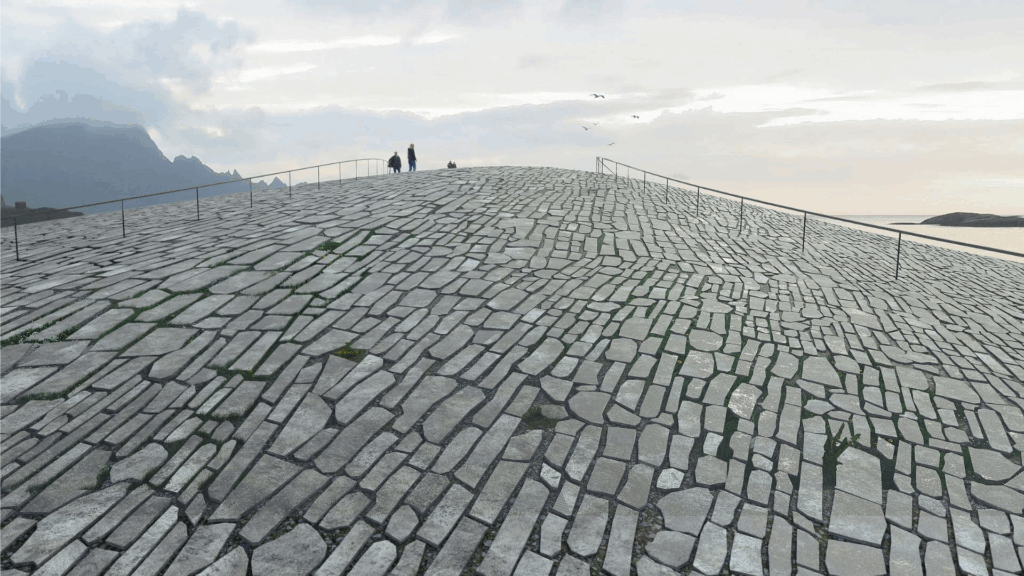
Image Credits – Website @TheWhale
How The Curved Structure Works
The shape of the concrete shell helps provide the strength needed to span a large area. Its parabolic form distributes structural forces in a way that reduces the need for multiple supporting columns inside the museum.
This unusual design creates several features that will shape the visitor experience:
- A wide open interior: The main exhibition area will not be broken up by interior columns.
- A whale-inspired silhouette: The undulating roof is designed to resemble a whale diving beneath the sea.
- A low coastal profile: The structure follows the curves of the surrounding landscape and keeps the horizon in focus.
- A public viewing platform: The roof itself will become a place where visitors can walk and look out across the Arctic coast.
The engineering solution therefore serves both a practical and visual purpose. It allows the building to maintain its unusual shape while creating an open space for exhibitions beneath it.
Visitors Will Be Able To Walk Across The Roof
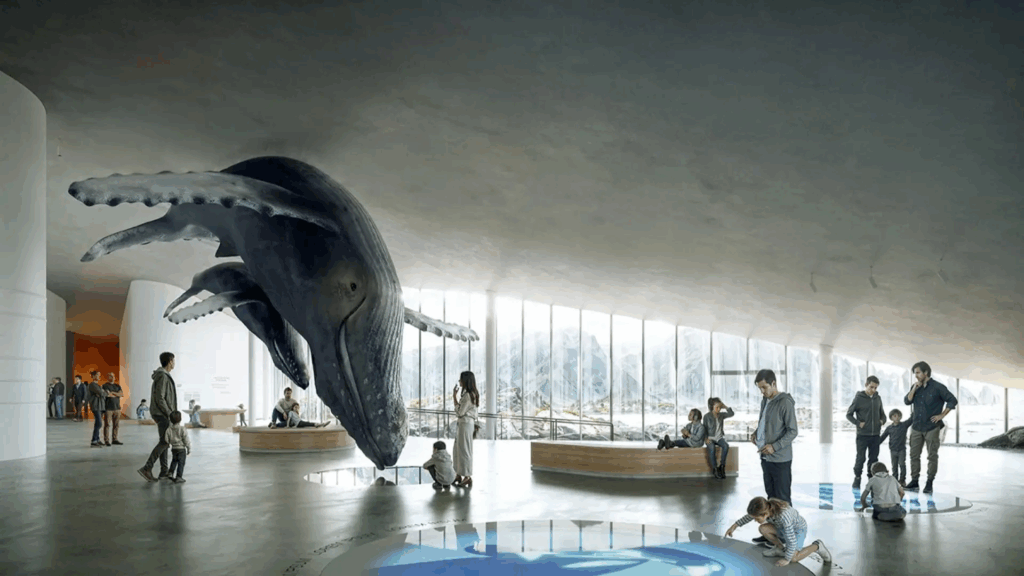
Image Credits – Website @TheWhale
The giant roof will be one of the museum’s main attractions rather than simply a structural feature above visitors’ heads. It will be covered with natural, unworked stones collected from the area surrounding the museum.
Those stones are intended to help the structure visually blend into the rocky coastal environment. Visitors and local residents will also be able to walk across the surface and use it as a viewpoint overlooking the archipelago.
Depending on the time of year and conditions, visitors could see the midnight sun or the northern lights from the site. The museum’s location in northern Norway gives the landscape an additional layer of drama that changes with the seasons.
More Than A Conventional Rooftop
The architects have treated the roof as an extension of the surrounding terrain. Instead of separating the public from the top of the building, the design invites people to move across it and experience the coastline from a different perspective.
That choice also helps blur the line between the museum and the landscape around it. Visitors will not simply arrive, enter through a door, and leave the environment behind.
The building is designed so that the surrounding coast remains part of the experience. The journey through The Whale begins outside, continues across the roof, and remains connected to the landscape inside.
The Ocean And Cliffs Will Enter The Museum
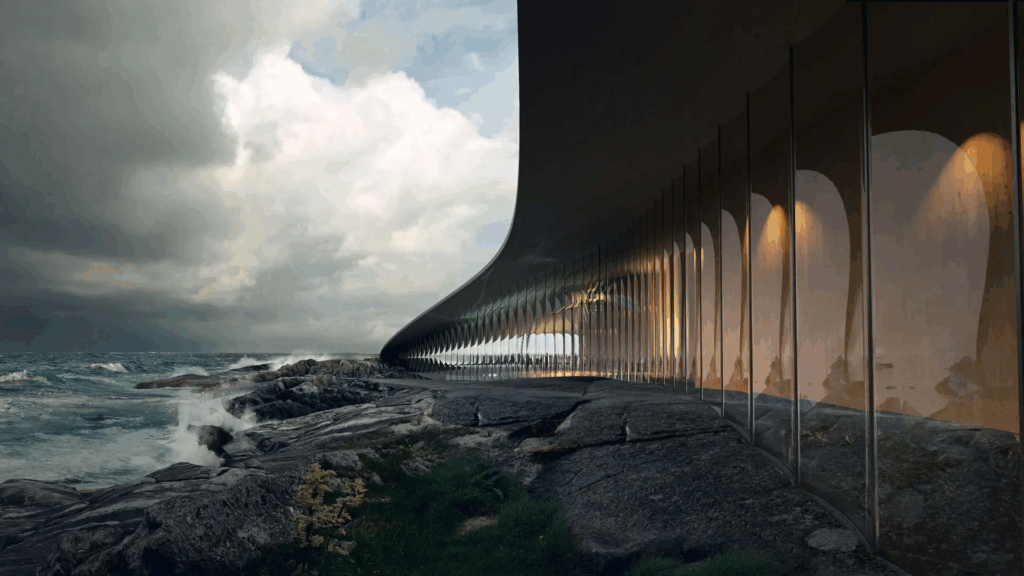
Image Credits – Website @TheWhale
A continuous curved glass facade will face the ocean and the surrounding archipelago. The broad windows are designed to keep the sea visible as visitors move through the museum.
The interior floor will also include subtle shifts in height that reflect the uneven terrain outside. Instead of creating a perfectly flat and disconnected indoor environment, the architects have allowed the shape of the landscape to influence the spaces within.
Rocks Will Become Part Of The Interior
The connection to the site goes even further than the changing floor levels. Rocks from the surrounding area will extend into several parts of the building.
This approach is intended to keep visitors aware of their position between the cliffs and the ocean. The museum will function as a shelter and exhibition space, while still maintaining a close physical relationship with the landscape beyond its walls.
That connection is particularly fitting because the animals explored inside the museum live in the waters directly offshore. Visitors may learn about whale behavior while looking through the glass toward the environment where those animals can actually be found.
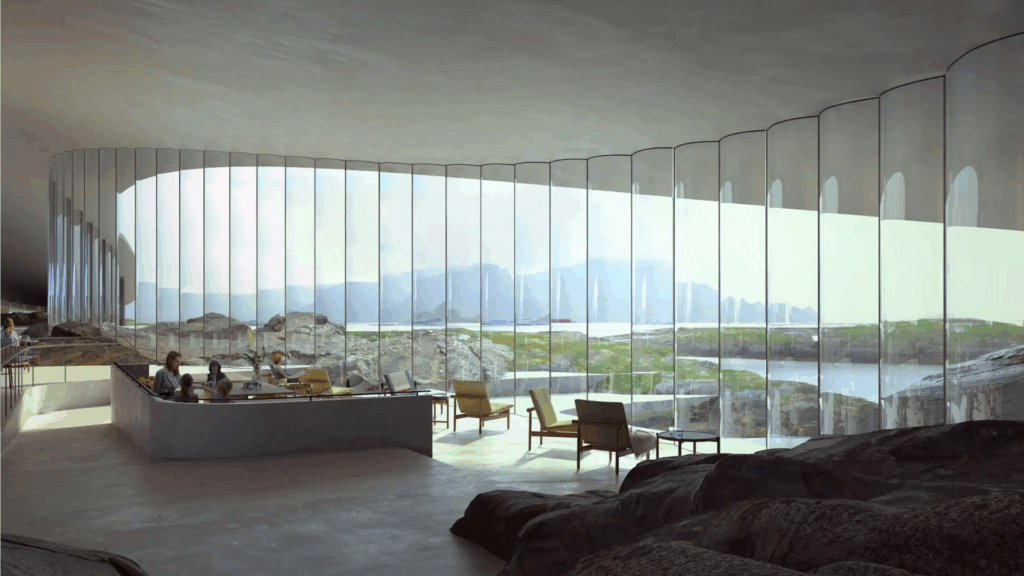
Image Credits – Website @TheWhale
Andenes Is Already Famous For Whale Watching
The waters around Andenes are home to several species of whales and other marine mammals. Sperm whales are among the best-known residents, and these enormous animals can grow to nearly 50 feet, or around 15 meters, in length.
Humpback whales, orcas, minke whales, long-finned pilot whales, and porpoises also spend time in the region. The variety of marine life has helped make Andenes one of Norway’s best-known destinations for people hoping to see whales in their natural habitat.
Whale-watching operators in the village began taking visitors out to sea in 1988. That early start helped establish Andenes as a pioneer of the whale-watching industry in Norway.
Thousands Of Visitors Come To See The Animals
Nearly four decades after whale-watching tours began in the area, the activity remains a major draw. Roughly 50,000 people visit each year to encounter the marine giants living in the waters nearby.
The new museum will give those visitors a chance to learn more about the animals before or after heading out to sea. It will also provide a deeper look at whale biology, behavior, evolution, and humanity’s complicated relationship with these creatures.
The museum will serve as a gateway to experiences in the surrounding environment. Whale-watching tours can take visitors toward Bleik Canyon, a deep underwater trench filled with nutrient-rich waters that support a productive marine ecosystem.
Visitors Will Walk Among Life-Size Orcas
The Whale will not rely on traditional displays alone. Its exhibitions are expected to combine science, art, storytelling, sound, and architecture to create different ways of understanding the animals.
One exhibition will feature five life-size wooden sculptures depicting individual orcas known to swim in Norwegian waters. The installation is intended to create a more tangible connection between visitors and animals that can be difficult to fully appreciate from photographs or distant sightings.
Standing beside a life-size representation could give visitors a stronger sense of the animals’ physical presence. It also connects the exhibition directly to individual orcas associated with the waters around Norway.
A Suspended Whale Will Reveal Their Social Lives
Another major installation will feature a massive suspended whale sculpture. The exhibition will explore the animals’ size, sounds, behavior, and social nature.
The museum plans to examine similarities between whales and humans, including communication, cooperation, and caregiving. These subjects will help visitors move beyond the familiar image of whales as simply enormous animals swimming through the ocean.
Another gallery will focus on the roughly 90 modern-day whale species. It will trace the approximately 50-million-year evolutionary journey that transformed their ancestors into mammals adapted to life in the sea.

The Exhibitions Will Explore Whale Biology
One part of the museum will allow visitors to take a closer look at whale anatomy. Bones, baleen, whale blood, and other biological specimens will help explain how these animals survive in an environment so different from the one humans inhabit.
The exhibitions will also feature remarkable facts about what happens inside a whale’s body during a deep dive. Scientists have found that a diving whale’s heartbeat can slow to just two beats per minute.
That ability is part of the extraordinary set of adaptations that allows some whales to spend long periods beneath the surface. The museum will use biological specimens and scientific information to bring those hidden processes closer to visitors.
The Ocean Food Web Will Take Center Stage
Another gallery will create an immersive underwater experience focused on the ocean food web. Visitors will encounter scenes involving whales feeding on creatures such as krill, squid, and herring.
The exhibition will also explore the later stages of a whale’s life. When a whale dies and sinks to the seafloor, its remains can become an important source of nutrients for deep-sea organisms.
This process shows how the influence of a whale can continue after death. The remains become part of an ecosystem far below the surface, supporting life in one of the ocean’s most remote environments.
Whale Sounds Will Fill A Multisensory Gallery
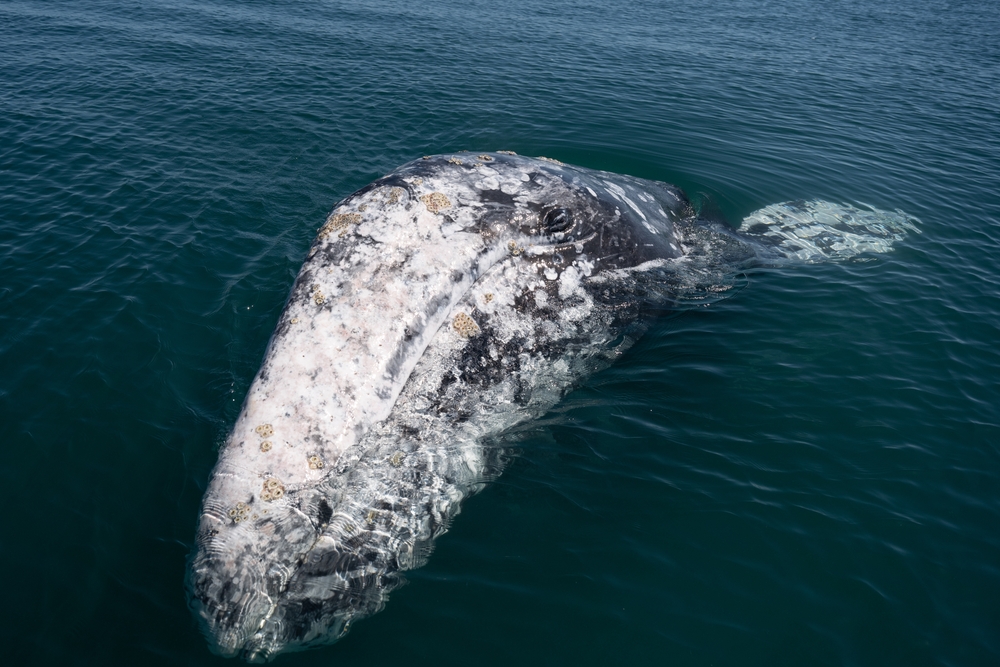
A gallery called Soundscape will focus on the underwater world of sound. The dark, multisensory installation will combine whale calls with ocean sounds, weather, and light.
For many whale species, sound plays a major role in communication and interaction. The exhibition is designed to give visitors an impression of an environment that is difficult for humans to experience directly.
The underwater world can appear silent to people standing on shore or watching the surface of the sea. Beneath the waves, however, sound travels across vast distances and can form an important part of how marine animals understand their surroundings.
Humanity’s Complicated Relationship With Whales
The museum will also address the history of human interaction with whales. One area will examine industrial whaling and its consequences, alongside the different cultural roles whales have played around the world.
Another gallery, called Horizons, will explore how whale habitats and migration routes intersect with shipping and other human activity. The exhibition will emphasize the connections between different parts of the world’s oceans.
This part of the museum moves beyond individual whale species and examines the environments they depend on. It also places human activity within the wider systems that influence marine habitats.
The Landscape Around The Museum Is Part Of The Plan
The project does not end at the walls of the main building. Landscape architect Marianne Levinsen Landskab has developed outdoor spaces designed to bring visitors closer to the coastal environment.
The area around the museum will include a tidepool, a campfire area, and stepping stones. These features are intended to encourage visitors to spend time exploring the landscape rather than treating the building as a completely self-contained attraction.
A New Walkway Will Connect The Coast
A new walkway across the breakwater will connect The Whale with the wider coastal landscape. The route will extend the visitor experience beyond the museum itself and create another way to explore the shoreline.
The outdoor design reflects the same philosophy behind the building. The museum is intended to exist alongside the landscape rather than separate visitors from it.
That approach gives the project a connection that many museums cannot offer. The subject of the exhibitions remains physically present beyond the building, in the cold North Atlantic waters surrounding Andenes.
The Whale Is Set To Open In 2027
The Whale is scheduled to welcome its first visitors on June 4, 2027. Tickets are expected to go on sale before the opening, giving travelers another reason to add northern Norway to their plans.
The museum will also include a café and restaurant, adding to its role as a destination for people spending time in the region. Visitors can combine the indoor exhibitions with whale-watching tours, hiking, coastal walks, and views of landmarks such as the historic Andenes Lighthouse.
The building’s giant whale-like shape will likely be the first thing that catches people’s attention. Its real purpose, however, is to bring visitors closer to an environment that is usually experienced only from the surface.
By combining a walkable roof, column-free interior, immersive exhibitions, and direct access to one of Norway’s best-known whale-watching regions, The Whale is being designed as more than a place to display information. When it opens in 2027, visitors will be able to stand beside the North Atlantic and learn about the giants swimming beyond the horizon.
Featured Image from Website @TheWhale