
Your cart is currently empty!
Harry Potter Fans Started Covering Up Their Tattoos After J.K. Rowling’s Controversial Comments
For years, the Deathly Hallows symbol was one of the clearest ways to tell another Harry Potter fan without saying a word. A triangle, a circle and a line could represent childhood memories, friendship, escape and a fictional world that meant everything to someone growing up. Then, in June 2020, some fans began looking at those same tattoos differently. Instead of proudly displaying them, they started asking tattoo artists to cover them with completely new designs.
Contents
show
The change came after J.K. Rowling made a series of comments about transgender people that sparked widespread criticism. For fans who were trans themselves, or who had close friends and family who were, the tattoos suddenly carried a meaning they no longer felt comfortable displaying. One artist responded by offering free cover-up designs to trans Harry Potter fans, while others began quietly planning how to replace symbols that had once been deeply personal.
The Tattoo Cover-Up Requests Started Pouring In
On June 9, 2020, cartoonist Lee Knox Ostertag spent an entire working day drawing snakes, flowers and cats. The designs were created specifically for Harry Potter fans who wanted to cover tattoos connected to the franchise. Some of the original tattoos featured the lightning bolt associated with Harry, his famous glasses or other recognizable imagery from the books and films.
Ostertag, known for The Witch Boy books and work on The Owl House, offered the designs for free to trans fans who wanted their Harry Potter tattoos covered. Other people could receive a design by making a donation of at least $50 to the Trans Women of Color Collective, a grassroots organization led by trans and gender non-conforming people of color.
The offer arrived just days after Rowling had posted comments objecting to the phrase “people who menstruate.” On June 6, she wrote, “I’m sure there used to be a word for those people,” followed by a mocking reference to possible spellings of the word woman. She later rejected the interpretation that her comments were hateful and said she knew and loved transgender people.
Three days after those comments, Rowling published a longer essay explaining her position on sex and gender identity. She wrote, “Woman is not a costume,” while also discussing her experiences with domestic abuse and sexual assault and concerns about single-sex spaces. For some fans, the debate immediately changed how they felt about a franchise that had once been a major part of their identity.
The Deathly Hallows Tattoo Became A Complicated Symbol
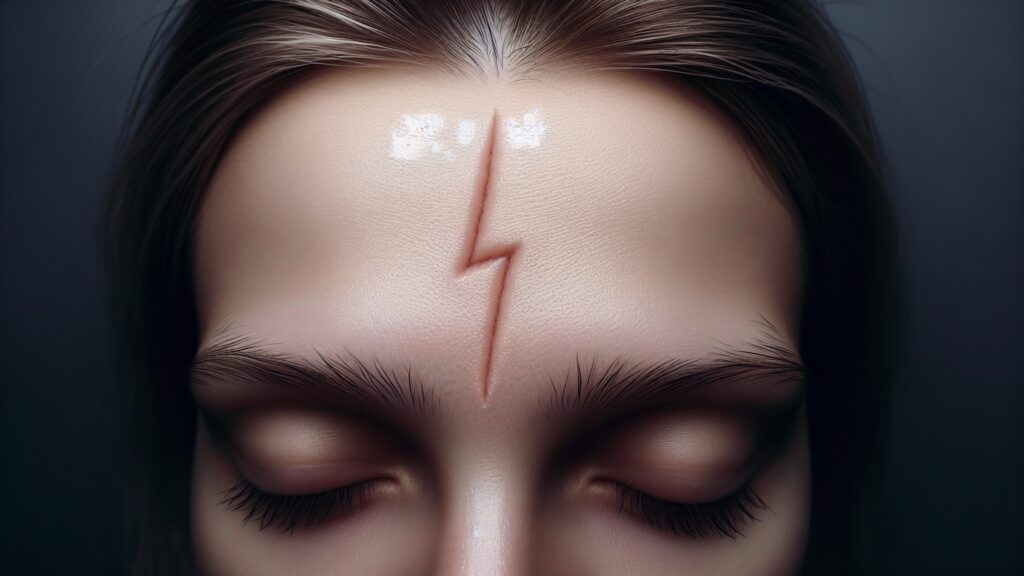
The Deathly Hallows design was particularly common among fans because of its simple shape. A triangle surrounds a circle, with a straight line running through both. It is small enough to fit almost anywhere and recognizable enough that another Harry Potter fan can identify it almost instantly.
That simplicity also made the tattoo difficult to emotionally separate from the franchise. For someone who had received it during childhood or early adulthood, the symbol could represent much more than the fictional objects it depicts. It could mark a friendship, a difficult period, a relationship or the feeling of discovering a place where the reader finally belonged.
Unlike a T-shirt or poster, however, a tattoo does not disappear when someone’s feelings change. It can fade as skin ages and the lines can spread over time, but the basic image remains. Laser removal can take multiple sessions and cost significant amounts of money, which made a cover-up an attractive alternative for people who wanted a different image without going through the removal process.
The decision was therefore not necessarily about pretending the Harry Potter years never happened. For several former fans, the challenge was much narrower: they no longer wanted a symbol on their body that could be interpreted as supporting views they rejected.
Jordan Wanted The Tattoo To Stop Sending The Wrong Message
Jordan began reading Harry Potter at 11 while living in a part of the South where the books were considered by some people to be connected with “witchcraft and evil.” The criticism around the series made it difficult for Jordan to openly enjoy the books, but that only made the fictional world feel more significant. Jordan’s parents had also recently divorced, and Hogwarts became a place that offered an escape from everything happening outside the pages.
The tattoo came later. A friend gave Jordan a stick-and-poke Deathly Hallows design on the ankle at a venue they used to visit. It was inexpensive and informal, but the symbol represented something that had stayed important for years. As Jordan got older, however, rereading the books brought a more critical perspective, including questions about the way certain themes were handled.
Then Rowling’s comments added another layer to the tattoo. Jordan said, “It no longer represents what it did.” The concern was particularly focused on friends who were transgender and how they might interpret seeing the symbol on Jordan’s body.
Jordan explained, “The tattoo just started feeling like, if that was visible around my friends who are trans, I wouldn’t want them to feel like I support the things that she says.” Even the possibility of covering the tattoo did not mean the history behind it would disappear. “I don’t think I will ever completely be rid of it, I guess,” Jordan said.
Andrew Once Had To Hide The Books To Read Them
Andrew, 26, from Ohio, had an especially complicated history with Harry Potter. As a child, he had to hide the books because they were considered unacceptable in his home. A friend borrowed them from a school library, and Andrew found a way to disguise them so he could continue reading without attracting attention.
“I’d slip the dust cover from my Bible on them so I could read them at home without suspicion,” Andrew told the publication that interviewed him. At the same time, he was beginning to understand his own sexuality while living in an environment he described as filled with judgment. Harry Potter became associated with another idea that felt important to him.
“In an environment filled with judgment and damnation, Harry Potter taught me that love and acceptance was the most powerful weapon of all,” Andrew said. That connection eventually followed him into college, where he got a small Deathly Hallows tattoo on his right wrist after a boyfriend encouraged him to get one.
The meaning of the tattoo changed after Rowling’s comments. Andrew did not suddenly forget what the books had meant to him, and he did not deny the role they had played during his childhood. Instead, he decided the symbol no longer belonged on his skin. “I will always hold a special place in my heart for Harry Potter, but it’s time to close this book out of an abundance of respect and solidarity for my trans brothers and sisters,” he said.
Other Fans Struggled With The Same Decision
Leigh, a nonbinary hairstylist in Houston, initially found a different way to deal with the controversy. Leigh considered separating the books from the person who wrote them, allowing the Deathly Hallows tattoo to retain its personal meaning even as Rowling became increasingly controversial.
That approach made it possible to continue feeling connected to the tattoo. Leigh said it “helped me continue to feel okay with my tattoo in spite of Rowling’s faults and shortcomings.” For a while, the distinction between a fictional story and its creator seemed sufficient.
Eventually, however, Leigh began to see the symbol differently. “As a nonbinary person, the symbol has almost started to feel deceitful,” Leigh said. Leigh had already mentioned the possibility of covering the tattoo to a tattoo artist, who offered to do the work relatively cheaply because the design would be straightforward.
Kay, a nonbinary librarian who worked with middle and high school students, faced a similar conflict. Kay had a Deathly Hallows tattoo on the forearm and initially hoped Rowling might change course. “The first time she said something, I was like, ‘Oof, okay, well, maybe she’ll grow from this,’” Kay said. Instead, the controversy continued and eventually made even rereading the books feel difficult.
Daniel Radcliffe Offered Fans A Different Perspective
Daniel Radcliffe, who played Harry Potter in the film adaptations, publicly responded to Rowling’s comments on June 8, 2020, through a statement published by The Trevor Project. His response was direct: “Transgender women are women.” He also acknowledged the difficult position fans could find themselves in after spending years connected to the books.
Radcliffe’s statement recognized that Harry Potter had become something larger than its creator for many readers. People had built their own relationships with the characters and stories, often during periods of childhood when books can have an unusually strong influence.
He offered one particularly striking thought for fans struggling with that separation. Whatever readers had discovered in the books, Radcliffe wrote, “that is between you and the book that you read, and it is sacred.” For someone considering a tattoo cover-up, that idea allowed for a complicated possibility: the story could remain meaningful even if the symbol no longer felt right.
That distinction did not solve the problem for everyone. Some fans kept their tattoos, while others decided that changing the image was the only way they could feel comfortable with what they were visibly carrying.
The New Tattoos Were About Reclaiming The Skin
The designs created by Ostertag included snakes, flowers and cats. On the surface, they were ordinary tattoo ideas. Their purpose was much more specific because they were being placed over symbols that had become emotionally complicated for the people wearing them.
For those choosing a cover-up, the new artwork could represent a new chapter without requiring the old one to be forgotten. The original ink remained underneath the new design, much like the memories attached to the Harry Potter books remained part of the person’s history.
That is what made the cover-up wave different from simply throwing away merchandise. A book can be placed on a shelf. A poster can come down. A tattoo has to be carried on the body unless someone goes through the process of removing or covering it.
The choices included several approaches:
- Cover the Deathly Hallows: Replace the recognizable symbol with artwork that has no connection to Harry Potter.
- Use an entirely new subject: Flowers, animals and other designs could transform the appearance of the original tattoo.
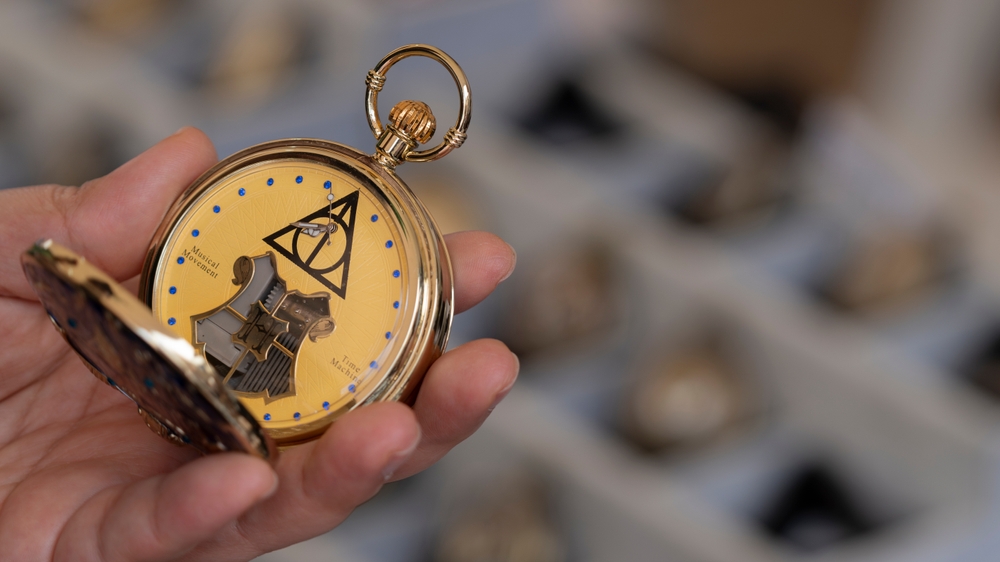
- Keep the tattoo hidden: Some fans chose watches or clothing rather than immediately committing to a cover-up.
- Rethink the meaning: Others continued to view the tattoo as a personal connection to the books rather than an endorsement of Rowling.
The Hardest Part Was Deciding What The Tattoo Meant Now
None of these tattoos had originally been created as political statements. Jordan’s tattoo was connected to childhood and family circumstances. Andrew’s relationship with the books was tied to secrecy, sexuality and the experience of finding acceptance in a fictional world.
Leigh had tried to preserve the distinction between a creator and a creation. Kay had hoped the controversy might eventually pass. Their different reactions showed how difficult it was to assign one meaning to a symbol that had been personal to so many people.
For some, keeping the tattoo was possible because the memories remained separate from Rowling. For others, the symbol had become too closely connected to the controversy to feel comfortable anymore. There was no single answer because the tattoo had never meant exactly the same thing to every person who wore it.
The cover-up offered a middle ground. Fans could acknowledge that Harry Potter had mattered to them while deciding that the imagery no longer belonged on their skin. The new artwork did not erase their childhood. It simply changed what they wanted other people to see.
The Books Stayed In The Past, But The Tattoos Had To Move Forward
The strangest part of the Harry Potter tattoo debate was that many of the people seeking cover-ups had once loved the series intensely. They had not chosen random designs from a catalog. They had selected symbols because the stories had meant something during formative years.
That history could not be removed with a tattoo machine. It could only be carried differently.
For some former fans, covering the Deathly Hallows became a way to draw a line between the person they were when they got the tattoo and the person they had become. The old symbol could remain underneath without continuing to speak for them.
The ink may have been permanent, but its message did not have to be. That was the choice these fans were making: not erasing where they came from, but deciding what they wanted their skin to say next.