
Your cart is currently empty!
The Mystery Behind The Tiny Scar Millions Have On Their Arms
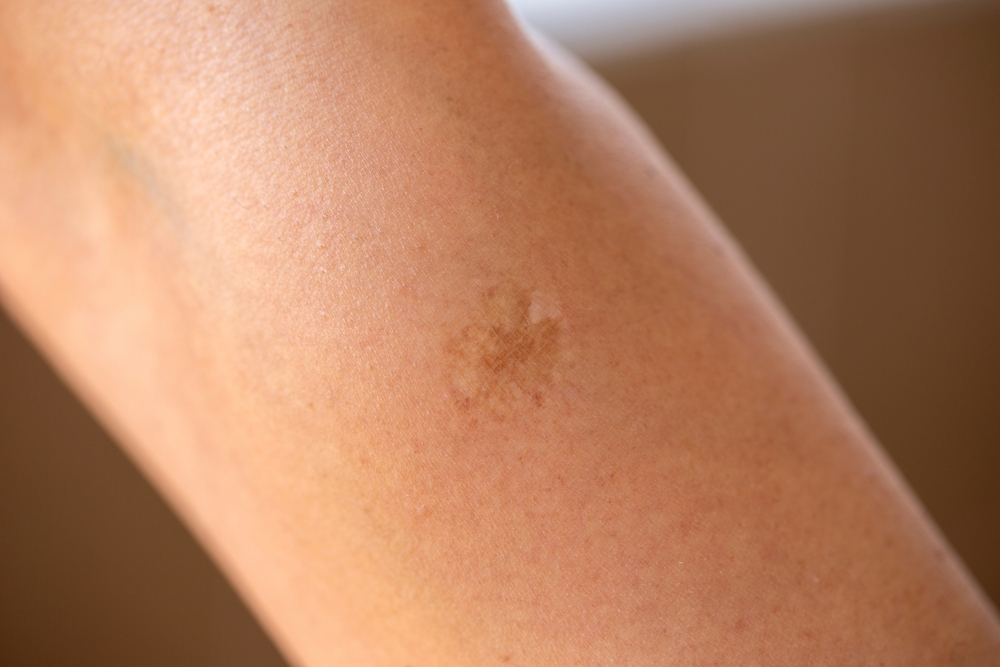
Millions of people have the same tiny mark on their upper arm, and many never knew why it was there. The strange little circle has recently become a viral talking point, with people comparing photographs and realizing they share an oddly specific feature.
Contents
show
The mark is usually linked to a childhood vaccine, but its origin is more interesting than a simple injection. Depending on where and when someone was born, that small scar can tell a story about tuberculosis, vaccination programs and even one of the greatest victories in medical history.
That Little Circle Is Usually A BCG Scar
For millions of people, the explanation begins with tuberculosis. The scar is commonly left by the Bacille Calmette-Guerin vaccine, better known as BCG, which protects children against serious forms of tuberculosis and has been used in vaccination programs across much of the world.
Unlike many familiar injections, BCG is delivered directly into the skin. The vaccine contains a weakened strain of bacteria related to the organism that causes tuberculosis, allowing the immune system to respond at the injection site.
Why The Injection Leaves A Scar
The NHS describes the main side effect as “a blister where the injection was given.” The site can then form a scab and take weeks or months to heal, eventually leaving a small flat scar.
That process is why the mark can look so distinctive. It is usually circular or oval and appears on the outside of the upper arm, where it can remain visible for decades after the original vaccination.
The Vaccine Has Been Around For More Than A Century
The story behind the scar stretches back to two French bacteriologists, Albert Calmette and Camille Guerin. They spent 13 years weakening a strain of bovine tuberculosis until it could no longer cause the disease, eventually producing the vaccine that bears their names.
In July 1921, Calmette used the vaccine on an infant whose mother had tuberculosis and whose life was considered to be at risk. The Institut Pasteur records the result in simple terms: “The infant was saved by the vaccine.”
More Than 150 Countries Use It
The World Health Organization incorporated BCG into its global immunisation program in 1974, and more than 150 countries now vaccinate babies against tuberculosis. The practice is particularly important in places where the disease remains a major threat.
That helps explain why people who grew up thousands of miles apart can have almost identical scars. Someone born in the Philippines can carry the same mark as someone born in Brazil or Nigeria because the vaccination leaves a similar reaction in the skin.

Why Some People Have The Scar And Others Don’t
The presence or absence of the scar can also reflect where and when someone grew up. Routine BCG vaccination has never been recommended across the United States because tuberculosis has historically been less common there, although it is offered to particular high-risk groups.
Britain followed a different approach for decades, operating a broad vaccination program that gave BCG to schoolchildren at around age 13. That policy changed in 2005, when Britain moved toward targeted vaccination of newborns.
Your Age Can Tell Part Of The Story
This created an unusual generational divide. Someone born in Britain before the policy change may have received BCG as a teenager, while a younger eligible child may have received it as a newborn.
An American who grew up in the United States may never have received BCG at all. The absence of the scar therefore does not mean someone missed a routine childhood vaccine; it can simply reflect the vaccination policy of the country where they were raised.
An Older Scar Can Come From Smallpox

BCG is not the only vaccination associated with a distinctive mark on the upper arm. Older generations may have a smallpox vaccination scar, which came from a completely different technique.
The smallpox vaccine was introduced into the skin using a two-pronged needle rather than a conventional injection. According to the CDC, the needle was dipped into the vaccine before being used to make a series of punctures in the skin, creating a reaction that eventually healed into a characteristic scar.
The Smallpox Mark Belongs To Another Era
Routine smallpox vaccination ended in Britain in 1971 and the United States in 1972. In 1980, the World Health Organization declared the disease eradicated worldwide.
Smallpox remains the only human infectious disease to have been eliminated globally. That means an old scar on someone’s arm can sometimes be a physical trace of a vaccination campaign against a disease that no longer circulates naturally.
The Scar Joke Has Been Circulating For Years
The recent viral posts were not the first time people noticed the mark. In June 2017, the African Memes Facebook page posted a close-up of the scar and called it the “universal ‘you are an immigrant’ mark,” reportedly attracting thousands of reactions.
The joke resurfaced in 2024 when an X user highlighted the scar on actress Anya Taylor-Joy’s arm. A month later, a side-by-side image comparing Taylor-Joy and Mia Goth spread rapidly, reportedly receiving 101,000 likes and 8,100 reposts within two weeks.
Why The Joke Caught On
The scar is unusually easy to recognize once someone points it out. People can spend their entire lives carrying it without knowing what caused it, making the discovery feel like a strange piece of information hiding in plain sight.
The joke also works because the mark can appear on people from completely different backgrounds. What looks like a clue about someone’s identity is usually a record of vaccination instead.
The Scar Does Not Mean Lifelong Protection
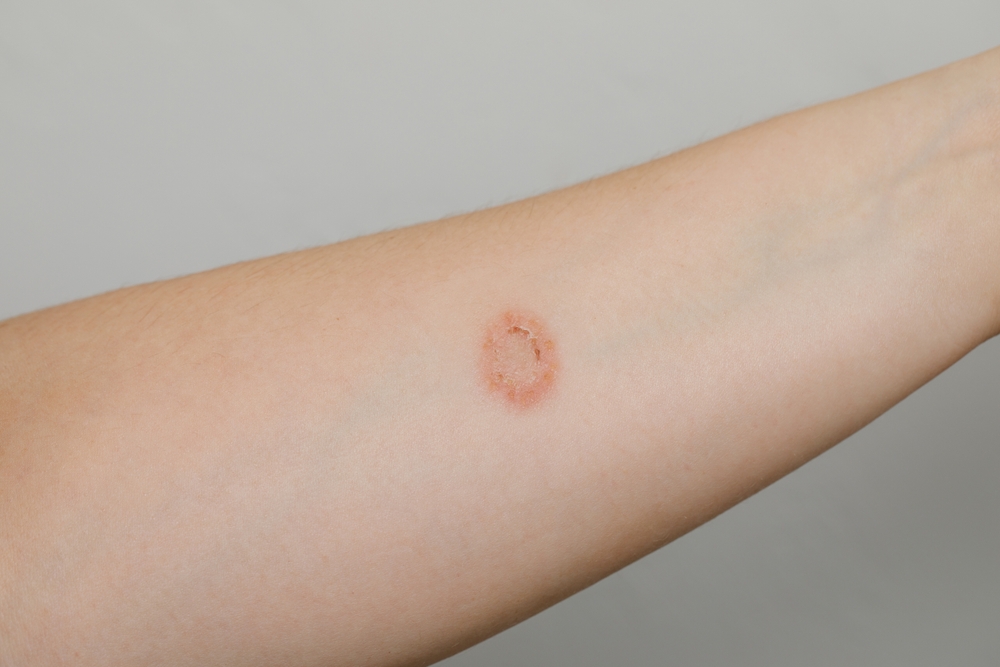
The distinctive mark can make BCG seem more powerful than it actually is, but its protection has clear limits. A large analysis published in The Lancet Global Health in 2022 examined records involving 68,552 people across 17 countries and 26 studies.
The analysis found that infant BCG vaccination reduced tuberculosis risk by roughly 18% overall, with protection concentrated among children younger than five. Among adolescents and adults, the researchers detected no significant protection in the data they examined.
Public Health Seattle and King County puts the distinction plainly: “The BCG vaccine protects against the worst kinds of childhood TB. It does not protect you as an adult.”
What BCG Is Designed To Prevent

The main value of childhood BCG is protection against severe forms of tuberculosis in young children, including dangerous infections such as tuberculous meningitis. It does not guarantee that someone vaccinated as a baby will never develop tuberculosis later in life.
That limitation is one reason researchers have continued searching for better tuberculosis vaccines. The scar can last a lifetime, but the protection it represents was never intended to be a lifelong shield against every form of the disease.
Tuberculosis Still Kills More Than A Million People
The disease behind the scar remains a major global health problem. According to the World Health Organization, tuberculosis killed 1.23 million people in 2024, making it the world’s deadliest single infectious agent.
There is another number worth knowing, however. Since 2000, global efforts against tuberculosis are estimated to have saved 83 million lives, showing how dramatically prevention, diagnosis and treatment can change the course of a disease.
A Tiny Scar With A Much Bigger Story
Most people with the mark probably never received an explanation for it. They simply grew up with a small circle on their arm, while the memory of the vaccination disappeared long before they understood what it meant.
That is what makes the viral discovery so strange. The scar looks like a personal feature, but for millions of people it is actually evidence of a shared public-health effort that began more than a century ago.
The next time someone spots the same little circle on another person’s arm, the most interesting question is not where that person came from. It is how many people around the world carry the same reminder of a vaccine they received before they could even remember it.