
Your cart is currently empty!
10 Black Women Bought First-Class Tickets. What Happened Next Exposed a Deeper Problem
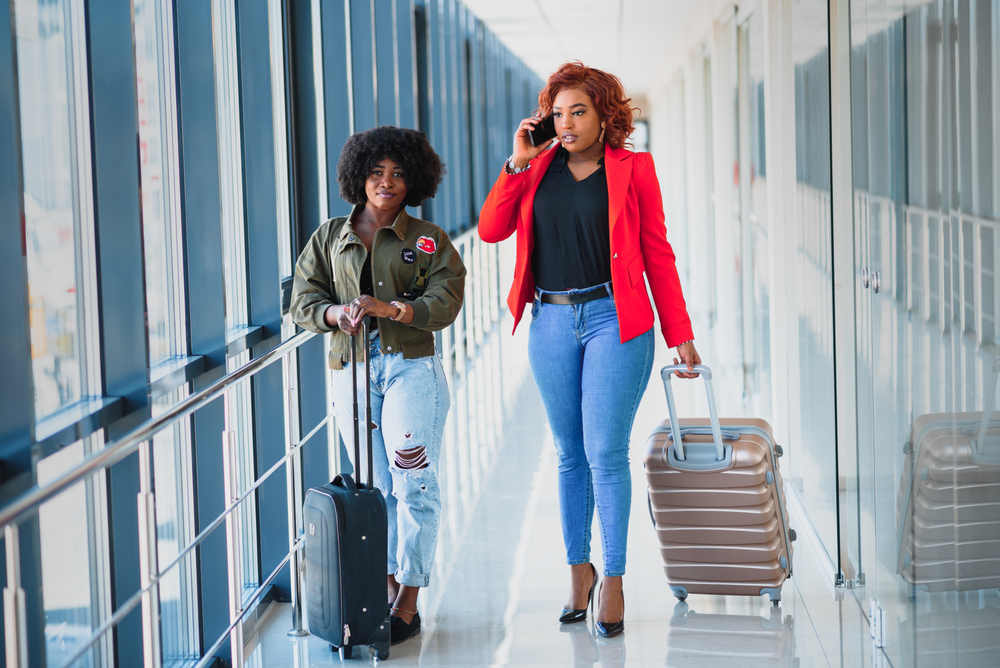
Ten Black women walked into an airport with first-class tickets and discovered that, for some people around them, the tickets still did not seem to make sense. The women had paid for their seats, earned their careers, and had every right to be in the priority lines. Yet their presence was met with questions, assumptions, and one shouted remark that captured the entire situation.
Contents
show
The trip was described by software engineer Angie Jones in a post that quickly spread online. What happened to her group was not presented as a dramatic confrontation. It was a series of ordinary interactions that became revealing when placed together: being directed toward regular lines, hearing comments from other passengers, and watching strangers struggle to accept that ten Black women could simply be traveling first class.
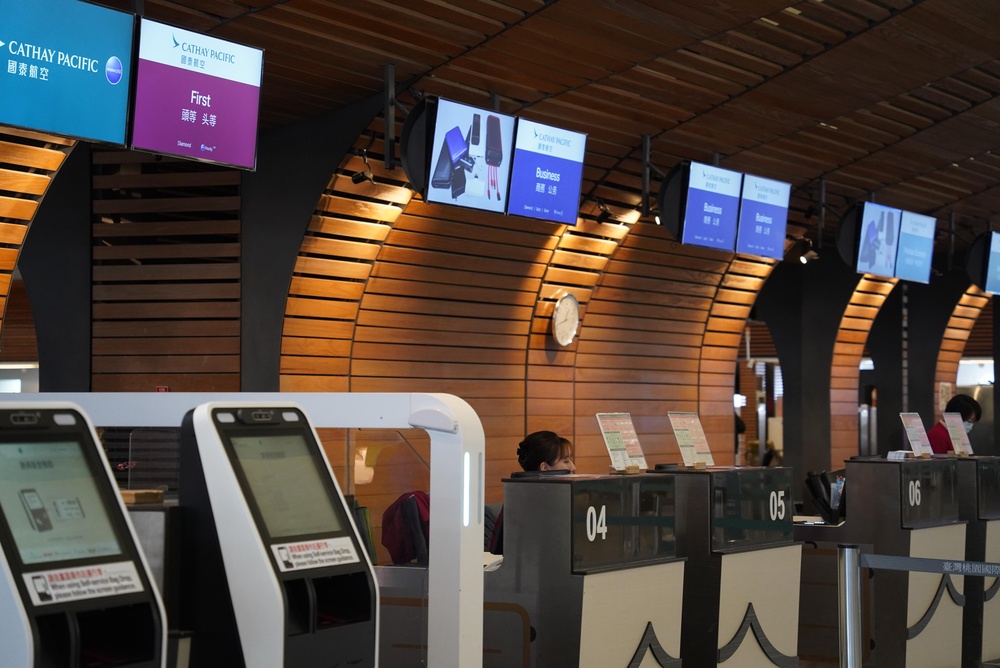
Ten First-Class Tickets, One Awkward Airport Experience
Jones traveled on a girls’ trip in late July 2021 with nine friends. All ten women were Black, and all ten had first-class tickets. Jones herself was an established software engineer with more than 25 patented inventions, a Master Inventor, and the creator of Test Automation University, a training platform operated by Applitools.
The credentials were mentioned because they added another layer to the experience. Jones was hardly someone who had stumbled into a first-class cabin by accident. She had built a career in technology and held professional achievements that would normally be enough to establish her credentials before anyone even asked.
Yet the group still encountered people who appeared unable to accept what they were seeing. Jones said staff tried to direct the women toward the regular lines, while passengers made comments as they moved through the priority queue. Nothing about the tickets had changed. The assumptions surrounding them had.
The experience raised an uncomfortable question about the invisible expectations people carry into public spaces. When someone sees a group of Black women in first class, what does that person assume before knowing anything about them?
One Passenger Said What Others Were Thinking
The most striking moment came when one man apparently voiced his objection loudly enough for the women to hear. Jones recalled him yelling, “Are they a higher class of people than I am?!”
That sentence transformed the incident from a collection of awkward airport encounters into something much more pointed. The man was not questioning whether the women had purchased their tickets. He was questioning what their presence in that section appeared to say about status.
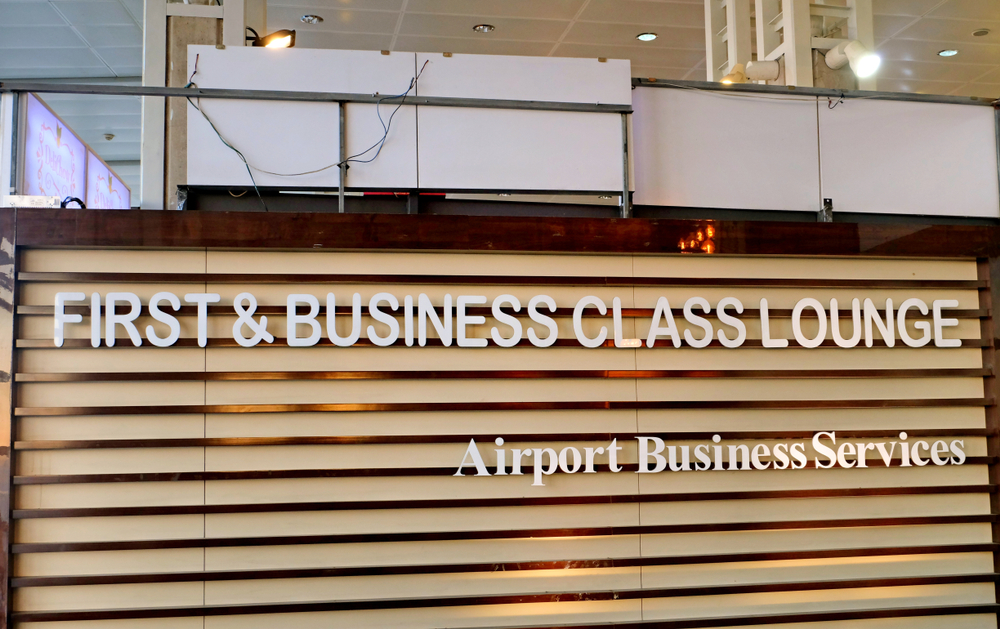
First class is designed around hierarchy. There are separate queues, separate lounges, priority services, wider seats, and a higher price. Passengers know what the cabin represents, which is exactly why the man’s question carried so much weight.
Jones finished her original post with two words: “Stay mad.” The response was deliberately blunt, but the moment had already made its point. Ten women had purchased ten seats. Their presence had apparently become a social statement for people who were not comfortable seeing them there.
The Story Spread Because Other Travelers Had Similar Experiences
Jones’s post was shared more than 32,000 times, and the responses quickly became a collection of similar experiences from other Black travelers. People described being questioned about whether they were in the correct line, being treated as though they had entered the wrong section, and learning that certain outward signals could change how strangers perceived them.
One passenger recalled being questioned about whether she was in the correct section by a flight attendant who had just served her orange juice. Another traveler, Onyekachi Amadi, described how the experience changed depending on what she carried with her. “I cannot count how many times this has happened to me. I noticed it doesn’t happen if I’m traveling with my maxi Chanel bag and my LV duffel,” Amadi wrote.
The detail about luxury luggage was particularly revealing because it suggested that visible wealth could function as a shortcut for credibility. The expensive bags did not change who she was, but they appeared to change how some people treated her.
Bryan Liles described taking the opposite approach. “I sit up front just feed on those tears,” he wrote, before describing an earlier encounter at a United Club lounge in Denver where a staff member told him, “this is a private club.”
Jones Was Also Accused of Making It Up
The reaction did not stop with people sharing their own stories. Some commenters claimed Jones was lying about what happened.
Jones responded directly to those accusations. “To those saying I’m lying, you’re a huge part of the problem,” she wrote. “You tell yourself a notable person is lying (for what reason, I cannot figure out) before you believe there are actual racists in…America.”
That response introduced another layer to the story. Jones had described something that she and her friends experienced personally, yet strangers who were not there felt confident enough to dismiss it.
The contradiction was difficult to ignore. Jones had already established a highly accomplished professional life, yet even those credentials could not prevent some people from questioning whether her account was believable.
Her argument was straightforward. If a person is already committed to believing that racism cannot be operating in a particular situation, evidence from the person who experienced it may still be dismissed.
The Numbers Showed Complaints Were Rising
The wider aviation picture provided additional context. Passengers filed 58 discrimination complaints with the U.S. Department of Transportation between January and June 2021, compared with 30 during the same period in 2020. Southwest Airlines received the highest number, followed by American Airlines.
The numbers do not establish that every complaint involved the same circumstances Jones described. They do show that discrimination complaints in air travel were being formally reported during the same period.
The Department of Transportation states that airlines may not discriminate against passengers based on race, color, national origin, religion, sex, or ancestry. A passenger who believes discrimination has occurred can file a complaint, turning an uncomfortable encounter into a documented allegation.
That process also reveals why individual experiences can be difficult to measure. A passenger has to decide that what happened was serious enough to report. A strange look may never become a complaint. Neither will a dismissive comment or an assumption about where someone belongs.
Another First-Class Encounter Had an Unexpected Ending
Several months later, Pat Morris described another experience involving an upgrade and a first-class seat. Morris reached her assigned row and discovered another woman already sitting there.
A flight attendant named Debra checked Morris’s ticket and confirmed that the other passenger had taken the wrong seat. The attendant apologized to the woman who had been sitting there and then invited her to take another first-class seat that had become available.
Morris received her seat and water. The other passenger received an apology and an upgrade.
Morris later wrote, “This is what privilege looks like.” She connected the incident to a much broader pattern, writing, “This narrative replays every day in every boardroom, law firm, health system, corporation, classroom, courtroom, police station.”
Her experience was different from Jones’s because the interaction was resolved by a flight attendant who checked the facts and corrected the seating mistake. But it raised a similar question about who is presumed to belong in spaces associated with money, status, or professional power.
Ten Paid Tickets Still Did Not Settle The Question
The striking part of Jones’s story was never that ten Black women could afford first-class tickets. Of course they could. The surprise came from the people who seemed unable to accept it.
The women did not need matching credentials, designer luggage, or an explanation for why they were traveling together. They needed tickets, and they had them. Yet the reaction around them showed how quickly assumptions about race and status can enter an otherwise ordinary transaction.
Jones’s career made the story harder for some people to dismiss, but that also exposed another uncomfortable point. A person should not have to present an impressive résumé before being treated as though they belong in a first-class line.
The women boarded the plane because they had purchased seats there. Nothing else was required.
The Most Revealing Part Was Who Felt Entitled To Question Them
Air travel creates countless small encounters between strangers. Most disappear within minutes. A question at a security line, a seat dispute, or a comment in a boarding queue rarely becomes a story people remember years later.
Jones’s experience stayed with people because it exposed how an ordinary setting can reveal assumptions that usually remain hidden. The women were not asking anyone to give them special treatment. They were simply expecting the treatment attached to tickets they had already paid for.
That is what made the shouted question so revealing. “Are they a higher class of people than I am?!” was framed as a challenge to the women, but it also exposed the speaker’s own understanding of first class as a visible ranking system.
The ten women did not create that hierarchy. They simply entered it.
The Seats Were Never The Real Achievement
A first-class ticket can buy a larger seat, priority boarding, and a different experience in the air. It cannot buy the assumption that strangers will automatically believe you belong there.
For Jones and the women who traveled with her, the trip became a public conversation about that assumption. Thousands of people responded with stories of their own, showing that the experience did not exist in isolation.
The most important detail may be the simplest one: ten women paid for ten seats, arrived at the airport, and expected to use what they had purchased. The fact that their right to be there became a subject of debate says far more about the people questioning them than it does about the women themselves.