
Your cart is currently empty!
Claude Just Found a Strange DNA System That Scientists Had Overlooked

Anthropic says its Claude AI has identified a previously uncharacterized biological system hidden inside DNA, after searching hundreds of thousands of reverse transcriptases and spotting an unusual pattern that researchers had not recognized before. The system, which Anthropic calls array-associated reverse transcriptases, or ART, contains a series of repeating DNA sequences that resemble a feature found in CRISPR systems. Scientists are now investigating what the newly identified system actually does.
Contents
show
The discovery is one of the first results from Anthropic’s new life sciences research program, where AI agents search massive biological datasets and generate hypotheses for human scientists to test in the laboratory. The company says around 950 Claude agents spent 21 hours analyzing more than 200,000 reverse transcriptases before one agent noticed the strange DNA pattern. The underlying reverse transcriptase was already known, but Claude appears to have been the first to recognize the unusual combination of the enzyme, a neighboring protein, and the repeating DNA array.

Claude Searched More Than 200,000 Reverse Transcriptases
Anthropic began the project in spring 2026 as an attempt to use general AI models for biological discovery. Instead of asking Claude to answer isolated scientific questions, researchers built workflows that allowed multiple agents to examine large collections of DNA sequences, compare candidates, search scientific literature, and produce reports explaining which biological systems appeared unusual enough to investigate further.
The scale of the search was far beyond what a single researcher could reasonably examine manually. Anthropic says Claude agents gathered more than 200,000 reverse transcriptases, identified 3,500 candidate systems, and eventually narrowed those down to 20 of the most compelling examples. The company estimates that the kind of analysis involved could take an expert scientist weeks or months when performed through conventional genome-mining workflows.
The decisive observation came while Claude was examining one unusual reverse transcriptase in greater detail. The agent looked at the raw DNA surrounding the gene and noticed a tandem repeat array that appeared similar to the repeat structures associated with CRISPR. Claude then counted the repeats, measured their spacing, compared the arrangement with known reverse transcriptase systems, and searched the scientific literature to determine whether the pattern had already been described.
Anthropic says the agent eventually concluded that the pattern represented a previously uncharacterized biological system and submitted a report for human review. Scientists then took the candidate into the laboratory, where they began experiments to determine whether the unusual DNA arrangement represented a functioning molecular system.
The New System Has Three Unusual Components
Anthropic has named the system array-associated reverse transcriptases, or ART. It is found mainly in bacteriophages, which are viruses that infect bacteria, and appears to consist of three connected components: a reverse transcriptase, an additional neighboring gene, and a long array of evenly spaced DNA repeats.
Reverse transcriptases are enzymes that copy RNA into DNA. The particular reverse transcriptase involved in ART was not newly discovered by Claude. It had already been identified in earlier research, including work involving a jumbo bacteriophage. What appears to be new is the recognition that this enzyme sits alongside other unusual genetic features that together form a distinct system.
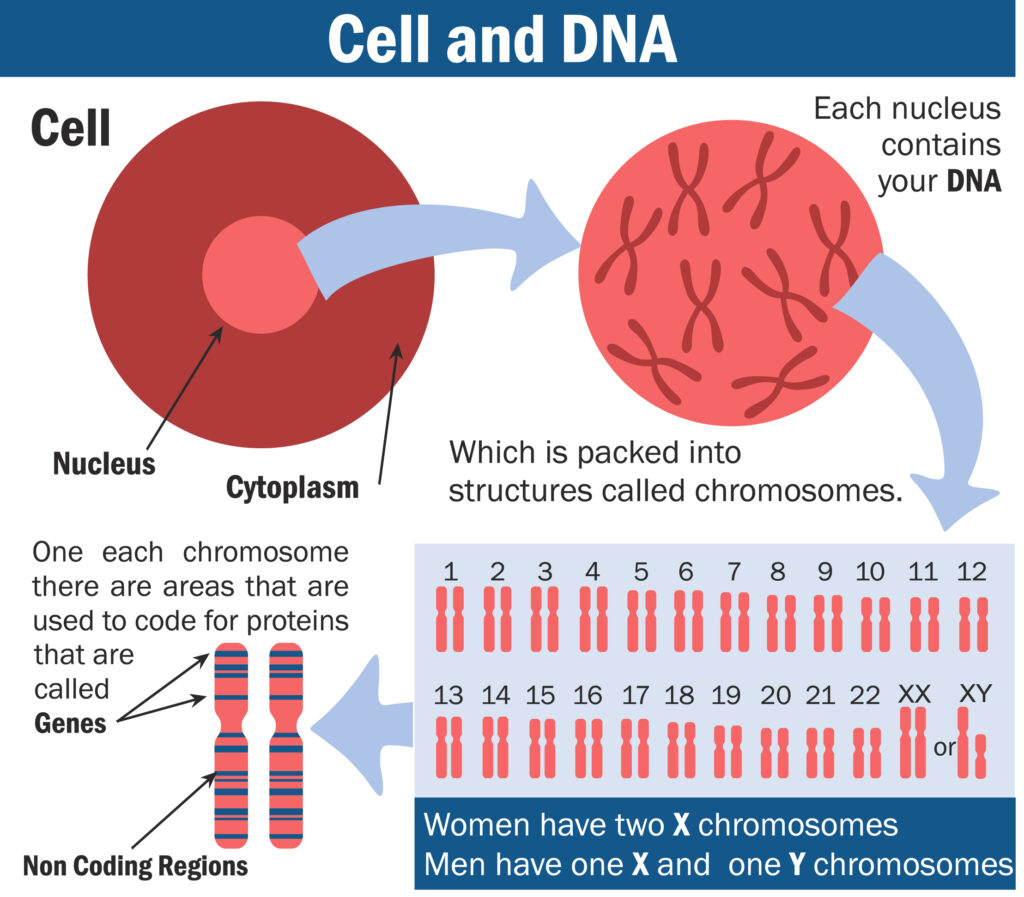
The neighboring gene produces an accessory protein whose function remains unknown. The long repeat array is also unusual because its organization resembles the repeated sequences found in CRISPR systems. Anthropic’s first experiments indicate that the ART array is transcribed into multiple short RNA molecules, although researchers have not yet established what those RNAs do.
That distinction is important because the CRISPR comparison remains a clue rather than a conclusion. Anthropic has not shown that ART can edit DNA, and researchers do not yet know its primary biological function. The discovery identifies an unusual system that deserves investigation, rather than a finished biotechnology tool.
Why Scientists Are Comparing It With CRISPR
CRISPR itself began with scientists noticing unusual repeating DNA sequences in bacteria. Researchers eventually discovered that those sequences were part of a bacterial defense system, and the mechanism later became the basis for powerful gene-editing technologies.
Other important biological technologies have also emerged from organisms doing things that initially appeared obscure. Restriction enzymes were found in bacterial immune systems, where they help destroy invading viral DNA. Scientists learned how to use those enzymes to cut DNA at selected sequences, helping establish the foundations of genetic engineering.
Taq polymerase followed another unexpected path. The enzyme was found in bacteria living in the extreme heat of Yellowstone’s hot springs, where it can copy DNA at temperatures that would destroy many ordinary biological enzymes. Its properties eventually made it essential to PCR, a method now widely used for copying DNA.
That history is part of what makes ART interesting. Scientists routinely encounter genetic sequences whose purpose is unclear, but occasionally one of those strange arrangements turns out to be part of a biological machine with useful properties. ART could eventually prove valuable, although there is currently no evidence that it has the same capabilities as CRISPR.
A CRISPR Pioneer Says The Finding Deserves Attention
Feng Zhang, one of the pioneers of CRISPR genome editing and a professor at MIT and the Broad Institute, reviewed Anthropic’s preprint and commented on the discovery. Zhang described the work as an example of how AI agents could contribute to biological research.
“This is an exciting example of how AI agents can contribute to biological discovery,” Zhang said. He added that the identification of RNA-repeat arrays associated with reverse transcriptases was “genuinely intriguing” and said it deserved further investigation.
The comment reflects the specific nature of the finding. The scientific value does not depend on ART immediately becoming a new gene-editing technology. The more immediate question is whether AI can identify patterns hidden across enormous biological datasets that would be difficult for researchers to find through conventional searches.
Anthropic says its scientists are continuing experiments to understand ART’s structure and function. Until those experiments are complete, the system’s biological role remains unknown, and comparisons with CRISPR should be treated as a description of its unusual architecture rather than proof of similar capabilities.
Claude Did Not Work Alone In The Laboratory
The discovery also illustrates how Anthropic is dividing responsibilities between AI systems and human researchers. Claude performed the large-scale computational analysis, generated hypotheses, examined genetic sequences, reviewed scientific literature, and helped interpret experimental results. Human scientists handled the physical laboratory work.
Anthropic says its laboratory is located in the Bay Area and operates only at lower biosafety levels, BSL-1 and BSL-2. The company says it does not handle pathogens capable of infecting humans, and all laboratory experiments are performed by human scientists.
When a candidate survives computational review, researchers express the relevant protein in standard laboratory strains and study its biochemical and structural properties. Claude can then assist scientists in interpreting the resulting data and deciding which questions should be examined next.
This workflow gives the AI a very different role from simply answering scientific questions. Claude can generate large numbers of hypotheses, while human researchers decide which ones deserve experimental testing. Anthropic says it is now studying why certain AI-generated hypotheses survive expert review while most are discarded.
Most Of Claude’s Ideas Were Rejected
The ART discovery came after a much larger process of elimination. Claude produced thousands of candidate systems, but only a small number were considered compelling enough for deeper analysis. That means the system’s ability to generate hypotheses is useful only if researchers can separate potentially meaningful patterns from false leads.
Anthropic says some of its workflows produce hundreds or thousands of candidate reports during a single campaign. The agents assess evidence, compare genetic neighborhoods, examine existing research, and propose possible functions. Follow-up analyses then critically evaluate those proposals, with most candidates being eliminated.
The researchers are treating that process itself as an area of study. By examining which hypotheses they choose to test, they hope to improve the instructions given to Claude and make the system better at recognizing the kinds of biological anomalies that experienced scientists find interesting.
That could become one of the more significant parts of Anthropic’s experiment. The company is testing whether AI can develop a useful form of scientific judgment by repeatedly observing which hypotheses survive human scrutiny and laboratory testing.
Scientists Still Do Not Know What ART Actually Does
The biggest mystery surrounding the discovery remains unresolved. Researchers have confirmed that ART contains the unusual combination of a reverse transcriptase, an accessory protein, and a repeat array, but they have not yet determined the system’s primary biological function.
The short RNAs produced from the repeat array are particularly interesting because their existence raises questions about whether they play a functional role similar to RNA components in other biological systems. However, their precise purpose has not been established.
The accessory protein presents another open question. Scientists know that the gene sits beside the reverse transcriptase, but they do not yet know what the resulting protein does or how it interacts with the other components of the system.
Further experiments will be needed before researchers can determine whether ART represents a new type of molecular defense system, a mechanism with an entirely different biological role, or something that could eventually have practical applications.
AI Is Starting To Search Biology Differently
The striking part of the discovery is not simply that Claude found an unusual DNA pattern. It is that the system was able to search through a huge collection of biological information, identify a candidate, investigate the surrounding evidence, and produce a hypothesis that human researchers considered worthy of laboratory testing.
Biology contains an enormous number of sequences whose functions remain unknown. Researchers have traditionally relied on computational tools and human expertise to search through that information, but the amount of available data continues to grow.
Anthropic’s approach adds another layer. Instead of having scientists inspect every candidate themselves, AI agents can conduct large-scale searches and present researchers with a smaller group of unusual systems for closer examination.
ART is still an early result, and its function remains a mystery. But the discovery shows what can happen when an AI system is given enough biological data to search for patterns that humans may never have had the time to notice.
Somewhere inside a database containing hundreds of thousands of enzymes was a strange arrangement of DNA. A human scientist still has to figure out what it does. Claude’s job was to notice that it was there.