
Your cart is currently empty!
America’s Measles Surge Has Reached A Level Not Seen In 35 Years

The United States has recorded more than 3,600 confirmed measles cases in 2026, pushing the country into a situation public health officials have been warning about for years. The latest figures show 3,659 confirmed infections as of September 24, with cases reported across 47 jurisdictions. That is already far above the 2,289 cases recorded during all of 2025, and the year is still not over.
Contents
show
The surge has been driven largely by outbreaks, with 95% of confirmed cases linked to outbreak activity. Measles was declared eliminated in the United States in 2000, but declining vaccination rates have created pockets where the virus can spread rapidly. Now, officials are facing a much bigger question: whether the country can maintain the elimination status it has held for more than two decades.

Measles Cases Have Already Surpassed 2025
The latest numbers show just how quickly the situation has changed. The United States had recorded 2,289 confirmed measles cases throughout 2025, which was already the highest annual total in many years. By September 24, 2026, that figure had climbed to 3,659 confirmed cases, representing an increase of more than 1,300 infections compared with the entire previous year.
The CDC figures show that 3,642 of this year’s cases were reported by U.S. jurisdictions, while another 17 cases involved international visitors. Forty outbreaks have been reported so far in 2026, and 3,478 of the confirmed cases are associated with outbreaks. That means the overwhelming majority of infections are connected to clusters where the virus has continued spreading between people.
The increase is particularly notable because measles is highly contagious. Once the virus enters a community where vaccination coverage is low, infections can spread quickly, particularly among people who have not received the recommended protection. The current figures show that outbreaks remain the main driver of the national case count.
Last year’s numbers already represented a major change from 2024, when just 285 confirmed cases were reported. The jump from 285 cases in 2024 to 2,289 in 2025 was followed by another dramatic increase in 2026. With several months still remaining in the year, the country has now moved well beyond the previous annual total.
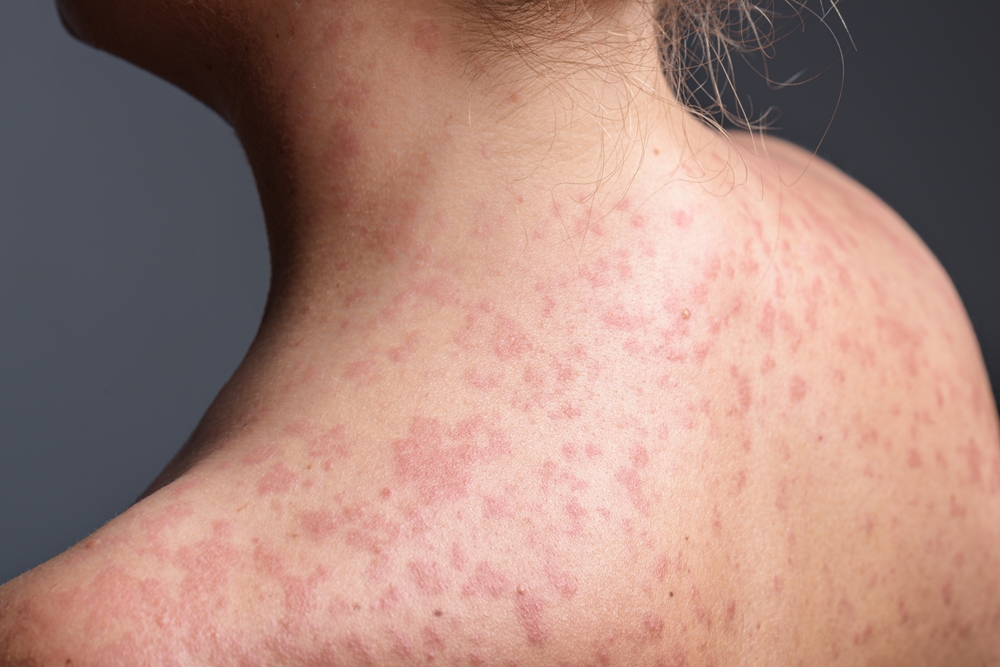
Why Measles Can Spread So Rapidly
Measles is caused by a highly contagious virus that spreads through the air when an infected person breathes, coughs or sneezes. The illness commonly begins with fever, cough, a runny nose and red or watery eyes before the familiar blotchy rash appears. Because people can be infectious before the rash develops, the virus can move through communities before an outbreak is immediately obvious.
The disease can also cause serious complications. Pneumonia is one of the most significant complications, while inflammation of the brain, known as encephalitis, can cause severe neurological problems. Measles can also lead to ear infections and diarrhea, and in some cases the infection can be fatal.
Another concern is the effect measles can have on the immune system. The infection can cause what is known as immune amnesia, reducing the immune system’s ability to recognize and respond to infections it had previously encountered. That means the consequences of measles can extend beyond the initial illness.
Before widespread vaccination, measles infected millions of American children every year. The introduction of the vaccine dramatically changed that pattern, eventually allowing the United States to declare the disease eliminated in 2000. The current resurgence shows how quickly that progress can be threatened when enough people in a community lose protection.
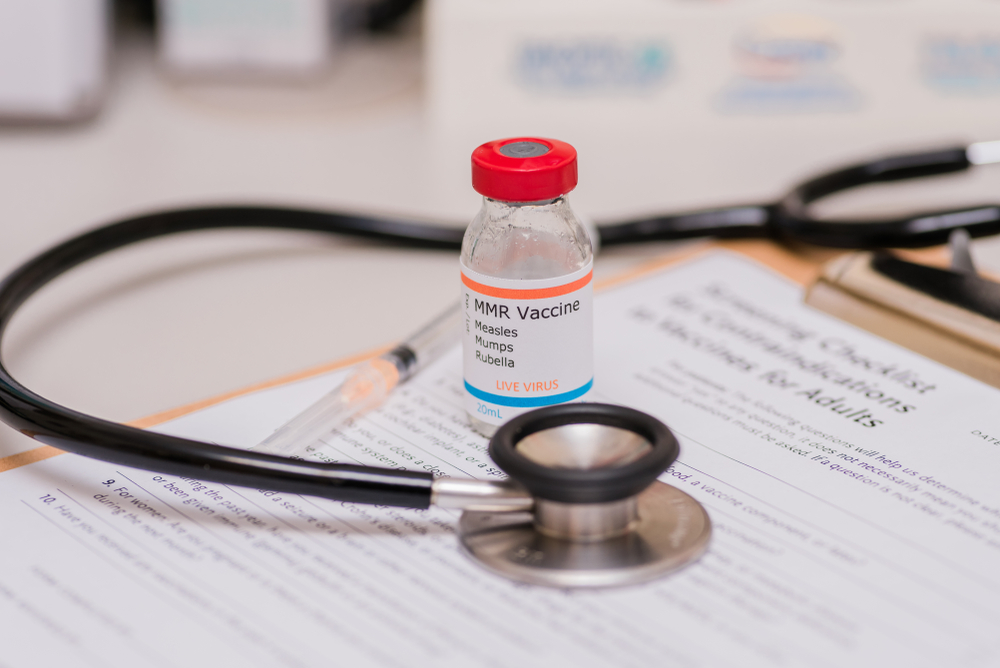
Falling Vaccination Rates Are Creating Vulnerable Pockets
Community vaccination levels are particularly important with measles because the virus spreads so efficiently. Around 95% of people need to be vaccinated to maintain strong community immunity, which helps prevent the virus from moving easily through a population and provides protection to people who cannot be vaccinated or who remain vulnerable for other reasons.
National averages, however, can conceal major differences between communities. Some areas have vaccination rates that remain high, while others have much lower coverage. During an outbreak among the Russian and Ukrainian immigrant community in Spartanburg, South Carolina, some schools reportedly had vaccination rates as low as 20%.
That creates conditions in which an imported measles infection can develop into a much larger outbreak. Once the virus reaches a group where many people are susceptible, transmission becomes much easier. The result can be a cluster of infections that continues expanding before health officials can bring it under control.
The decline in vaccination coverage has been a growing concern in recent years. The two-dose MMR vaccine is the main tool used to prevent measles, and the United States recommends two doses for children between the ages of one and six. The supplied figures state that the two-dose protection is about 97% effective against measles, making vaccination coverage a central part of preventing further spread.

The MMR Vaccine Remains The Main Defense
The measles, mumps and rubella vaccine has played a central role in reducing measles cases in the United States since it was introduced. Two doses are recommended for children, and high vaccination coverage makes it much harder for the virus to maintain chains of transmission after an infected person enters a community.
The current outbreak has also become entangled with a broader debate over vaccine policy and public health messaging. Health Secretary Robert F. Kennedy Jr. has faced criticism from public health experts over statements and policy changes involving childhood immunization. At the same time, Kennedy has publicly acknowledged the effectiveness of the MMR vaccine.
Kennedy has described the MMR vaccine as the “most effective way to prevent the spread of measles.” He has also promoted other approaches that public health experts have criticized as lacking sufficient evidence. The mixed messaging has become part of the wider debate surrounding the government’s response as case numbers continue climbing.
Earlier this year, a federal judge blocked the government from implementing a series of sweeping changes to childhood immunization recommendations under Kennedy’s leadership. The proposed changes included reducing the number of recommended childhood shots from 17 to 11, according to the supplied reporting.

The United States Could Lose Its Measles Elimination Status
The rising case count has also placed the country’s elimination status under renewed scrutiny. The United States has been considered to have eliminated measles since 2000, meaning continuous transmission of the virus had been stopped domestically even though individual cases could still arrive from other countries.
Elimination status can be lost when continuous transmission of the same measles virus strain continues for at least 12 months. That makes the current outbreaks particularly significant because the issue is no longer simply the number of individual infections recorded during a calendar year.
A panel is expected to consider the country’s elimination status in November. The decision will depend on whether the conditions required to maintain elimination have been met, including whether continuous transmission has occurred for the required period.

Canada lost its measles elimination status last year after sustained transmission. The possibility of the United States facing a similar assessment comes after a sharp increase in cases over the past 18 months, making the current outbreak one of the country’s most significant measles events in decades.
2026 Has Become A Record Year For Outbreak Activity
The scale of the outbreak becomes even clearer when the figures from recent years are placed next to each other. In 2024, the United States recorded 285 confirmed measles cases and 16 outbreaks. In 2025, confirmed cases increased to 2,289, while the number of reported outbreaks reached 48.
In 2026, 40 outbreaks had already been reported by September 24. The number of confirmed infections has reached 3,659, and 95% of those cases are associated with outbreaks. The figures show that the rise is being driven primarily by sustained clusters rather than a collection of unrelated individual infections.
There is also a significant carryover effect from outbreaks that began in the previous year. Of the 3,478 outbreak-associated cases recorded in 2026, 2,094 came from outbreaks that started during 2026, while 1,384 came from outbreaks that began in 2025.
That pattern shows how difficult it can be to stop measles once transmission becomes established in a community. An outbreak can continue generating new cases across months, particularly when susceptible people remain concentrated in the same areas.
Nearly Every Part Of The Country Is Being Touched
The latest figures show confirmed cases across 47 jurisdictions, covering a wide geographic area of the United States. Alabama, Alaska, Arizona, California, Colorado, Connecticut, Delaware, Florida, Georgia, Idaho, Illinois, Indiana, Iowa, Kansas, Kentucky, Louisiana, Maine, Maryland, Massachusetts, Michigan, Minnesota, Missouri, Montana, Nebraska, New Jersey, New Mexico, New York City, New York State, North Carolina, North Dakota, Ohio, Oklahoma, Oregon, Pennsylvania, Rhode Island, South Carolina, South Dakota, Tennessee, Texas, Utah, Vermont, Virginia, Washington, West Virginia, Wisconsin and Wyoming have reported cases.
That geographic spread does not mean every state is experiencing the same level of transmission. Measles outbreaks tend to be concentrated in particular communities, and vaccination coverage can vary substantially from one location to another.
Several states have experienced new outbreaks or continued clusters during the year. Virginia and Pennsylvania have been dealing with outbreaks, while Utah has continued responding to a cluster that began in 2025. The continuing activity demonstrates how infections can persist even after the original source of an outbreak is no longer obvious.
The CDC also reports 17 cases among international visitors. Imported infections are not unusual because measles continues circulating internationally. The bigger public health concern comes when an imported case enters a community where vaccination coverage is low enough for the virus to continue spreading.
The Numbers Could Keep Rising Before The Year Ends
The 3,659 confirmed cases reported through September 24 are not necessarily the final number for 2026. The figures can change as jurisdictions report additional confirmed infections, and health departments may update existing case counts as investigations are completed.
That means the current total should be viewed as a snapshot rather than the final measure of the year’s outbreak activity. Even so, the comparison with previous years is already stark. The United States has recorded more confirmed measles cases in the first nine months of 2026 than it did during the entire previous year.
The immediate challenge is stopping existing outbreaks from continuing to generate new infections. That depends heavily on identifying cases quickly, tracing exposures and maintaining high vaccination coverage in communities where the virus is circulating.
The United States spent decades driving measles transmission down to the point where elimination became possible. The current numbers show how quickly that achievement can come under pressure when protection falls below the level needed to stop the virus from spreading.