
Your cart is currently empty!
Dad Copies His Daughters Selfies And Accidentally Becomes An Internet Star
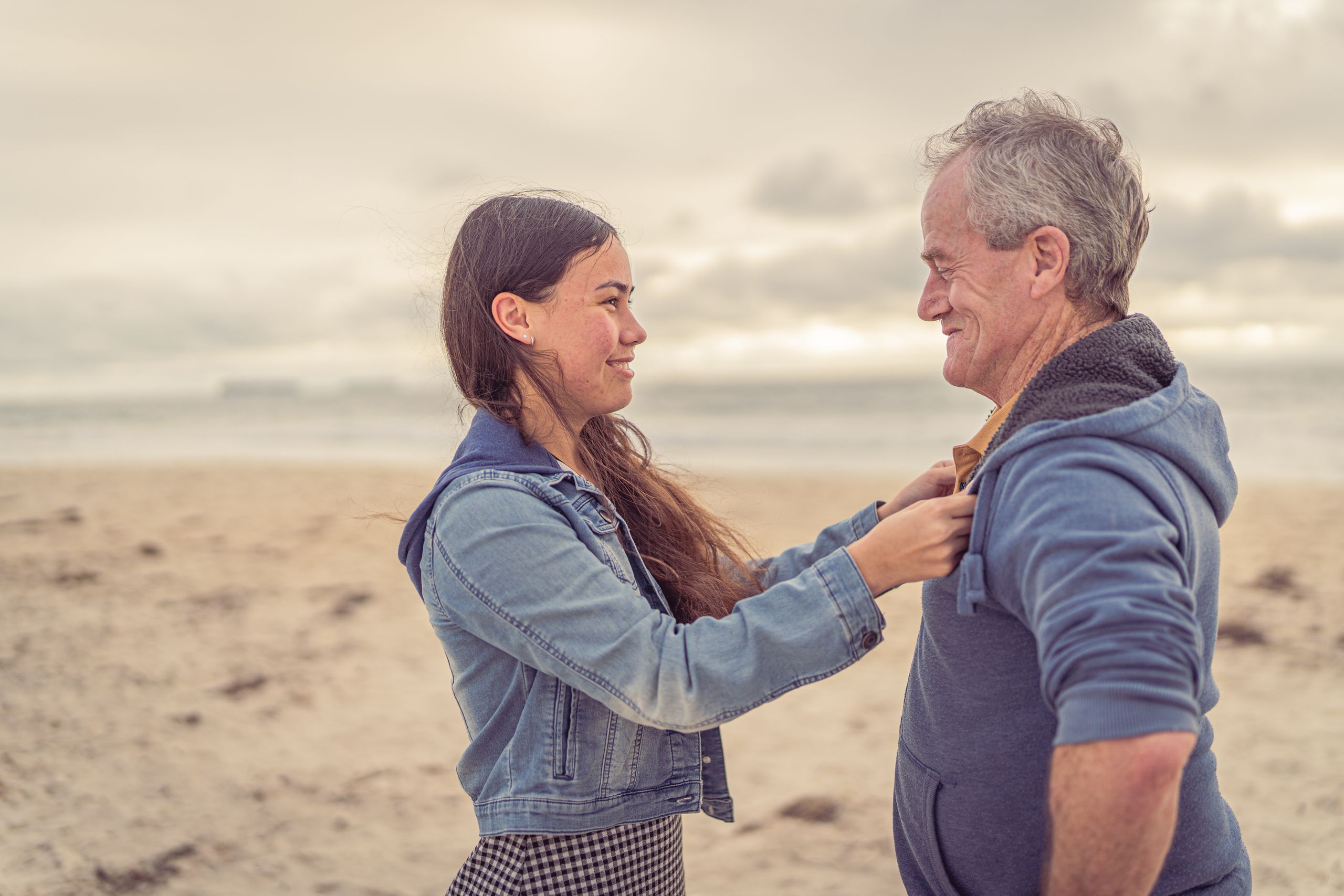
A Spokane father saw strangers leaving crude comments under his 19-year-old daughter’s selfies and decided he needed to do something about it. His solution was so unusual that it completely backfired. Instead of making his daughter less visible online, Chris Martin recreated her selfies himself, and the dad quickly became an internet sensation.
Contents
show
It Started With A Comment Section He Hated
In April 2016, Chris Martin was 47 and living near Spokane, Washington. He worked in warehouse inventory and performed stand-up comedy when he could get a stage. His daughter, Cassie, was 19 and regularly posted selfies on Facebook, but one photo attracted attention from men her father did not know.
Martin had already asked Cassie to tone down the photos, but she continued posting and the comments kept appearing. Rather than deleting the picture or starting an argument with strangers online, he decided to copy his daughter and put himself into the joke.
“I did it because she posted something and the guys in the comment section were too much,” Martin said. “So to put water on the fire, I posted one like it and said, ‘What about me, guys?’ and that did it.”
The response was immediate, and the unwanted comments under Cassie’s photo stopped. Martin had found a way to make his presence known without getting into an online fight, although he had no idea the joke would soon reach an audience far beyond his family.
The Joke Quickly Became A Family Project

The first recreation could have been a one-off, but Martin’s wife, Jani, soon got involved. She came home with a white tank top and told her husband that Cassie had posted another selfie, meaning he had another photograph to recreate.
The new picture featured Cassie surrounded by leaves. Martin did not realize the image used a Snapchat filter, so he taped an actual branch to his head. The plan looked convincing enough until he discovered that the branch contained tiny bugs.
“While trying to do it, that branch on my head had tiny little bugs in it I wasn’t aware of,” Martin said. “So as I’m sitting there trying to take a photo, I’m wondering why I’m itching so much.”
Martin eventually got the bugs out and kept going. “I guess all artists suffer for their craft,” he added, turning an unpleasant experience into another part of the joke.
Sharpie Tattoos Made The Photos Even More Ridiculous
Cassie also had tattoos, while her father had none. When Martin wanted to recreate photographs showing her body art, he simply drew his own tattoos onto his skin.
At first, he used Sharpie, which proved harder to remove than expected. “Took me 3 days to get all the ink off,” Martin wrote in a post that June. He eventually switched to dry erase markers.
One of his favorite recreations involved Cassie posing with her hand against her chin while showing a tattoo of a hammerhead shark. Martin copied the pose but replaced the tattoo with Jabberjaw, the cartoon shark from Hanna-Barbera.
The photographs worked because he was not attempting to look like his daughter. He was deliberately making the comparison absurd.
His Daughter Eventually Joined The Joke

Cassie initially rolled her eyes at what her father was doing, but her reaction changed once she saw her friends laughing at the photographs. “She rolled her eyes at first, but once she saw her friends thought it was funny, she was OK with it,” Martin said.
Cassie later explained that comedy had always been part of her father’s parenting style. “My dad is a huge comedian in the family so when he did the pictures it was a huge laugh,” she said.
She even changed her Instagram bio to read, “MY FATHER HARASSES ME ON SOCIAL MEDIA.” Martin responded by describing himself as “that Selfie Dad guy,” and the family joke had become an internet identity.
The Dad Who Wanted Less Attention Got Twice As Much
Martin’s original goal was simple: make strangers think twice before commenting on his daughter’s photographs. Instead, strangers started following him, and his audience grew rapidly.
By the end of June 2016, Martin had passed 16,000 followers. About a year later, he had more than 140,000, and by February 2018 his account had more than 150,000 followers while Cassie’s account had almost 75,000.
The numbers created an amusing twist. Martin had tried to make his daughter less visible, but he ended up becoming roughly twice as visible as she was by recreating the photographs that started the whole situation.
His audience also stretched far beyond the United States. “We’re huge in Sweden, Germany, Australia and England,” Martin said. “America was almost no one, which was weird.”
The international attention became part of the story, and Martin recalled that one German newspaper gave him a headline that translated to “sexy papa.”
The Internet Had A Different Idea Of Who The Star Was
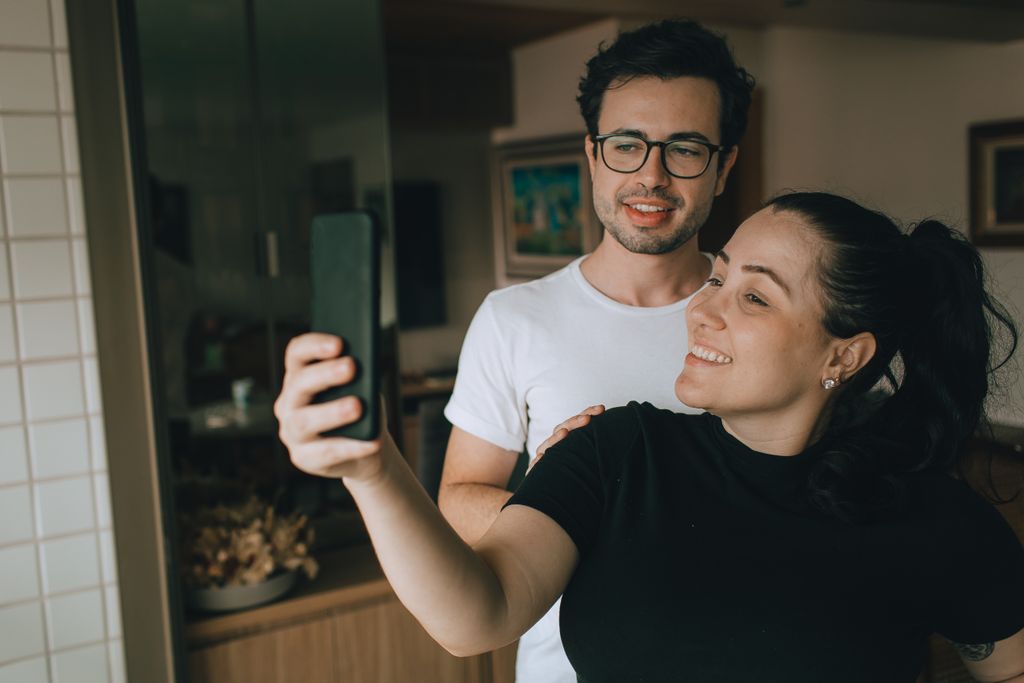
The photographs were built around Cassie’s original posts, but Martin’s exaggerated recreations became the attraction. His approach was easy to understand, yet personal enough to make people curious about what he would copy next.
Instead of giving strangers a lecture about what his daughter should post, Martin inserted himself into the visual joke. The result was a strange form of family comedy that depended on both of them understanding where the line was.
Cassie ultimately embraced it and even suggested that other parents could use humor when discussing their children’s choices. “My dad’s humor has always been twisted in with my parenting,” she said. “I think some parents should tie in some comedy with their opinions on certain life choices their kids make.”
Then The Messages Became More Serious

The selfie recreations attracted plenty of laughs, but Martin eventually discovered that people were connecting with the photographs for reasons he had never expected. He said fathers contacted him while grieving, while other people told him the images reminded them of parents they had lost.
One woman told Martin that her autistic daughter loved looking at the photographs. The project had started with a comment section and a joke, but some viewers were finding personal meaning in something Martin had never designed to carry that weight.
“It meant a lot deeper things to some people than just a little laugh,” Martin said. “It’s humbling, because I started out just being stupid, and it hit a nerve with so many people.”
The account also attracted criticism, with Martin saying some people called him a jerk and questioned what he was doing. He disagreed with their interpretation, but he acknowledged that the joke could eventually go too far.
“I wondered if it might get old,” he told PEOPLE. “I didn’t want to get to the point where I was pathetic for attention.”
Cassie Eventually Toned Down Her Selfies
The original problem Martin wanted to solve did eventually change. The crude comments under Cassie’s photos stopped, and she later toned down some of her own selfies while becoming more aware of how photographs could be received online.
Martin believed the experience exposed a broader issue surrounding social media. “There’s too much pressure for everybody to look sexy on the Internet,” he said.
That observation gave the bizarre joke a straightforward starting point. Social media had created a space where a young woman’s photograph could attract strangers she did not know, and Martin’s response was to make himself part of the same visual language.
His method was awkward, funny and deliberately over the top, but it accomplished the immediate goal. The men who had been filling Cassie’s comment section with crude remarks stopped, while her father became the person strangers wanted to see next.

A Family Joke Became An Internet Phenomenon
Several details helped turn Martin’s unusual response into a story that people kept sharing:
- A concerned father: Martin wanted strangers to stop leaving crude comments on his daughter’s photos, so he copied one of her poses.
- A family joke: His wife encouraged him to recreate another selfie, turning the first photograph into an ongoing project.
- A willingness to look ridiculous: Branches, fake tattoos and exaggerated poses became part of the routine.
- An unexpected audience: Followers arrived from countries including Sweden, Germany, Australia and England.
- A deeper connection: Messages from grieving parents and families gave the joke an emotional dimension Martin had never expected.
The story also shows how quickly an ordinary family moment could escape its original context online. Martin did not set out to become famous, and he was not trying to build a social media career when he first copied his daughter.
He was responding to a comment section, but the internet turned that response into something much bigger. The father who wanted strangers to leave his daughter alone became the person thousands of strangers were waiting to see next.
The Warning Became The Joke
There is an obvious irony in where Martin’s experiment ended. He wanted fewer strangers paying attention to Cassie, but thousands began paying attention to him instead.
His daughter remained part of the joke, while her father became an unexpected viral personality through the same photographs he had originally wanted to discourage. What began as an awkward attempt to shut down crude comments became a family comedy routine that traveled far beyond Spokane.
Martin’s solution was never complicated. He simply stepped into the frame, copied the joke and made himself impossible to ignore.