
Your cart is currently empty!
The Ancient Apple Tree Hiding in a Maine Backyard Had A Secret Nobody Expected
The apple tree looked like it was barely hanging on. Its trunk was hollow, half of it had already rotted away, and what remained leaned sideways on three twisted limbs covered in moss and blue lichen. Bigger apple trees stood nearby, making the battered specimen easy to overlook. There was nothing about it that suggested it had survived for centuries, carried an obscure piece of European history across the Atlantic, or belonged to a variety that had apparently disappeared from North America.
Contents
show
Then historian Todd Little-Siebold took a few leaves. Little-Siebold, a historian at College of the Atlantic, spends much of his time encouraging people to look closely at old trees and ask a deceptively simple question: who planted them? Hundreds of Maine apple trees were eventually sampled and genetically tested, but almost all matched varieties researchers already knew. The unimpressive tree on Verona Island was different. Its DNA revealed that it was a Drap d’Or de Bretagna, an ancient French apple variety, and no other living example of the cultivar was known anywhere in North America. What looked like a dying backyard tree had quietly preserved a piece of apple history for generations.
The Smallest Tree In The Dooryard
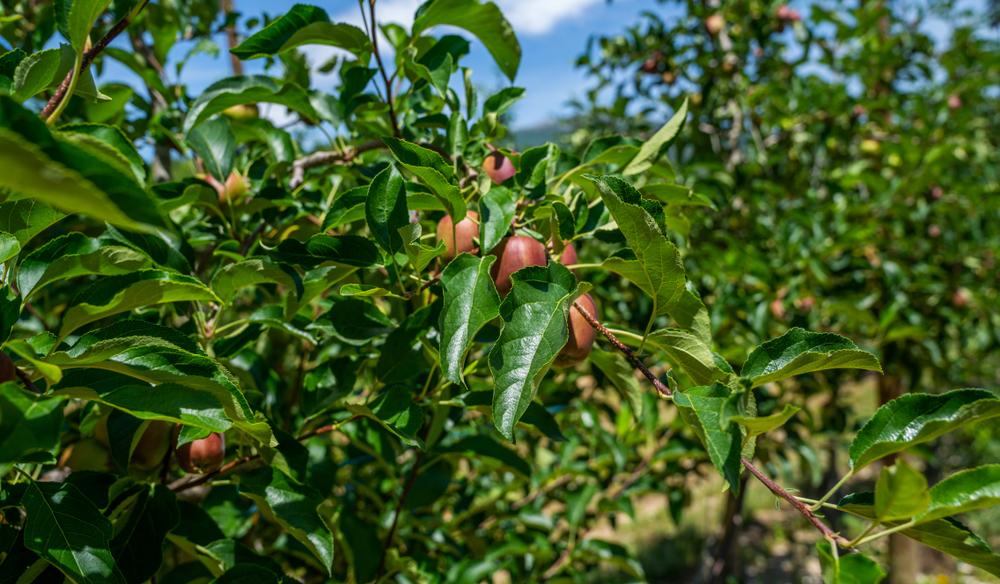
Ron and Jeanne Russell had owned the Verona Island property since 1979, and the tree stood near an old farm boundary. Its appearance gave little indication of its age or importance. John Bunker, the founder of Fedco Trees and the Maine Heritage Orchard, examined the trunk and saw evidence of a much larger tree that had slowly disappeared over time. “It looks to me as though it was once several times larger. Half the trunk is gone,” Bunker said, describing a tree that had lost much of its original structure while somehow continuing to live and produce fruit.
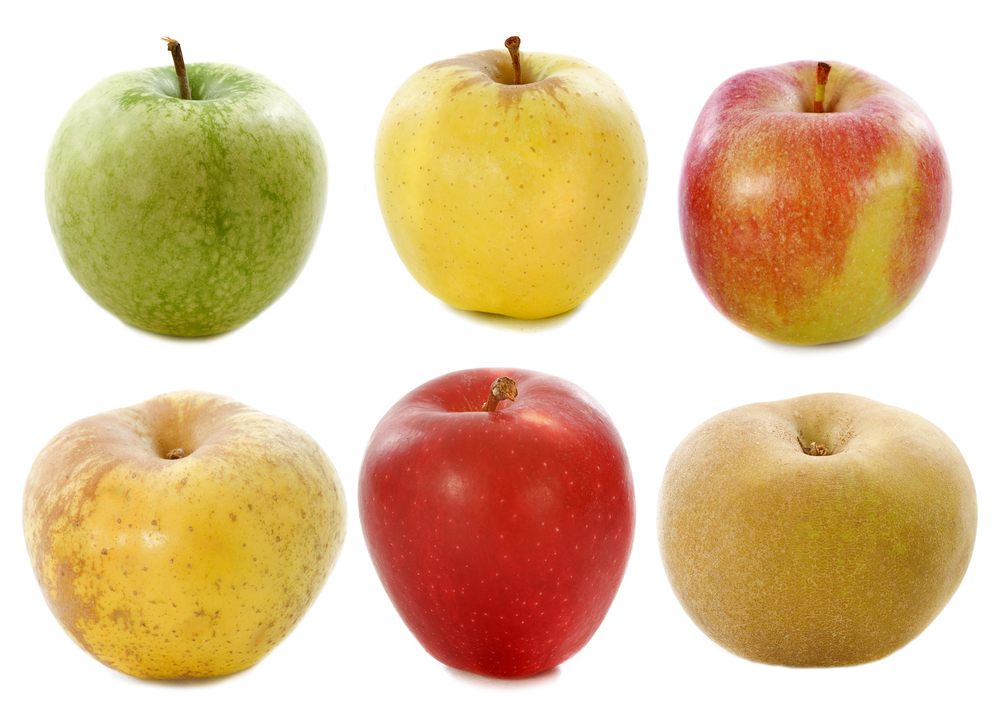
The apples themselves were another clue that the tree was worth investigating. They were chartreuse yellow with a web of russeting across the skin, while the flesh was dense and carried a combination of strong acidity and sweetness. People who tasted them described the flavor as complex and almost nutty. Every spring, the tree still produced pale pink flowers across its three surviving limbs, followed later by fruit. Despite its hollow trunk and fragile appearance, the tree continued following the same cycle it had presumably followed for generations.
That persistence was part of what made the discovery so remarkable. Little-Siebold later described the tree as “completely and utterly visually unremarkable,” yet it turned out to be anything but ordinary. The tree had survived on a property where nobody fully understood what it represented, and for decades it simply remained another old apple tree in a Maine yard. Its story only began to emerge when someone decided that even an unimpressive tree might have a history worth investigating.
A Few Leaves Changed Everything
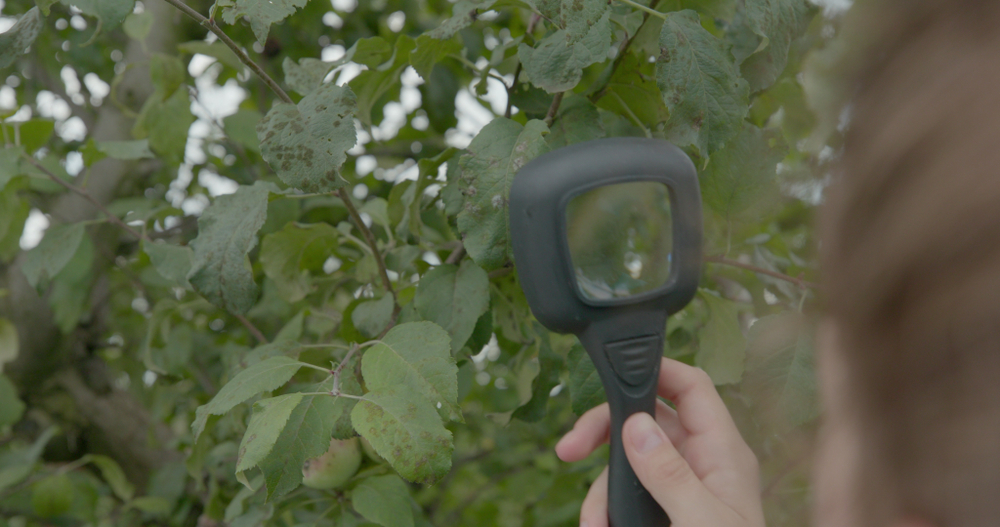
The breakthrough began with leaves rather than fruit, photographs, historical records, or a dramatic excavation. Samples from the Verona Island tree were collected and sent to a genotyping laboratory in June 2023, alongside material from hundreds of other Maine apple trees. The goal was to compare their genetic signatures against an extensive reference collection containing apple varieties from Europe and North America. Most of the trees could be connected to varieties researchers already recognized, but the Verona Island sample produced an identification that immediately raised a much bigger historical question.
Cameron Peace, a tree fruit geneticist at Washington State University, carried out the comparison with Nick Howard, a molecular geneticist working in the Netherlands, and Bjarne Larsen, a plant breeding researcher in Denmark. Their reference work allowed them to compare the genetic profile of the mysterious tree with known cultivars and trace relationships that could not be established simply by looking at the fruit. By September 2023, the results had arrived, and the tree that had seemed so ordinary suddenly had a documented genetic identity.
John Bunker, who had already spent decades searching for lost Maine apples, had deliberately avoided guessing what the tree might be before the testing. “I had no knowledge at all,” he said. The genetic finding was eventually published in a scientific paper in August 2024, turning a quiet discovery in a Maine dooryard into a much broader piece of evidence about how old apple varieties moved across continents and survived long after their names disappeared from common use.
Meet The Golden Cloth Of Brittany
The tree was identified as Drap d’Or de Bretagna, a dessert apple associated with Brittany in France. The name roughly translates to “Golden Cloth of Brittany,” and historical pomological records place a Drap d’Or in French nursery listings as early as 1628. The identification therefore connected the battered Maine tree to a variety with roots reaching back centuries into European horticulture. But the genetic result contained another detail that made the discovery especially unusual: no other living Drap d’Or de Bretagna was known anywhere else in North America.
That meant researchers were looking at more than an old tree with an interesting name. The Verona Island specimen represented a living example of a variety that had effectively disappeared from the American record. It had continued producing apples year after year while its identity became forgotten. The tree had survived even as the horticultural system that once carried and named the variety changed around it.
The discovery also offered a possible explanation for how the apple reached Maine in the first place. Bjarne Larsen pointed to the human value that old fruit varieties could have held for immigrants who transported them across the Atlantic. “If immigrants brought that cultivar with them across the Atlantic and planted it in their gardens, it’s because it really had a value for them,” he said. An apple tree could therefore preserve more than genetics. It could preserve evidence of what people chose to carry with them when they began new lives thousands of miles from home.
An Apple May Have Crossed The Atlantic Centuries Ago
Todd Little-Siebold’s working theory places the arrival of the variety in the late 1600s, when French settlers were living around Castine, Maine. The idea is that settlers may have brought the cultivar with them, planted it in the region, and then propagated it through cuttings and grafting. Apple trees do not have to be grown from seeds to reproduce a particular variety. By taking living wood from one tree and grafting it onto another root system, growers can essentially preserve the same genetic variety across generations.
The Verona Island specimen is thought to have grown from a cutting taken around 1820, which would mean the tree itself has already survived for at least two centuries. The Maine Organic Farmers and Gardeners Association has placed its minimum age at around 200 years, putting it among the oldest living apple trees on the continent. The exact chain of trees connecting the French original to the modern specimen cannot be reconstructed completely, but the genetic evidence provides a strong link between the living tree and the old French cultivar.
Peace explained why the oldest surviving trees can sometimes be the hardest to identify. “Being oldest means it was least likely to be discovered, more likely that it’s disappeared,” he said. The same isolation that allowed an unusual tree to survive could also allow its identity to disappear. A family might continue caring for an old tree without knowing its historical name, while the variety itself vanished from nurseries and commercial orchards elsewhere.
The Ancient Apple Is Connected To Modern Fruit
The story becomes even more surprising when researchers trace the genetics of old French apples into modern varieties. Drap d’Or de Bretagna belongs to an ancestral group that researchers describe as the grandmothers of many early American apple varieties. That means the genetic history preserved in this obscure Maine tree is connected to fruit that can still be found today. The varieties GoldRush and Cosmic Crisp are among the cultivars with ancestry linked to this broader group.
This creates a strange horticultural time capsule. A person buying an apple in a supermarket today would have little reason to suspect that its ancestry could lead back to varieties cultivated centuries ago. Yet the genetics of old apples continue through their descendants, even when the original cultivar itself disappears from commercial production. In that sense, the Verona Island tree represents a missing name that still has echoes in modern orchards.
The discovery also shows why genetic testing has become so valuable for heritage fruit research. Appearance alone can be misleading, especially when old varieties have changed through local growing conditions or when different apples look similar. DNA can reveal relationships that generations of growers may have forgotten. In this case, it transformed an anonymous tree into a documented link between European horticulture, early American settlement, and the apples grown today.
Researchers Are Saving The Tree Before It Is Too Late
There is one obvious problem with the discovery: the original tree is in poor condition. Much of the trunk has disappeared, the remaining structure is hollow, and its roots and surviving limbs are carrying the weight of a tree that has already endured an extraordinary amount of time. John Bunker believes it could potentially stand for another century, but there is no guarantee that it will. A storm, disease, structural failure, or simple old age could eventually bring down the original specimen.
Researchers and heritage apple growers have therefore begun preserving it through propagation. MOFGA staff took twig cuttings and grafted them onto rootstock at the Maine Heritage Orchard in Unity, a former gravel pit that now contains more than 300 rare apple varieties and 20 heritage pears. Bunker also placed cuttings in his own Palermo orchard, creating another backup in case the original tree eventually disappears.
The strategy means the genetics can survive even if the ancient tree cannot. The grafted trees will take years to mature and produce fruit, but they offer researchers something the original tree alone cannot provide: a chance to preserve the variety in multiple locations. Sarah Alexander, executive director of the Maine Organic Farmers and Gardeners Association, described the discovery as a correction to the historical record and said, “This discovery reshapes our understanding of apple lineage and emphasizes the importance of preserving heirloom varieties.”
Then Two More Trees Turned Up
The Verona Island tree seemed to be a solitary survivor until another Maine resident unknowingly carried the story forward. On September 21, a housing counselor from Belfast named Hannah Tays brought a bag of apples to a Maine apple identification table. The fruit was tested, and the following April researchers confirmed that two additional Maine trees matched the genetic profile of the Verona Island specimen.
Suddenly, the only known living example in North America had become three. The discovery suggests that rare apple varieties can survive in places where nobody recognizes them, particularly around old farms, family properties, and rural communities where fruit trees may have been maintained long after their original commercial importance disappeared.
DNA testing has already been correcting similar mistakes. Over a six-year period, about a dozen varieties at the Maine Heritage Orchard were discovered to have been incorrectly labeled. That matters because a mislabeled tree can effectively disappear from historical records even while the living plant remains. Genetic identification gives researchers a way to reconnect surviving trees with the varieties they actually represent.
Thousands Of Apples Have Already Disappeared
The discovery also points to the enormous scale of America’s lost apple diversity. A 1905 USDA catalog counted roughly 14,000 kinds of apples grown in the United States during the previous century, including more than 600 varieties recorded in Maine alone. Today, about 2,500 apple varieties survive in the United States, and only around 100 are grown commercially. Just 15 varieties account for most of the market.
That concentration means modern shoppers encounter only a tiny portion of the apple diversity that once existed. Thousands of varieties that once grew in American orchards have disappeared from everyday agriculture, while the remaining rare cultivars are scattered among heritage orchards, old farms, and private properties. Some may still exist under incorrect names, waiting for someone to identify them.
Researchers are also careful not to claim that the ancient French variety automatically contains some special agricultural advantage. The genetic testing established ancestry, but it has not shown that Drap d’Or de Bretagna possesses unusual disease resistance or drought tolerance. CJ Walke, who manages the heritage orchard, described the possibility as something growers are still investigating, saying they are “hoping that there are some resilient characteristics in some of these varieties that might help apple propagation into the future.”
The Biggest Clue Was Sitting In Plain Sight
The strangest part of the entire discovery may be how easy the tree was to ignore. It was not the largest tree on the property, the healthiest, or the most impressive. Its trunk was hollow and partially gone, its branches were twisted, and its appearance gave almost no indication that it carried the genetic identity of an ancient French cultivar that had disappeared from the North American record.
For decades, the tree simply grew where it had been planted. It flowered in spring, produced fruit, and survived another year. Now its cuttings are being preserved in heritage orchards, researchers have identified two additional matching trees, and the discovery has added another piece to the history of how apples traveled from Europe into North America.
The lesson is remarkably practical: an old tree does not need to look important to be important. Sometimes the evidence of a centuries-old story is sitting quietly in the corner of a yard, waiting for someone to ask the right question.