
Your cart is currently empty!
This 200 Year Old Whale Could Hold A Secret To Longer Human Lives
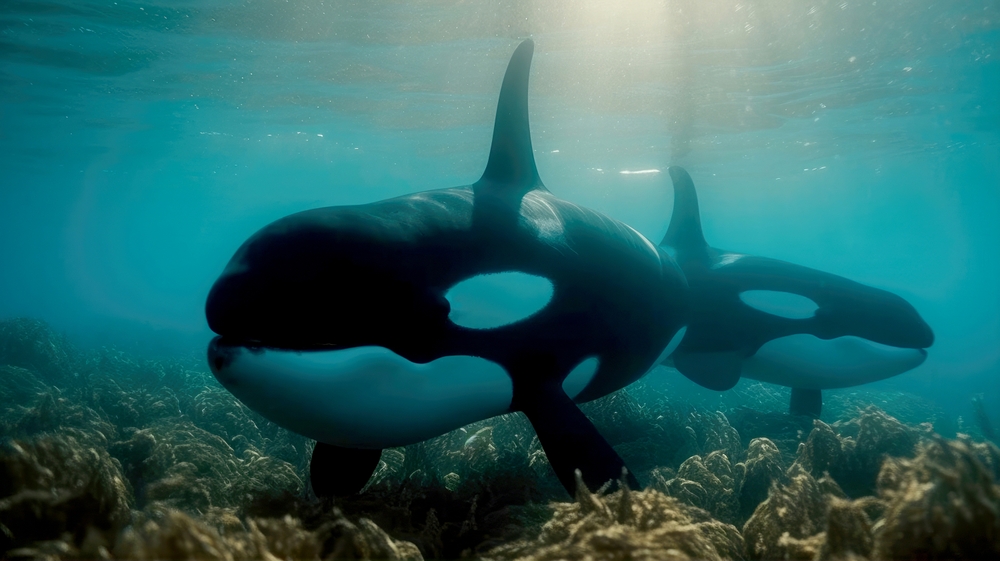
A whale that can live for more than 200 years has given scientists a fascinating clue about one of biology’s biggest mysteries: why some bodies age far more slowly than others. Researchers studying bowhead whales have identified a protein involved in DNA repair that may help explain how these enormous animals survive for so long.
Contents
show
The protein has also produced intriguing results in laboratory experiments involving human cells and fruit flies. That does not mean humans can suddenly live to 200, but it has given researchers another potential pathway to investigate in the search for healthier aging.
The Whale That Can Outlive Several Generations
Bowhead whales are already extraordinary before scientists even look at their DNA. These Arctic giants can weigh more than 80,000 kilograms and have a maximum lifespan exceeding 200 years, making them the longest-lived mammals currently known.
For comparison, the verified human longevity record belongs to Jeanne Calment, who lived to 122 years and 164 days. A bowhead whale can therefore survive for almost twice as long as the longest-lived human ever documented.
That creates a major biological puzzle because large animals have enormous numbers of cells. More cells and more time should theoretically create more opportunities for mutations and other forms of damage to accumulate.
Yet bowhead whales appear to have unusually strong defenses against cancer and other problems associated with aging. Scientists have been studying those defenses to understand whether they could reveal mechanisms relevant to human health.
A Protein Called CIRBP Has Caught Scientists’ Attention
The protein at the center of the latest research is called cold-inducible RNA-binding protein, or CIRBP. Researchers found unusually high levels of it in bowhead whale cells, with the protein appearing at levels around 100 times higher than in several other mammals examined.
DNA is constantly exposed to damage from normal cellular activity and environmental stress. Cells have repair systems that fix much of that damage, but problems can become more serious when repairs fail or when genetic damage accumulates over time.
Researchers found that bowhead whale CIRBP improved two major pathways involved in repairing DNA double-strand breaks when it was introduced into human cells. These breaks are among the more dangerous forms of DNA damage because incorrect repairs can leave mutations behind.
The discovery gives scientists something much more specific to investigate than the general observation that bowhead whales live for a very long time. It points toward a particular protein and a particular cellular process that could potentially influence aging.
Human Cells Produced An Intriguing Result
The most interesting part of the research came when scientists tested the whale protein in human cells. The experiments found that bowhead whale CIRBP increased the efficiency and accuracy of DNA repair, while also reducing the formation of micronuclei associated with damaged chromosomes.
Researchers then tested increased CIRBP expression in fruit flies, where the results became even more interesting. The flies lived longer and showed improved resistance to radiation exposure when the protein was overexpressed.
That does not prove the same effect would occur in people. It does show that the protein is capable of producing measurable biological changes in other organisms, giving researchers a reason to investigate the mechanism further.
University of Rochester researcher Vera Gorbunova, who helped lead the research, said, “This research shows it is possible to live longer than the typical human lifespan.”
The statement should be understood in the context of the research, rather than as a prediction that people will soon reach 200. The experiments provide clues about biological longevity, but human lifespan extension remains a much bigger question.
Why DNA Repair Could Be So Important
Every cell in the human body depends on DNA remaining functional. The molecule carries the instructions cells need to build proteins and carry out their normal jobs, while repair systems constantly work to correct damage.
The problem is that DNA damage can accumulate as organisms age. If repairs become less effective, mutations and cellular dysfunction can contribute to diseases associated with aging, including cancer.
The bowhead whale appears to have evolved particularly effective systems for maintaining its genome. Researchers found evidence of enhanced DNA double-strand break repair and lower mutation rates in bowhead whale cells compared with cells from several other mammals.
That could help explain how an animal can remain healthy for an extraordinary length of time. Instead of allowing damage to accumulate unchecked, its cells may be better equipped to detect and repair some of the problems that build up during aging.
The Mystery Of Peto’s Paradox
The findings also connect to a longstanding biological puzzle known as Peto’s paradox. Cancer generally develops when mutations and other cellular changes allow abnormal cells to grow uncontrollably, so animals with vastly more cells and longer lifespans might be expected to develop cancer far more often.
That does not appear to happen in the way scientists would expect. The bowhead whale offers researchers another opportunity to study how a massive, long-lived animal can maintain its cells without experiencing cancer at the rate its size and lifespan might suggest.
Could Humans Ever Use The Whale Protein?
This is where the viral claim needs some serious qualification. Scientists have not shown that giving humans CIRBP would allow them to live to 200 years, and there is currently no evidence that taking the protein as a supplement would extend human lifespan.
What researchers have actually demonstrated is more specific. Bowhead whale CIRBP improved DNA repair in human cells, while increased expression of the protein extended lifespan in fruit flies under laboratory conditions.
Researchers now need to determine whether similar effects can be safely produced in living mammals and, eventually, whether the pathway has any meaningful application to humans. They would also need to establish how much activity is beneficial and whether increasing the protein could create unwanted effects elsewhere in the body.
Gorbunova said researchers are interested in finding ways to increase the same pathway in humans. For now, that remains a research direction rather than an available anti-aging treatment.
Cold Temperatures Add Another Twist
There is another unusual detail that has caught attention: lower temperatures appeared to enhance CIRBP activity. That observation has naturally sparked interest because cold exposure is already popular among people interested in longevity and wellness.
However, the research does not establish that cold showers or ice baths can reproduce the bowhead whale’s longevity. The whale’s biology involves many interacting systems, and one laboratory observation cannot be turned into a human treatment recommendation.
The cold connection is therefore best viewed as another clue for scientists to investigate. It may eventually help researchers understand how the protein responds to environmental conditions, but much more work is needed before drawing conclusions about human lifespan.
Scientists Are Looking To Long-Lived Animals For Answers
The bowhead whale is not the only animal attracting scientists interested in aging. Researchers have also studied elephants, naked mole rats and bats because these species display biological characteristics that appear to protect them from some diseases associated with aging.
Bowhead whales are especially useful because they combine enormous body size with extraordinary longevity. Earlier research has identified whale-specific genetic adaptations involving DNA repair, cell-cycle regulation, cancer and aging, adding to the growing evidence that their biology contains unusual defenses against cellular damage.
The new CIRBP findings add another potential piece to that puzzle. Instead of studying human aging in isolation, scientists can compare humans with animals that appear to have evolved different ways of protecting their cells.
That approach could eventually reveal targets for therapies designed to improve genome maintenance or reduce some forms of age-related damage. It could also show that extreme longevity depends on several biological defenses working together rather than one magical molecule.
A 200-Year Human Lifespan Is Still A Long Way Away
The idea of a 200-year human lifespan makes for an irresistible headline, but the actual research is more nuanced. Scientists have found evidence that a protein highly abundant in bowhead whales can improve DNA repair in human cells and influence lifespan in fruit flies, not evidence that humans can currently live for two centuries.
That distinction does not make the discovery less interesting. The bowhead whale has given researchers another biological system to study, and its extraordinary lifespan suggests that nature may contain solutions to aging that humans have only begun to uncover.