
Your cart is currently empty!
The Woman Behind NASA’s Next Giant Telescope Was Breaking Barriers Long Before Hubble Took Flight
A NASA telescope preparing to explore some of the biggest mysteries in the universe carries a name that deserves far more attention. Nancy Grace Roman helped shape American space astronomy from its earliest days, becoming NASA’s first chief astronomer and its first female executive. Long before the Hubble Space Telescope became one of the most famous scientific instruments ever built, Roman was helping create the programs and opportunities that made ambitious space observatories possible.
Contents
show
Roman’s story began decades before the telescope bearing her name was conceived. Born in 1925, she developed a fascination with astronomy as a child, studied at institutions that were only beginning to open more doors for women in science, and eventually joined a newly established NASA. Her career would put her at the center of the agency’s early astronomy efforts and help earn her the nickname “mother of Hubble.”
A Childhood Fascination With The Night Sky
Roman was born on May 16, 1925, and grew up with parents who encouraged her interest in the natural world. Her mother was a music teacher and her father was a geophysicist, and Roman later credited them with influencing her scientific curiosity. Her mother regularly took her outside in Michigan to look at constellations and the aurora, while also teaching her about birds, trees, animals and plants. In a 1980 interview with historian David DeVorkin, Roman recalled, “I teasingly have blamed my mother for getting me interested in astronomy,” explaining that those early experiences helped spark an interest that would stay with her for the rest of her life.
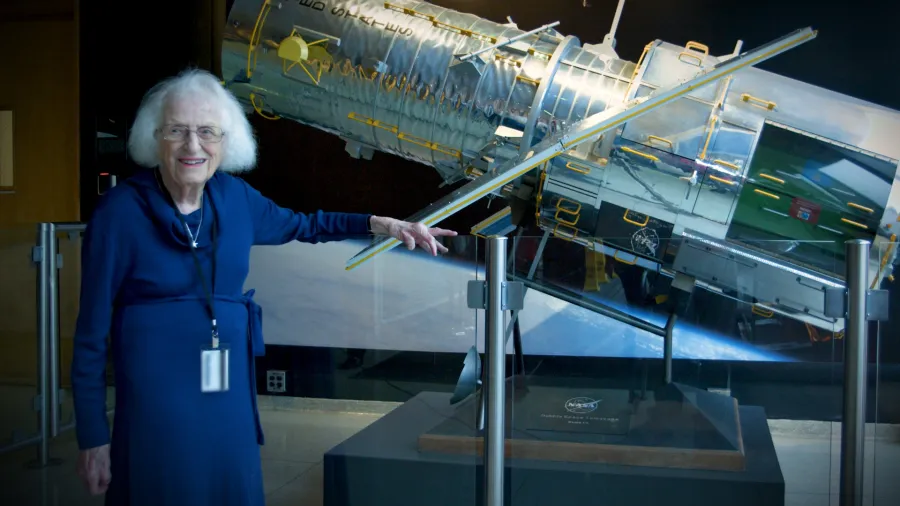
Image Credit Nasa
By the age of 11, Roman had taken that fascination a step further by starting an astronomy club with classmates. She spent her free time visiting the local library and searching for books that could help her understand more about the stars and the universe. Roman later remembered that she “read everything I could get my hands on,” and by junior high school she had already decided that astronomy was the field she wanted to pursue. She eventually attended Swarthmore College in Pennsylvania, a choice that gave her the opportunity to study astronomy at a time when women still faced significant barriers in higher education.
Roman later continued her studies at the University of Chicago, where she worked at Yerkes Observatory. She became the first woman on the observatory’s academic staff, adding another milestone to a career that was already moving into territory few women had entered. Her early work was not about chasing fame or becoming a household name. She was building the scientific experience that would eventually put her in a position to help shape the direction of American astronomy.
Her Career Took A Major Turn When NASA Was Created
After her years in academia, Roman moved to the U.S. Naval Research Laboratory, where her research covered subjects including stars, galactic structure and orbital mechanics. She also worked on experiments involving radar bounced off the Moon. Those experiences gave her a broad scientific background just as the United States was entering a new era of space exploration, and that timing would prove crucial when NASA was established in 1958.
Only a year later, Roman was asked to join the newly created agency and establish its astronomy program. The appointment made her NASA’s first-ever chief astronomer and the agency’s first female executive. Rather than simply joining an existing department, she was helping build an entire area of scientific work within an organization that was itself still taking shape. Her job placed her in a position to advocate for astronomy missions and help establish the scientific foundation for observing the universe from space.
Roman’s work came at a moment when astronomers were increasingly interested in putting telescopes above Earth’s atmosphere. Observing from space offered major advantages because Earth’s atmosphere can interfere with astronomical observations. Building that capability required years of scientific planning, institutional support and investment, and Roman became one of the people helping push those efforts forward.
Why She Became Known As The “Mother Of Hubble”
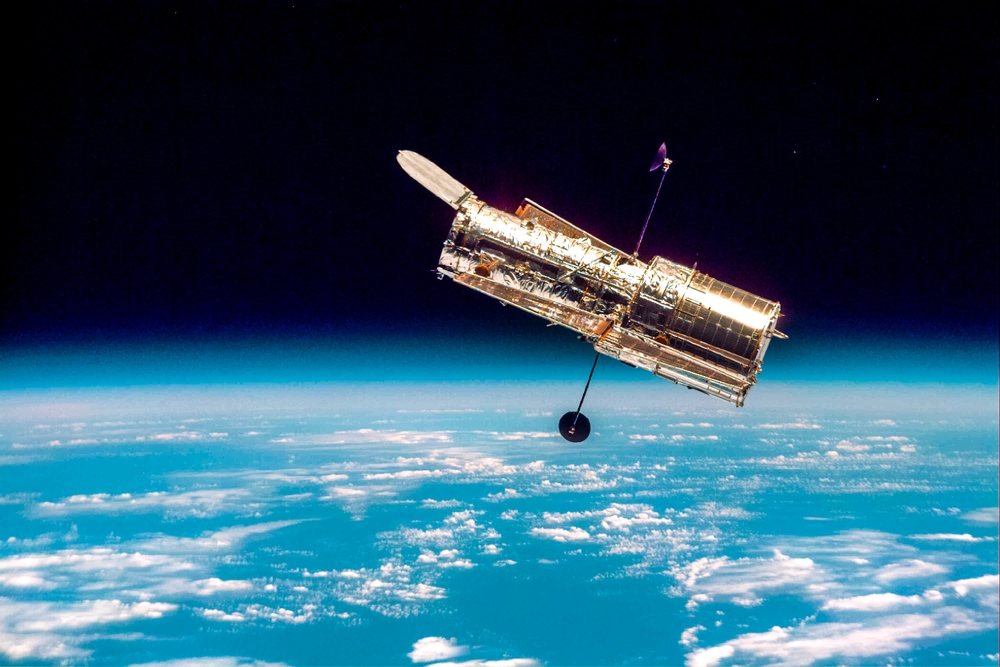
The Hubble Space Telescope would eventually become famous for its extraordinary observations of galaxies, nebulae and distant objects across the universe. But Hubble’s journey began long before its launch, when the project was still known as the Large Space Telescope. Roman played an important role in helping develop the concept of a powerful space-based observatory and in building support for the kind of astronomy NASA could conduct beyond Earth’s atmosphere.
Her contribution eventually earned her the nickname “mother of Hubble.” The title was tied to her work helping establish the conditions that allowed the project to move forward, rather than simply to her association with the telescope after it became operational. Roman was part of the generation of scientists and administrators who helped turn space-based astronomy from an ambitious idea into a major part of NASA’s scientific program.
That legacy is particularly significant because Hubble became one of the most recognizable scientific instruments in history. Its observations transformed public understanding of the universe and gave scientists an extraordinary tool for studying distant objects. Roman’s role came much earlier, when the challenge was helping make such a telescope possible at all.
NASA’s New Telescope Now Carries Her Name
The Nancy Grace Roman Space Telescope is designed to continue exploring questions that sit at the edge of modern astronomy. Among its targets are dark matter and dark energy, two subjects that remain central to scientists’ efforts to understand how the universe is structured and how it has evolved. The telescope will also study distant worlds beyond our solar system, expanding the search for planets and planetary systems across a much wider region of space.
The observatory is being designed to survey huge areas of the sky, giving scientists a different way to investigate the universe from the one provided by Hubble. Rather than replacing Hubble, Roman’s telescope will add another powerful capability to the collection of space-based observatories available to researchers. Its wide field of view will allow it to study enormous sections of the cosmos and gather data that can help answer questions about galaxies, cosmic expansion and distant planetary systems.
There is also a striking connection between the telescope’s mission and Roman’s own career. She spent her professional life helping NASA establish astronomy as a major part of its space program, while the observatory carrying her name is being built to push that field into another generation of discovery. The name therefore represents more than a tribute to a scientist. It connects the early foundations of NASA’s astronomy program with the questions scientists are still trying to answer today.
Roman Was Breaking Barriers While Building A Scientific Legacy
Roman’s career stands out because her achievements came during a period when women faced obstacles at nearly every stage of scientific education and employment. Her own path required careful choices about where she could study, and her position at Yerkes Observatory made her the first woman on its academic staff. At NASA, she reached another historic milestone as the agency’s first female executive while also becoming its first chief astronomer.
Her achievements were tied closely to the work itself. She conducted research, developed programs and helped advance the idea that major astronomical observations could be carried out from space. The attention surrounding the astronauts and major launches of the early space age often dominated the public image of NASA, but scientific programs also required people working behind the scenes to determine what missions should accomplish and why they were worth pursuing.
Roman became one of those people. Her career demonstrates how major scientific achievements can depend on decisions made years before a spacecraft ever reaches a launchpad. The telescope bearing her name is now preparing to investigate dark matter, dark energy and distant planets, but its story reaches back to a young girl in Michigan who spent her nights learning the constellations.
The Telescope’s Mission Goes Far Beyond Stunning Space Images
Space telescopes are often remembered for the spectacular images they produce, but the Roman Space Telescope has much larger scientific ambitions. Its observations will help researchers investigate dark energy and dark matter, which are essential to understanding the structure and behavior of the universe. Dark matter cannot be directly observed through ordinary light, while dark energy is associated with the universe’s accelerating expansion, leaving scientists with major questions about both.
The telescope will also examine worlds beyond our solar system. The discovery of thousands of exoplanets has shown that planetary systems are widespread, but many questions remain about how those systems form and evolve. A powerful space observatory capable of surveying large areas of the sky can give scientists a much broader dataset for studying those distant worlds and the environments surrounding them.
Those investigations reflect the same basic ambition that shaped Roman’s career: use astronomy to see farther and answer questions that cannot be fully addressed from Earth. The technology has changed dramatically since Roman joined NASA in its earliest years, but the scientific curiosity behind the missions remains remarkably familiar.
Nancy Grace Roman’s Legacy Is Already Flying Into The Future
Roman died in 2018, but her name is now attached to one of NASA’s major astronomical missions. That connection gives the telescope a history before it has even begun delivering the observations scientists hope will reshape their understanding of the universe. Her career began with childhood curiosity, continued through academic and government research, and eventually reached the highest levels of NASA’s early astronomy program.
The story behind the telescope is therefore much bigger than a name on a spacecraft. Nancy Grace Roman helped establish the foundation for space astronomy at NASA and played a critical role in the development of the observatory that became Hubble. Now another telescope is carrying her legacy into a new generation of questions about the universe.
Roman once looked up at the night sky from Michigan as a child. Decades later, the agency she helped shape is sending her name back toward the stars.