
Your cart is currently empty!
These Wildlife Photos Caught Animals Looking Absolutely Ridiculous
Wildlife photography is usually associated with dramatic predators, breathtaking landscapes and animals frozen in moments of raw power. But some of the best photographs happen when nature accidentally produces something far more entertaining. The 2026 Comedy Wildlife Awards finalists have captured giraffes that look like they are wearing trees, walruses that resemble an Arctic crime syndicate, owls with serious attitude and a caiman sporting what might be the animal kingdom’s best Elvis impersonation.
Contents
show
The photographs were taken across Kenya, the UK, Sri Lanka, Norway, Ireland, China, Peru, Australia and several other locations. Each image captures an ordinary animal doing something completely natural, but the timing creates an extraordinary visual joke. From a sleepy pile of goslings to a whale shark looming behind an unsuspecting fish, these are the wildlife moments that prove you never quite know what a camera might catch.
One Giraffe Appears To Be Wearing A Tree
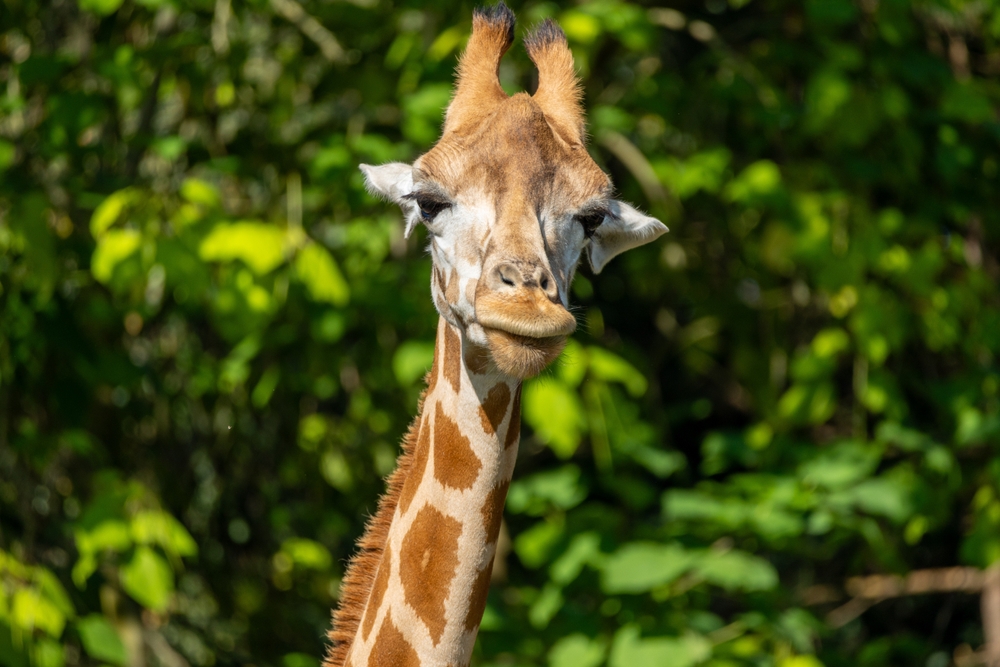
Dirk Koster’s photograph from Kenya may have captured one of the greatest accidental hairstyles in wildlife photography. Three young giraffes were standing side by side on the savanna in the Maasai Mara when one of them lined up perfectly with an umbrella acacia behind it. The tree’s green canopy appears directly above the giraffe’s head, making the animal look as though it has somehow decided to accessorize with an entire tree.
Koster took the photograph in 2025 in the Oltepesi area and said there was no staging involved. The giraffes were simply standing together and looking back at him with curiosity when the unusual alignment happened. The image was titled “The different one,” and the description fits perfectly because the middle giraffe suddenly appears to have arrived wearing a spectacular green hairdo.
The photograph is a perfect example of why wildlife photography can depend so heavily on timing and position. A few steps in either direction would have ruined the illusion, leaving the viewer with three young giraffes standing on the savanna. Instead, one of them looks as though it has wandered into the wilderness wearing a leafy hat.
A Tiny Damselfly Gives The Camera A Wave
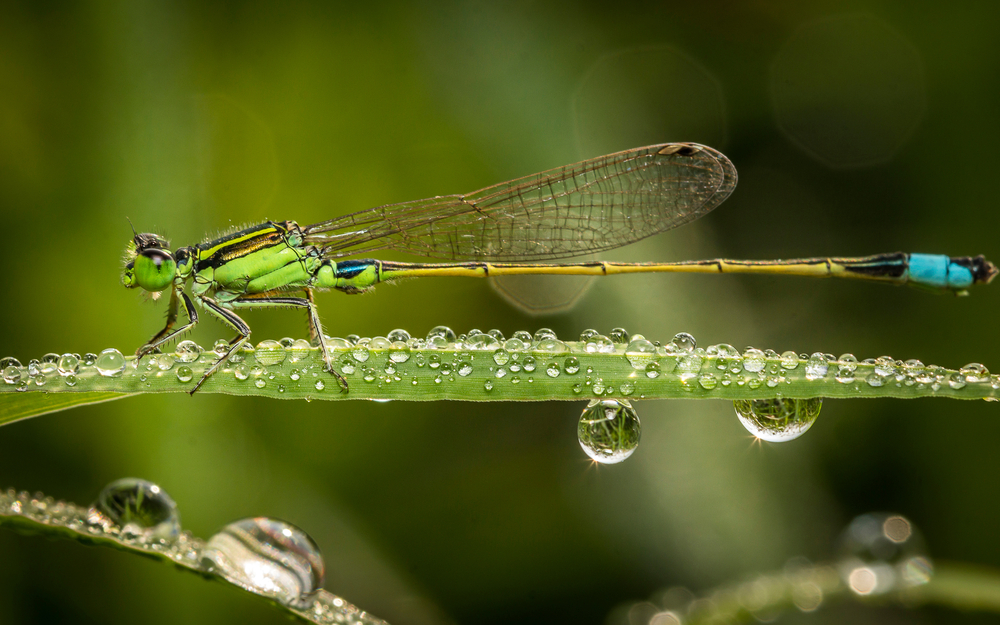
Lee Frost’s “Nature’s window” captures another moment that looks almost too perfectly arranged to be real. The photograph shows an azure damselfly poking its head through a hole in a leaf in Stoke-on-Trent, UK, creating the strange impression that the tiny insect deliberately found a window before turning toward the photographer.
Frost took the photograph early one morning in May after spending time photographing insects as they warmed up. He was preparing to leave when the sleepy damselfly slowly climbed a blade of grass, prompting him to place it gently on a leaf for one final portrait. Instead of remaining where it was placed, the insect disappeared behind the leaf before suddenly appearing through a ready-made opening.
The timing became even better when Frost pressed the shutter and captured what looks like a tiny wave. The damselfly was obviously not posing for a comedy photograph, but the resulting image makes it look as though the insect knew exactly what it was doing. It is the kind of photograph where the caption almost feels unnecessary because the visual joke is already obvious.
Doris The Buffalo Has Arrived Wearing Her Best Bonnet
Some animals have to work hard for a funny photograph. Andy Rouse’s Asian water buffalo simply had to lift her head out of a lake at the right moment. The result, photographed at Lake Kumana in Sri Lanka, makes the buffalo look as though she has emerged from the water wearing a floral bonnet.
Rouse called the animal Doris after seeing the flowers and vegetation sitting around her head. “When this water buffalo lifted her head up, it looked like she had a fancy bonnet on so we called her Doris!” he said. The photograph gives the powerful animal an unexpectedly delicate appearance, with the flowers creating the impression that she has dressed up for a very formal occasion.
The joke becomes even stronger because the buffalo itself appears completely unaware of the transformation. There is no costume and no setup. Doris simply surfaced with part of the lake’s vegetation resting on her head, creating one of those rare wildlife photographs where a completely normal moment looks like something from a comedy sketch.
The Walruses Look Like An Arctic Mafia
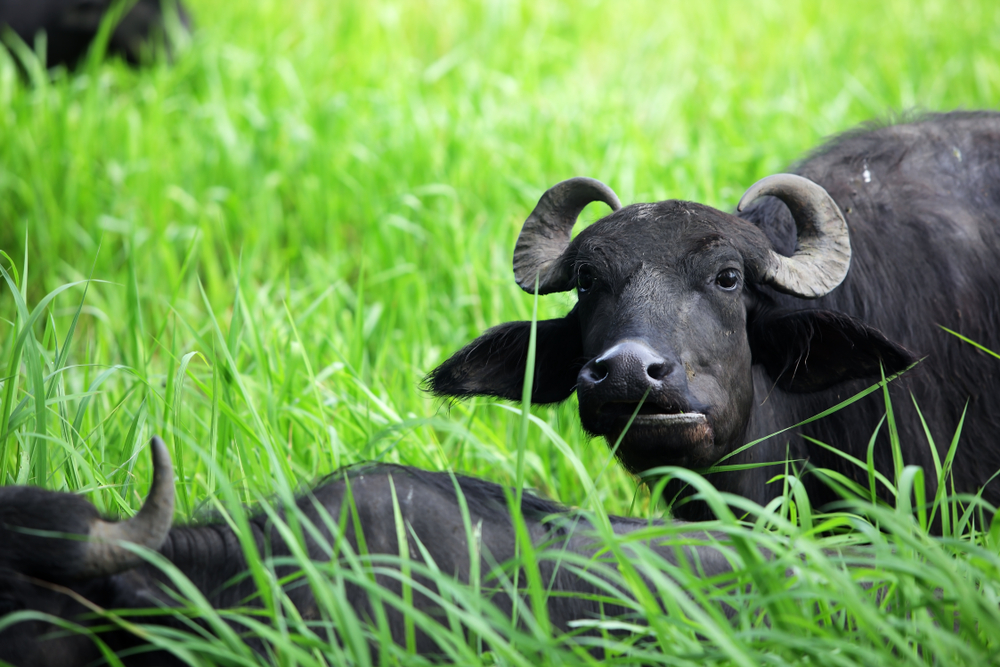
Marek Jackowski’s “Sea gangsters” photograph gives an entire group of walruses the appearance of a suspicious organization that has just arrived to inspect the newcomer. The photograph was taken on Moffen Island in Svalbard, Norway, where Jackowski encountered groups of walruses resting together on the beach during an expedition in autumn 2024.
The animals were lying close together, which is normal behavior in the freezing Arctic conditions. Walruses are highly social and often gather in large groups, and staying packed together can help them conserve body heat. Jackowski, however, found himself feeling as though the local mafia had rolled up to investigate him.
He said the walruses spent around 10 minutes giving him what he described as the “ultimate Arctic inspection” before swimming away. Their size, whiskers and expressions make the scene look remarkably serious, even though they were simply carrying on with their normal behavior. The result is a photograph that could easily pass for the opening scene of a very strange Arctic gangster movie.
These Goslings Have Completely Given Up For The Day
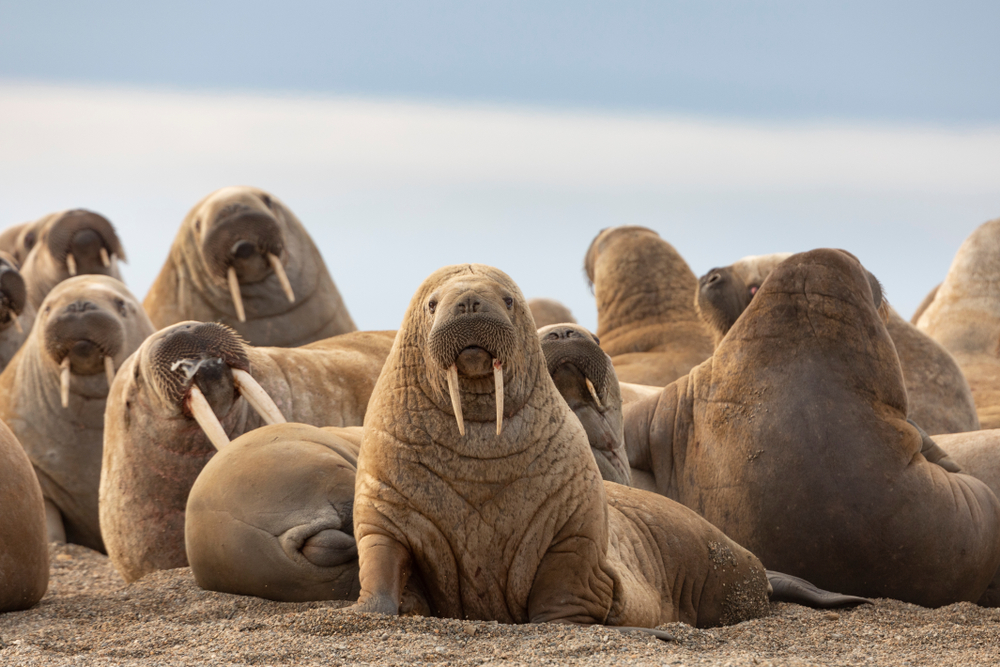
Celine Nic Oireachtaigh’s “Zonkling” takes a much softer approach to comedy. Instead of capturing an animal looking angry or bizarre, the photograph shows a group of greylag goslings curled together in a fuzzy pile after swimming at Finnamore Lakes in West Offaly, Ireland.
Oireachtaigh regularly photographs wildlife around the local boglands and wetlands and spotted the brood during April or May. After their swim, the goslings settled down together on the grass while their parents remained nearby keeping watch. She photographed the scene from behind a gorse bush so she would not disturb their nap.
The resulting picture looks like the wildlife equivalent of falling asleep five minutes after getting home from a long day. The tiny birds are packed together so closely that they almost look like one large ball of fluff. Their parents may have been keeping watch, but the youngsters appeared to have already decided that the day’s activities were finished.
This Owl Looks Like It Has Had Enough
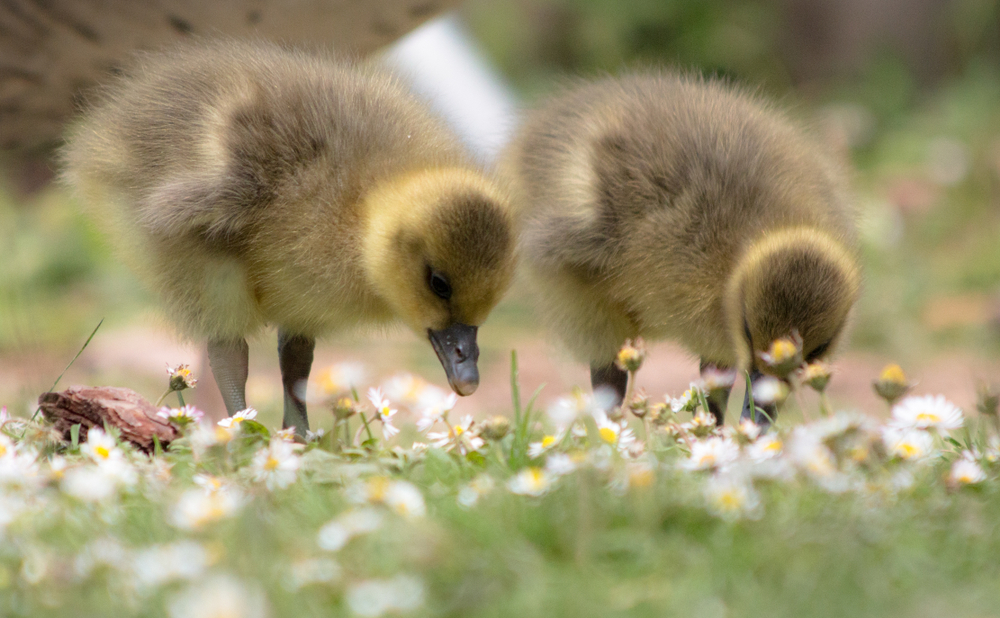
Ka Chun Jacky’s “Resting owl face” may be one of the most relatable photographs among the finalists. The mountain scops owl was photographed in Nanling National Forest Park in China during a nighttime birding trip, where the small bird silently flew through the darkness before landing on a branch.
Jacky and his friends were able to photograph the owl before it began singing. They relied on dim torchlight and burst shots because they knew the opportunity could disappear quickly. One of those frames caught the bird facing forward with an expression that looks remarkably like a person who has just been asked to explain themselves.
There is no way to know what the owl was actually thinking, and its expression should not be treated as evidence of human-like emotion. Still, the photograph’s timing gives it a comic personality that viewers can immediately recognize. The title “Resting owl face” says almost everything.
The Mantis Accidentally Looks Like It Has Human Legs
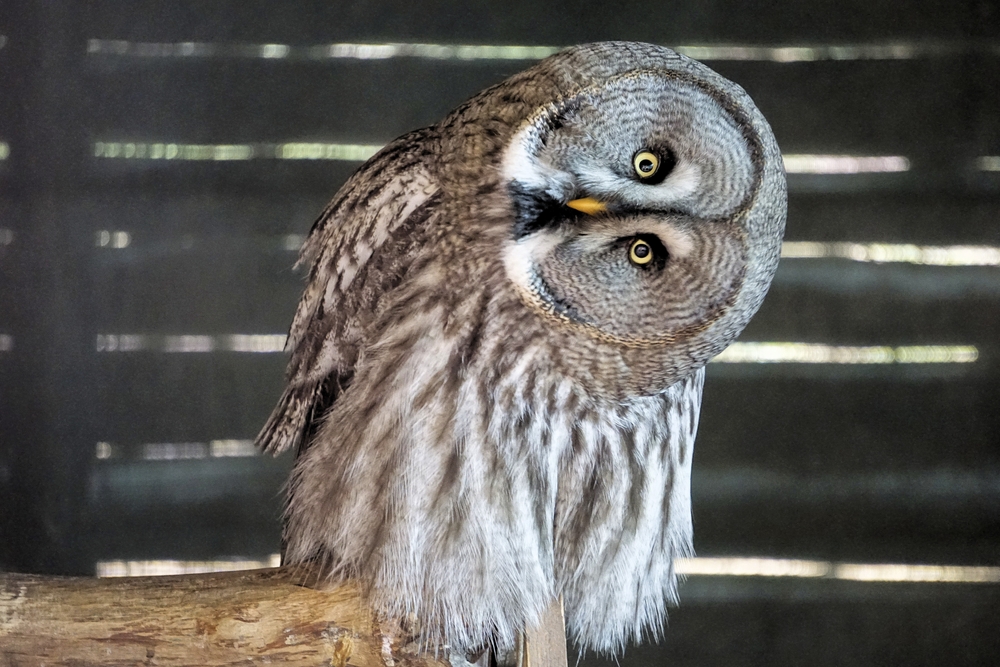
Diego Perez’s “Sexy mantis” creates its comedy through a visual trick. The photograph was taken during a night walk in Camanti, Cusco, Peru, where Perez spotted a tiny green mantis peeking over a leaf. Part of the insect’s body disappears behind the leaf, changing the way its forelegs appear in the frame.
Perez said almost everyone who saw the photograph laughed, even when they could not immediately explain what was funny about it. Once the illusion becomes clear, however, the mantis suddenly looks as though it is posing with a pair of human-like legs visible beneath the leaf.
The photograph also points toward a more serious issue. Perez took it in an area of Camanti that is still waiting to be protected. That means the strange little portrait captures both the humor of an unusual encounter and a glimpse of wildlife living in a landscape that could benefit from greater protection.
The Kangaroo Looks Like It Is Being Told Off
Heather Smith’s “Busted” captures a familiar-looking interaction between two eastern grey kangaroos at Crowdy Bay National Park on Australia’s mid-north coast. The mother and joey are positioned in a way that makes the adult appear to be staring directly at the youngster, creating the unmistakable visual impression of a parent delivering a serious lecture.
Smith said the kangaroos were in a campground near Diamond Head, an area where large numbers of kangaroos are accustomed to people sharing their space. She still kept a safe distance and used a 100-400mm lens to capture the interaction.
The photograph does not establish what the kangaroos were communicating, but the timing makes the scene instantly recognizable to human viewers. The mother appears unimpressed, the youngster appears caught, and the title does the rest. Whatever happened seconds before the shutter clicked, “Busted” feels like an appropriate verdict.
A Baby Baboon Suddenly Looks Like A Superhero
Andy Parkinson’s photograph “Hercules, the baboon” turns a normal wildlife interaction into something that looks physically impossible. The image shows an infant olive baboon appearing to hold an adult above its head in Mara North Conservancy, Kenya.
The perspective creates the illusion that the tiny animal has suddenly developed extraordinary strength. The visual resemblance to a miniature superhero makes the photograph stand out among the finalists, especially because the size difference between the two animals makes the moment look completely absurd.
Photography often depends on catching a fraction of a second when an animal’s position creates an unexpected shape or illusion. This is one of those moments. The baby baboon may not actually be demonstrating superhero strength, but the camera captured a frame that makes the idea difficult to resist.
The Sparrowhawk Looks Ready For A Ballet Performance
Robert Nairn’s “Ballet dancer” gives a sparrowhawk an unexpectedly graceful role. The bird was photographed in Dumfries, Scotland, standing on a moss-covered stump in a position that makes one leg appear lifted as though it is performing a carefully rehearsed dance move.
Nairn is a 69-year-old amateur photographer and a member of Ayr Photographic Society. He became interested in wildlife photography after retiring and captured the image using a Nikon Z8 with a 100-400mm lens.
The photograph works because the bird’s natural movement has been frozen into a shape that looks deliberate. There was no choreography, of course. The sparrowhawk was simply caught at exactly the right instant, turning an ordinary moment into something that looks like a performance.
The Smallest Bird In Europe Has A Serious Complaint
Jan Wittmer’s “Angry bird” shows just how much attitude can fit inside one of Europe’s smallest birds. The goldcrest was photographed on the German island of Helgoland, where Wittmer encountered the tiny bird while it searched for food.
To get an eye-level perspective, Wittmer placed his camera on the ground and waited as the goldcrest darted back and forth. His patience paid off when the bird suddenly stopped and looked directly toward the camera.
Wittmer described the encounter as love at first sight, but the photograph itself tells a slightly different story. The goldcrest’s direct stare makes it appear deeply unimpressed by the photographer’s presence. Considering the bird’s tiny size, its expression gives the image an even bigger comedic punch.
A Whale Shark Appears Behind One Very Unlucky Fish
Kyo Chen’s “A very pressured spadefish” captures what might be the ultimate example of being in the wrong place at the wrong time. Chen was diving in the Philippines and had returned to the same location for four consecutive days hoping to spend time photographing whale sharks.
While waiting for one of the enormous animals to appear, he began photographing a group of lively spadefish. Then a whale shark suddenly emerged behind one of them, creating a spectacular contrast between the huge silhouette and the much smaller fish in front.
The spadefish looks almost as though it has just realized something enormous is directly behind it. Chen had no control over the timing, which is precisely what makes the photograph so effective. A few seconds earlier or later, and the image would have been completely different.
From Elvis To A Moose With A Runny Nose
The remaining finalists continue to show just how unpredictable wildlife photography can be. Paolo Torre’s “Elvis” captures a caiman in Brazil with floating vegetation stuck to its head, creating a hairstyle that resembles the famous 1950s rock-and-roll look. Alexander Hormann’s “Runny nose” shows a female moose emerging from Maligne Lake in Alberta, Canada, with water pouring from her face after diving for aquatic plants.
There is also “Acrobatic bullfrog” by Jeremy Richards, which shows an African bullfrog performing an apparent aerial maneuver in South Luangwa National Park, Zambia. The male had emerged after heavy rain and was competing with other males around a temporary pool. Another finalist, Homi Sahana’s “The handstand,” makes a leopard in Kenya appear to balance upside down on a tree branch while searching for its cub.
Then there is Thong Duy Vu’s “Out of water,” which gives a colourful sunbird the appearance of enjoying a miniature spa treatment on a banana blossom. Lynn Emery’s “Two birds one vision” shows two little owls watching different things at sunset in Dubai’s Al-Qudra desert, while Charles Janson’s “Bears sharing a laugh” catches two young brown bears play-fighting in a moment that looks remarkably cheerful.
The Best Comedy Happens When Nobody Is Trying
The appeal of these photographs comes from a simple fact: the animals were not performing for the camera. The giraffe was standing on the savanna, the buffalo was leaving a lake, the goslings were sleeping and the bears were play-fighting. The photographers simply happened to capture those moments from exactly the right position.
That is also why the funniest images can be so difficult to recreate. Wildlife photographers cannot ask a bird to look left or tell a leopard to hold a pose for another second. They have to wait, watch and react quickly when something unexpected happens.
The 2026 finalists show what can happen when preparation meets a perfectly timed accident. Sometimes the reward is a technically impressive wildlife photograph. Other times, it is a giraffe wearing a tree, a walrus mafia inspection or a caiman who appears to have just walked out of an Elvis concert.
animal photography, animal photos 2026, Comedy Wildlife Awards 2026, Comedy Wildlife Photography, funniest wildlife photos, funny animal photos, funny animals, funny wildlife moments, hilarious animal moments, nature photography, viral animal photos, wildlife awards, wildlife finalists, wildlife photography