
Your cart is currently empty!
Kurt Vonnegut Gave Five High School Students An Unusual Assignment, And His Advice Still Hits Home

Five high school students in New York hoped to meet one of America’s most celebrated novelists, but the response they received turned into something far more memorable than a school visit. In November 2006, students at Xavier High School wrote to Kurt Vonnegut as part of a persuasive writing assignment, asking him to visit their school. The celebrated author could not attend, yet he took the time to send them a thoughtful letter filled with advice about creativity, self-discovery, and the pressure people put on themselves to succeed.
Contents
show
Vonnegut was already 84 years old when he wrote the letter, and he would die approximately five months later. Rather than offering the students a conventional writing lesson, he encouraged them to make art without worrying about whether they were talented enough. His unusual homework assignment asked them to create a six-line poem, keep it entirely private, and then destroy it. The idea might sound strange, but the novelist had a specific reason for asking them to do it, and his message continues to resonate with people who hesitate to try something new.
“Go into the arts. I’m not kidding. The arts are not a way to make a living. They are a very human way of making life more bearable.” — Kurt Vonnegut https://t.co/FkDg7kOzy3
— Natural Philosophy (@Naturalphilosy) June 17, 2026
Five Students Took A Chance On A Literary Legend
The story began when an English teacher at Xavier High School in New York City challenged her students to write persuasive letters to their favorite authors. Their task was to convince the writers to visit the school, giving the students an opportunity to practice their writing while reaching out to people whose work they admired. Five students decided to contact Kurt Vonnegut, the acclaimed novelist known for Slaughterhouse-Five and Cat’s Cradle. At 84, Vonnegut had already established himself as one of America’s most recognizable literary voices, known for combining dark humor with sharp observations about society and human behavior.
The students had little reason to expect a response, let alone a personal letter from such a famous writer. According to the account of the exchange, Vonnegut was the only author who replied. His letter was dated November 5, 2006, and began with a humorous explanation of why he could not visit the school. He joked that he no longer made public appearances because he had come to resemble an iguana. Although he could not accept their invitation because of health issues, he offered the students something more personal than a simple refusal. He used the opportunity to explain why creating art can be worthwhile even when nobody else ever sees the result.
“You meet saints everywhere. They can be anywhere. They are people behaving decently in an indecent society.” — Kurt Vonnegut https://t.co/tQe5eOLv2P
— Saganism (@Saganismm) August 18, 2026
Vonnegut’s Advice Had Nothing To Do With Fame
Vonnegut encouraged the students to practice an art regardless of their natural ability. He suggested trying activities such as drawing, singing, dancing, acting, writing poetry, or creating fiction. His message challenged the idea that people must possess obvious talent before they can enjoy making something. He explained that artistic expression gives people a chance to discover their own thoughts and feelings, describing the experience as a way to “make your soul grow.” For Vonnegut, the value of creativity existed long before money, recognition, or professional success entered the picture.
The novelist’s suggestions were deliberately simple. Students could draw a picture of their teacher, sing while showering, or dance on their way home from school. He even encouraged them to pretend to be Count Dracula, turning ordinary moments into opportunities for playful experimentation. These examples removed the pressure to produce something impressive and invited the students to focus on the experience itself. Nobody needed expensive equipment, professional training, or an audience to participate. They only needed the willingness to try something they might normally dismiss as silly or beyond their abilities.
His Homework Was To Create Something Nobody Would See
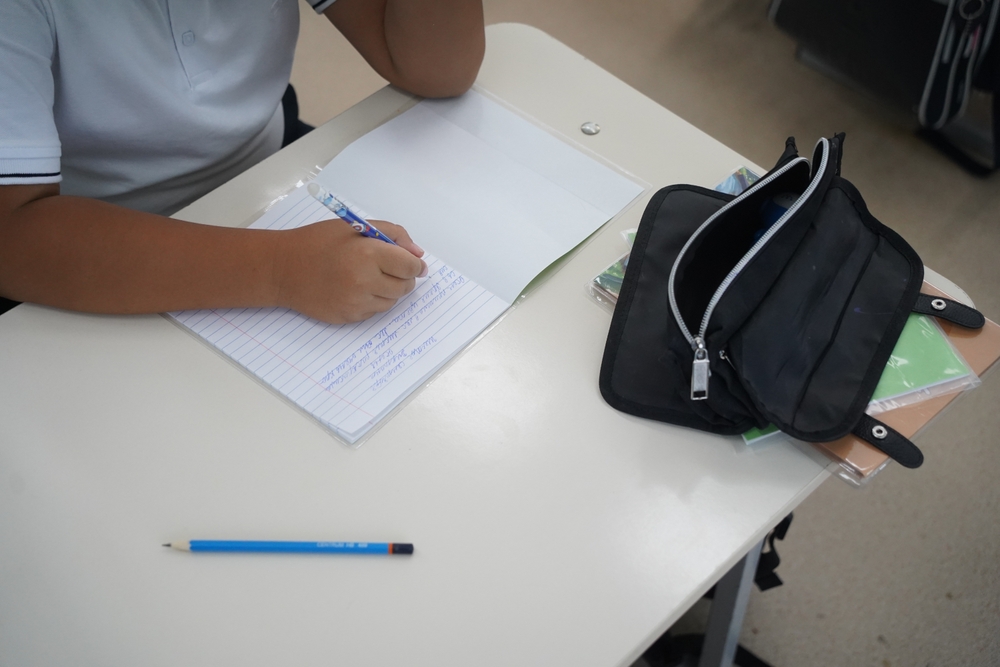
After encouraging the students to experiment with creative activities, Vonnegut gave them a more specific assignment. He asked them to write a six-line poem about anything they wanted, making it rhyme and doing their best to create something good. The unusual part came after the writing was finished. He instructed them not to show the poem to anyone, including their parents, friends, or teacher. Instead, they were supposed to tear it into tiny pieces and throw the pieces away in separate trash receptacles. The exercise deliberately removed the possibility of praise, criticism, or public recognition.
At first, the instruction might seem pointless. Writing usually involves creating something that can eventually be read, shared, or appreciated, so destroying a finished poem appears to defeat the purpose. Vonnegut was asking the students to experience the process without worrying about the outcome. They still had to choose their words, work with rhyme, and complete the task, but they would never receive an audience’s judgment. Their only reward would be the experience of having created something. The poem could be awkward or imperfect, and nobody would ever know. What mattered was that they had attempted it and discovered something through the effort.

Why Destroying The Poem Was The Point
The assignment challenged a familiar habit: judging creative work by what happens after it is finished. People often measure a painting by how others react to it, a song by how many people listen, or a piece of writing by whether it attracts attention. Vonnegut removed those expectations from the exercise entirely. The students were free to concentrate on the activity without wondering whether their work would impress anyone. Destroying the poem made the task private and temporary, but the experience of writing it still belonged to them.
That distinction can change how people approach unfamiliar activities. Learning an instrument involves making mistakes, just as writing involves awkward sentences and drawing involves uneven lines. When every attempt is treated as a test of talent, the possibility of embarrassment can stop people before they begin. Vonnegut’s exercise offered another option. People can create something simply because they want to experience creating it, even when the result is never shared. The work does not need to become a finished product or a public achievement to make the time worthwhile.
The Fear Of Being Bad Can Stop People Before They Start
Many people have hobbies they would like to try but never begin. Someone might buy art supplies and leave them untouched, think about learning guitar for years, or imagine writing a book without ever opening a document. Sometimes practical barriers stand in the way, but fear of embarrassment can also play a part. People may worry that their first attempt will look childish, sound terrible, or reveal that they lack the talent they hoped they possessed. Avoiding the activity protects them from that uncomfortable possibility, but it also prevents them from discovering whether they might enjoy it.
Online culture can make those concerns harder to ignore. A beginner’s first drawing can be compared with an artist’s professional portfolio, while someone learning to cook may measure their results against polished videos created by experienced chefs. Those comparisons overlook the time and practice behind the finished work. Vonnegut’s advice offers a way to start without carrying the burden of public judgment. A person can experiment privately, learn from mistakes, and decide later whether they want to continue. The first attempt does not have to establish a person’s ability or determine what they can eventually achieve.
Readers can put that approach into practice with a few small changes:
- Make something privately: Write a short poem, sketch an everyday object, or experiment with a recipe without sharing the result.
- Set a manageable challenge: Spend 15 minutes drawing, writing, or learning a few musical notes rather than demanding a finished masterpiece.
- Allow yourself to make mistakes: Complete the activity before judging the result, giving yourself time to discover what you learned.
- Choose curiosity over performance: Focus on the experience of trying something unfamiliar instead of worrying about whether anyone will be impressed.
- Keep the pressure low: Treat the activity as an experiment rather than a commitment to become an expert.
These steps can make unfamiliar activities feel less intimidating because they reduce the expectation that every attempt must produce something worth showing off. They also allow people to discover which activities they genuinely enjoy. Someone may find pleasure in painting even without becoming a skilled artist, or enjoy playing music without ever performing for an audience. The experience can be valuable on its own, and that is precisely the point Vonnegut wanted the students to understand.
Kurt Vonnegut’s Legacy Goes Beyond His Novels
Vonnegut’s novels often explored war, technology, cruelty, and the absurdities of modern life through satire and unconventional storytelling. Slaughterhouse-Five, published in 1969, became one of his best-known works and drew on his experience of the bombing of Dresden during World War II. His writing frequently challenged readers to question familiar assumptions, using humor and unusual perspectives to examine difficult subjects. The letter to the Xavier students carried that instinct into a much smaller setting, asking them to reconsider what makes a creative activity worthwhile.
Rather than giving the students a formula for becoming successful writers, Vonnegut encouraged them to create without expecting recognition. His advice arrived near the end of his life. He died in Manhattan on April 11, 2007, at the age of 84, roughly five months after writing the letter. The exchange has continued to circulate because its message applies to people well beyond a high school English class. Anyone who has postponed a hobby because they feared being bad at it can understand the pressure Vonnegut was trying to remove. His assignment gave the students permission to make something imperfect and keep the experience for themselves.

You Do Not Need To Be Good At Something To Begin
Vonnegut’s assignment remains striking because it asks for so little. There is no demand to become an expert, publish a book, build an audience, or turn a hobby into a career. The challenge is simply to make something and experience the process without measuring its value through someone else’s response. That approach leaves room for curiosity before self-criticism takes over. People can still improve their skills and share work they are proud of, but they do not need to prove their talent before they are allowed to start.
The next time you postpone a creative idea because you suspect you will be bad at it, try making something nobody else needs to see. Write the poem, play the first few notes, or draw the imperfect picture. You can decide what to do with the result later. For now, the only requirement is to give yourself the chance to discover what happens when you begin.