
Your cart is currently empty!
Trump Opens US Doors To Flávio Bolsonaro After Brazil Election Defeat
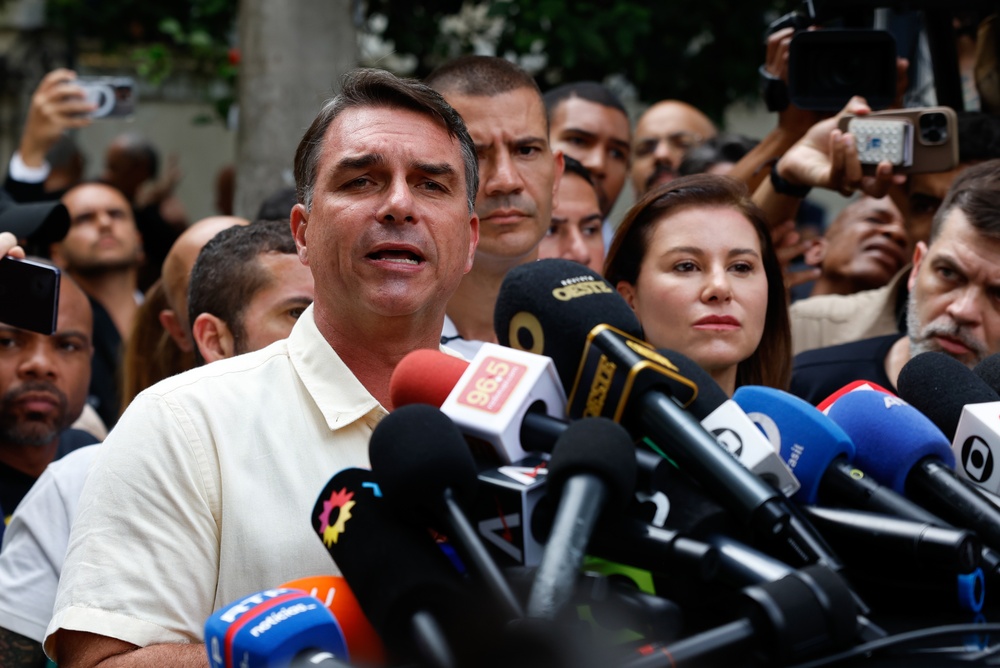
Brazil’s post-election political crisis has taken an international turn after defeated presidential candidate Flávio Bolsonaro left the country and the Trump administration confirmed that he and his family would receive US visas. The move has raised fresh questions about the relationship between Washington and Brasília, particularly as Bolsonaro faces investigations in Brazil and his political allies confront an unexpected leadership challenge.
Contents
show
The 45-year-old senator’s departure reportedly followed a Supreme Court order requiring him to surrender his passports within 24 hours. His decision to leave has drawn comparisons with his father, former Brazilian president Jair Bolsonaro, who travelled to Florida after losing the 2022 election to Luiz Inácio Lula da Silva. With Trump publicly expressing sympathy for the Bolsonaro family, the latest developments threaten to add another dispute to an already strained diplomatic relationship.
Trump Administration Confirms Visas For Bolsonaro And Family
A senior US State Department official confirmed that the United States would issue visas to Flávio Bolsonaro and his family, allowing them to enter the country following his defeat in Brazil’s presidential election. The announcement came after several news organisations reported that the senator had left Brazil while questions remained about his whereabouts and compliance with a court order.
“The State Department will issue visas to Flávio Bolsonaro and his family and allow them entry into the United States,” the official said, according to Reuters. The statement confirmed the administration’s position on their entry, although it did not establish that Bolsonaro had received asylum or any protection from potential legal proceedings in Brazil.
President Donald Trump also indicated that he would approve of Bolsonaro coming to the United States. Speaking to reporters, Trump questioned the circumstances surrounding the Brazilian election and expressed support for the family, while maintaining that he had not taken sides in the contest.
“Well, I would approve. I think they’re fine people. The election was very strange, and I thought it was terrible,” Trump said, according to Reuters. His comments followed earlier remarks in which he questioned Lula’s victory, even though the supplied reports do not establish evidence supporting claims that the election was rigged.
The decision places the Trump administration in a sensitive position as Lula’s government continues to manage the aftermath of the election. While granting visas is an immigration decision, the timing has created questions about how Washington intends to deal with a Brazilian political figure whose legal circumstances have become a matter of national attention.
Why Flávio Bolsonaro Left Brazil After His Defeat
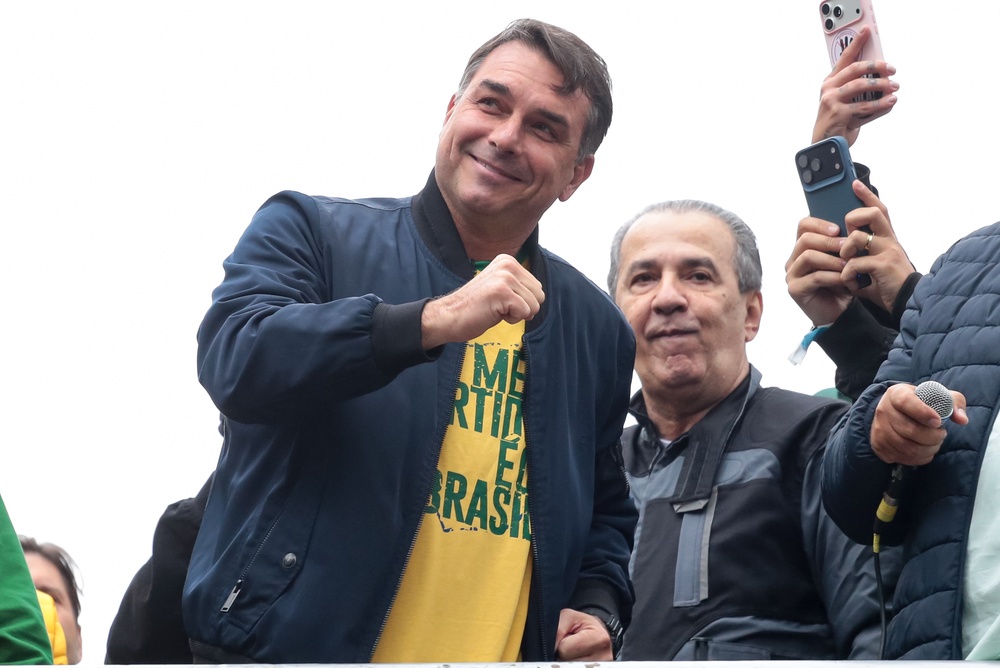
Bolsonaro’s departure came shortly after Brazil’s Supreme Court ordered him to surrender his regular and diplomatic passports. According to Reuters, the order gave him 24 hours to comply and was connected to an investigation involving alleged money laundering. The court cited concerns about the possibility of him leaving the country and his significant financial resources when explaining its decision.
Brazilian reports also linked the senator to investigations concerning alleged corruption and other financial activities. One allegation described in the supplied reporting involves online betting platforms, while another concerns the production of a biographical film about his father. Authorities reportedly examined whether funds connected to the project were linked to Banco Master, a collapsed bank at the centre of a major financial scandal.
Bolsonaro has denied wrongdoing, and the existence of an investigation does not establish that he committed a crime. At the time of his departure, the supplied reports said there was no arrest warrant for him, although legal analysts reportedly suggested that defying the passport order could provide grounds for further judicial action.
The senator had publicly denied plans to leave Brazil shortly before his departure. On Monday, he said he had no intention of fleeing and indicated that he would surrender his passports while defending himself against the allegations. Reports that he subsequently left the country therefore raised questions about his travel arrangements and whether he had complied with the court’s instructions.
According to Reuters, Argentina’s migration department later said Bolsonaro and his family had entered the country’s Misiones province from Brazil on Tuesday night using valid travel documents. They then boarded a private aircraft bound for Guayaquil, Ecuador, according to the flight plan cited by Argentine authorities. Subsequent reporting said Bolsonaro had arrived in the United States, with television footage showing him stepping off a plane at Miami’s Opa-locka airport alongside his wife and two daughters.
The sequence of events has become central to the political controversy. Brazilian authorities may still examine the circumstances surrounding his departure, while Bolsonaro’s legal team could face questions about the passport order. His move abroad does not, by itself, determine the outcome of the investigations or establish that he has escaped any legal consequences.
Lula Criticises The Departure As Election Tensions Continue
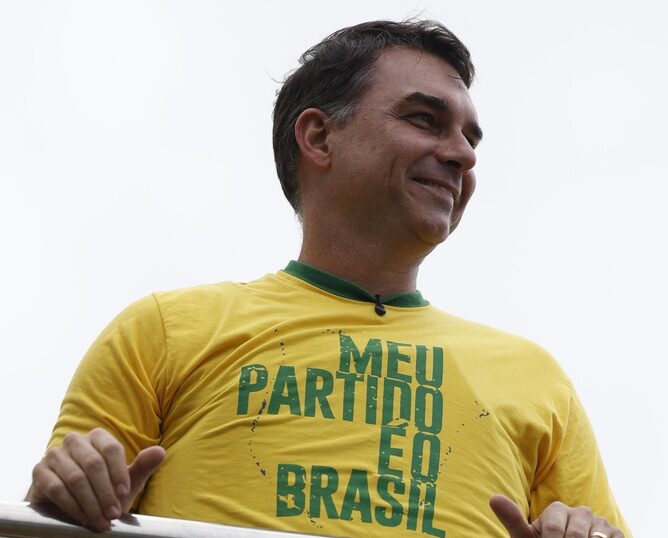
President Luiz Inácio Lula da Silva responded critically to reports that Bolsonaro had left Brazil. Lula said the senator should have remained in the country and addressed the allegations through the Brazilian justice system rather than departing after the court order.
The criticism comes after a closely watched presidential runoff that produced a decisive result in Lula’s favour. With all votes counted, Lula received 51.8% of the vote and defeated Bolsonaro by nearly 4.4 million votes, according to the supplied election reports. The result secured Lula another term and left Bolsonaro’s conservative movement facing questions about its future direction.
Bolsonaro initially refused to concede defeat and said he would seek to have the election result annulled, citing alleged voting irregularities. His Liberal Party later acknowledged Lula’s victory, although party leaders said concerns raised about the election still required clarification.
The distinction between a political challenge and a legally established irregularity remains important. Bolsonaro’s allegations do not independently prove that the election was fraudulent, and the supplied reports do not provide evidence demonstrating that the result should be annulled.
Lula’s response to Bolsonaro’s departure has also placed the dispute within a wider debate over accountability and the treatment of political opponents. His government has an interest in ensuring that legal investigations proceed through Brazilian institutions, while Bolsonaro’s supporters have continued to question aspects of the political and judicial process.
The senator’s departure may make the immediate political dispute harder to resolve. With Bolsonaro outside Brazil and his legal position still uncertain, attention is likely to remain focused on the court order, the status of the investigations and the response from his political allies.
Bolsonaro’s Own Campaign Team Was Surprised
The senator’s departure reportedly caught members of his campaign team off guard, creating uncertainty about who would lead the conservative opposition after the election. Rogério Marinho, a fellow senator who managed Bolsonaro’s campaign, said he had expected the defeated candidate to remain in Brazil and take on a prominent role in the opposition.
“We are surprised by the news because, just yesterday, we discussed the need for Flávio, given the 60 million votes he received, to take on this role as leader of the opposition,” Marinho said, according to Reuters. His comments indicated that the campaign team had been preparing for Bolsonaro to remain a central figure in Brazilian politics after the result.
Marinho also said he had received a message from Bolsonaro indicating that he wanted to take a break before speaking with the campaign team again. He said he had not received further information about what had happened or what the senator intended to do next.
The uncertainty could complicate efforts to coordinate the conservative movement. Bolsonaro’s election campaign had given him a prominent national platform, but his departure means his immediate role in opposition politics remains unclear. Party members may now need to decide whether to organise around him from abroad or elevate other figures who can operate directly within Brazil.
Several issues are likely to influence the movement’s next steps. Bolsonaro’s legal circumstances could affect his ability to participate in domestic politics, while disagreements about his departure may create tension among allies who expected him to remain in the country. The Trump administration’s willingness to issue visas may also encourage supporters to view the United States as a place where the family can continue its political activities, although the visa decision does not itself guarantee any particular political role.
The conservative opposition still has a substantial electoral base, according to figures cited by Marinho. However, the number of votes received does not automatically settle questions of leadership, particularly when the candidate is dealing with legal investigations and living outside the country.
Flávio Bolsonaro’s Departure Echoes His Father’s Move To Florida
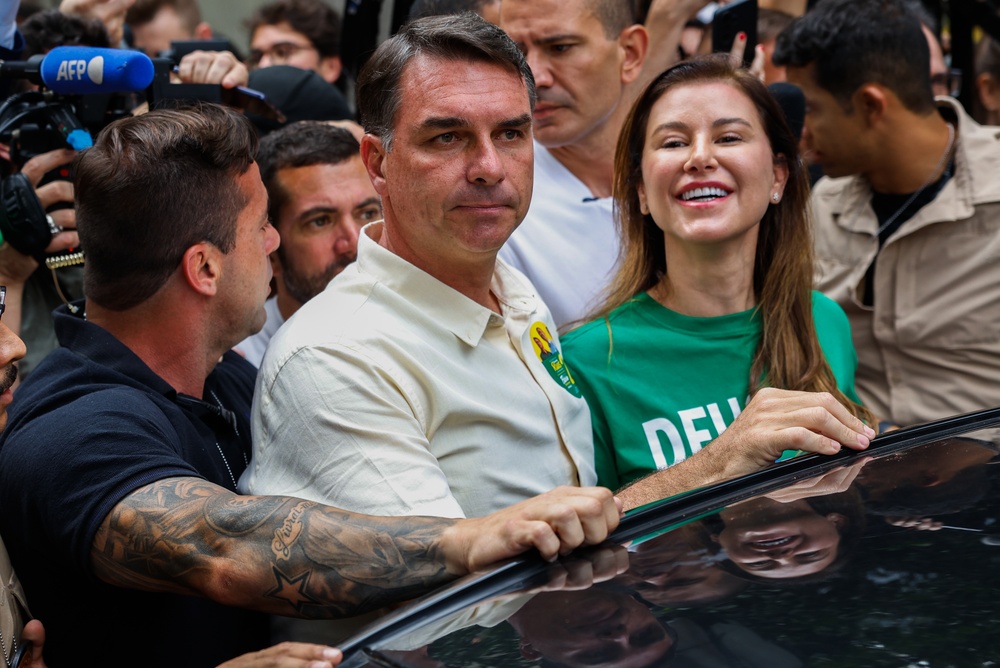
The latest developments have revived memories of Jair Bolsonaro’s departure after he lost the 2022 presidential election to Lula. The former president travelled to Florida shortly before Lula’s inauguration and remained in the United States for several months before returning to Brazil.
Jair Bolsonaro’s departure took place during a period of intense political tension. In January 2023, his supporters stormed government buildings in Brasília, including Congress, the Supreme Court and the presidential palace. The attacks drew international attention and comparisons with the January 6, 2021, assault on the US Capitol.
The former president was subsequently convicted in a separate case involving a plot to overturn the 2022 election result and received a 27-year prison sentence, according to the supplied reporting. That case concerned alleged efforts to undermine the transfer of power and is distinct from the financial investigations involving his son.
Flávio’s current legal circumstances must therefore be assessed separately from his father’s conviction. The younger Bolsonaro faces investigations involving alleged financial misconduct, and he denies wrongdoing. His departure does not establish guilt in those matters, just as the visa announcement does not resolve the legal questions facing Brazilian authorities.
The family connection has nevertheless become politically significant. Both men travelled to the United States after election defeats, and both situations have involved disputes over Brazil’s political institutions and the legitimacy of election-related proceedings.
Eduardo Bolsonaro, Flávio’s brother who lives in the United States, had also discussed the possibility of his brother leaving Brazil if he lost the presidential contest. His earlier remarks suggest that the option had been considered within the family, although the supplied reporting does not establish precisely when Flávio decided to depart.
US-Brazil Relations Face Renewed Diplomatic Pressure
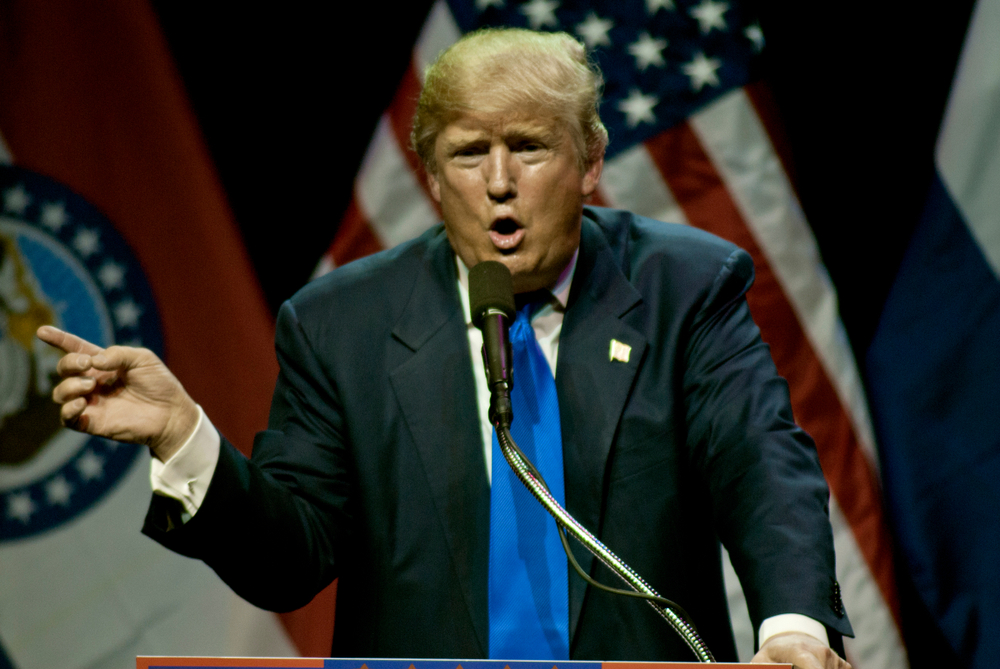
The visa decision comes against a backdrop of tension between Lula’s government and the Trump administration. Lula has accused Washington of supporting the Bolsonaro family politically, while Trump has repeatedly expressed criticism of the proceedings against Jair Bolsonaro and questioned the circumstances of Lula’s election victory.
The disagreement extends beyond individual statements. The supplied reporting describes earlier US measures involving tariffs on Brazil in response to the criminal case against the former president. Those developments added an economic dimension to a dispute already shaped by competing political interests and different interpretations of Brazil’s legal proceedings.
Allowing Flávio Bolsonaro and his family to enter the United States could therefore become another source of friction. Lula’s government may view the decision through the wider context of Washington’s relationship with the Bolsonaro family, while US officials can point to the distinction between granting visas and deciding the outcome of legal matters in Brazil.
The available information does not establish that Trump personally arranged Bolsonaro’s departure or that the US government directed him to leave Brazil. Reports indicated that Trump supported allowing the senator to enter the United States, but it remained unclear whether the two men had spoken directly before the journey.
That uncertainty matters because the diplomatic consequences will depend partly on what the governments can substantiate. A visa decision is a documented administrative action, while allegations of political coordination require separate evidence. Keeping those questions distinct is essential to understanding the dispute without treating speculation as established fact.
For both countries, the challenge will be managing their political differences without allowing them to overwhelm other areas of bilateral relations. The visa announcement has added another sensitive issue to the relationship, but the supplied reports do not establish what further measures either government intends to take.
What Comes Next For Bolsonaro And Brazil’s Opposition
Bolsonaro’s next steps will depend on developments in Brazil and the United States. Brazilian authorities can continue investigating the allegations against him, and the circumstances of his departure may receive further scrutiny following reports that his passports were cancelled after the surrender deadline expired.
The US visas would allow Bolsonaro and his family to enter the country, but they do not automatically grant asylum or immunity from Brazilian legal proceedings. Any further questions concerning his immigration status or the possibility of legal cooperation would need to be addressed through the relevant authorities and procedures.
His political future is also uncertain. Marinho’s comments indicate that Bolsonaro had been expected to play a leading role in the conservative opposition after the election. His departure could disrupt those plans, although it does not necessarily mean that his influence among supporters will disappear.
The immediate questions are concrete: whether Brazilian authorities will take further action over the passport order, how the financial investigations will proceed, and whether Bolsonaro’s party can establish a clear leadership structure after the election defeat. The response from Lula’s government and the Trump administration will also help determine whether the episode remains primarily a domestic legal matter or develops into a wider diplomatic dispute.
For now, the visa announcement has connected Brazil’s post-election tensions with a broader disagreement over political accountability and international relations. The outcome will depend on the actions of courts and government officials, not simply on the competing claims made by political figures.