
Your cart is currently empty!
Scientists Reveal The Strange Reason Baby Snakes Curl Clockwise Inside Eggs

Snake embryos have an unusual habit that has puzzled scientists for years. Long before they develop the muscles needed to move, the tiny reptiles begin twisting their bodies into tightly wound spirals, almost always curling in a clockwise direction. Researchers have now uncovered a possible explanation, and it involves an unexpected struggle between two developing body parts.
Contents
show
A new study published in the journal Current Biology suggests that the secret lies in the difference between how quickly a snake’s body grows and how slowly its digestive tract develops. The discovery could also help scientists understand how snakes manage to develop their extraordinarily long bodies inside relatively small eggs.
Scientists Discovered A Strange Pattern In Snake Embryos
Snakes are known for their unusually long bodies, flexible skeletons, and ability to squeeze through narrow spaces. However, their distinctive anatomy begins taking shape long before they emerge from their eggs. During early development, snake embryos form tightly wound spirals that follow a surprisingly consistent direction.
Unlike the embryos of most other vertebrates, which generally develop without this distinctive twisting pattern, young snakes appear to favor one particular direction. Scientists call this right-handed, or dextral, coiling, describing a spiral that twists clockwise as the embryo’s body develops. The behavior is particularly noticeable during the earliest stages of development.
To understand how common this unusual pattern was, researchers examined photographs of hundreds of developing reptiles. A team led by evolutionary biologist Tetsuto Miyashita of the Canadian Museum of Nature collected images of more than 900 embryos from 39 species of snakes and other limbless reptiles.
The results revealed a striking biological pattern. Young snake embryos showed a strong preference for clockwise spirals, even before they developed the muscles required to move independently. Researchers also discovered that the preference became less consistent as the embryos grew older.
One particularly interesting example came from the Cape house snake (Boaedon capensis). Researchers examining 146 early embryos of this species found that every single one displayed a clockwise coil. This consistency suggested that the initial twisting direction was connected to something happening inside the developing embryo.
The researchers also compared snake embryos with those of other limbless reptiles, including legless lizards. Unlike snakes, these animals were equally likely to develop left-handed or right-handed coils. This difference suggested that the clockwise preference was associated with something distinctive about snake development rather than simply being a consequence of having an elongated body.
The Mystery Began During The COVID Lockdowns
The investigation had an unusual beginning. During the COVID-19 lockdowns in 2020, Miyashita was looking for a research project that his students could complete remotely. The evolutionary biologist remembered photographs of snake embryos he had encountered in scientific papers, particularly their tightly curled bodies.
One detail continued to catch his attention: the embryos appeared to coil in the same direction. Miyashita wondered whether the clockwise pattern was consistent across different snake species or whether the photographs simply showed a coincidence. That question eventually developed into a larger investigation.
He asked his students to search scientific publications and museum collections for photographs of developing snakes. The team began gathering images and recording which direction the embryos curled. Their collection eventually included more than 900 embryos representing 39 species of snakes and other limbless reptiles.
The researchers noticed that the directional preference was strongest during the earliest stages of development. This was particularly interesting because the embryos had not yet developed muscles capable of producing the movements associated with coiling. Something else had to be responsible for shaping their bodies.
Alexandra Weber, a University of British Columbia zoology researcher and lead author of the study, explained the puzzle in a statement. “There is a touch of mystery to spirals,” Weber said, noting that scientists were only beginning to understand how these shapes develop in animals, including snake embryos, snail shells, and the human intestine.
The team now had evidence of an unusual developmental pattern, but photographs alone could not explain what was physically forcing the embryos into those shapes. Researchers needed a closer look at the structures hidden inside the developing snakes.
CT Scans Revealed An Unexpected Structure Inside
To investigate further, the scientists turned to micro-CT imaging, a technique that uses X-rays to create detailed three-dimensional views of internal structures. The technology allowed researchers to examine the developing embryo without relying solely on external photographs. Their investigation revealed an unexpected arrangement involving the digestive system.
The scans showed a section of intestine running through the center of the coiled body. Blood vessels extending from the yolk surrounded this structure, creating an arrangement that researchers described as a pillar of gut. This internal structure offered an important clue about why the embryos were bending.
The digestive tract was developing differently from the rest of the embryo. While the snake’s body was rapidly extending, its gut was growing more slowly. This difference created physical tension inside the developing animal, as the longer body continued growing around a comparatively shorter internal structure.
The intestine effectively acted as a tether, restricting how far the body could extend in a straight line. As the embryo continued growing, its body began bending around the shorter digestive structure instead of extending freely. Researchers believe this process produces the distinctive spiral seen in early snake development.
The discovery provided a possible explanation for why the embryos coil before they develop the muscles needed to move. Their bodies are being shaped by physical forces created during growth, rather than by deliberate movements. The digestive tract plays an important role in determining how the developing animal fits together.
Why The Growing Snake Almost Always Turns Right
The slower-growing digestive tract helped explain why snake embryos curled, but researchers still needed to understand why the spiral usually formed clockwise. The answer involved another structure inside the egg: the yolk, which provides the developing embryo with nutrients needed for growth.
In snake embryos, the yolk sits on the left side of the developing body. Researchers believe this positioning influences the direction in which the body bends as it lengthens around the digestive tract. The growing body curves toward the opposite side, producing the characteristic right-handed coil.
This combination of growth patterns and internal positioning helps explain why young snake embryos show such a strong preference for clockwise spirals. The yolk’s position contributes to the direction of the twist, while the difference in growth rates between the body and digestive system creates the physical conditions that produce the coil.
The process takes place before the embryo has developed enough muscle strength to control its movements. That distinction is particularly interesting because it suggests the initial spiral emerges from physical forces within the developing animal rather than active movement. The embryo’s shape is influenced by the way its internal structures grow in relation to one another.
Alexandra Weber described the finding as a surprisingly straightforward explanation for a difficult biological question. “It’s a surprisingly simple solution to a surprisingly difficult problem,” Weber said.
The researchers believe this mechanism explains why early snake embryos consistently favor clockwise spirals. Their observations also show how the position of internal structures can influence the shape of an animal before it becomes capable of moving independently.
Why Snake Embryos Eventually Start Curling Left
The clockwise preference does not necessarily last throughout the entire development process. As snake embryos grow, their muscles gradually mature, giving them greater control over their movements. They also begin using up the yolk that supplied much of their early nourishment.
These changes give the developing animals greater freedom to move and reposition their bodies. The digestive tract also catches up in length as development continues, making the physical restrictions responsible for the initial spiral less influential. Consequently, the embryos become less dependent on the early growth-related forces that determined their original coiling direction.
Researchers found that the directional preference gradually weakened as the embryos approached hatching. By the later stages of development, approximately equal numbers of embryos were curled in opposite directions. Some had shifted into left-handed coils, showing that the initial clockwise pattern was not necessarily permanent.
This change helps explain why the clockwise pattern is particularly noticeable during early development. The embryos initially experience physical restrictions that later become less significant as their bodies mature. Their changing coiling patterns also provide clues about how different developmental stages influence the shape of the growing animal.
The findings suggest that snake embryos experience two distinct stages of coiling. During the earliest stage, internal growth patterns strongly influence the direction of the spiral. Later, as the muscles develop and the digestive tract grows, the embryos gain more freedom to reposition themselves.
How Coiling Helps Snakes Develop Their Extraordinary Bodies
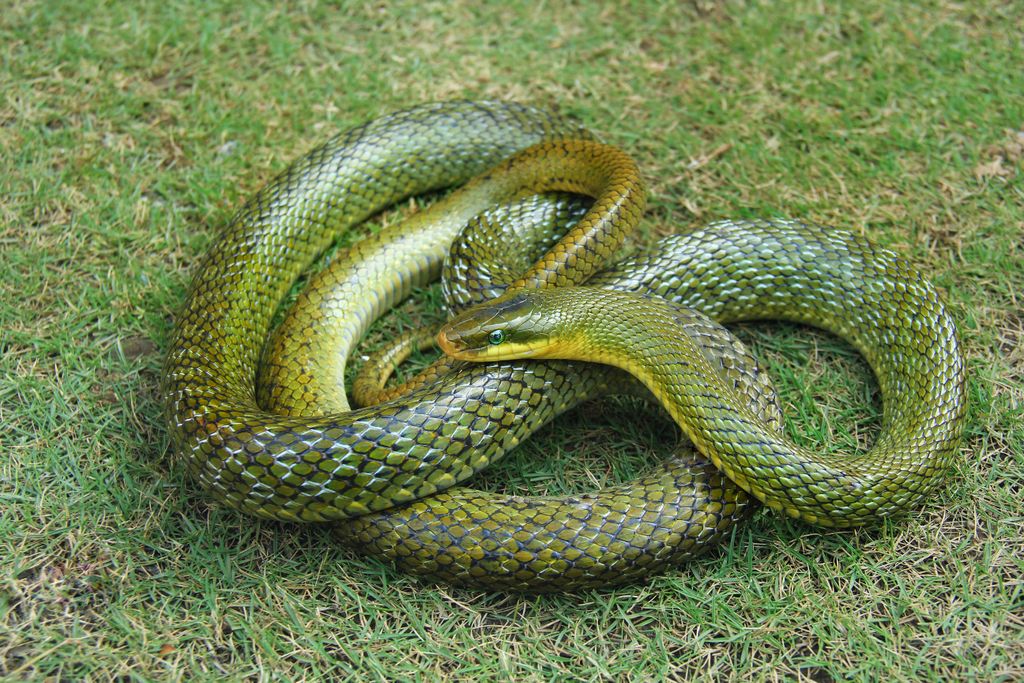
The discovery offers a possible explanation for one of the biggest challenges facing developing snakes. Snakes have exceptionally elongated bodies compared with other vertebrates, with numerous vertebrae contributing to their flexible skeletons. However, developing such a long body inside a relatively small egg presents a considerable physical challenge.
Coiling appears to help solve that problem by allowing the growing embryo to occupy a compact space while its body continues lengthening. Instead of requiring the developing animal to extend in a straight line, the spiral allows it to fold into the limited space available inside the egg.
The researchers argue that coiling could be part of what makes the development of such an elongated body possible. The process is closely connected to the interaction between the rapidly growing body, the slower digestive tract, and the position of the yolk. These structures influence the embryo’s shape while it is still developing.
Several features make this developmental process particularly unusual:
- Rapid body growth: The snake’s body elongates faster than its digestive tract during early development, creating a difference in how the structures fit together.
- A slower-growing digestive tract: The gut initially acts as a tether, restricting how far the growing body can extend in a straight line.
- The yolk’s position: Its location on the embryo’s left side helps determine the direction of the initial spiral.
- Early muscle development: The first coils form before the embryo can actively control its movements, suggesting physical forces drive the initial pattern.
- Changing growth patterns: As the embryo matures, the gut develops further and the muscles gain strength, allowing greater movement and more variable coiling directions.
Together, these processes help explain how snakes develop their long bodies while remaining confined inside eggs. The spiral may be a useful part of the developmental process rather than simply an unusual shape that happens to appear during growth.
What This Discovery Reveals About Snake Evolution
For years, researchers investigating snake anatomy have focused heavily on genetics and the evolutionary changes responsible for their unusual body shapes. Genetic research has provided important clues about how snakes developed their elongated skeletons and numerous vertebrae. However, the new findings suggest that physical growth patterns also deserve attention.
The way different structures develop inside an embryo can influence the final shape of the animal. In this case, the relationship between the body and digestive tract appears to create a spiral that helps accommodate the snake’s extraordinary length. The findings offer another way to investigate how snakes develop their distinctive anatomy.
This does not mean genetic research has become less important. Instead, the study adds another dimension to scientists’ understanding of snake development by showing how physical interactions between growing structures can influence body shape. The development of an animal involves several processes working together, and the timing of growth can have visible consequences.
The research also raises questions about how other unusual shapes emerge in nature. Scientists have long been interested in spirals because they appear in different biological structures, including intestines and snail shells. Although these structures can form through different mechanisms, understanding one developmental process may help researchers investigate others.
Tetsuto Miyashita also emphasized the value of simple observation when investigating complicated biological questions. His team’s work began with photographs and a question about which direction embryos were curling. Detailed imaging eventually helped turn that observation into a possible explanation for a long-standing biological mystery.
Scientists Hope To Understand Other Natural Spirals
The findings could open further opportunities to investigate how physical forces influence developing organisms. Spiral shapes appear throughout the natural world, from the arrangement of certain shells to the winding structures inside living bodies. Scientists are still investigating how these patterns emerge and what determines their direction.
The snake embryo study offers one example of how differences in growth rates and the positioning of internal structures can influence an organism’s shape without requiring active movement. Researchers hope to develop the model further and investigate whether similar physical principles could help explain other spiral formations.
There is still more to learn about the developmental mechanisms behind snakes’ unusual anatomy. The study provides a possible explanation for why early embryos coil clockwise, but it also opens new questions about how growing tissues interact to produce complex shapes.
What began as a question about the direction of a tiny embryo’s spiral has revealed an unexpected relationship between the digestive system and the developing body. Inside a snake’s egg, a rapidly lengthening body, a slower-growing gut, and a small supply of yolk work together to produce one of nature’s strangest developmental patterns.