
Your cart is currently empty!
Trump Faces Calls to Lose Presidential Powers as Rare Constitutional Clause Enters Political Debate

Donald Trump’s escalating campaign to acquire Greenland has triggered a political controversy that could have serious consequences for his presidency. As tensions with European allies continue to grow, several Democratic lawmakers are demanding that the president be stripped of his presidential powers using a rarely discussed constitutional provision. Their proposal has brought the 25th Amendment into the spotlight, raising questions about whether Trump could be removed from his presidential responsibilities without going through the traditional impeachment process.
Contents
show
The constitutional provision has never been used to involuntarily transfer a president’s powers under Section 4, making the current calls particularly significant. While critics argue that Trump’s recent statements and foreign policy decisions have raised serious concerns, the amendment comes with strict requirements that could make its implementation extremely difficult. Here’s what the Constitution actually allows, who would need to support the move, and why removing Trump’s presidential powers might be harder than some lawmakers suggest.

Trump’s Greenland Threats Trigger Calls for Constitutional Action
Trump’s renewed push to acquire Greenland has created fresh tensions between Washington and several European governments. The president has refused to rule out military force as a possible way of securing the Danish territory, while also threatening tariffs against European allies unless Denmark agrees to sell the island. When reporters asked how far he would go to acquire Greenland, Trump responded, “You’ll find out.” The comment followed weeks of uncertainty surrounding the White House’s position on the possibility of military action.

The president’s approach has attracted criticism from both sides of the political aisle, including Republicans who have expressed concerns about the consequences of an invasion. Republican Representative Don Bacon of Nebraska indicated that he would lean toward supporting impeachment if the United States attempted to invade Greenland. “I don’t want to give you a definite yes or no, but I would lean that way. It would be a total mistake to invade an ally. It would be catastrophic to our allies and everything. It’s just the worst idea ever in my view,” Bacon said. His comments illustrate how Trump’s Greenland ambitions have created disagreements within his own party.
The controversy intensified after reports emerged about a letter Trump sent to Norwegian Prime Minister Jonas Gahr Støre. In the letter, Trump reportedly connected his failure to receive the Nobel Peace Prize with his efforts to acquire Greenland. He was quoted as saying he “no longer feel[s] an obligation to think purely of peace.” The reported statement prompted Democratic Senator Ed Markey of Massachusetts to call for the 25th Amendment to be invoked. “Invoke the 25th Amendment,” Markey said, bringing renewed attention to a constitutional provision that could transfer presidential authority to the vice president.
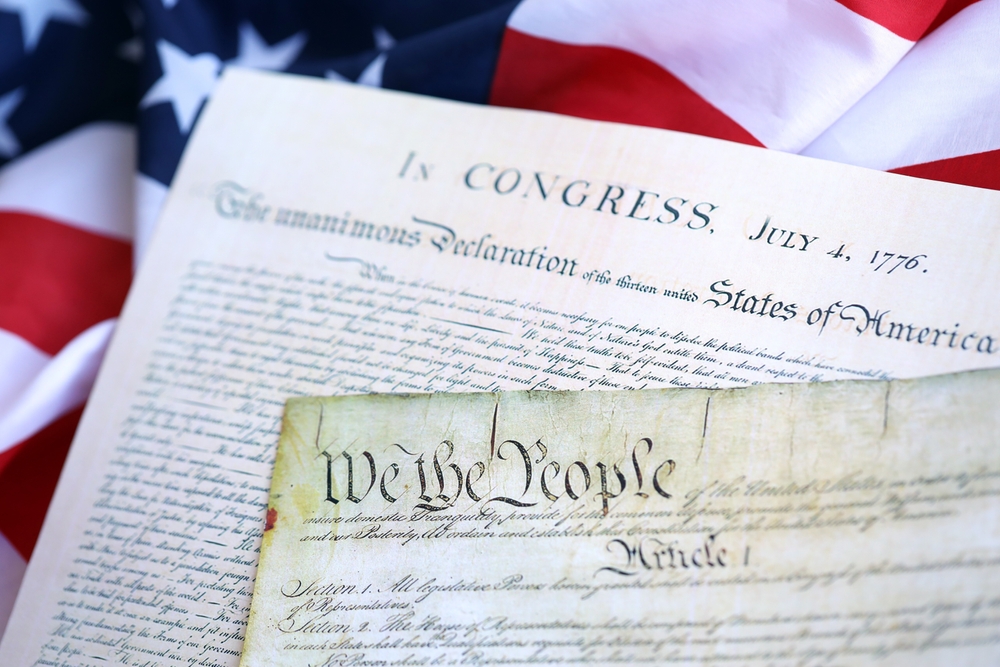
Democrats Are Demanding That the 25th Amendment Be Invoked
Markey was not the only Democratic lawmaker calling for action against Trump. Representative Yassamin Ansari of Arizona also argued that the constitutional provision should be used immediately. “The 25th Amendment exists for a reason—we need to invoke it immediately,” Ansari said. Representative Sydney Kamlager-Dove of California raised similar concerns after Trump published several late-night social media posts about Greenland, including a declaration that there was “no going back” on the issue. She argued that his actions were putting Americans at risk and called for the amendment to be invoked.
These demands reflect growing frustration among Democratic lawmakers over the president’s approach to foreign policy. However, calling for the amendment and successfully activating it are two very different things. The Constitution does not allow members of Congress to independently declare a president incapable of performing his duties. The process begins with the vice president and a majority of the principal officers of the executive departments, meaning the decision would require support from within the administration itself.
Trump has faced similar discussions before. During his first presidency, a 2018 anonymous opinion article claimed that there had been early discussions within the Cabinet about invoking the 25th Amendment. Miles Taylor, a former chief of staff at the Department of Homeland Security, later claimed responsibility for writing the article. The renewed Greenland controversy has brought those earlier discussions back into focus, although the constitutional requirements remain unchanged. Even widespread political opposition would not be enough to activate Section 4 without the necessary support from the executive branch.

What the 25th Amendment Actually Allows
The 25th Amendment was introduced following the assassination of President John F. Kennedy in 1963 and ratified in 1967. Its purpose was to establish a clear constitutional process for transferring presidential authority when a president dies, resigns, becomes incapacitated, or temporarily cannot perform official responsibilities. Before its introduction, questions surrounding presidential succession and temporary incapacity were not addressed with the same level of detail. The amendment established procedures designed to ensure that the United States would always have someone capable of exercising presidential powers.
The amendment contains four separate sections, each dealing with a different situation involving the presidency or vice presidency. These provisions cover several circumstances, ranging from the death of a president to situations in which the president voluntarily transfers authority. Understanding the differences is essential because the current political demands specifically concern Section 4.
The four sections cover the following situations:
- Section 1: Establishes that the vice president becomes president if the sitting president dies or resigns.
- Section 2: Allows the president to nominate a new vice president when the position becomes vacant, subject to confirmation by both chambers of Congress.
- Section 3: Allows a president to voluntarily transfer presidential powers temporarily to the vice president.
- Section 4: Allows the vice president and a majority of the principal executive department officers to declare the president unable to perform the duties of the office.
Section 4 is attracting the most attention because it can be initiated without the president voluntarily agreeing to transfer authority. However, it does not automatically remove the president from office permanently. Instead, the vice president assumes the responsibilities of Acting President while the constitutional process determines whether the president can resume exercising those powers.

Section 4 Could Transfer Trump’s Presidential Authority
Section 4 addresses situations in which a president is considered unable to discharge the powers and duties of the office. To activate it, the vice president and a majority of the principal officers of the executive departments must submit a written declaration to the president pro tempore of the Senate and the speaker of the House of Representatives. Once that declaration is delivered, the vice president immediately assumes the powers and duties of the presidency as Acting President. The sitting president remains in office, but the vice president takes over the exercise of presidential authority.
One important distinction is that Section 4 does not require the president’s permission. This makes it different from Section 3, which allows a president to voluntarily transfer authority, usually for a temporary medical procedure. Under Section 4, the vice president and Cabinet majority can initiate the process if they believe the president cannot perform the responsibilities of the office. However, the president has the constitutional right to challenge their declaration, which can turn the process into a major confrontation between the executive branch and Congress.
What Happens If Trump Challenges the Decision?
If Trump challenged a declaration under Section 4, he would submit a written statement to Congress asserting that no inability exists. The vice president and Cabinet majority would then have four days to reaffirm their position. If they did, Congress would have to assemble within 48 hours if it was not already in session. Lawmakers would then have up to 21 days to determine whether the president should continue to be considered unable to perform his duties.
For the vice president to retain presidential authority against the president’s wishes, two-thirds of both the House of Representatives and the Senate would have to agree that the president remains unable to perform his responsibilities. If that threshold were not reached, the president would resume exercising his powers. This requirement creates a significant obstacle for anyone attempting to use Section 4 against a sitting president, particularly when the political disagreement concerns controversial policy decisions rather than an established inability to carry out official responsibilities.
Why Section 4 Has Never Been Used Against a President
Although the 25th Amendment has been used several times, Section 4 has never been formally invoked. The provisions allowing voluntary transfers of presidential authority have been used for medical procedures, when presidents temporarily needed to undergo anaesthesia. President George W. Bush invoked Section 3 twice, in 2002 and 2007, while President Joe Biden used it in November 2021 during a routine medical procedure. In each case, presidential responsibilities were temporarily transferred to the vice president before being returned to the president.
Section 4 presents a considerably more complicated situation because it involves a declaration that a sitting president cannot fulfil the responsibilities of the office. It also requires cooperation between the vice president and a majority of Cabinet members. These officials would have to agree that the circumstances justify transferring presidential authority, even if the president strongly disagreed with their assessment. The requirement makes the provision particularly difficult to use during an ordinary political dispute.
Another major question concerns what actually qualifies as presidential incapacity. A president making controversial foreign policy decisions, upsetting international allies, or facing criticism from political opponents does not automatically establish an inability to perform constitutional duties. The amendment was designed to address situations involving presidential incapacity, and determining whether a particular situation meets that standard could become a serious constitutional dispute.
Constitutional Expert Explains Why Removing Trump Would Be Difficult
Nicholas Cole, a senior research fellow at Pembroke College, Oxford University, has questioned whether the current circumstances could realistically meet the requirements for Section 4. Cole described the threshold as “incredibly high,” highlighting the difficulty of getting the vice president and Cabinet members to agree that a president cannot perform his responsibilities. His assessment suggests that even strong disagreements over Trump’s Greenland policy would not necessarily provide sufficient grounds for invoking the amendment.
Cole also questioned whether the president’s own administration would interpret a collection of controversial policy decisions as evidence of incapacity. “This idea that the Vice President and the President’s own Cabinet are going to take the view that a set of policy decisions indicate that the President has [some kind of] incapacity is a case I can’t see,” he said. His comments highlight the central problem facing Democrats who want Section 4 invoked: the people required to initiate the process are members of the administration whose authority would be transferred.
The expert also suggested that lawmakers unhappy with Trump’s ability to perform his responsibilities could consider impeachment as a more appropriate constitutional route. The two processes address different circumstances, and the distinction could become important if the Greenland controversy continues. Section 4 deals with presidential inability, while impeachment provides a separate mechanism for addressing alleged misconduct. Cole’s assessment suggests that political disagreements over the president’s decisions are unlikely to make Section 4 an easy option.
Impeachment Could Be a More Practical Route
Impeachment has already entered the discussion among Republicans concerned about Trump’s Greenland ambitions. Representative Don Bacon’s comments indicate that an invasion of an American ally could influence his willingness to support impeachment. This is significant because criticism of Trump’s approach has not been limited to Democratic lawmakers. However, successfully removing a president through impeachment also requires substantial political support, making it a difficult process in its own right.
The impeachment process and Section 4 have different constitutional purposes, but both involve demanding congressional thresholds. Under Section 4, if the president challenges the declaration, two-thirds of both chambers must agree that he remains unable to perform his duties. Impeachment, meanwhile, requires a majority vote in the House to impeach and a two-thirds vote in the Senate to convict and remove the president. Cole pointed out that lawmakers who believe they have enough votes to overcome the Section 4 challenge could potentially pursue impeachment instead.
For Democrats demanding immediate action, the difficulty is that political criticism alone cannot activate either mechanism. They would need sufficient support from lawmakers and, in the case of Section 4, cooperation from the vice president and Cabinet. The Greenland controversy may have intensified questions about Trump’s conduct, but the Constitution establishes specific procedures that cannot simply be bypassed because members of Congress disagree with a president’s decisions.
Trump’s Greenland Controversy Leaves a Major Constitutional Question
The renewed calls to invoke the 25th Amendment have exposed a significant gap between political demands and constitutional reality. Democratic lawmakers can publicly argue that Trump should lose his presidential powers, while Republicans can question his approach to Greenland. Yet neither criticism nor political pressure is enough to trigger Section 4. The vice president and a majority of Cabinet members would first need to declare that the president cannot perform his duties, followed by a potentially difficult congressional process if Trump challenged their decision.
The amendment remains one of the most significant constitutional safeguards involving presidential incapacity, but its use against a president who refuses to step aside would require extraordinary cooperation. Trump’s Greenland ambitions have placed that possibility back in the political conversation, although the constitutional hurdles remain substantial. For now, the biggest obstacle to the proposal is not a lack of lawmakers demanding action. It is whether anyone inside Trump’s own administration would be willing to initiate the process.