
Your cart is currently empty!
Scientists Find Something Extraordinary Inside an Asteroid That Has Been Frozen in Time for 4.5 Billion Years

Scientists examining ancient asteroid material have discovered all five molecular building blocks used by DNA and RNA, raising fascinating questions about how life first appeared on Earth. The discovery comes from Ryugu, a 4.5-billion-year-old asteroid that has preserved chemical clues from the earliest days of the Solar System. Researchers have now confirmed that the five essential nucleobases used by living organisms were present in this ancient space rock, suggesting that some of the ingredients needed for life existed long before Earth became the planet we know today.
Contents
show
The finding adds to growing evidence that asteroids carried complex organic molecules throughout the early Solar System. Scientists have previously identified similar compounds in meteorites and samples collected from another asteroid, Bennu. However, finding all five nucleobases in pristine Ryugu material provides another important piece of evidence in the investigation into life’s origins. The discovery also raises an intriguing possibility: some of the chemical ingredients that eventually became part of living organisms may have arrived on Earth from space.
Scientists Discover All Five Genetic Building Blocks on Ryugu
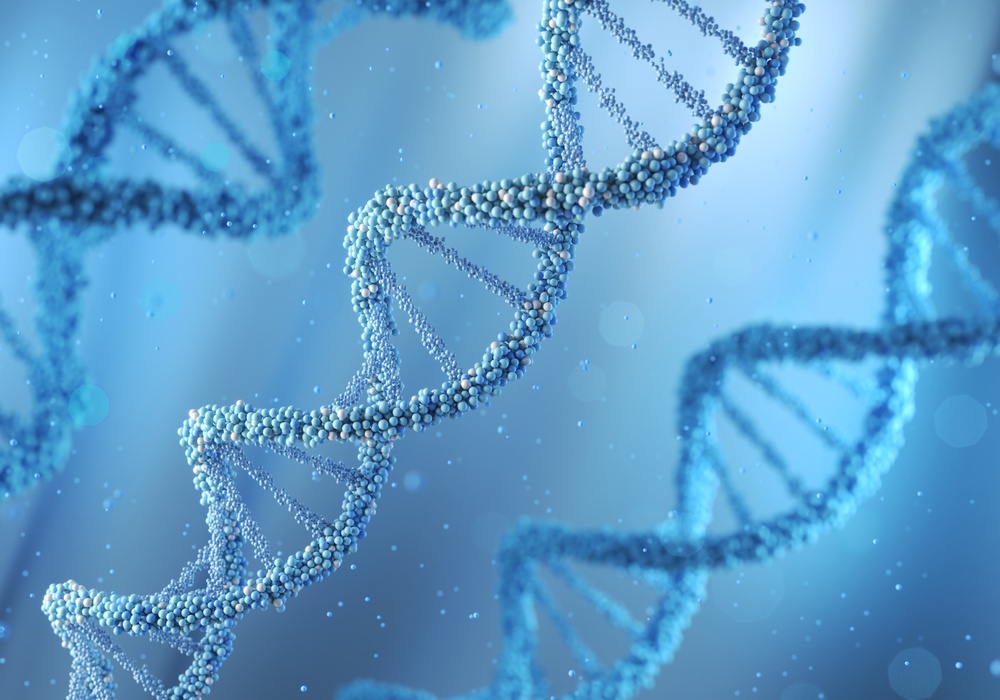
The discovery centres on samples collected from asteroid Ryugu by Japan’s Hayabusa2 spacecraft. The mission returned 5.4 grams of asteroid material to Earth in 2020, giving scientists an unusually valuable opportunity to examine a space rock that had preserved chemical clues from the early Solar System. According to research published in Nature Astronomy, a Japanese scientific team identified all five fundamental nucleobases in two Ryugu samples. These molecules are the chemical letters used to store genetic information in living organisms.
The finding builds on earlier research published in 2023, when scientists reported detecting uracil in Ryugu material. The latest analysis expands that discovery by confirming the presence of adenine, guanine, cytosine, thymine and uracil. These five molecules are essential components of the genetic systems used by life on Earth. Their presence in an ancient asteroid provides further evidence that the chemical ingredients associated with biology were already circulating through space billions of years ago.
Researchers detected the five nucleobases in roughly similar amounts across the two samples they examined. This gives scientists additional evidence about the organic chemistry preserved inside Ryugu. The asteroid material is particularly valuable because it was collected directly in space and returned inside a protected capsule, reducing the risk of contamination from Earth’s environment. The results suggest that the ingredients associated with genetic information may have been more widespread throughout the early Solar System than scientists once understood.
What Are the Five Molecular Letters of Life?
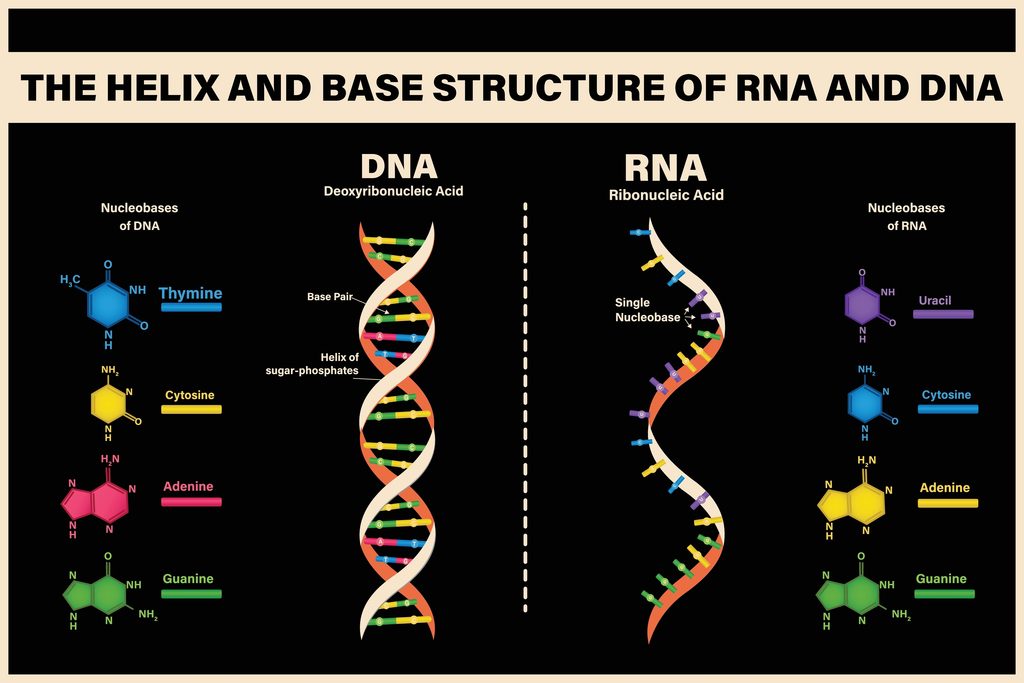
DNA and RNA carry the genetic information that allows living organisms to function, grow and reproduce. Their structures depend on molecules called nucleobases, which combine with sugars and phosphate groups to form nucleotides. These nucleotides are the building blocks of genetic material, allowing biological systems to store and use instructions. Without these chemical components, the genetic systems found in living organisms could not function as they do today.
The five nucleobases identified in Ryugu belong to two chemical groups known as purines and pyrimidines. Adenine and guanine are purines, while cytosine, thymine and uracil are pyrimidines. Although these names may sound technical, their functions are central to the way genetic information is organised. DNA uses adenine, guanine, cytosine and thymine, while RNA uses adenine, guanine, cytosine and uracil.
The five molecules have distinct roles within these genetic systems:
- Adenine: A purine found in both DNA and RNA.
- Guanine: A purine that helps form the genetic code.
- Cytosine: A pyrimidine found in both forms of genetic material.
- Thymine: A pyrimidine used in DNA.
- Uracil: A pyrimidine used in RNA instead of thymine.
Finding all five in ancient asteroid material gives researchers an opportunity to investigate how these molecules formed before life emerged. Their presence does not mean the asteroid contained living organisms. Instead, it shows that essential chemical ingredients associated with genetic material can exist in space without requiring biological activity.
How Scientists Examined the Ancient Asteroid Material
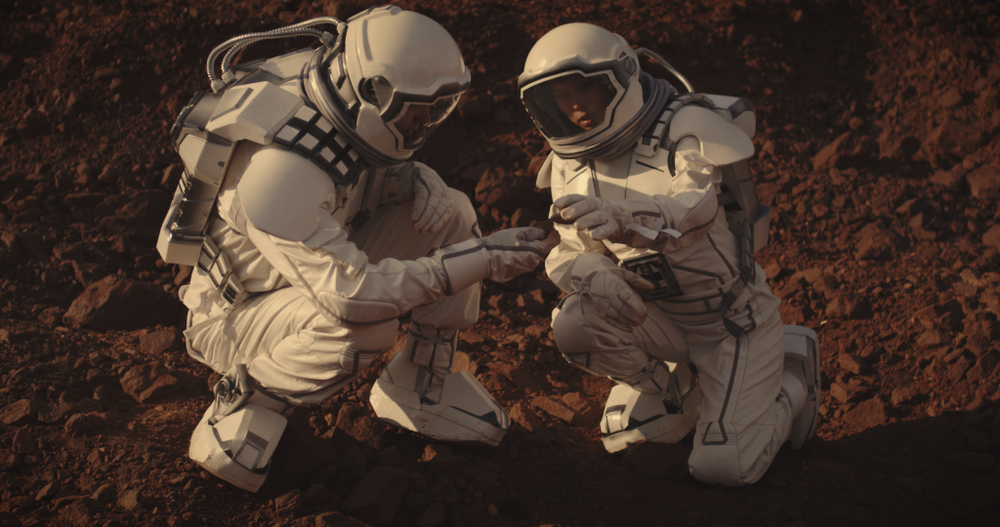
Studying Ryugu required exceptionally careful laboratory work because the samples are among the most valuable materials collected from an asteroid. The Hayabusa2 mission brought the particles back to Earth in 2020, allowing researchers to investigate their chemical composition without relying on meteorites that had already passed through the atmosphere. Scientists used ultra-clean laboratory conditions to reduce the possibility of introducing substances that could interfere with the results.
The research team extracted organic molecules from the asteroid material using water and hydrochloric acid. They then purified the extracted substances before examining them for evidence of nucleobases. This process allowed researchers to separate and identify the relevant organic compounds while protecting the integrity of the original material. Working with such small quantities required careful handling throughout the analysis.
The detection of all five nucleobases in both analysed samples strengthens the findings. Their presence in roughly similar amounts also provides useful information about the chemical composition of Ryugu. Scientists can now compare these results with material collected from other asteroids and meteorites to investigate whether similar chemical processes occurred across different parts of the early Solar System.
Asteroids May Have Carried Life’s Ingredients Across Space
Ryugu is not the first space rock to reveal organic molecules associated with genetic material. Scientists have previously identified nucleobases and other complex organic compounds in meteorites that landed on Earth. Two important examples are the Murchison meteorite, which fell in Australia in 1969, and the Orgueil meteorite, which fell in France in 1864. These discoveries helped establish that the chemistry associated with life’s building blocks can occur beyond our planet.
However, meteorites collected after landing can be exposed to Earth’s atmosphere, soil and other environmental influences. This makes pristine asteroid samples particularly useful because they offer a clearer picture of the material before its arrival on Earth. NASA’s mission to asteroid Bennu produced another important discovery in 2025, when researchers reported finding all five nucleobases in samples returned from that asteroid. The findings from Bennu and Ryugu now provide evidence from two separate asteroid missions.
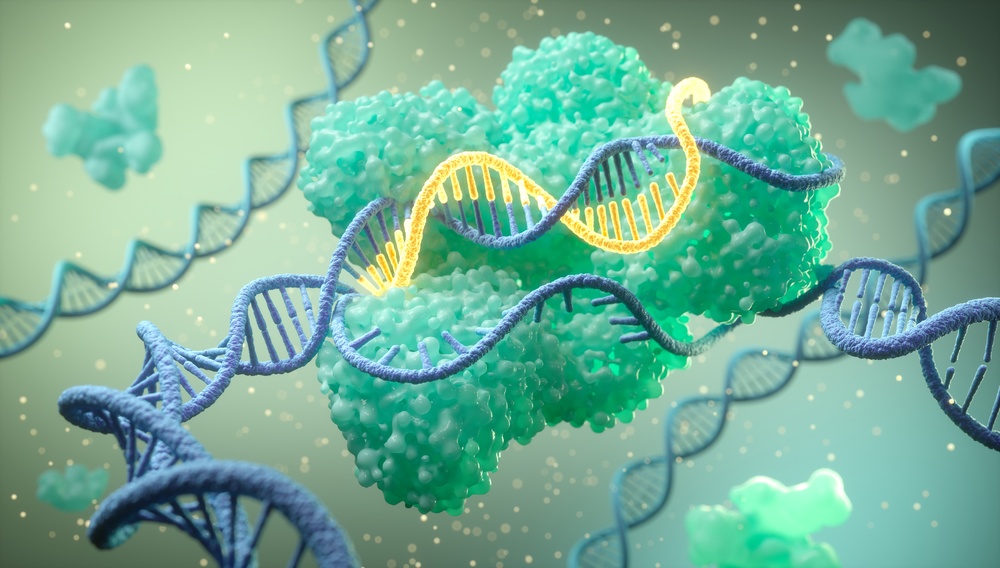
Asteroids such as Ryugu and Bennu are remnants of the early Solar System. Their parent bodies formed billions of years ago and preserved organic material through much of that time. Researchers believe that some of these space rocks may have delivered organic compounds to the young Earth through ancient impacts. If that happened, asteroids could have contributed some of the ingredients needed for the chemical processes that eventually led to life.
Why Different Asteroids Contain Different Chemical Mixtures
Although several asteroids and meteorites contain nucleobases, their chemical compositions are not identical. Researchers have found differences in the relative amounts of purines and pyrimidines across different space rocks. The Murchison meteorite, for example, is enriched in purines, while Bennu and Orgueil contain greater amounts of pyrimidines. These variations suggest that the chemical environments inside ancient asteroid parent bodies influenced which molecules formed or survived.
One possible explanation involves ammonia, a nitrogen-containing molecule that can influence the formation of nucleobases. Differences in ammonia availability and other chemical conditions may affect the balance between purines and pyrimidines. This means that asteroids can preserve different chemical histories even when they contain many of the same organic compounds. Comparing their compositions allows researchers to investigate the environments in which these molecules developed.
The variations also show why scientists need samples from multiple asteroids. A single space rock cannot provide a complete picture of organic chemistry across the early Solar System. By examining material from Ryugu, Bennu and meteorites such as Murchison and Orgueil, researchers can identify similarities and differences that reveal how widespread these compounds may have been. Each sample offers another opportunity to understand the chemical conditions that existed billions of years ago.
What the Discovery Reveals About Earth’s Origins
The discovery raises important questions about how Earth acquired the chemical ingredients associated with life. Scientists have long investigated whether the earliest organic molecules formed through chemical reactions on our planet or arrived through impacts involving asteroids and other space objects. The latest Ryugu findings provide further evidence supporting the possibility that some of these compounds existed in space before reaching Earth. This gives researchers another avenue to investigate the planet’s earliest chemical history.
During the early Solar System, asteroids and other rocky objects frequently collided with planets and smaller bodies. Some of these objects contained water, carbon and a variety of organic compounds. If ancient asteroids delivered nucleobases and other useful molecules to Earth, they may have helped supply the raw materials needed for increasingly complex chemical reactions. This possibility connects the history of life on Earth with processes that occurred far beyond the planet.
However, finding all five nucleobases in an asteroid does not establish that life existed there or prove that asteroids created life on Earth. Nucleobases are important ingredients, but living systems require much more than individual molecules. Scientists still need to understand how organic compounds became organised into structures capable of storing information, carrying out chemical reactions and eventually reproducing. The Ryugu discovery provides evidence about the availability of essential ingredients, while the transition from chemistry to biology remains an open scientific question.
The Biggest Questions About Life Are Still Unanswered
The discovery provides another important clue, but scientists still have considerable work ahead. Finding all five nucleobases in pristine asteroid material raises questions about how these molecules formed, how widely they were distributed and whether similar chemical conditions existed across other regions of the early Solar System. Researchers can use comparisons between asteroid samples to investigate the processes responsible for producing and preserving these compounds.
Several questions remain particularly important as scientists continue investigating the origins of life’s chemical ingredients:
- Where did the molecules form? Researchers are investigating whether nucleobases developed inside asteroid parent bodies or through chemical processes elsewhere in space.
- How widespread were they? More asteroid samples could reveal how common these compounds were throughout the early Solar System.
- What influenced their abundance? Chemical conditions involving ammonia and other substances may explain differences between asteroid samples.
- How did they reach Earth? Scientists are examining how ancient impacts could have delivered organic material to our planet.
- How did chemistry become biology? The transition from individual organic molecules to self-replicating systems remains one of science’s greatest challenges.
Future research involving pristine asteroid material could help answer these questions. Scientists are particularly interested in comparing samples from different asteroids because their chemical differences may reveal how organic compounds developed under varying conditions. Each new discovery can help narrow down the possible pathways through which the ingredients of life emerged and eventually became available on Earth.
An Ancient Asteroid Could Hold Clues to Our Existence
Ryugu has preserved material from approximately 4.5 billion years ago, offering scientists a rare opportunity to investigate the chemical conditions that existed during the earliest stages of the Solar System. The discovery of all five DNA and RNA nucleobases adds to evidence from Bennu and ancient meteorites that essential ingredients associated with genetic material were present beyond Earth. Scientists still cannot explain exactly how life began, but these ancient space rocks are providing increasingly valuable clues.
The possibility that some of life’s essential ingredients arrived from space gives the search for our origins an extraordinary new dimension. The molecules that help living organisms store genetic information may have existed long before Earth developed its first biological systems. Somewhere in the ancient chemical history preserved by asteroids such as Ryugu could be another piece of the puzzle explaining how a lifeless collection of molecules eventually became the living world.