
Your cart is currently empty!
Trump Hints He Could Stay Neutral In The 2028 Republican Presidential Race

Donald Trump has spent years establishing himself as the central figure in the Republican Party, with his endorsements carrying considerable influence over primary contests. However, the president has now suggested he could leave the party’s next presidential nomination battle entirely in the hands of Republicans, rather than choosing a preferred successor himself.
Contents
show
During an interview with CBS News’ 60 Minutes, Trump discussed the possibility of endorsing a candidate for the 2028 presidential election. Although he initially indicated that he would probably support someone, he later suggested that staying out of the contest might be a better option.
His comments come at a difficult moment for Republicans, following substantial Democratic victories in the 2026 midterm elections. With Vice President JD Vance, Secretary of State Marco Rubio and several other Republican figures being discussed as potential presidential contenders, Trump’s decision could become an important part of the party’s next leadership transition.
Trump Admits He May Not Endorse Anyone In 2028
The question came during Trump’s interview with Ross Douthat, a CBS News correspondent for 60 Minutes. The conversation covered several subjects, including the Republican Party’s recent electoral losses, Trump’s administration and the future of the MAGA movement.
When Douthat turned to the 2028 presidential election, he reminded Trump that another Republican would become the party’s presidential nominee in two years. He then asked whether the president intended to endorse someone to replace him.
Trump initially appeared open to the possibility, although his response was less definite than many might have expected. “Probably. Not necessarily,” he told Douthat when asked whether he would endorse a candidate.
The interviewer followed up by asking how Trump would decide whom to support. The president responded by praising the number of potential candidates available within the Republican Party, suggesting that he had positive relationships with several people who could compete for the nomination.
“I don’t know, we have a tremendous bench. I mean, I have so many people that I have great relationships with,” Trump explained. His answer suggested that he was not prepared to identify one particular person as his preferred successor.
Douthat then asked who could be considered beyond the vice president. Trump mentioned Rubio, describing him positively, before acknowledging that other potential contenders had not received the same public attention.
“The ones they think about, but there are many others and I’d rather not mention their names. There’s some senators that are excellent. I know ’em all, I like ’em a lot,” Trump said.
He eventually made his position clearer, although he stopped short of ruling out an endorsement altogether. “So I may or may not get involved. I don’t know. Maybe I’m better off not getting involved,” the president added.
The distinction is significant because Trump has previously played a prominent role in Republican primary politics. His decision to support a candidate could attract considerable attention, while choosing to remain neutral would leave potential successors competing without an official endorsement from the president.
JD Vance And Marco Rubio Emerge As Potential Successors
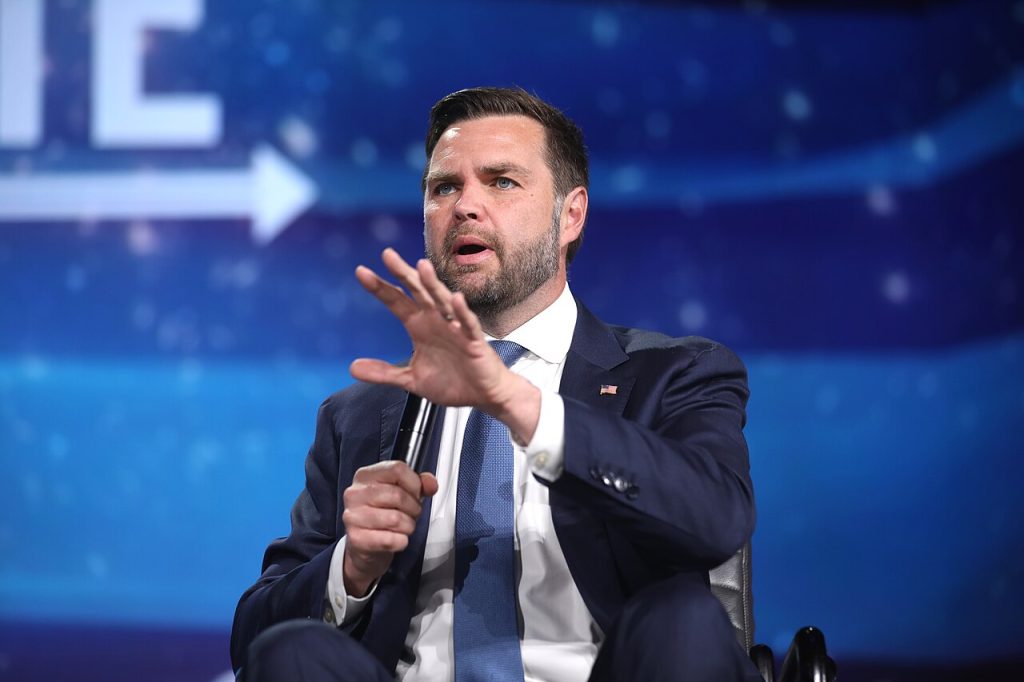
Trump’s interview brought attention to two Republicans whose names have repeatedly appeared in discussions about the party’s future. Vance and Rubio currently occupy senior positions in the administration, giving both a national profile ahead of the next presidential election.
Neither received an endorsement during the interview, and Trump did not indicate that he had privately settled on a preferred successor. Nevertheless, his comments offered an insight into how he views the potential candidates surrounding him.
JD Vance Remains A Prominent Name
As vice president, Vance occupies one of the most visible positions in American government. His role alongside Trump has placed him close to the administration’s major political decisions, while also giving him opportunities to build relationships with Republican voters and party figures.
Vance has frequently been mentioned in conversations about the 2028 Republican nomination. His position also makes him an obvious subject whenever Trump is asked about the possibility of a successor.
A New York Times/Siena University poll cited in the supplied reporting found that 33% of Republican voters surveyed preferred Vance as the next Republican presidential nominee. That placed him ahead of Rubio, although the figures represent a snapshot of opinion rather than a prediction of the eventual primary outcome.
Trump did not specifically discuss Vance’s chances of becoming the nominee during the exchange. Instead, he acknowledged the vice president as part of the broader group of potential contenders without offering a commitment to support him.
Rubio Also Receives Positive Comments
Rubio has established a prominent position in the administration through his role as secretary of state. His responsibilities have placed him at the center of American foreign policy, making him another recognizable figure within the Republican leadership.
Trump spoke favourably about Rubio when Douthat asked whether he could become a candidate in 2028. “I think Marco’s great,” the president said, before describing him as someone doing a fantastic job.
The same New York Times/Siena University poll placed Rubio at 23% among surveyed Republican voters. Although that figure was below Vance’s result, it showed that Rubio was also attracting support in discussions about the next Republican nominee.
Trump’s comments did not suggest that he had chosen between the two men. Instead, he praised Rubio while leaving open the possibility that other Republicans could also enter the contest.
Republicans Are Facing The Fallout From The 2026 Midterms
The timing of Trump’s remarks is particularly notable because they came just days after Republicans experienced major losses in the 2026 midterm elections. Democrats secured control of both chambers of Congress, while also making gains in several statewide contests.
The results marked a significant setback for Trump’s party during the second half of his presidency. They also created a difficult political environment for Republican candidates who had campaigned with his support.
During the campaign season, Trump repeatedly encouraged voters to treat the midterms as though he himself were on the ballot. He appeared at rallies and publicly supported Republican candidates, seeking to bring his political influence into contests across the country.
However, several candidates who received his endorsement failed to win their races. The outcome prompted questions about how effectively Trump’s personal popularity could translate into votes for other Republicans.
Douthat raised precisely that issue during the interview, pointing out that Trump had encouraged supporters to vote as if he were personally running. The interviewer also noted that Trump had endorsed candidates who subsequently struggled in their respective contests.
Trump responded by arguing that the results would have been different if he had appeared on the ballot himself. “I was not on the ballot,” he said, suggesting that his own presence could have changed the outcome.
He also acknowledged that some voters had reservations about particular Republican candidates. Trump said that voters had the right to reject candidates they did not support, even when he had personally backed them.
The president’s explanation also included other factors that he believed contributed to the Republican losses. These included dissatisfaction with the Iran war, rising gasoline prices and public concerns about Israel.
Trump Acknowledges Problems With His Administration’s Messaging
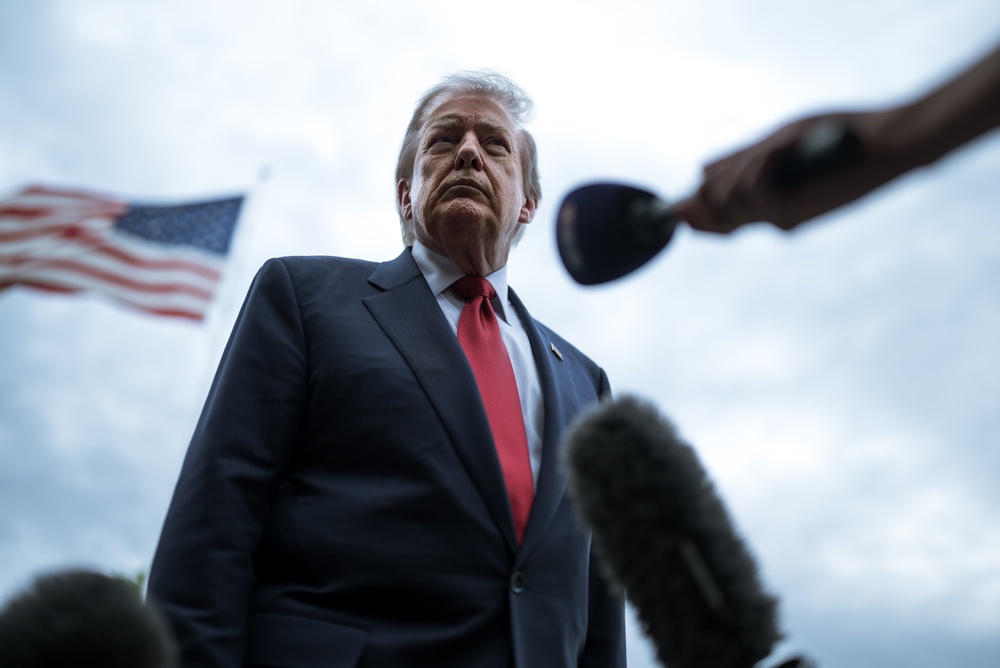
The election discussion also turned towards the economy, an issue that has remained central to American political campaigns. Douthat questioned why voters appeared dissatisfied despite Trump’s repeated claims that the economy was performing strongly.
Trump defended his administration’s economic record and argued that the country had achieved historically strong financial results. He also criticised media coverage, claiming that positive economic developments were not receiving sufficient attention.
However, he acknowledged that his administration may have struggled to communicate its economic message effectively. When Douthat asked why voters were not responding positively to his claims, Trump offered a relatively direct explanation.
“I think it was bad messaging,” the president said. He then added that his administration had failed to get its message across to the public.
The exchange offered another indication of the difficulties facing Republicans after the midterm results. Economic performance and the cost of living remain important issues for voters, and the administration’s explanation for the election outcome will likely remain part of political discussions.
Trump also discussed the impact of immigration enforcement, another major issue during his presidency. He maintained that securing the border had received strong public support but acknowledged that removing certain people who had established lives and jobs in the United States could create problems.
When Douthat asked whether his deportation approach had gone too far, Trump conceded that it might have been too tough in some cases. He suggested that an agreement with Democrats could potentially allow some long-term residents who had established employment to remain in the country.
His comments indicated an openness to discussing immigration policy with the incoming Democratic congressional majority. However, the interview did not establish what specific agreement could be reached or whether negotiations would produce a legislative compromise.
Trump Says MAGA Can Continue Without His Leadership
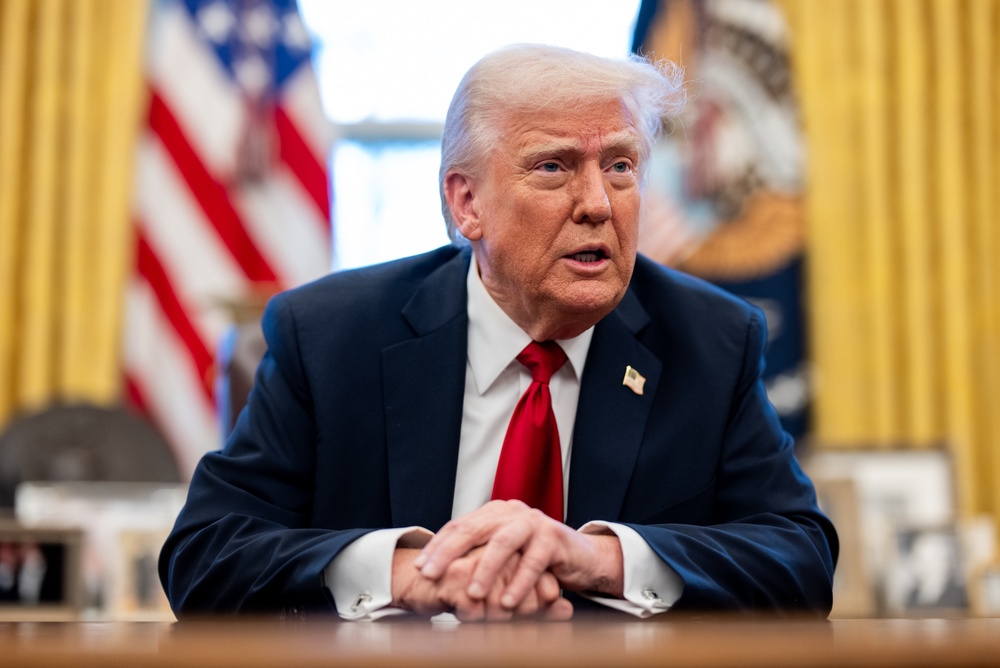
One of the more revealing exchanges came when Douthat asked whether the Make America Great Again movement could survive without Trump leading it. The question touched on an issue that will become increasingly relevant as Republicans prepare for the 2028 election.
For years, MAGA has been closely associated with Trump’s political identity, campaign appearances and policy priorities. Its influence within the Republican Party has also helped shape debates over immigration, foreign policy and the direction of the conservative movement.
Trump appeared confident that the movement could continue after his presidency. “I think so. Because MAGA is basically common sense, you know?” he told Douthat.
He then described what he considered the movement’s central principles, pointing to strong borders and a strong military. Trump also highlighted what he described as unprecedented wealth creation under his administration.
His answer presented MAGA as a political movement built around a set of priorities rather than something that depends entirely on his personal leadership. That distinction could become important when Republican voters begin considering candidates who want to represent the movement in the next election.
However, the question of leadership remains unresolved. Vance and Rubio may both be associated with the current administration, but neither has received Trump’s public endorsement for the 2028 nomination.
Other Republicans could also attempt to position themselves as candidates capable of carrying the movement forward. Trump’s willingness to mention unnamed senators suggests that he believes the potential field extends beyond the two administration figures receiving the most attention.
Ted Cruz And Ron DeSantis Are Also Among The Names

Although Trump did not mention every potential contender during the interview, other Republican figures have already been discussed in connection with the next presidential race. Texas Senator Ted Cruz and Florida Governor Ron DeSantis are among those identified in the supplied reporting.
Both have strongly signalled interest in entering the 2028 contest. Their possible participation could create a broader Republican primary featuring candidates with different political backgrounds and approaches.
Cruz has an established national profile through his work in the Senate and previous presidential campaign. DeSantis also has experience running a large state government and previously competed against Trump for the Republican nomination in 2024.
Their potential involvement would add another dimension to the succession discussion. The presence of several candidates could make the primary a contest over policy priorities, leadership styles and the future direction of the Republican Party.
Trump’s comments about unnamed senators are also worth noting in this context. He did not identify those individuals, leaving room for speculation about which Republican politicians he considers suitable candidates.
However, there is currently no public commitment from Trump to support Cruz, DeSantis, Vance, Rubio or anyone else. His remarks leave the question of his preferred successor unanswered.
Trump’s Endorsement Could Still Influence The Republican Primary
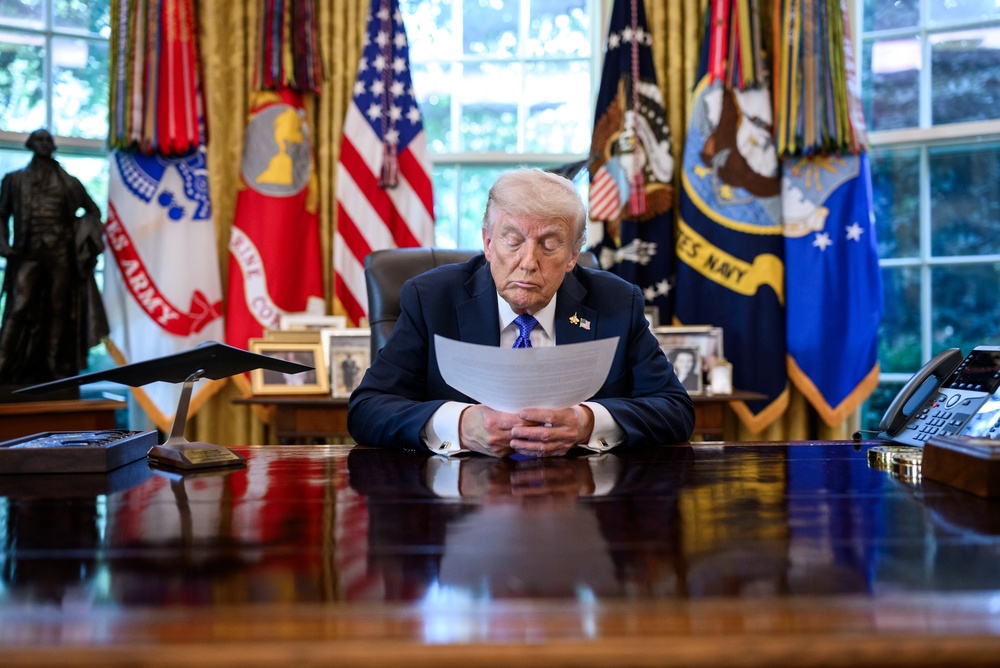
Even though Trump suggested he might stay out of the 2028 race, he acknowledged that his endorsement could carry significant influence if he decided to use it. During the interview, he defended his record of supporting Republican candidates and said his endorsement capacity had been strong.
That statement reflects the position Trump has occupied within the Republican Party for much of the past decade. His support has frequently been sought by candidates hoping to strengthen their standing among Republican primary voters.
An endorsement from a sitting president can attract media attention, introduce a candidate to new audiences and provide a campaign with valuable political support. Trump’s influence within the party has made the possibility of his backing particularly relevant to potential successors.
However, the 2026 midterm results have also raised questions about the limits of that influence. Several Trump-backed candidates lost their contests, showing that an endorsement does not guarantee victory in a general election.
The distinction between primary and general elections is important here. A candidate may receive support from Republican voters during a primary but still face a different set of challenges when competing against a Democratic opponent.
For Republicans considering the next presidential contest, Trump’s eventual position could therefore be significant in several ways. His endorsement might help one candidate establish an early advantage within the party, while his neutrality could give multiple contenders an opportunity to build their own support.
There is also the possibility that Trump could initially remain neutral before deciding to intervene later. His interview comments do not rule out that option, and he made clear that he had not reached a final decision.
The 2028 Succession Question Is Now In Focus
The Republican Party has two years before selecting its next presidential nominee, but discussions about the leadership transition are already underway. Trump’s interview has brought those discussions into sharper focus by raising the possibility that he might not personally choose a preferred candidate.
His comments also come at a time when Republicans are dealing with the consequences of losing control of Congress. The new Democratic majorities will have greater authority over legislation, congressional investigations and oversight of the administration.
That political environment could influence how potential Republican candidates approach the next election. They will have to consider their relationship with Trump while also developing their own positions on the issues facing the country.
Vance and Rubio remain among the most prominent names in the conversation, while Cruz, DeSantis and other Republicans could also seek the nomination. Trump’s decision about whether to endorse someone may become an important factor as those campaigns develop.
For now, the president has left the door open to both possibilities. He has praised potential successors, described MAGA as capable of continuing without him and acknowledged that he may be better off staying out of the nomination contest.
The Republican Party’s next presidential nominee will eventually have to emerge from that competition. Whether Trump chooses to influence the process or watch from the sidelines remains one of the biggest unanswered questions surrounding the party’s future.