
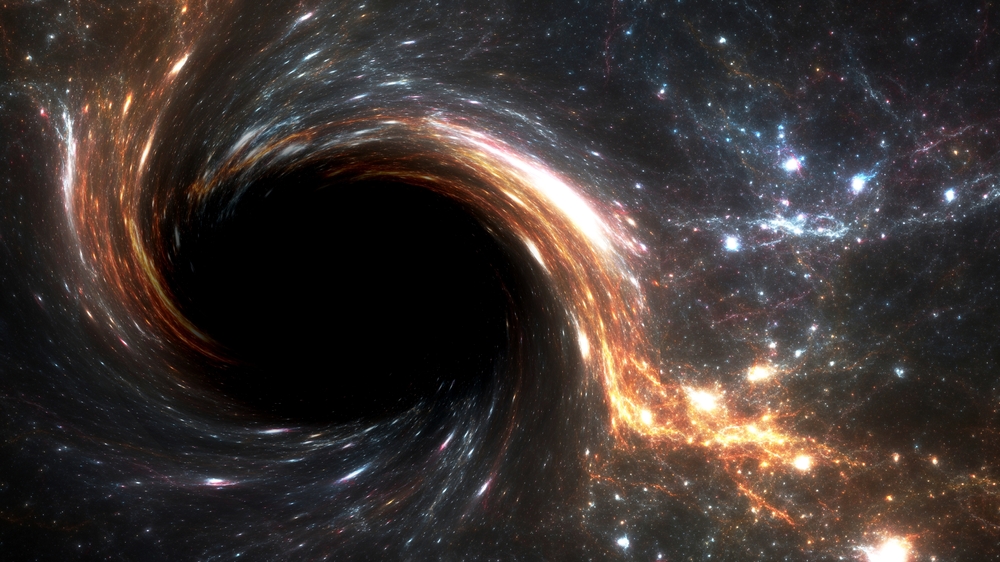
A massive star disappearing without a spectacular explosion sounds almost impossible, yet astronomers are finding evidence that this may happen across the universe. Some stars could be collapsing directly into black holes, leaving behind little or no visible supernova. Now, researchers have identified an unusual pattern in black hole observations that could help explain these mysterious stellar deaths.
A new study led by the California Institute of Technology (Caltech) has uncovered a strange gap in the masses of merging black holes. While black holes weighing around 10 times the mass of the Sun appear remarkably common, those between 12 and 16 solar masses are surprisingly scarce. Scientists believe this unusual distribution could point toward a hidden population of stars that collapsed under their own gravity without exploding.
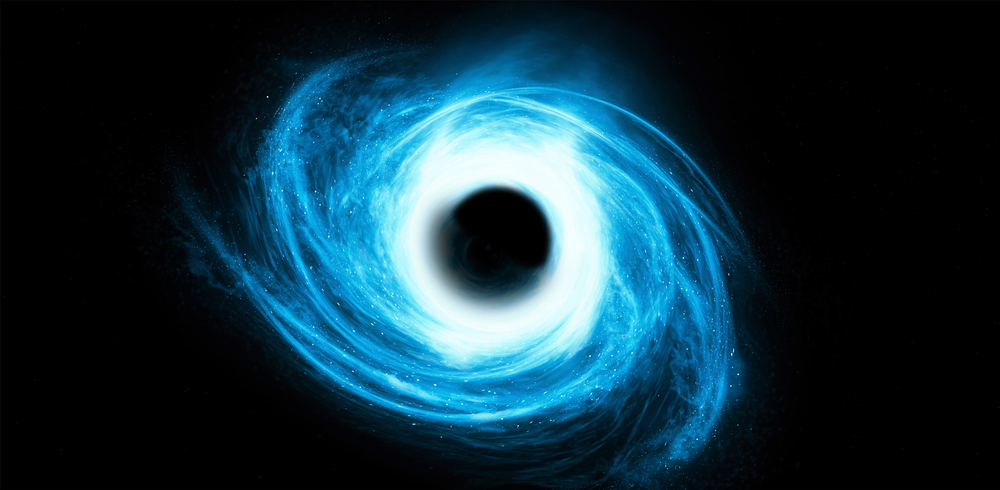
Scientists Have Discovered An Unusual Black Hole Pattern
Researchers analyzed 257 black hole mergers detected through the LIGO-Virgo-KAGRA gravitational-wave network. Their findings revealed a striking concentration of black holes weighing approximately 10 times the mass of the Sun, accounting for roughly three-quarters of the merger sample. However, the distribution changed considerably when scientists examined black holes with slightly greater masses, particularly those between 12 and 16 solar masses.
This unexpected shortage caught the researchers’ attention because black hole masses can reveal important information about how their original stars died. Massive stars undergo complicated physical changes during their final stages, and different conditions can determine whether they explode or collapse into black holes. The unusual concentration around 10 solar masses suggests that certain stellar conditions may favor the formation of black holes within this particular mass range.
Isaac Legred, the study’s lead author and a postdoctoral researcher at the University of Illinois Urbana-Champaign, explained the mystery behind the findings. “We see 10 solar-mass black holes merging all the time,” Legred said. “But why are, say, 14 solar-mass black holes so rare?” According to the researchers, the missing mass range could reveal a special combination of internal physical processes that influences how massive stars eventually collapse.
Some Massive Stars May Die Without Supernova Explosions
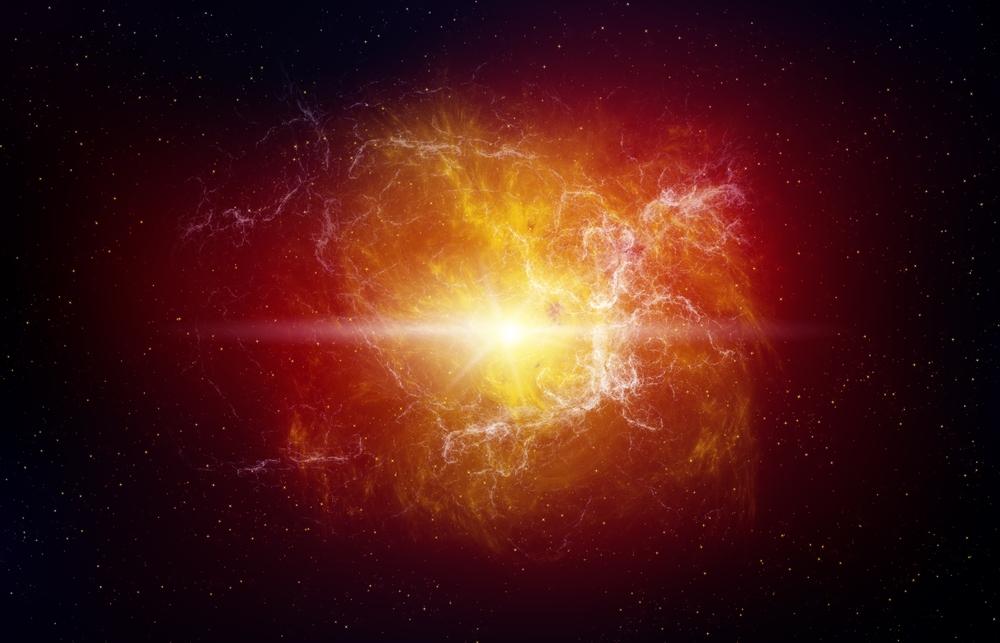
A supernova is one of the most dramatic events in astronomy. When a massive star reaches the end of its life, its core can collapse under gravity and trigger an enormous explosion that releases energy and throws stellar material into surrounding space. Depending on the conditions inside the collapsing star, the remaining core may eventually become a neutron star or a black hole.
However, theoretical models suggest that some massive stars might skip the spectacular explosion entirely. Their cores could collapse directly into black holes, with little or no visible supernova accompanying the process. Astronomers call these events failed supernovae, and they could explain why certain black holes appear so frequently in gravitational-wave observations.
The possibility creates an unusual problem for astronomers because a star that collapses silently can be difficult to identify. Without a bright explosion, observers may simply notice that a previously visible star has disappeared. Researchers have proposed that these events could produce a substantial number of the black holes found in merging binary systems, particularly those weighing around 10 solar masses.
Gravitational Waves Are Revealing Clues About Silent Stellar Deaths
Black holes cannot be observed directly through ordinary visible light because their gravitational pull prevents light from escaping beyond their event horizons. However, when two black holes orbit each other and eventually collide, they release gravitational waves that travel through spacetime. These signals carry information about the objects involved, allowing astronomers to investigate their masses, spins and other properties long after their original stars have disappeared.
The first direct detection of gravitational waves from merging black holes was announced in 2016, following observations made by the LIGO observatories in September 2015. The international detection network now includes LIGO facilities in Louisiana and Washington, Virgo in Italy and KAGRA in Japan. Together, these observatories have detected more than 300 black hole collisions, providing researchers with an increasingly detailed picture of how these extreme objects behave.
The new study examined both the masses and spin rates of merging black holes. Researchers found that black holes near 10 solar masses displayed a narrower distribution of spin rates than the broader population. Combined with the unusual mass concentration, this pattern suggests that these black holes may have formed through similar processes. The gravitational-wave signals could therefore help identify stellar deaths that would otherwise remain almost impossible to observe.
Hubble Has Already Captured A Star That Appears To Have Vanished
One of the most fascinating examples connected to failed supernova research involves a massive star known as N6946-BH1. Astronomers observed the star using NASA’s Hubble Space Telescope and noticed that its appearance changed dramatically over several years. Images from 2007 showed the star before it later faded from view, leading researchers to investigate whether it had collapsed directly into a black hole.
The star experienced a dramatic increase in brightness in 2009 before gradually disappearing from visible-light observations. Located in the galaxy NGC 6946, approximately 22 million light-years away, the object became a particularly interesting candidate for a failed supernova. Researchers have suggested that its disappearance could have resulted from its core collapsing under gravity rather than producing a conventional stellar explosion.
NASA’s Hubble observations also revealed infrared radiation from the location where the star had previously appeared. This radiation may be associated with material falling toward a newly formed black hole. Although the observations provide an intriguing example of what a failed supernova might look like, the object’s final fate has not been conclusively established. Its disappearance nevertheless gives astronomers an important opportunity to investigate how massive stars can end their lives.
Why The Missing Black Hole Masses Have Scientists Interested
The shortage of black holes between 12 and 16 solar masses could reveal something fundamental about the final stages of massive stars. Researchers believe certain combinations of stellar conditions may make some black hole masses much more likely to form than others. If the proposed explanation is correct, the concentration around 10 solar masses could represent a distinct population created through failed supernovae.
Katerina Chatziioannou, a Caltech physics professor and member of the LIGO team who led the research, explained the possible connection between the observations and stellar evolution. “A vast majority of the merging black holes in the universe are about 10 times the mass of our Sun,” Chatziioannou said. She added that the observations suggest this group may share a common origin and represent a population of black holes formed when stars failed to explode.
The discovery could also help researchers understand why some massive stars produce spectacular supernovae while others collapse almost silently. Several important questions remain open, including which internal stellar conditions prevent an explosion and how frequently these silent collapses occur. Scientists will need additional observations and improved models to determine whether failed supernovae can explain the unusual black hole distribution.
What Scientists Still Need To Confirm
Although the findings support the failed supernova explanation, researchers have been careful not to present the theory as a confirmed discovery. The unusual black hole mass distribution is consistent with predictions for stars that collapse without producing conventional explosions. However, gravitational-wave observations alone have not yet established that these stellar deaths are responsible for the entire population.
Researchers also face the challenge of distinguishing between different processes that can produce black holes with similar masses. The internal structure of a massive star, its evolution and the conditions surrounding its final collapse can all influence the resulting object. Understanding these factors will help scientists determine whether the missing mass range represents evidence of a particular type of stellar death or another feature of black hole formation.
Lead author Isaac Legred described the difficulty of studying stars that may disappear without an explosion. “We can look up at the sky and try to study historical records of massive stars that failed to explode, but it’s challenging because they just vanish without exploding, leaving a dark patch of sky,” he explained. Gravitational-wave astronomy offers another route by allowing scientists to investigate the black holes left behind rather than relying entirely on observations of the original stars.
The Universe Could Be Hiding An Entire Population Of Silent Stars
A massive star does not always need a brilliant explosion to leave behind one of the universe’s most powerful objects. Some may collapse directly into black holes, disappearing from view while leaving behind clues that scientists can detect much later through gravitational waves. The strange gap in black hole masses has given astronomers another way to investigate this possibility.
If future observations confirm the theory, scientists could gain a much clearer understanding of how massive stars die and why certain black holes are so common. For now, the missing masses remain an intriguing astronomical mystery, and the answer may be hiding in the stars that simply vanished.