
China has just brought a remarkable new aircraft one step closer to reality, and it could eventually change how people travel between cities. The country’s 19-seat CE-25A electric commuter plane has completed its first flight with a human crew aboard, marking a major milestone in the development of battery-powered aviation. Weighing approximately 10 tonnes, the aircraft uses 10 electric ducted fans instead of conventional propellers, giving it a distinctive design unlike most commuter planes currently in operation.
The development comes as countries and aviation companies race to find alternatives to conventional aircraft fuel. COMAC’s electric aircraft has a stated range of 400 kilometers and a cruising speed of 300 kilometers per hour, making it particularly interesting for shorter regional journeys. Although it remains far from carrying paying passengers, its successful crewed flight raises an intriguing possibility: could electric aircraft eventually make everyday air travel less dependent on fossil fuels?
China’s 19-Seat Electric Aircraft Has Completed Its First Crewed Flight
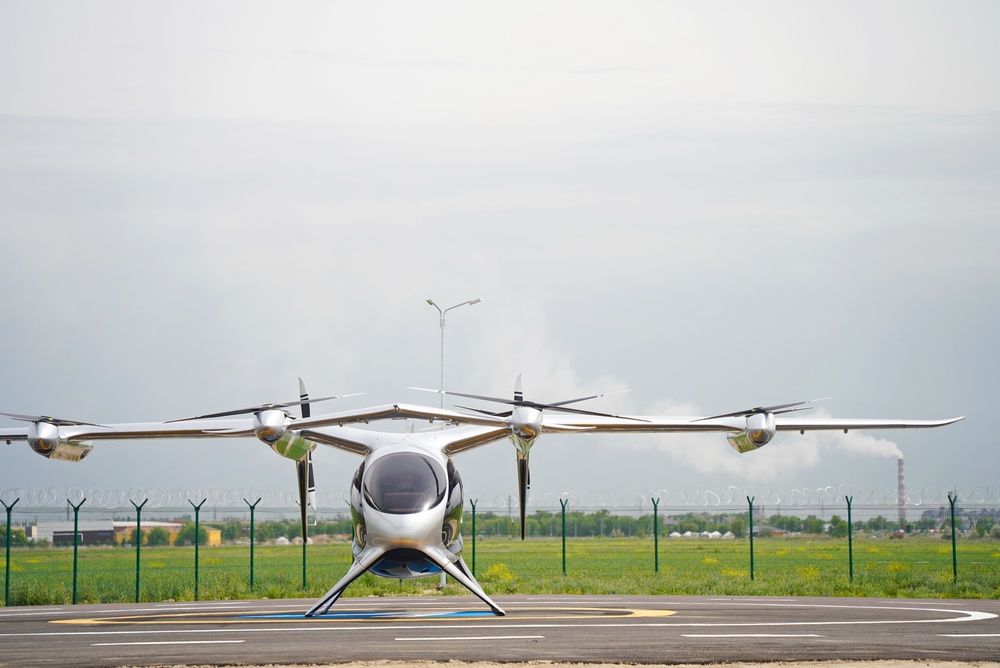
The aircraft, developed by the Commercial Aircraft Corporation of China (COMAC), completed its first crewed flight in Binzhou, Shandong province. Two pilots and a flight-test engineer were aboard the approximately 10-tonne demonstrator during the test. COMAC reported that all systems operated normally, marking an important development after months of testing without anyone inside the aircraft. The flight represents a significant step toward demonstrating that the electric commuter plane can operate with a human crew rather than relying exclusively on autonomous flight systems.
The CE-25A had already completed 19 autonomous test flights since February 2, meaning the November flight was not its first time taking to the skies. Those earlier tests allowed engineers to evaluate the aircraft’s performance without putting pilots aboard. Moving into crewed testing gives the development team another opportunity to examine how the aircraft performs under human operation. It also brings the project closer to the demanding certification process required before any commercial passenger operations can begin.
The aircraft’s development has attracted attention because large battery-electric planes remain relatively uncommon. Most electric aircraft projects have focused on smaller experimental designs or aircraft carrying only a handful of passengers. COMAC is attempting something more ambitious with a design intended for 19 passengers. However, a successful crewed flight does not mean airlines can begin purchasing the aircraft immediately. The company still needs to demonstrate that the plane meets aviation safety requirements, and there is currently no confirmed date for commercial service.
Ten Electric Fans Give The Aircraft Its Unusual Design
One of the most interesting features of the CE-25A is its propulsion system. Instead of conventional propellers, the aircraft uses 10 electric ducted fans mounted along its wings, with five on each side. These electrically powered units provide the thrust needed to move the aircraft through the air. The aircraft also features a T-shaped tail and a design intended for regional passenger transportation. Its unusual appearance reflects the engineering decisions involved in building an aircraft around electric propulsion rather than traditional aviation engines.
COMAC lists the CE-25A’s cruising speed at approximately 300 kilometers per hour, with a stated range of 400 kilometers. Its passenger capacity is 19, placing it within the commuter aircraft category. The company previously displayed a model at the China International Import Expo in Shanghai in November 2023. At that time, the accompanying information listed a range between 400 and 500 kilometers and a maximum cruising speed of 400 kilometers per hour. The full-size aircraft later became publicly visible through photographs shared on Chinese social media.
The aircraft’s published specifications give a clearer picture of what COMAC hopes to achieve:
- Passenger capacity: 19 people.
- Aircraft weight: Approximately 10 tonnes.
- Cruising speed: Around 300 kilometers per hour.
- Advertised range: Approximately 400 kilometers.
- Propulsion system: Ten electric ducted fans.
- Wing configuration: Five electric fans on each side.
- Aircraft design: T-tail commuter aircraft.
- Intended application: Short regional passenger journeys.
These figures make the CE-25A particularly interesting for routes connecting nearby cities. Its performance targets suggest that COMAC is concentrating on journeys where current battery technology could offer a practical alternative to conventional aircraft engines.
China’s Battery Industry Could Give The Project An Advantage
Developing a battery-powered aircraft presents challenges that go far beyond installing electric motors. Batteries must store enough energy to lift an aircraft weighing several tonnes while maintaining sufficient power throughout the journey. They also add considerable weight, which creates a difficult engineering balance between passenger capacity, flight distance, and overall aircraft performance. Battery energy density remains one of the biggest obstacles preventing electric aircraft from replacing conventional commercial planes on longer routes.
China’s established battery industry could provide an advantage in addressing these challenges. COMAC, battery manufacturer CATL, and Shanghai Jiao Tong University established a joint venture in July 2023 to develop electric aircraft technology. The venture had registered capital of 600 million Chinese yuan. CATL had also introduced its condensed battery technology around that period, claiming cell-level energy density of up to 500 watt-hours per kilogram. The company said it was testing the technology against aviation standards.
That figure is particularly relevant because approximately 500 watt-hours per kilogram has long been considered an important target for making commercial electric flight more practical. Higher energy density allows batteries to store more energy without adding as much weight. However, neither COMAC nor CATL has confirmed which battery technology powers the CE-25A. The partnership provides a strong indication of China’s interest in combining its aviation and battery industries, but the aircraft’s exact battery configuration remains undisclosed.
The 400-Kilometer Range Still Creates A Major Challenge
A stated range of 400 kilometers could make the CE-25A useful for several types of regional journeys. Smaller cities and nearby destinations could potentially benefit from aircraft that operate without burning conventional aviation fuel during flight. However, there is an important difference between an advertised maximum range and the distance an aircraft can safely cover during commercial operations. Airlines must account for passenger loads, weather conditions, reserve energy requirements, and other operational considerations.
A conventional Beechcraft 1900 turboprop aircraft in a similar passenger category can cover well over 1,000 kilometers. That gives traditional aircraft a substantial advantage when it comes to longer regional journeys. The CE-25A would therefore have a more limited operating range, at least with its currently published specifications. Airlines would need to select routes carefully and ensure that the aircraft could complete its journeys while maintaining the safety reserves required by aviation regulators.
Shorter routes could provide a realistic starting point while battery technology continues improving. An electric aircraft does not necessarily need to replace every conventional plane to become commercially useful. It could initially serve routes where the distance is manageable and where operators can establish reliable charging arrangements. COMAC’s challenge will be demonstrating that its aircraft can deliver consistent performance under real operating conditions rather than relying solely on its advertised specifications.
Other Companies Are Racing To Develop Electric Aircraft
China is not the only country pursuing larger electric aircraft. Several aviation companies have spent years developing alternative propulsion systems, although their approaches differ. Swedish company Heart Aerospace has been working on the ES-30, a regional aircraft designed to carry 30 passengers. The company previously explored a smaller 19-seat design called the ES-19 before shifting toward the larger aircraft in 2022. The ES-30 uses reserve turbogenerators to extend its range, meaning it combines electric propulsion with conventional fuel-powered backup systems.
Heart Aerospace has also developed its X1 demonstrator, which completed a flight in Plattsburgh, New York. The aircraft is a substantial demonstrator with a wingspan of 106 feet and a weight of approximately 25,000 pounds. Heart described it as the largest battery-electric aircraft ever flown. The company is targeting 2031 for commercial service with the ES-30 and has claimed potential operating costs more than 40% lower than conventional alternatives. Its approach demonstrates how manufacturers are exploring different ways to overcome battery limitations.
Another example is Eviation’s Alice, a nine-passenger electric aircraft that completed its first flight in September 2022. However, the company experienced serious difficulties and laid off most of its staff in early 2025. Its experience illustrates how difficult it can be to turn an impressive aircraft demonstration into a sustainable commercial business. COMAC faces many of the same broad challenges, even with China’s established manufacturing and battery industries supporting its development.
Aviation Certification Is The Next Major Hurdle
The CE-25A has already reached an important regulatory milestone, with China’s Civil Aviation Administration accepting COMAC’s application for a type certificate. This begins the formal airworthiness review process, during which the aircraft must demonstrate that it meets the applicable safety requirements. The application being accepted does not mean the aircraft has received permission to transport paying passengers. Certification remains a separate and demanding process that requires extensive technical evidence.
Aircraft manufacturers must demonstrate that their designs can operate safely under the conditions they are intended to encounter. This includes evaluating structural integrity, flight controls, propulsion systems, and other essential components. Electric aircraft introduce additional considerations because battery performance and energy management are closely connected to flight safety. Regulators must also assess how the aircraft behaves when systems malfunction or unexpected situations arise during operation.
COMAC has not announced when the CE-25A might enter commercial service. The company will need to complete the necessary testing and satisfy regulators before airlines can use the aircraft for passenger operations. Even after certification, commercial deployment would require suitable charging infrastructure and operational arrangements at airports. The first crewed flight has moved the program forward, but there is still a considerable distance between a successful demonstration and an aircraft operating scheduled passenger routes.
Why Short Regional Flights Could Lead Electric Aviation
The aviation industry faces a difficult challenge when attempting to reduce its dependence on fossil fuels. Commercial aircraft require enormous amounts of energy, particularly when flying long distances. Conventional aviation fuel offers an energy density that current batteries struggle to match, making large battery-electric passenger aircraft difficult to develop. Short regional journeys provide a more manageable opportunity because they require less total energy than international or long-haul flights.
There are several potential advantages if battery-electric aircraft become commercially practical:
- Reduced direct emissions: Electric aircraft do not produce exhaust emissions from burning aviation fuel during flight.
- Less exposure to fuel prices: Airlines could reduce their dependence on conventional jet fuel on suitable routes.
- Potentially quieter operations: Electric propulsion may reduce certain sources of aircraft noise.
- Regional connectivity: Smaller aircraft could provide additional connections between nearby cities.
- Further battery development: Aviation research could encourage improvements in battery technology that benefit other industries.
However, the overall environmental benefits will depend on how the electricity is generated and how batteries are manufactured. Airlines will also need to consider charging infrastructure, battery replacement costs, maintenance, and the practical demands of operating electric aircraft throughout the day. These factors will determine whether the technology can compete financially with conventional planes.
For China, the CE-25A represents an opportunity to combine its aviation manufacturing capabilities with its growing battery technology industry. The partnership involving COMAC, CATL, and Shanghai Jiao Tong University gives the project access to expertise across several important areas. Its progress also comes as other manufacturers work toward their own electric and hybrid aircraft programs, creating competition that could accelerate development across the industry.
Electric Passenger Flights Still Have A Long Way To Go
The CE-25A’s first crewed flight is a meaningful development for electric aviation, particularly because the aircraft is designed to carry 19 passengers rather than operate as a small experimental plane. Its 10 electric fans and advertised 400-kilometer range show how manufacturers are beginning to explore larger aircraft built around battery-powered propulsion. However, the technology must still overcome limitations involving battery capacity, aircraft weight, operating range, and certification.
The next major achievement will be proving that the CE-25A can meet the requirements for regular passenger operations. A successful test flight attracts attention, but reliable commercial service is what will determine whether electric aircraft become a practical part of everyday travel. For now, China has demonstrated that a 19-seat battery-electric commuter aircraft can take a human crew into the sky. Turning that achievement into a working passenger service will be the real challenge.